

Journal of System Simulation ›› 2026, Vol. 38 ›› Issue (6): 1669-1683.doi: 10.16182/j.issn1004731x.joss.25-0617
• Papers • Previous Articles Next Articles
Chen Zhirun1, Yuan Jie1, Jia Erkenbieke1, Zhang Ningning2, Liu Chao1, Ye Yushan1
Received:2025-06-30
Revised:2025-09-04
Online:2026-06-25
Published:2026-06-25
Contact:
Yuan Jie
CLC Number:
Chen Zhirun, Yuan Jie, Jia Erkenbieke, Zhang Ningning, Liu Chao, Ye Yushan. Adaptive Path Planning for Robotic Arms Integrating RRT* and APF[J]. Journal of System Simulation, 2026, 38(6): 1669-1683.
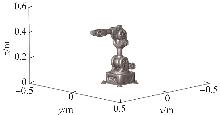
Fig. 1
Niryo Ned robotic arm model
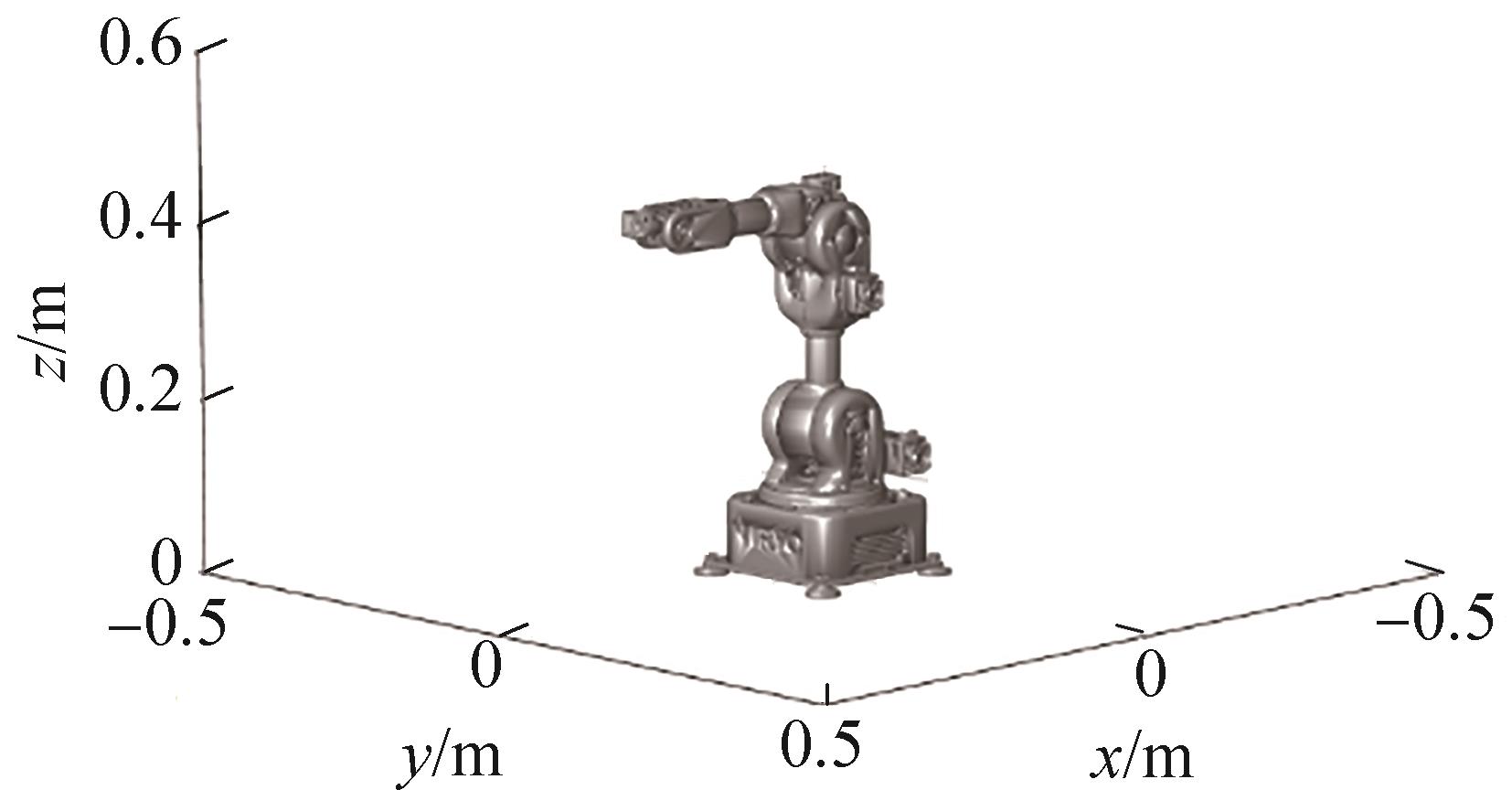
Table 1
D-H parameters
| 连杆i | ||||
|---|---|---|---|---|
| 1 | 0 | 0.079 | ||
| 2 | 0 | 0.22 | 0 | |
| 3 | 0.06 | 0 | ||
| 4 | 0 | -0.18 | ||
| 5 | 0 | 0 | ||
| 6 | 0 | -0.05 |
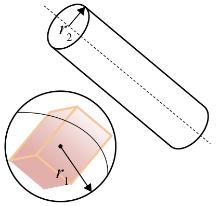
Fig. 2
Simplified collision detection model
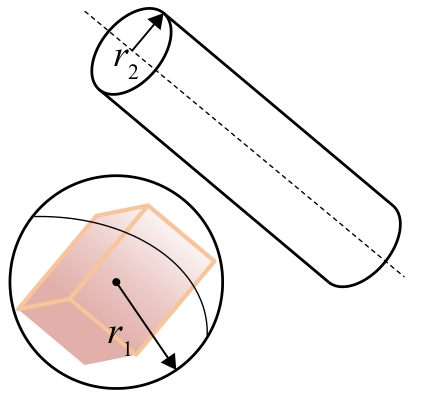
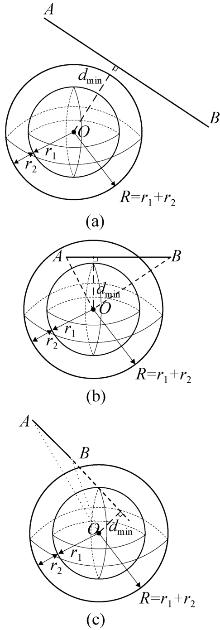
Fig. 3
Collision detection and determination
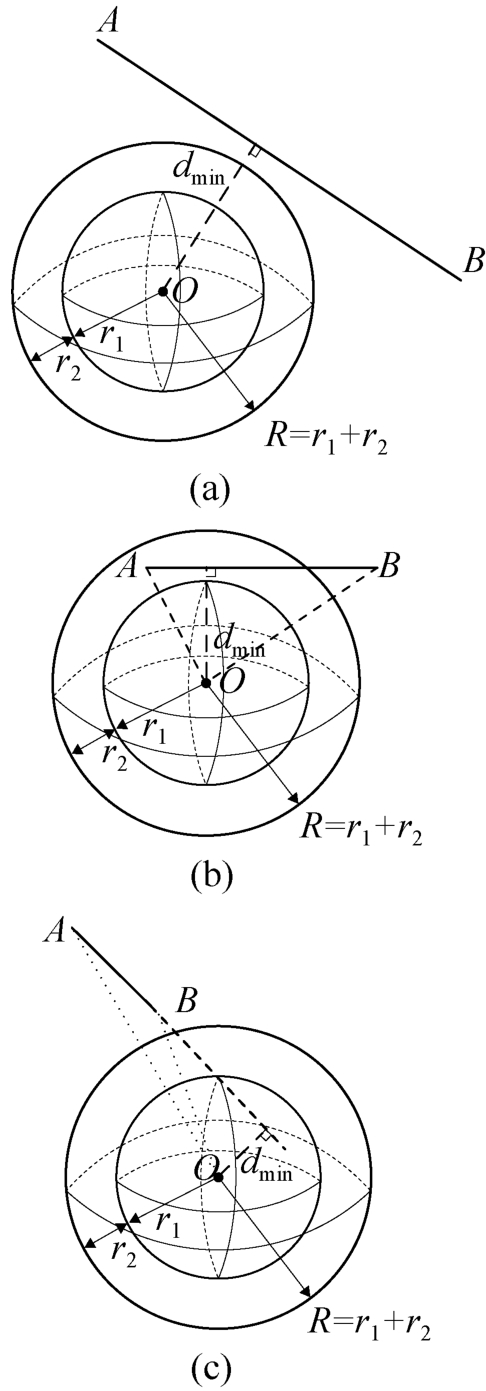
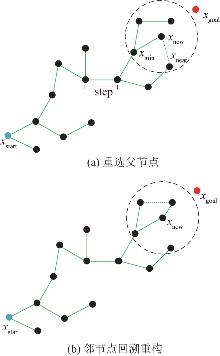
Fig. 4
Random tree optimization
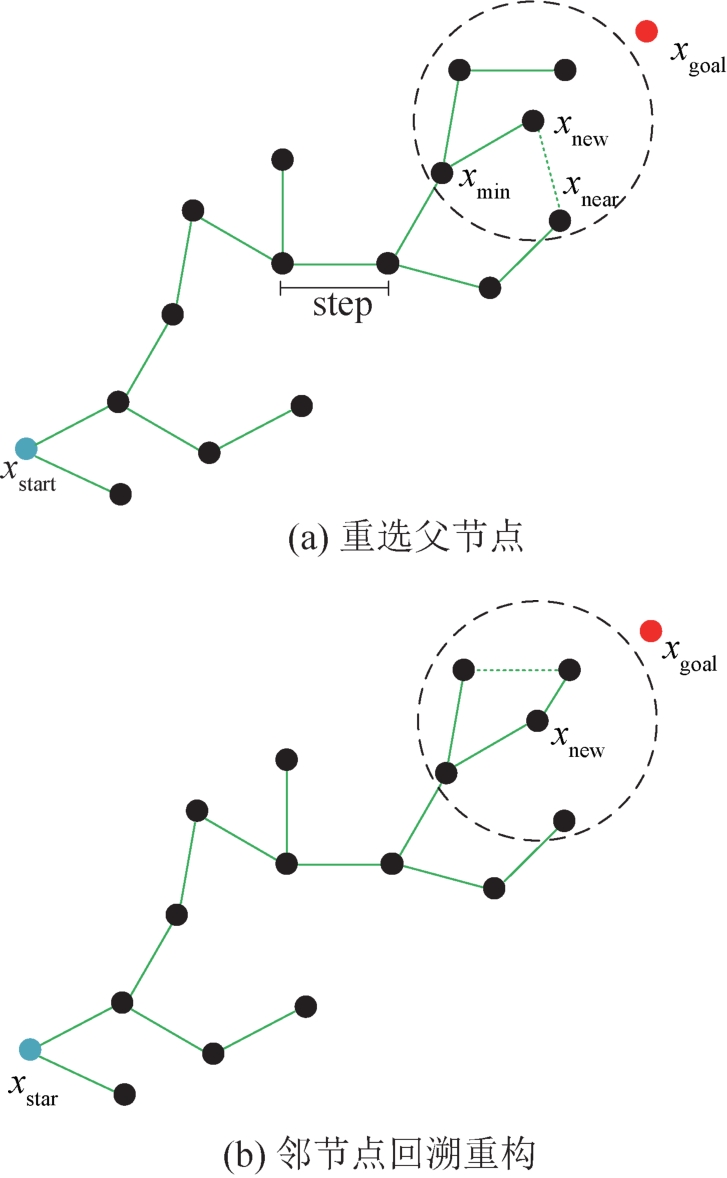
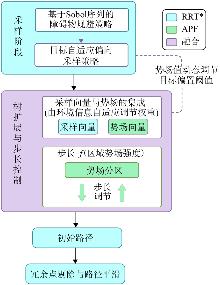
Fig. 5
Overall framework of AAPF-RRT* algorithm
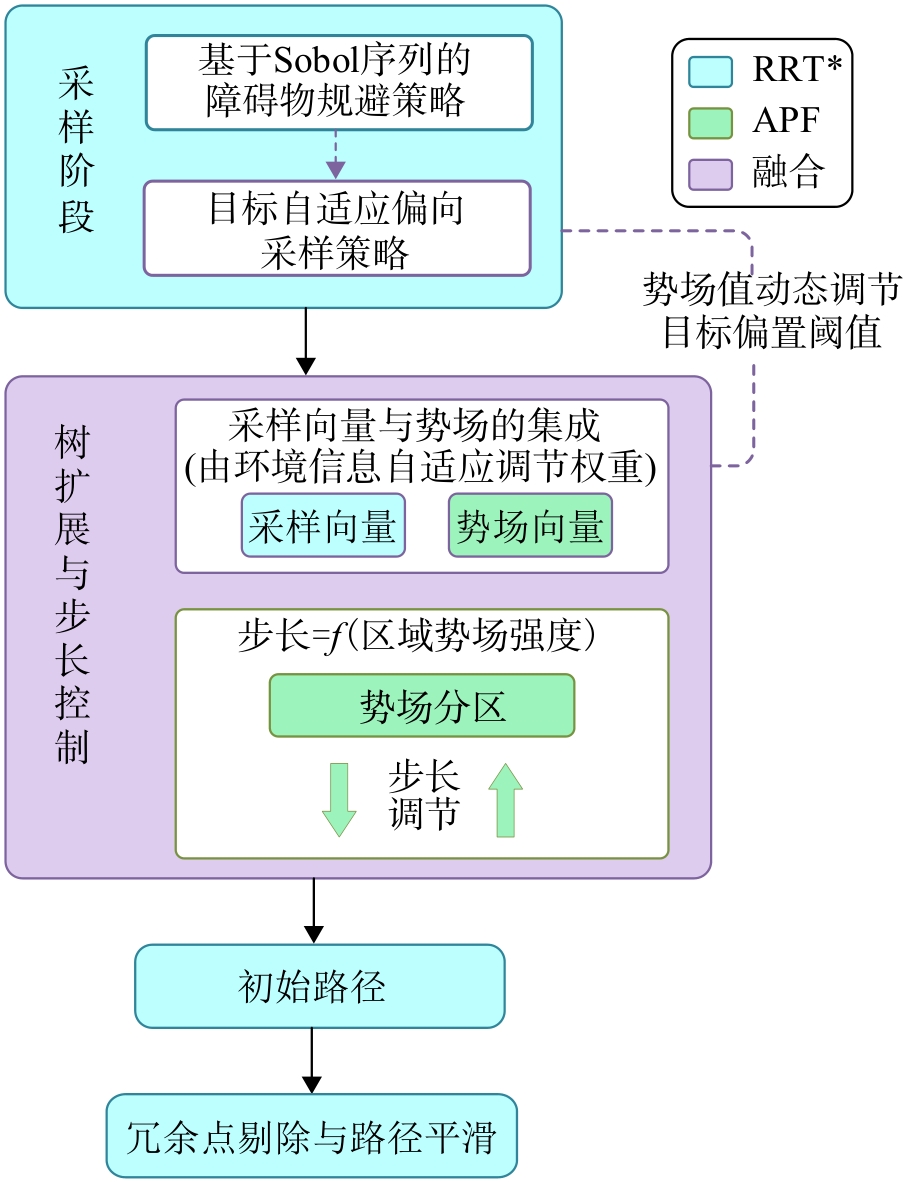
Fig. 6
Comparison of sampling point distribution
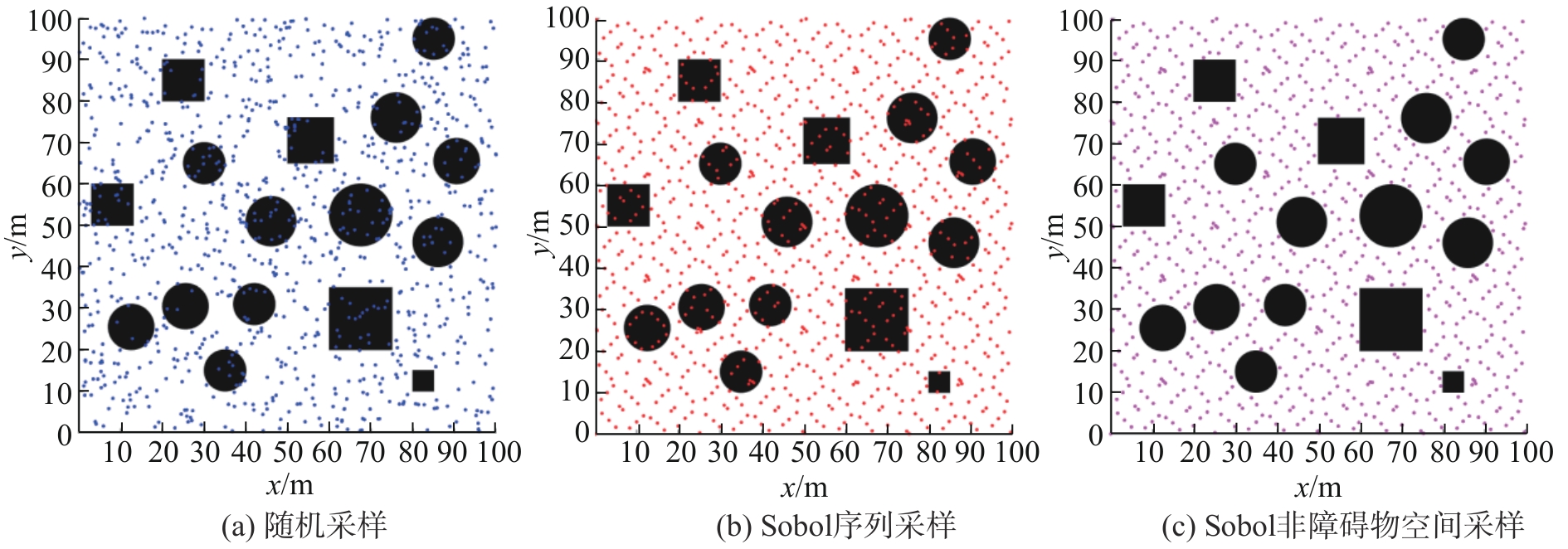
Fig. 7
Influence of APF on growth direction of nodes
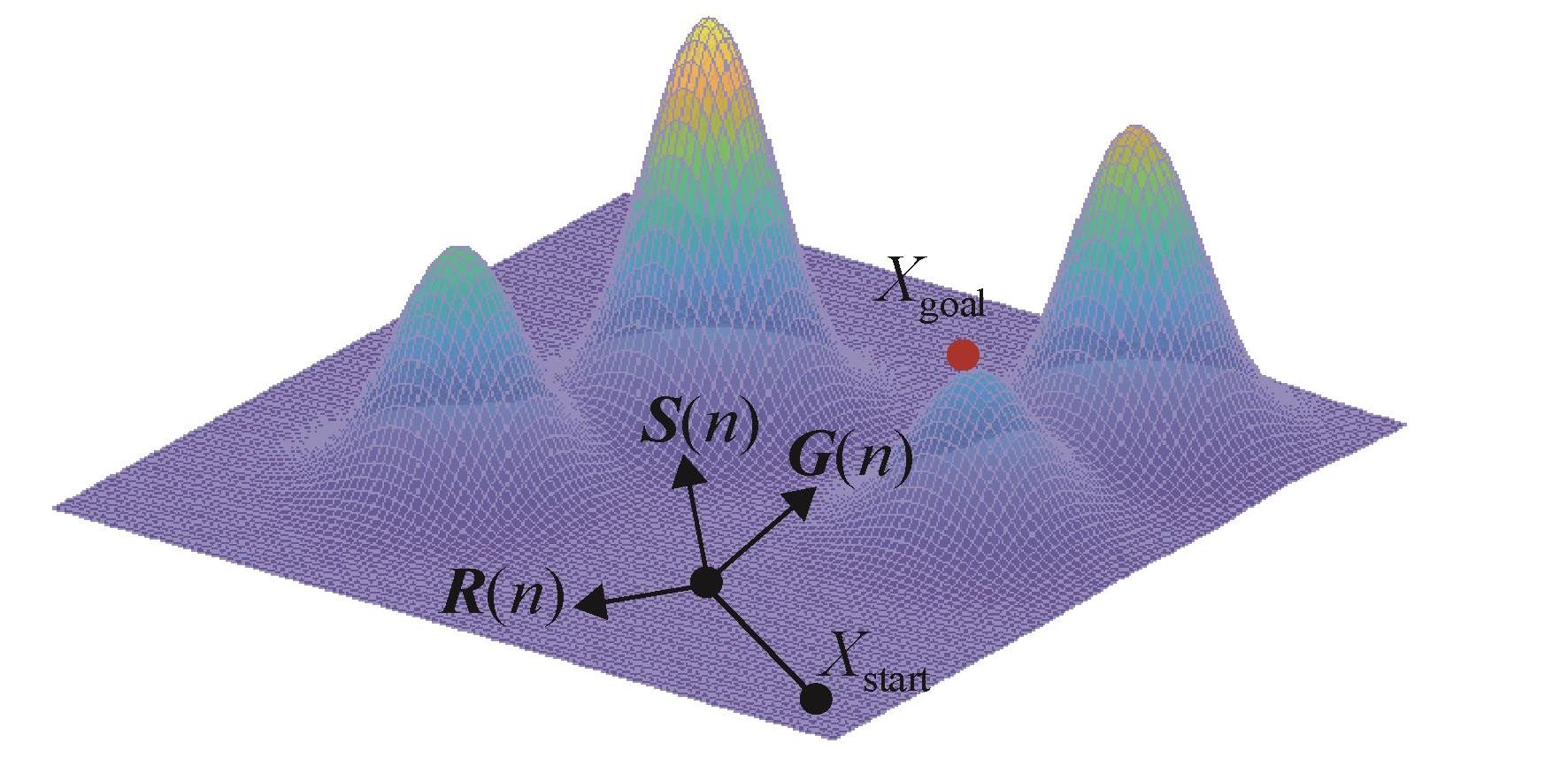
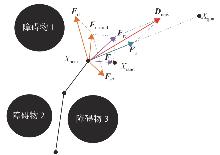
Fig. 8
Expansion direction of new node
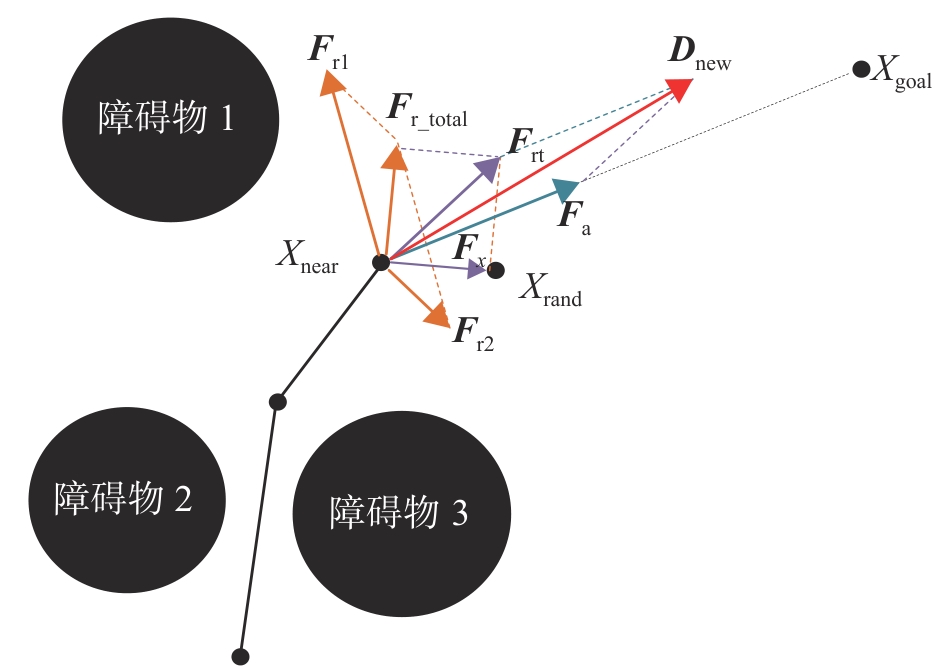
Fig. 9
Feature space division
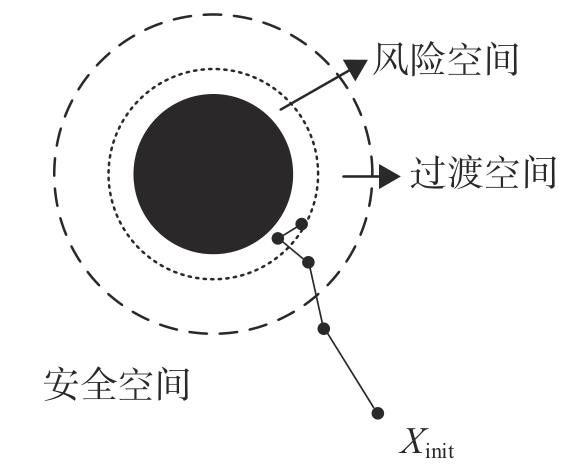
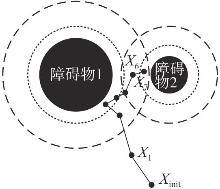
Fig. 10
Step size variation in feature space
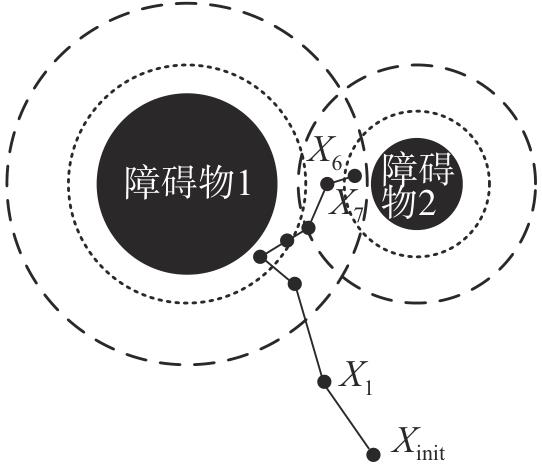
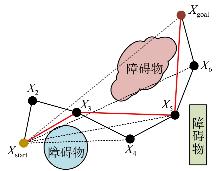
Fig. 11
Elimination of redundant points
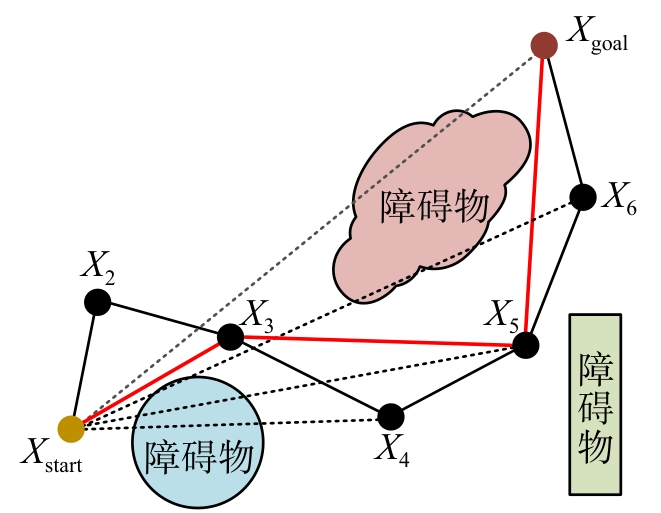
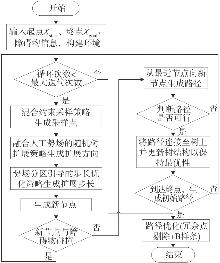
Fig. 12
Flowchart of AAPF-RRT* algorithm
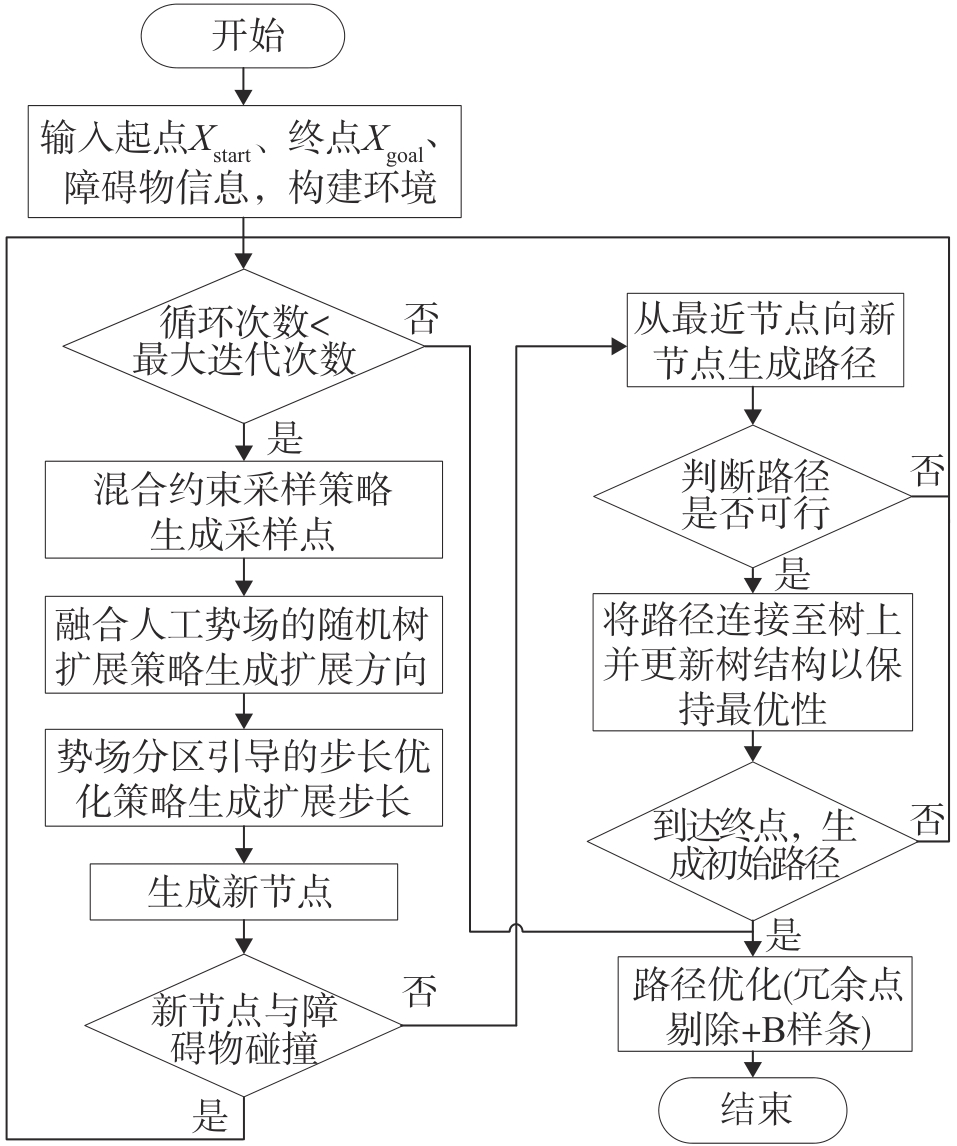
Fig. 13
Simulation results of various algorithms for three-dimensional obstacle avoidance in a simple obstacle environment
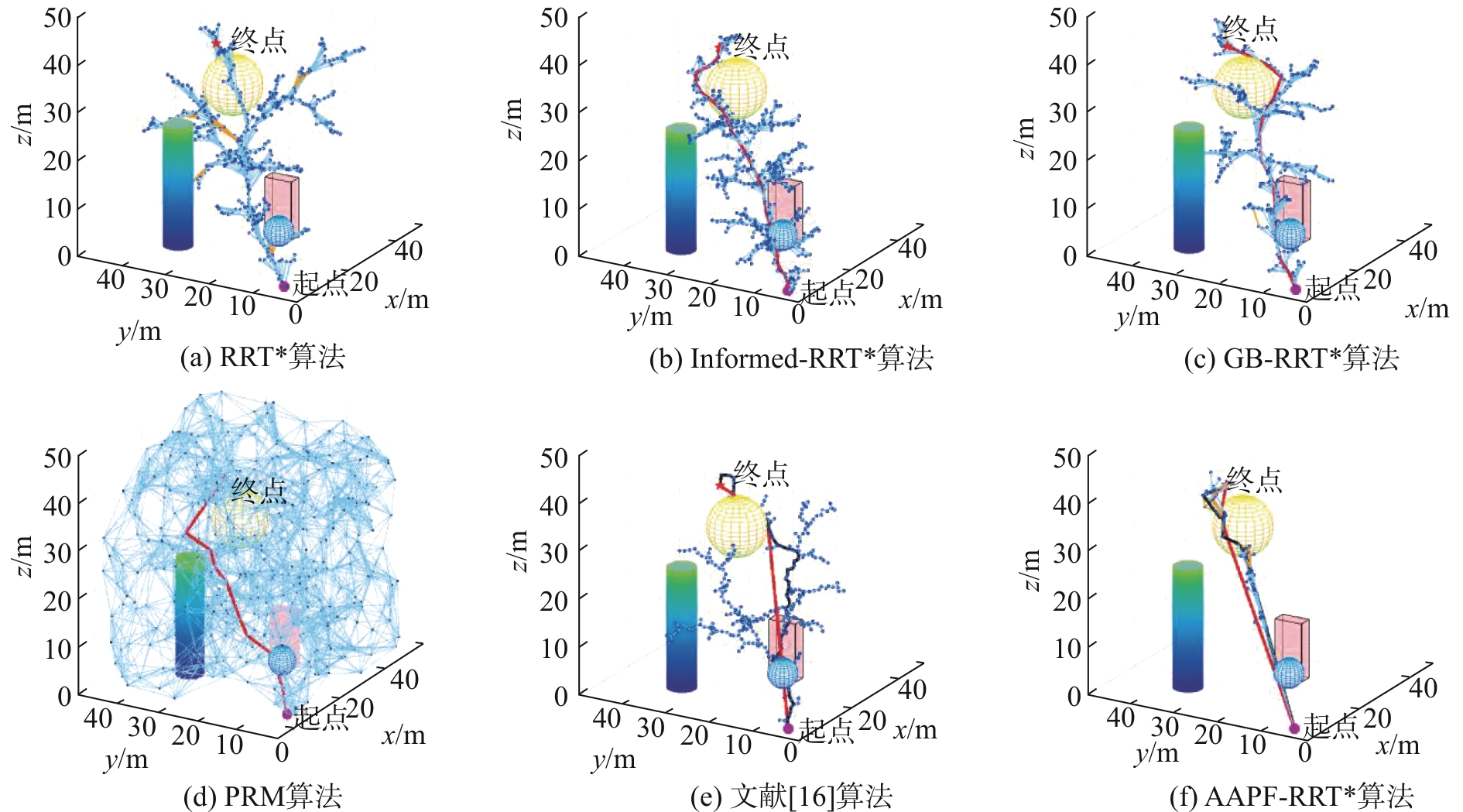
Table 2
Comparison of algorithm performance in simple obstacle environments
| 算法 | 成功率/% | 平均路径长度/m | 平均运行时间/s | 平均采样次数 | 迭代次数 |
|---|---|---|---|---|---|
| RRT* | 10 | 65.791 | 15.382 | 474 | 366 |
| Informed-RRT* | 70 | 62.573 | 5.030 | 476 | 476 |
| GB-RRT* | 100 | 64.064 | 2.560 | 446 | 236 |
| PRM | 100 | 68.368 | 1.670 | — | — |
| 文献[ | 95 | 61.740 | 7.470 | 444 | 448 |
| AAPF-RRT* | 100 | 57.382 | 1.433 | 265 | 198 |
Fig. 14
Simulation results of various algorithms for three-dimensional obstacle avoidance in high-density obstacle environments
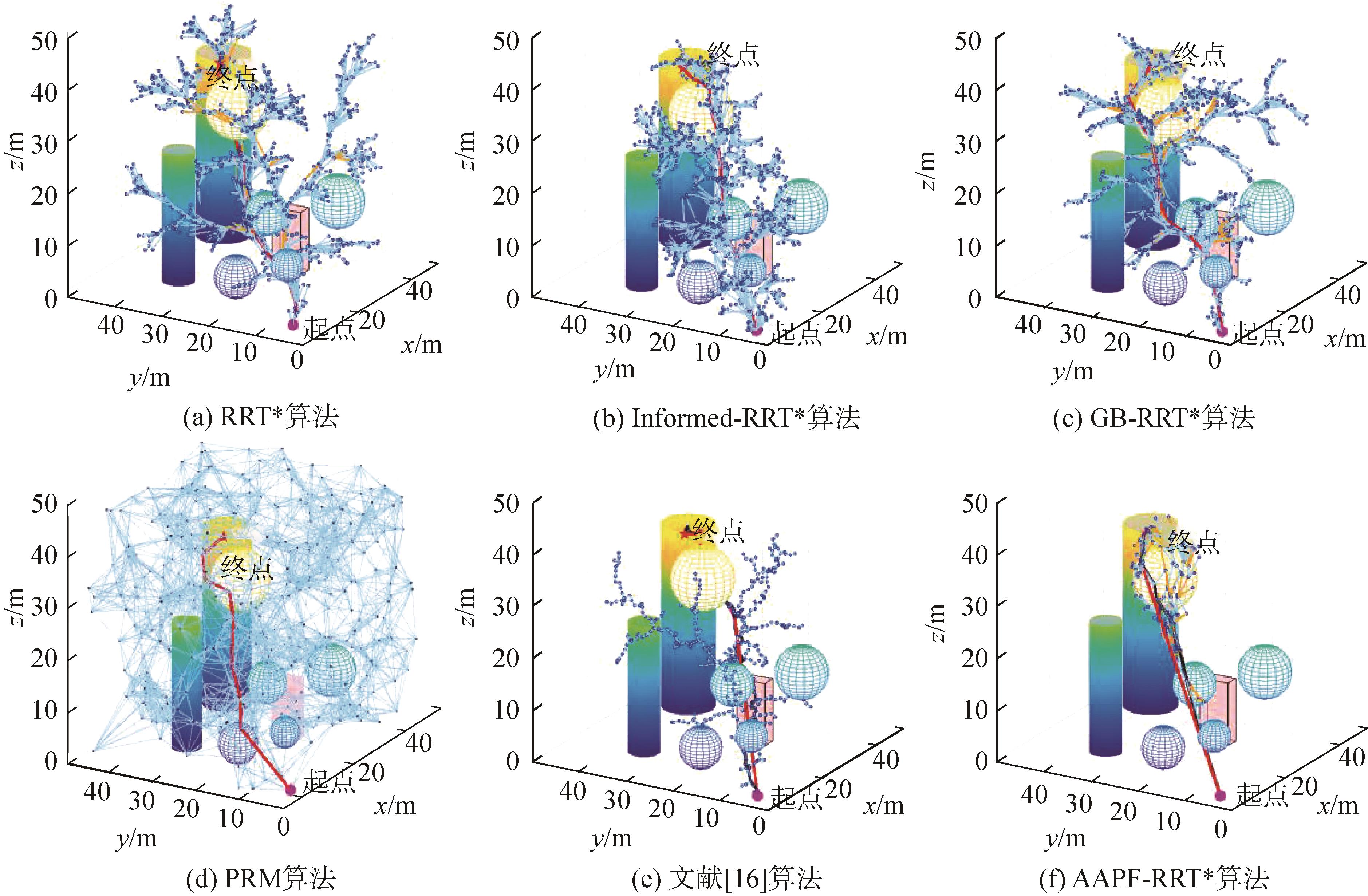
Table 3
Comparison of algorithm performance in high-density obstacle environments
| 算法 | 成功率/% | 平均路径长度/m | 平均运行时间/s | 平均采样次数 | 迭代次数 |
|---|---|---|---|---|---|
| RRT* | 14 | 65.136 | 17.474 | 954 | 958 |
| Informed-RRT* | 82 | 59.783 | 10.512 | 944 | 562 |
| GB-RRT* | 100 | 61.907 | 2.416 | 924 | 269 |
| PRM | 100 | 64.698 | 1.725 | — | — |
| 文献[ | 98 | 58.062 | 8.320 | 596 | 543 |
| AAPF-RRT* | 100 | 56.495 | 1.330 | 589 | 240 |
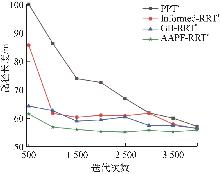
Fig. 15
Path convergence results of each algorithm under different iteration numbers
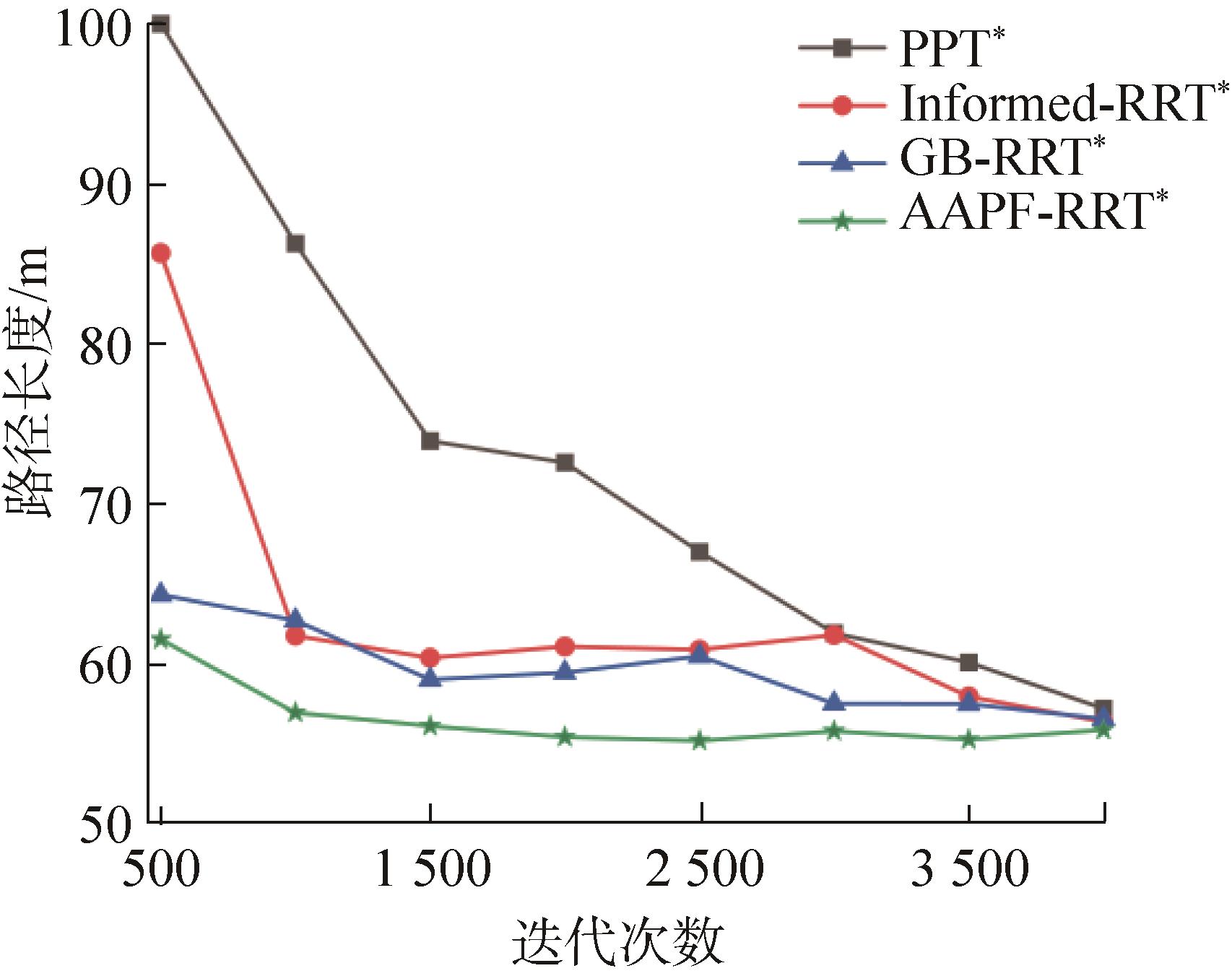
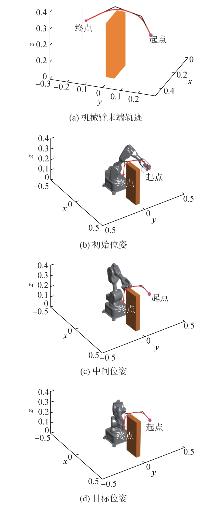
Fig. 16
Scene Ⅰ: Path planning for robotic arm
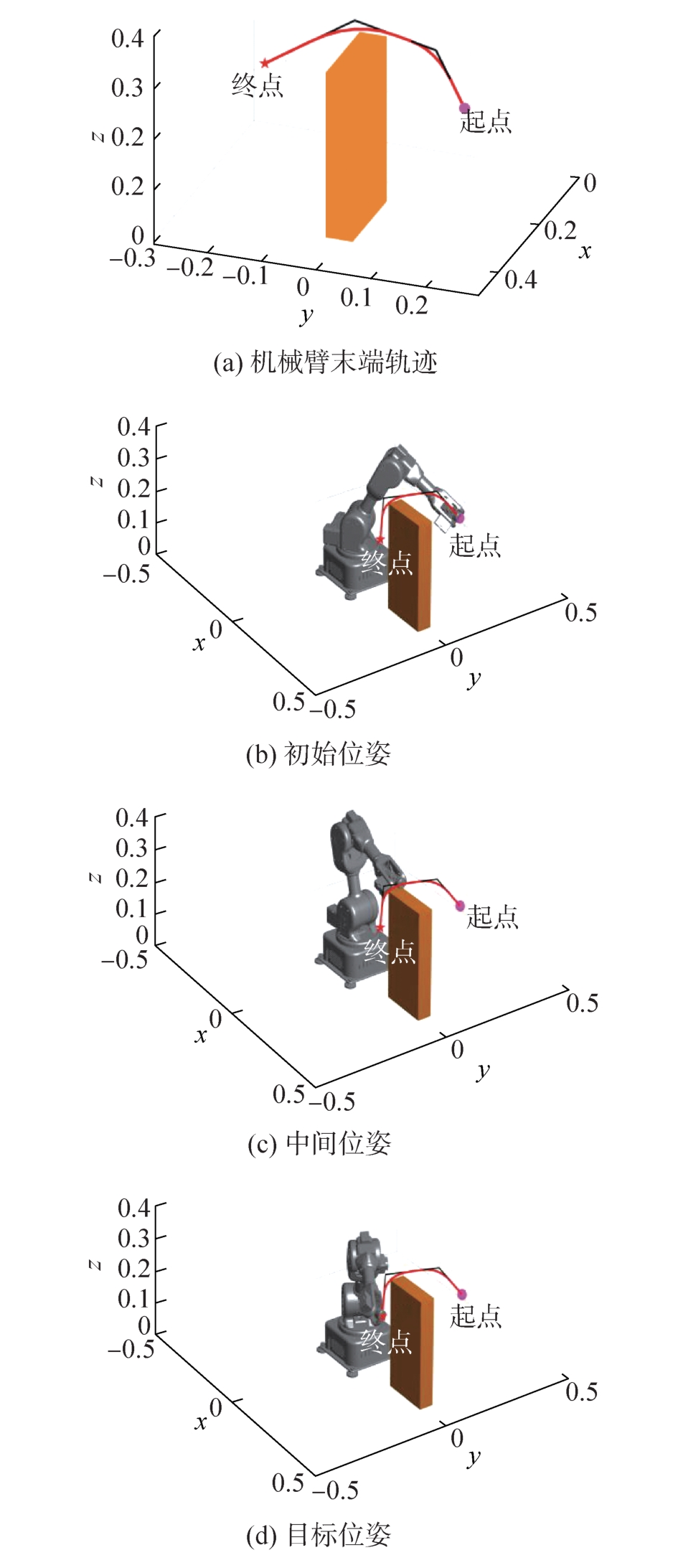
Fig. 17
Scene Ⅱ: Path planning for the robotic arm
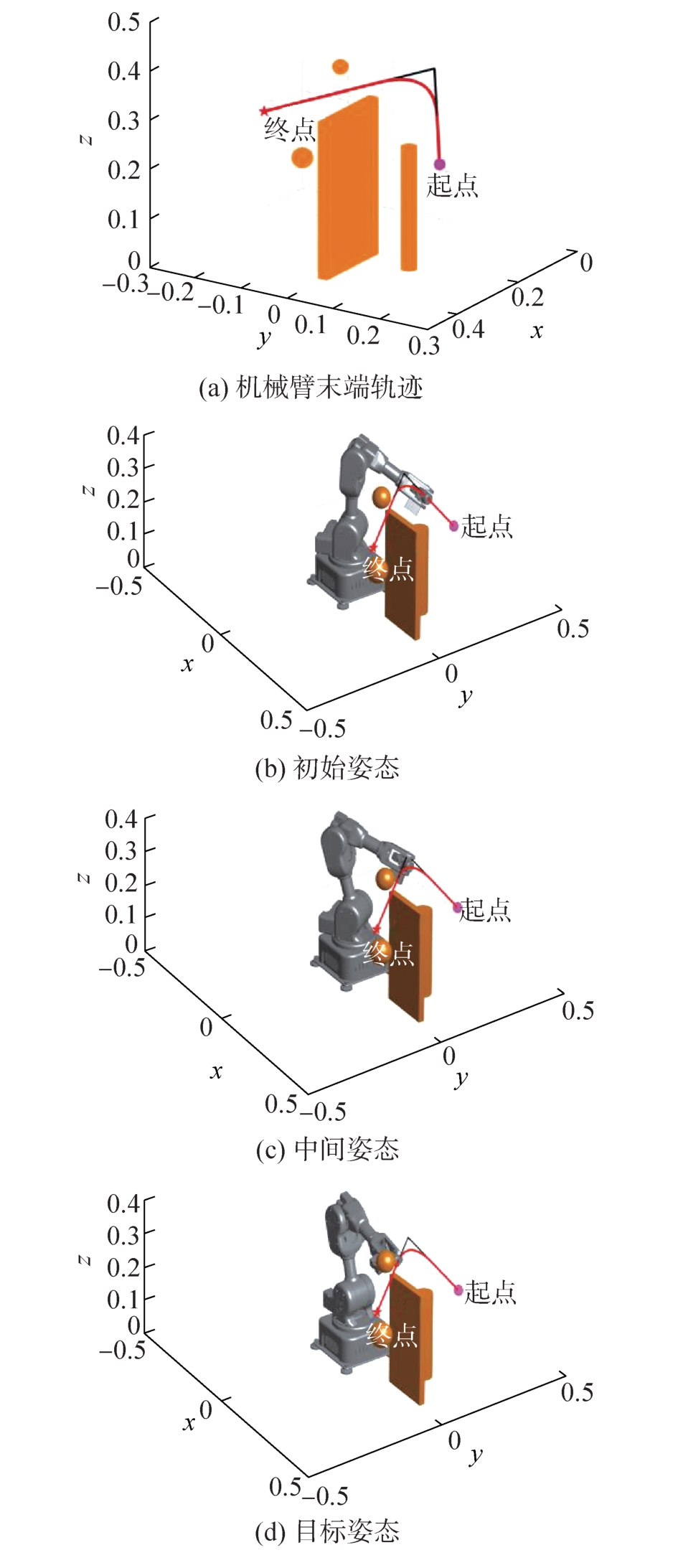
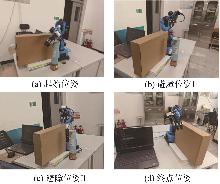
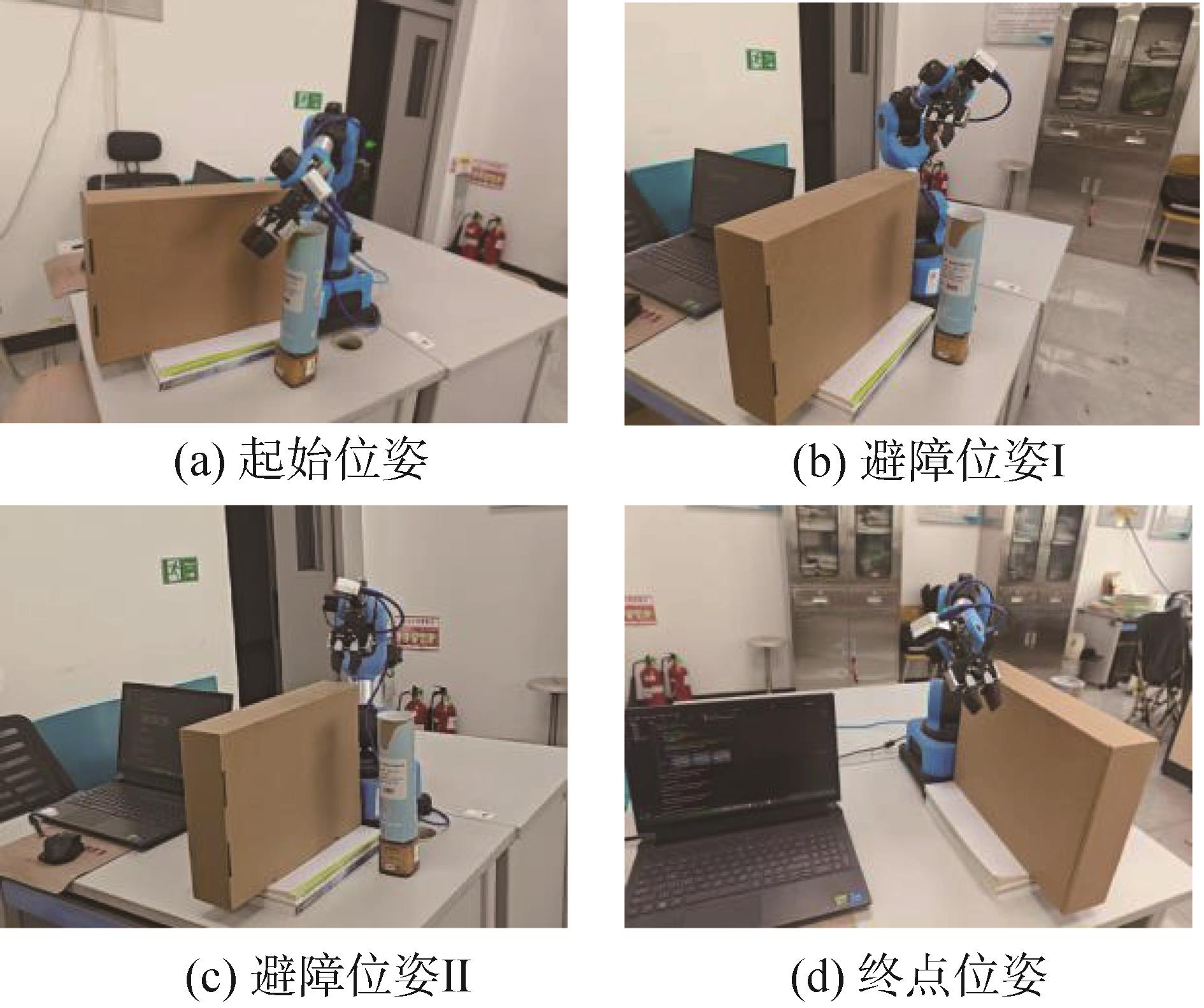
Fig. 18
Obstacle avoidance experiment of robotic arm physical prototype
| [1] | 吴其林, 赵韩, 陈晓飞, 等. 多臂协作机器人技术与应用现状及发展趋势[J]. 机械工程学报, 2023, 59(15): 1-16. |
| Wu Qilin, Zhao Han, Chen Xiaofei, et al. Review of Technology, Application Status and Development Trend in Multi-arm Cooperative Robots[J]. Journal of Mechanical Engineering, 2023, 59(15): 1-16. | |
| [2] | Tang Xianxing, Zhou Haibo, Xu Tianying. Obstacle Avoidance Path Planning of 6-DOF Robotic Arm Based on Improved A* Algorithm and Artificial Potential Field Method[J]. Robotica, 2024, 42(2): 457-481. |
| [3] | Zhou Xiwei, Yan Jingwen, Yan Mei, et al. Path Planning of Rail-mounted Logistics Robots Based on the Improved Dijkstra Algorithm[J]. Applied Sciences, 2023, 13(17): 9955. |
| [4] | 邓冬冬, 许建民, 孟寒, 等. 基于蚁群算法与人工势场法融合的移动机器人路径规划[J]. 仪器仪表学报, 2025, 46(2): 1-16. |
| Deng Dongdong, Xu Jianmin, Meng Han, et al. Mobile Robot Path Planning Based on the Fusion of Ant Colony Algorithm and Artificial Potential Field Method[J]. Chinese Journal of Scientific Instrument, 2025, 46(2): 1-16. | |
| [5] | Zhang Chuang, Wang He, Fu Lihua, et al. Three-dimensional Continuous Picking Path Planning Based on Ant Colony Optimization Algorithm[J]. PLoS One, 2023, 18(2): e0282334. |
| [6] | 薛光辉, 刘爽, 王梓杰, 等. 基于改进概率路线图算法的煤矿机器人路径规划方法[J]. 工矿自动化, 2023, 49(6): 175-181. |
| Xue Guanghui, Liu Shuang, Wang Zijie, et al. A Path-planning Method for Coal Mine Robot Based on Improved Probability Road Map Algorithm[J]. Journal of Mine Automation, 2023, 49(6): 175-181. | |
| [7] | 李子建, 高焕兵, 王雪秋. 改进RRT算法的机械臂避障路径规划研究[J]. 计算机工程与应用, 2025, 61(8): 307-314. |
| Li Zijian, Gao Huanbing, Wang Xueqiu. Research on Obstacle Avoidance Path Planning for Robotic Arms Using Improved RRT Algorithm[J]. Computer Engineering and Applications, 2025, 61(8): 307-314. | |
| [8] | 谭薪兴, 李光, 易静, 等. 改进RRT算法的机械臂路径规划[J]. 计算机集成制造系统, 2025, 31(3): 1014-1023. |
| Tan Xinxing, Li Guang, Yi Jing, et al. Path Planning of Manipulator Based on Improved RRT Algorithm[J]. Computer Integrated Manufacturing Systems, 2025, 31(3): 1014-1023. | |
| [9] | 朱敏, 肖阳, 臧昭宇. 基于改进蚁群算法的工业机器人路径规划研究[J]. 合肥工业大学学报(自然科学版), 2023, 46(4): 463-467, 534. |
| Zhu Min, Xiao Yang, Zang Zhaoyu. Research on Path Planning of Industrial Robot Based on Improved Ant Colony Algorithm[J]. Journal of Hefei University of Technology(Natural Science), 2023, 46(4): 463-467, 534. | |
| [10] | 贾浩铎, 房立金, 王怀震. 融合人工势场和Informed-RRT*算法的机械臂自适应路径规划[J]. 计算机集成制造系统, 2025, 31(4): 1179-1189. |
| Jia Haoduo, Fang Lijin, Wang Huaizhen. Adaptive Path Planning of Manipulators Combining Informed-RRT* with Artificial Potential Field[J]. Computer Integrated Manufacturing Systems, 2025, 31(4): 1179-1189. | |
| [11] | 刘小松, 康磊, 单泽彪, 等. 基于RTSR-RRT*算法的机械臂路径规划[J]. 仪器仪表学报, 2025, 46(3): 65-73. |
| Liu Xiaosong, Kang Lei, Shan Zebiao, et al. Path Planning of Robotic Arm Based on RTSR-RRT* Algorithm[J]. Chinese Journal of Scientific Instrument, 2025, 46(3): 65-73. | |
| [12] | Kang Jingu, Lim Dong-Woo, Choi Yong-Sik, et al. Improved RRT-Connect Algorithm Based on Triangular Inequality for Robot Path Planning[J]. Sensors, 2021, 21(2): 333. |
| [13] | Wang Xianpeng, Ma Xinglu, Li Xiaoxu, et al. Target-biased Informed Trees: Sampling-based Method for Optimal Motion Planning in Complex Environments[J]. Journal of Computational Design and Engineering, 2022, 9(2): 755-771. |
| [14] | 谭建豪, 潘豹, 王耀南, 等. 基于改进RRT*FN算法的机器人路径规划[J]. 控制与决策, 2021, 36(8): 1834-1840. |
| Tan Jianhao, Pan Bao, Wang Yaonan, et al. Robot Path Planning Based on Improved RRT*FN Algorithm[J]. Control and Decision, 2021, 36(8): 1834-1840. | |
| [15] | 龙厚云, 李光, 谭薪兴, 等. 融合A*的改进RRT机械臂路径规划[J]. 计算机工程与应用, 2024, 60(4): 366-374. |
| Long Houyun, Li Guang, Tan Xinxing, et al. Path Planning of Robotic Arm Based on Improved RRT Algorithm Combined with A*[J]. Computer Engineering and Applications, 2024, 60(4): 366-374. | |
| [16] | 陈丹, 谭钦, 徐哲壮. 基于采样点优化RRT算法的机械臂路径规划[J]. 控制与决策, 2024, 39(8): 2597-2604. |
| Chen Dan, Tan Qin, Xu Zhezhuang. Robotic Arm Path Planning Based on Sampling Point Optimization RRT Algorithm[J]. Control and Decision, 2024, 39(8): 2597-2604. | |
| [17] | 宋勇, 张蕾, 田荣, 等. 复杂多场景下机械臂避障运动规划方法研究[J]. 西北工业大学学报, 2023, 41(3): 500-509. |
| Song Yong, Zhang Lei, Tian Rong, et al. Research on Obstacle Avoidance Motion Planning Method of Manipulator in Complex Multi Scene[J]. Journal of Northwestern Polytechnical University, 2023, 41(3): 500-509. | |
| [18] | 崔炜, 朱发证. 机器人导航的路径规划算法研究综述[J]. 计算机工程与应用, 2023, 59(19): 10-20. |
| Cui Wei, Zhu Fazheng. Review of Path Planning Algorithms for Robot Navigation[J]. Computer Engineering and Applications, 2023, 59(19): 10-20. | |
| [19] | 何庆, 罗仕杭. 混合改进策略的黑猩猩优化算法及其机械应用[J]. 控制与决策, 2023, 38(2): 354-364. |
| He Qing, Luo Shihang. Chimp Optimization Algorithm Based on Hybrid Improvement Strategy and Its Mechanical Application[J]. Control and Decision, 2023, 38(2): 354-364. | |
| [20] | 代伟, 李创业, 杨春雨, 等. 基于低差异序列与快速扩展随机树融合算法的机械臂路径规划[J]. 控制理论与应用, 2022, 39(1): 130-144. |
| Dai Wei, Li Chuangye, Yang Chunyu, et al. Manipulator Path Planning Using Fusion Algorithm of Low Difference Sequence and Rapidly Exploring Random Tree[J]. Control Theory & Applications, 2022, 39(1): 130-144. | |
| [21] | Liang Juanling, Luo Wenguang, Qin Yongxin. Path Planning of Multi-axis Robotic Arm Based on Improved RRT*[J]. Computers, Materials & Continua, 2024, 81(1): 1009-1027. |
| [22] | 齐本胜, 李岩, 苗红霞, 等. 基于改进启发式RRT的AUV路径规划[J]. 系统仿真学报, 2025, 37(1): 245-256. |
| Qi Bensheng, Li Yan, Miao Hongxia, et al. Research on Path Planning Method for Autonomous Underwater Vehicles Based on Improved Informed RRT[J]. Journal of System Simulation, 2025, 37(1): 245-256. | |
| [23] | 牛金星, 王硕, 赵俊龙, 等. 基于目标引导的多目标苹果采摘路径规划方法[J]. 农业机械学报, 2025, 56(3): 208-215, 226. |
| Niu Jinxing, Wang Shuo, Zhao Junlong, et al. Multi-objective Apple Picking Path Planning Method Based on Target Guidance[J]. Transactions of the Chinese Society for Agricultural Machinery, 2025, 56(3): 208-215, 226. |
| [1] | Liu Manqiang, Shang Ziqiang. Application of Improved Multi-objective Differential Algorithm in Robotic Arm Multi-objective Trajectory Planning [J]. Journal of System Simulation, 2026, 38(6): 1647-1668. |
| [2] | Zhang Ziyao, Ji Yunfeng. Simulation of Robotic Arm Ball-catching Strategy Based on Curriculum RL of Transformer [J]. Journal of System Simulation, 2026, 38(2): 321-331. |
| [3] | Ni Peilong, Mao Pengjun, Wang Ning, Yang Mengjie. Robot Path Planning Based on Improved A-DDQN Algorithm [J]. Journal of System Simulation, 2025, 37(9): 2420-2430. |
| [4] | Chen Tao, Liu Jianxuan, Wang Lizhong, Zou Xiangjun, Li Xiaojuan. Research on Non-singular Fast Integral Terminal Sliding Mode Trajectory Tracking Control of Six-axis Robotic Arm [J]. Journal of System Simulation, 2025, 37(8): 2115-2123. |
| [5] | Wan Yuhang, Zhu Zilu, Zhong Chunfu, Liu Yongkui, Lin Tingyu, Zhang Lin. Dynamic Path Planning for Robotic Arms Based on an Improved PPO Algorithm [J]. Journal of System Simulation, 2025, 37(6): 1462-1473. |
| [6] | Zhang Sen, Dai Qiangqiang. UAV Path Planning Based on Improved Deep Deterministic Policy Gradients [J]. Journal of System Simulation, 2025, 37(4): 875-881. |
| [7] | Xu Qiang, Xu Jianlei, Hu Yanhai, Chen Haihui, Zhang Xing, Xing Zhaohui. Trajectory Optimization of Robotic Arm Based on Improved Simulated Annealing Genetic Algorithm [J]. Journal of System Simulation, 2025, 37(2): 404-412. |
| [8] | Sun Haijie, San Hongjun, Xiao Le, Yao Dexin, Chen Jiupeng, Yang Xiaoyuan. An Improved Path Planning Algorithm for Mobile Robots [J]. Journal of System Simulation, 2024, 36(9): 2193-2207. |
| [9] | Xie Xin, Hu Xiaobing, Zhou Hang. Research on Path Optimization Algorithm in Dynamic Routing Environment [J]. Journal of System Simulation, 2024, 36(8): 1969-1981. |
| [10] | Zhou Zhiyong, Mo Fei, Zhao Kai, Hao Yunbo, Qian Yufeng. Adaptive PID Control Algorithm Based on PPO [J]. Journal of System Simulation, 2024, 36(6): 1425-1432. |
| [11] | Zhang Rui, Zhou Li, Liu Zhengyang. Dynamic Path Planning for Mobile Robot Based on RRT* and Dynamic Window Approach [J]. Journal of System Simulation, 2024, 36(4): 957-968. |
| [12] | Jiang Zhaozhen, Wang Wenlong, Sun Wenqi. Path Planning Rapid Algorithm Based on Modified RRT* for Unmanned Surface Vessel [J]. Journal of System Simulation, 2024, 36(4): 888-900. |
| [13] | Yu Xiang, Jiang Chen, Duan Sirui, Deng Qianrui. Path Planning for Improvement of A* Algorithm and Artificial Potential Field Method [J]. Journal of System Simulation, 2024, 36(3): 782-794. |
| [14] | Liu Fulin, Li Qingxin. Formation Strategy of Hybrid Obstacle Avoidance Algorithm for Multiple Mobile Robots [J]. Journal of System Simulation, 2024, 36(3): 726-734. |
| [15] | Yan Xingyu, Li Dayan, Wang Niya, Zhang Kaixiang, Mao Jianlin. Multi-agent Path Planning with Obstacle Penalty Factor [J]. Journal of System Simulation, 2024, 36(3): 673-685. |
| Viewed | ||||||
|
Full text |
|
|||||
|
Abstract |
|
|||||
 http://www.china-simulation.com

