

Journal of System Simulation ›› 2026, Vol. 38 ›› Issue (10): 2840-2856.doi: 10.16182/j.issn1004731x.joss.26-0102
• Simulation Modeling and Digital Twin Technology • Previous Articles Next Articles
Fang Yaning1, He Renchu1,2
Received:2026-01-28
Revised:2026-03-25
Online:2026-10-31
Published:2026-10-20
Contact:
He Renchu
CLC Number:
Fang Yaning, He Renchu. Five-dimensional Digital Twin System for Closed-loop Gasoline Blending Optimization[J]. Journal of System Simulation, 2026, 38(10): 2840-2856.
Fig. 1
Logical model of digital twin system for gasoline blending units
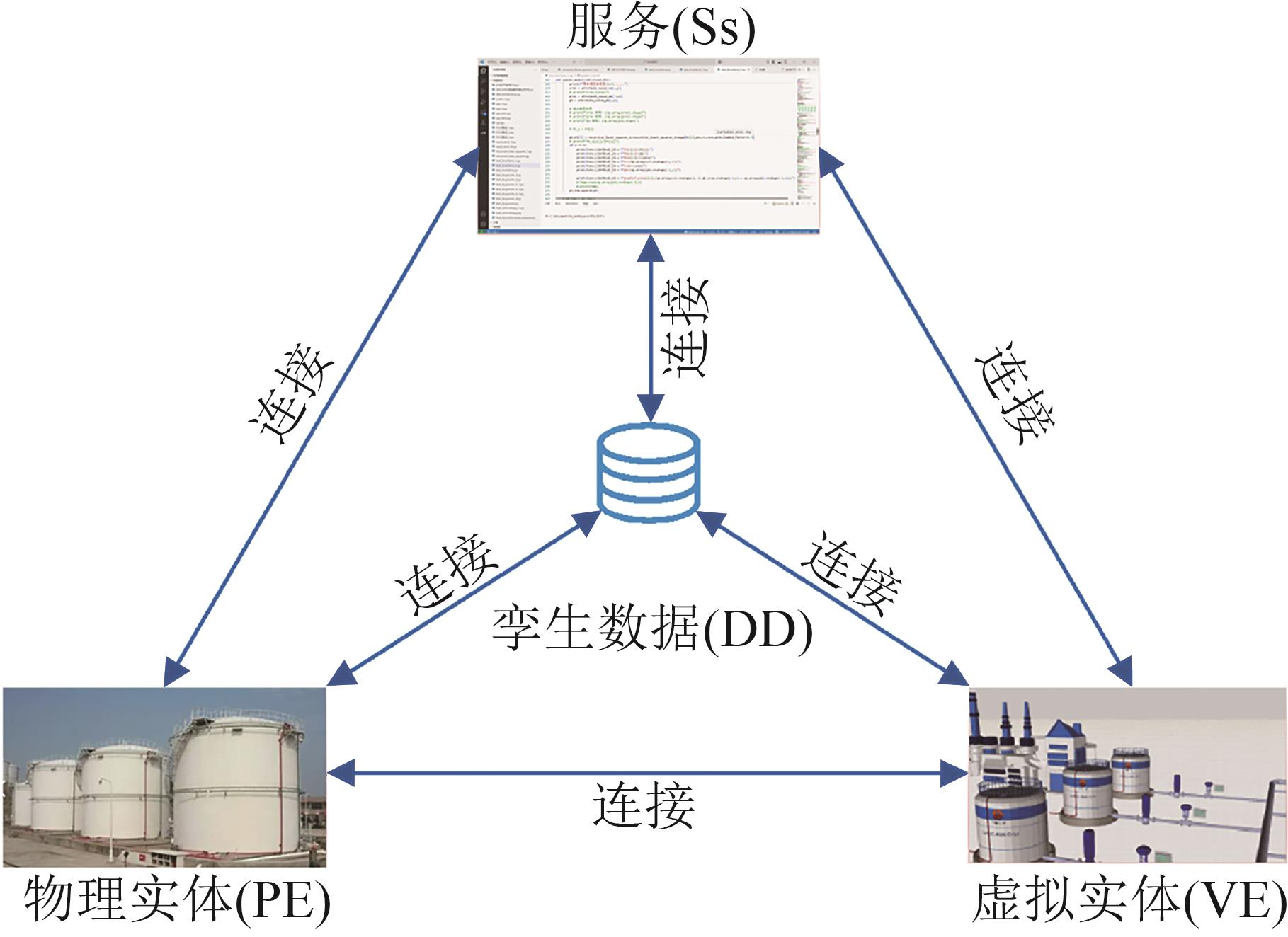
Fig. 2
Technical architecture of digital twin system
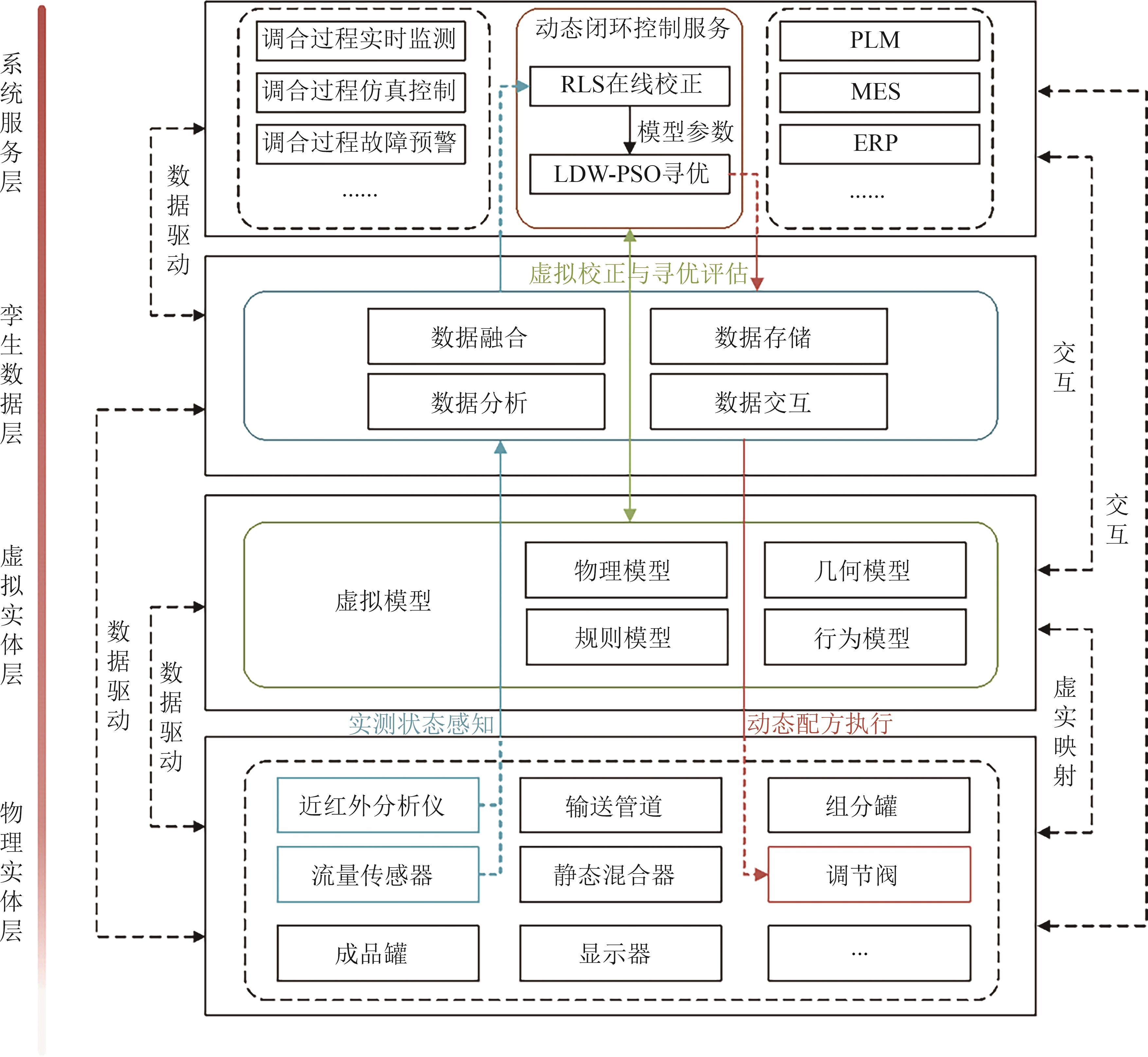
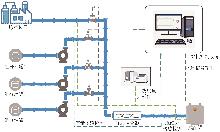
Fig. 3
Process flow of gasoline blending units
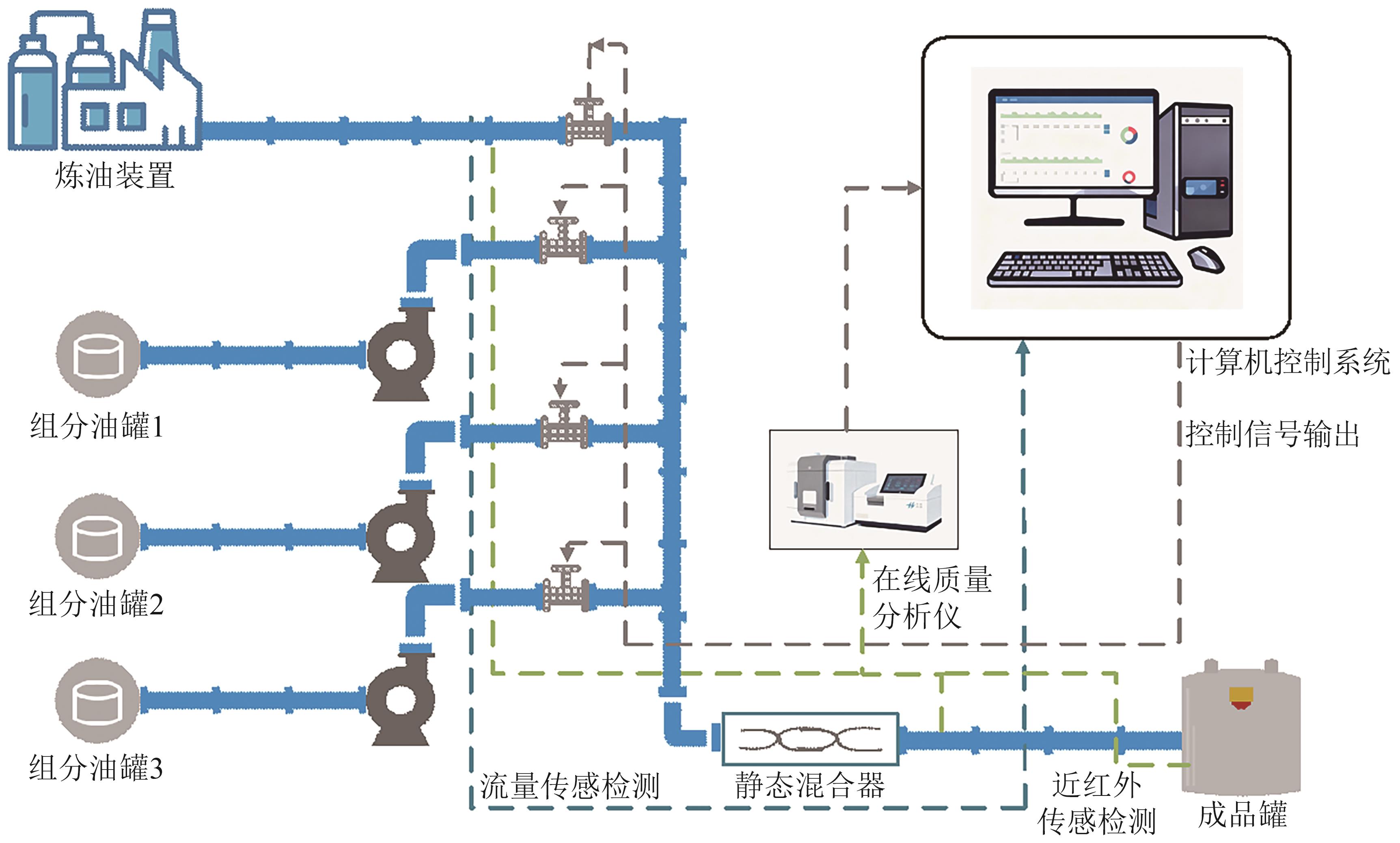
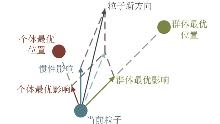
Fig. 4
Particle velocity direction
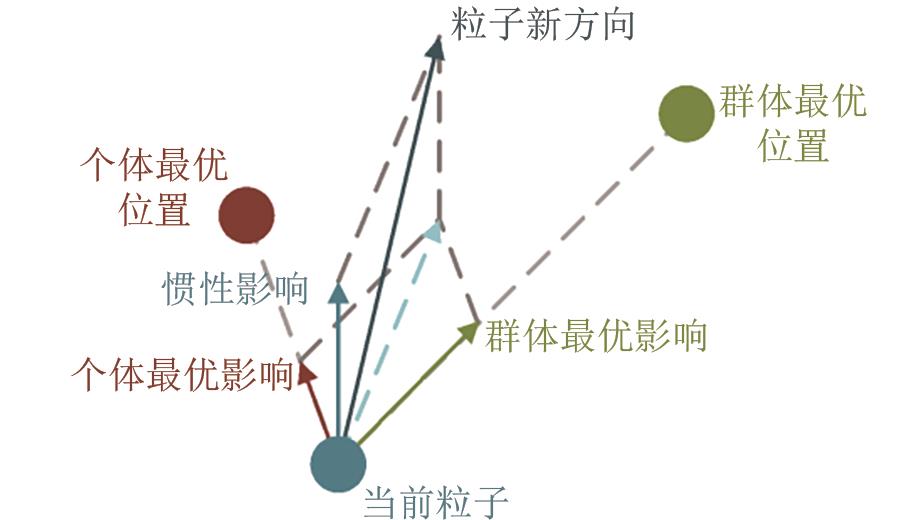
Fig. 5
Flowchart of LDW-PSO algorithm
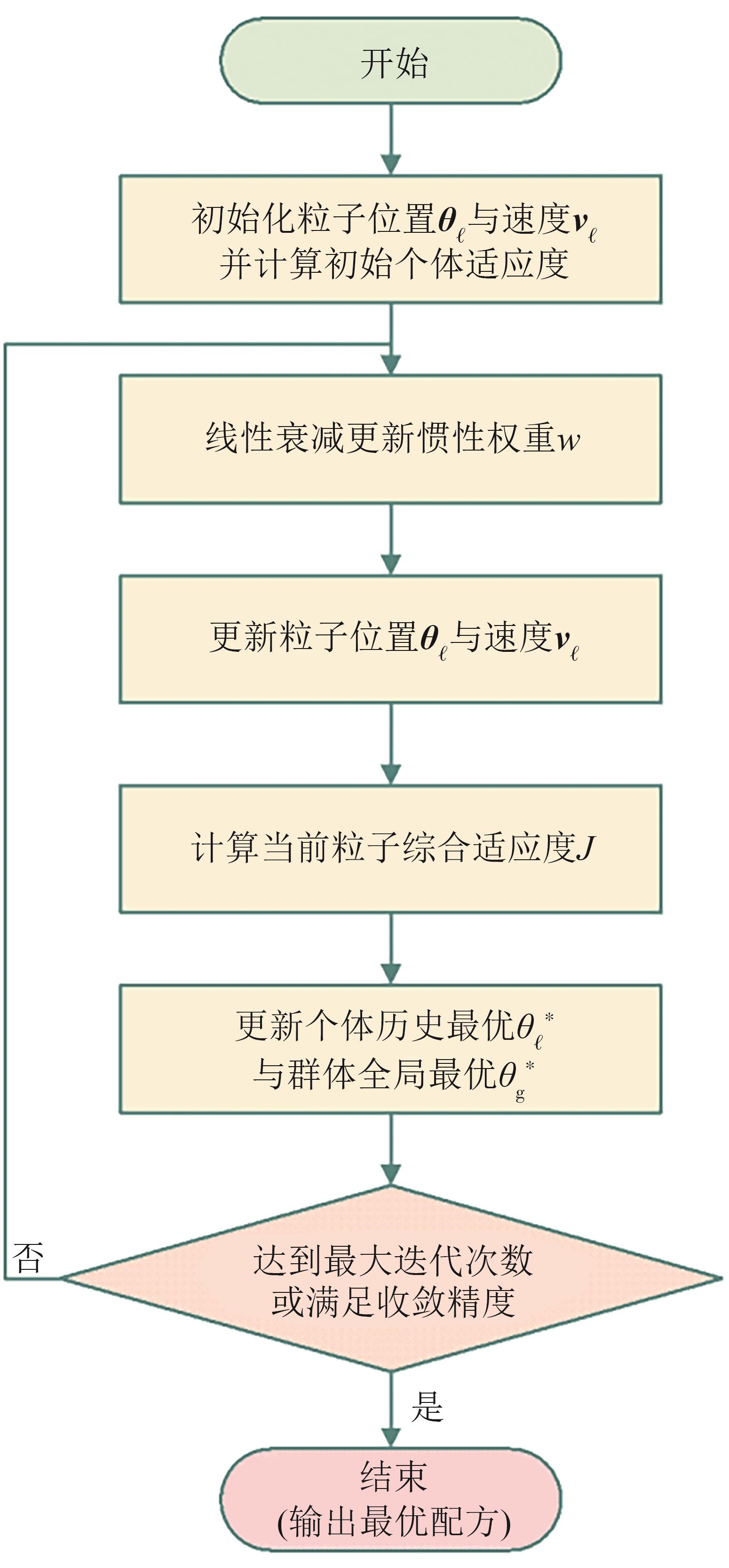

Table 1
Tool functions
| 工具名称 | 作用 |
|---|---|
| Blender | 构建储罐、管阀件及附属设施的精细三维网格模型,并进行材质渲染与纹理烘焙 |
| Visual Components | 导入几何模型并赋予运动逻辑与行为属性,搭建数字孪生场景 |
| InfluxDB | 针对调合过程高频写入、低延迟查询的特性,提供过程数据读写服务,存储调合工艺参数及算法中间变量 |
| KEPServerEX | OPC UA通信网关,消除底层设备与上层应用间的协议壁垒,实现工业协议的标准化转换 |
| Python | 算法与控制核心,通过多线程架构调度RLS模型更新与LDW-PSO配方优化算法,充当连接各异构模块的“数据胶水” |
| Aspen HYSYS | 物理实体代理/机理仿真,提供严谨的热力学计算引擎,模拟不同配方下的组分物性变化,在验证阶段替代真实的物理装置 |
Fig. 6
Building virtual models
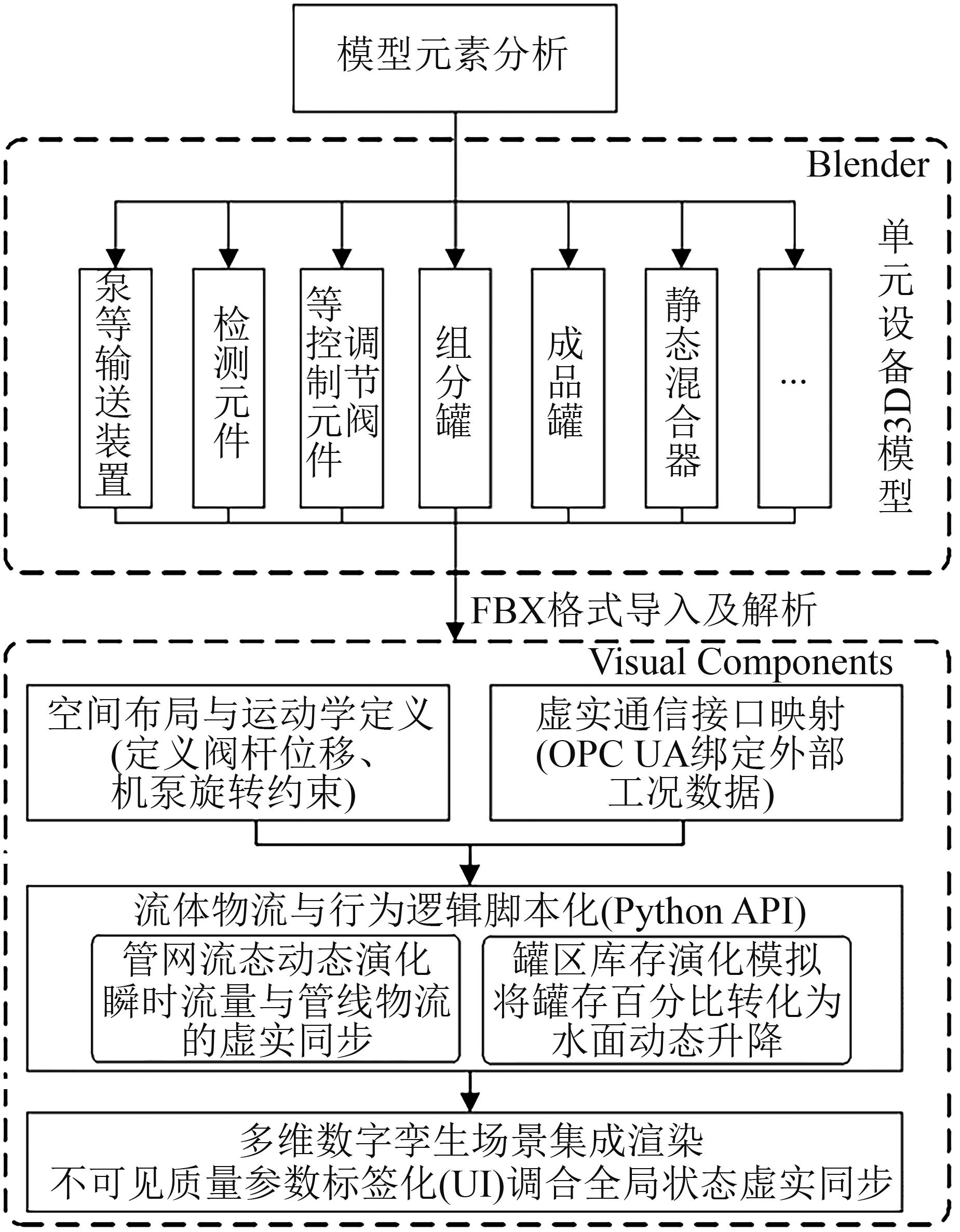
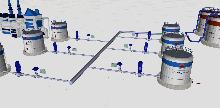
Fig. 7
Virtual model of gasoline blending units
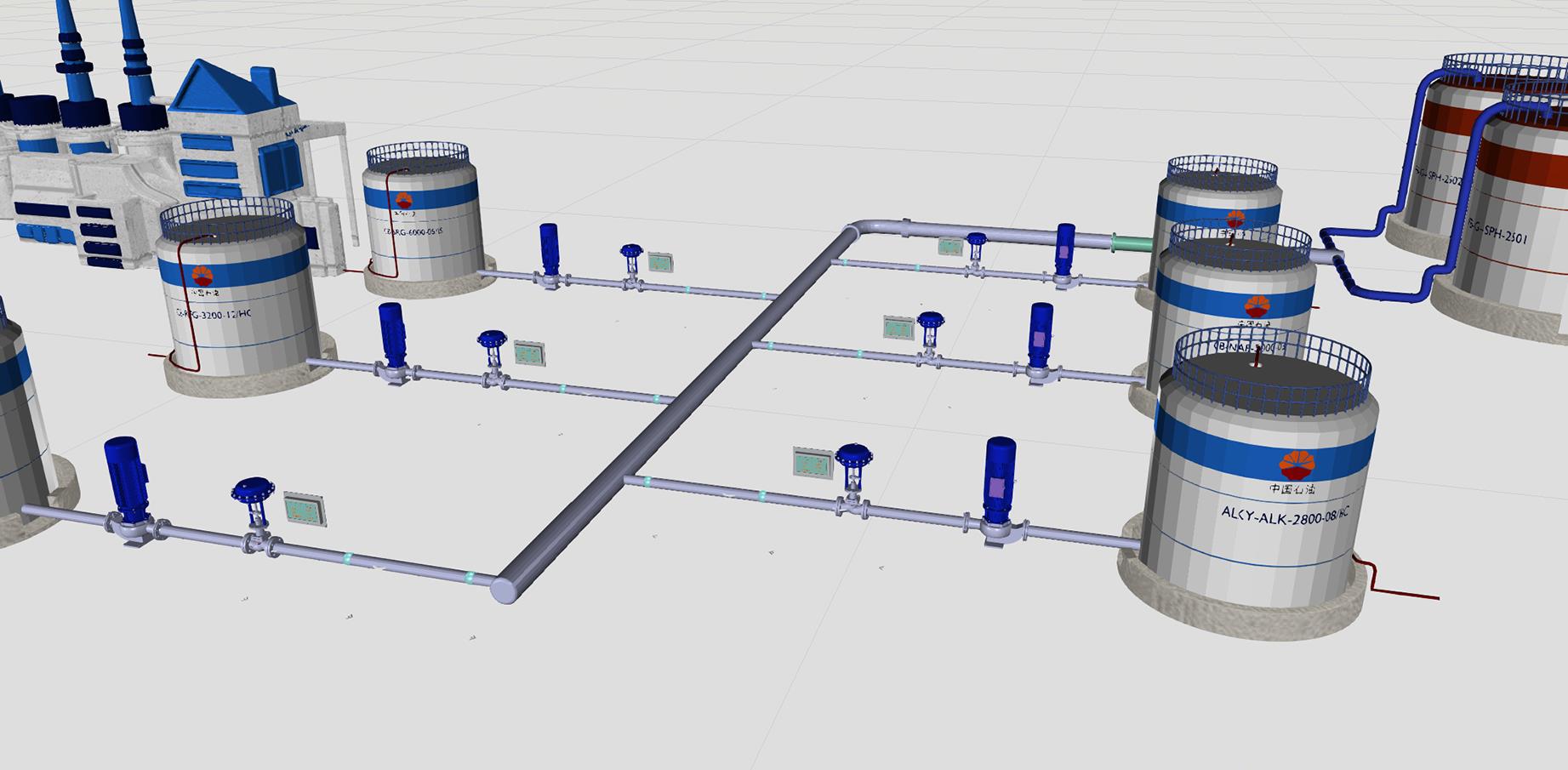
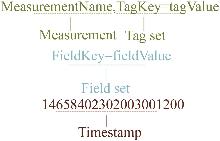
Fig. 8
InfluxDB line protocol structure
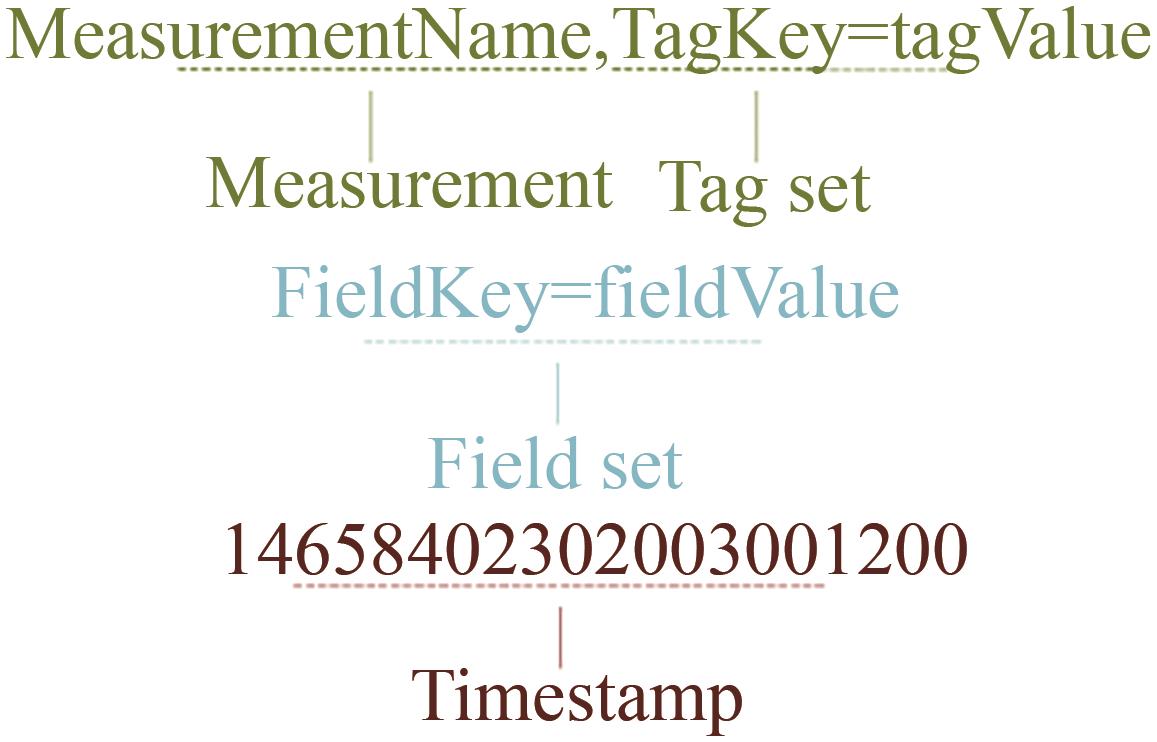
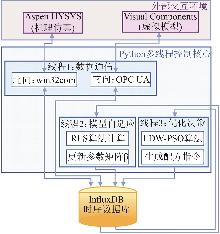
Fig. 9
Multi-threaded collaborative architecture of Python digital twin system
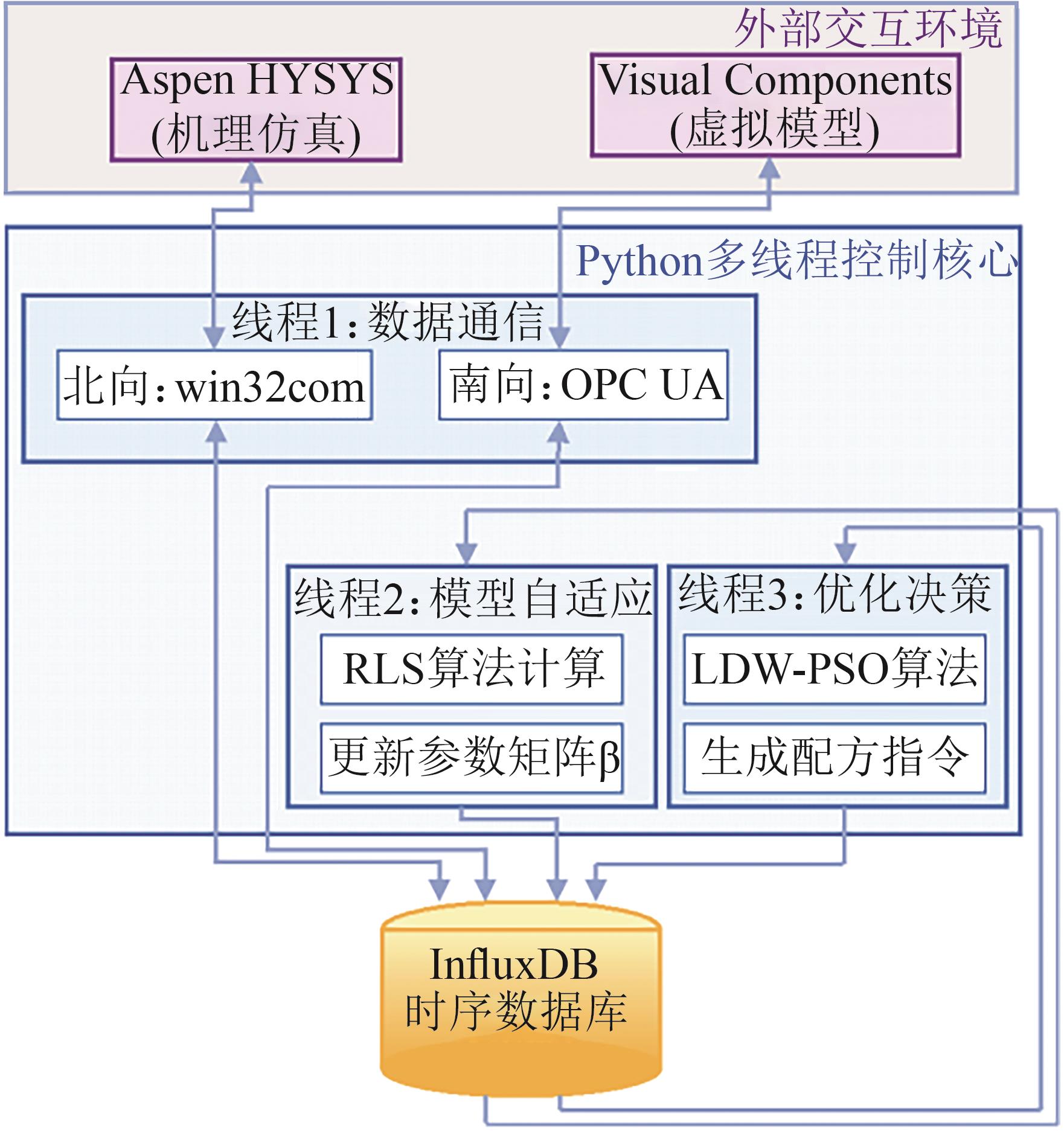
Table 2
Aspen HYSYS blending component library
| 序号 | Aspen HYSYS名称 | CAS编号 | 中文名称 |
|---|---|---|---|
| 1 | MTBE | 1634-04-4 | 甲基叔丁基醚 |
| 2 | p-Xylene | 106-42-3 | 二甲苯 |
| 3 | 24-Mpentane | 108-08-7 | 2,4-二甲基戊烷 |
| 4 | i-Pentane | 78-78-4 | 异戊烷 |
| 5 | Benzene | 71-43-2 | 苯 |
| 6 | 2-Eth-1-C5= | 3404-71-5 | 2-乙基-1 -戊烯 |
| 7 | 224-Mpentane | 540-84-1 | 异辛烷 |
| 8 | n-Octane | 111-65-9 | 正辛烷 |
| 9 | 3-Eth-1-C5= | 4038-04-4 | 1-戊烯 |
| 10 | n-Hexane | 110-54-3 | 正己烷 |
| 11 | n-Heptane | 142-82-5 | 正庚烷 |
| 12 | 2-Mpentane | 107-83-5 | 2-甲基戊烷 |
| 13 | n-Pentane | 109-66-0 | 正戊烷 |
| 14 | Cyclobutane | 287-23-0 | 环丁烷 |
| 15 | Toluene | 108-88-3 | 甲苯 |
| 16 | Thiophene | 110-02-1 | 噻吩 |
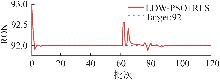
Fig. 10
Dynamic closed-loop tracking curves of RON under cold start and sudden disturbances
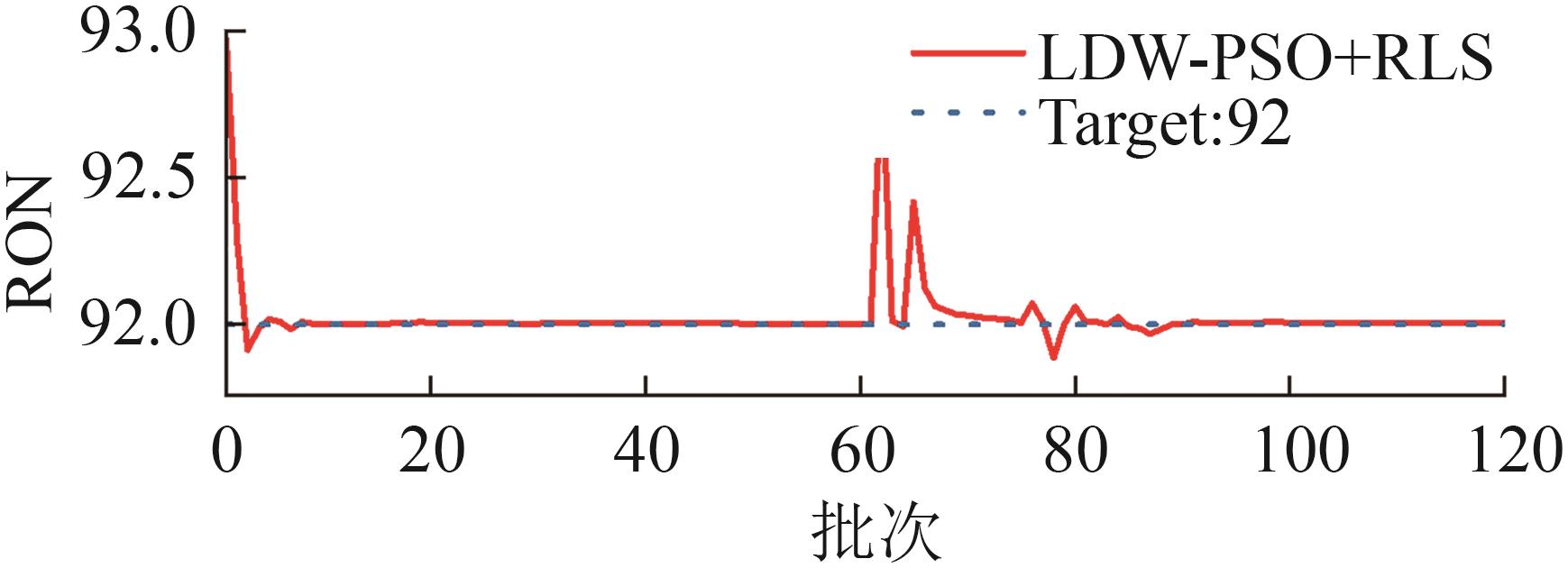
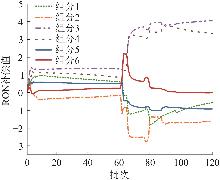
Fig. 11
Adaptive identification trajectories of RLS compensation parameters under cold start and sudden disturbances
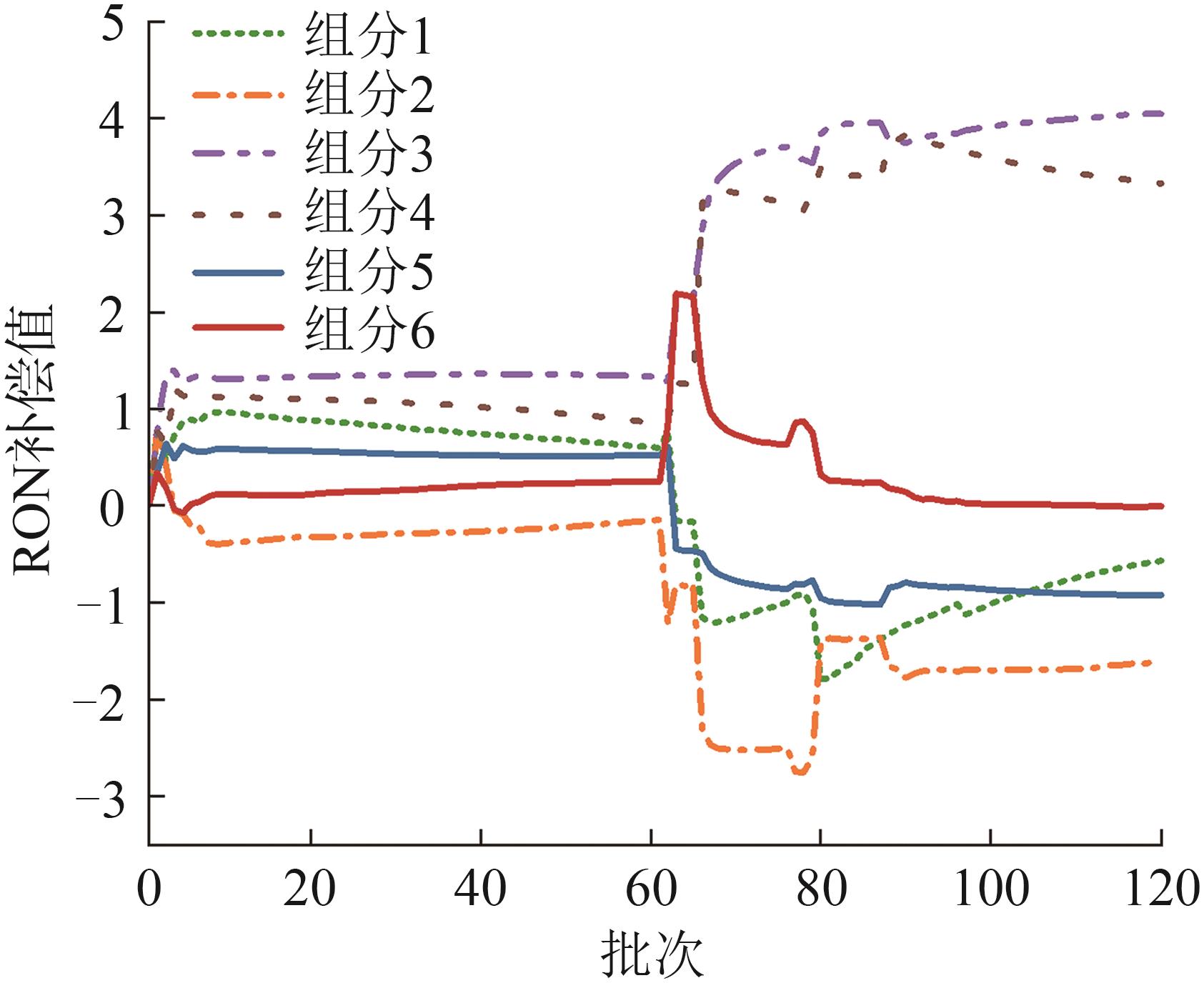
Table 3
Steady-state property statistics of finished gasoline
| 质量指标 | 国VIB约束界限 | 实际动态波动区间 | 运行轨迹均值 | 最大波动极差 |
|---|---|---|---|---|
| RON | ≥92 | [92.003 8, 92.005 7] | 92.004 5 | 0.001 9 |
| 蒸汽压/kPa | ≤70 | [69.995 9, 69.999 4] | 69.998 5 | 0.003 5 |
| 烯烃含量/% | ≤15 | [5.739 0, 6.041 8] | 5.921 1 | 0.302 8 |
| 芳烃含量/% | ≤35 | [34.397 8, 34.751 6] | 34.576 7 | 0.353 8 |
| 苯含量/% | ≤0.8 | [0.627 2, 0.640 9] | 0.635 17 | 0.013 7 |
| 氧含量/% | ≤2.7 | [0.271 5, 0.305 5] | 0.298 4 | 0.034 0 |
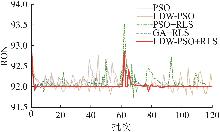
Fig. 12
Tracking performance comparison of multiple algorithms under dynamic disturbances
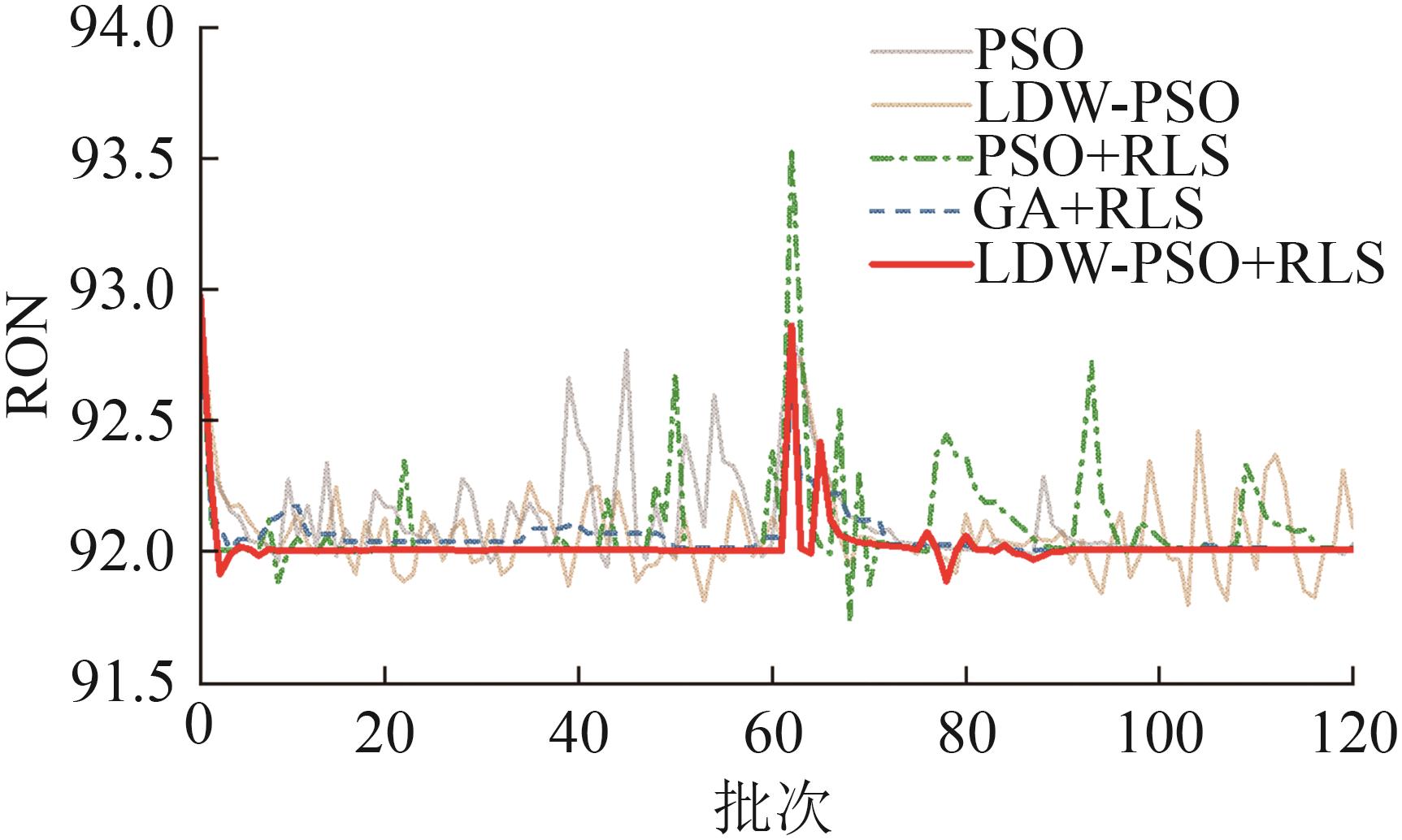
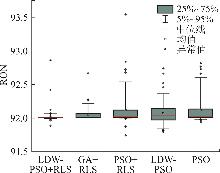
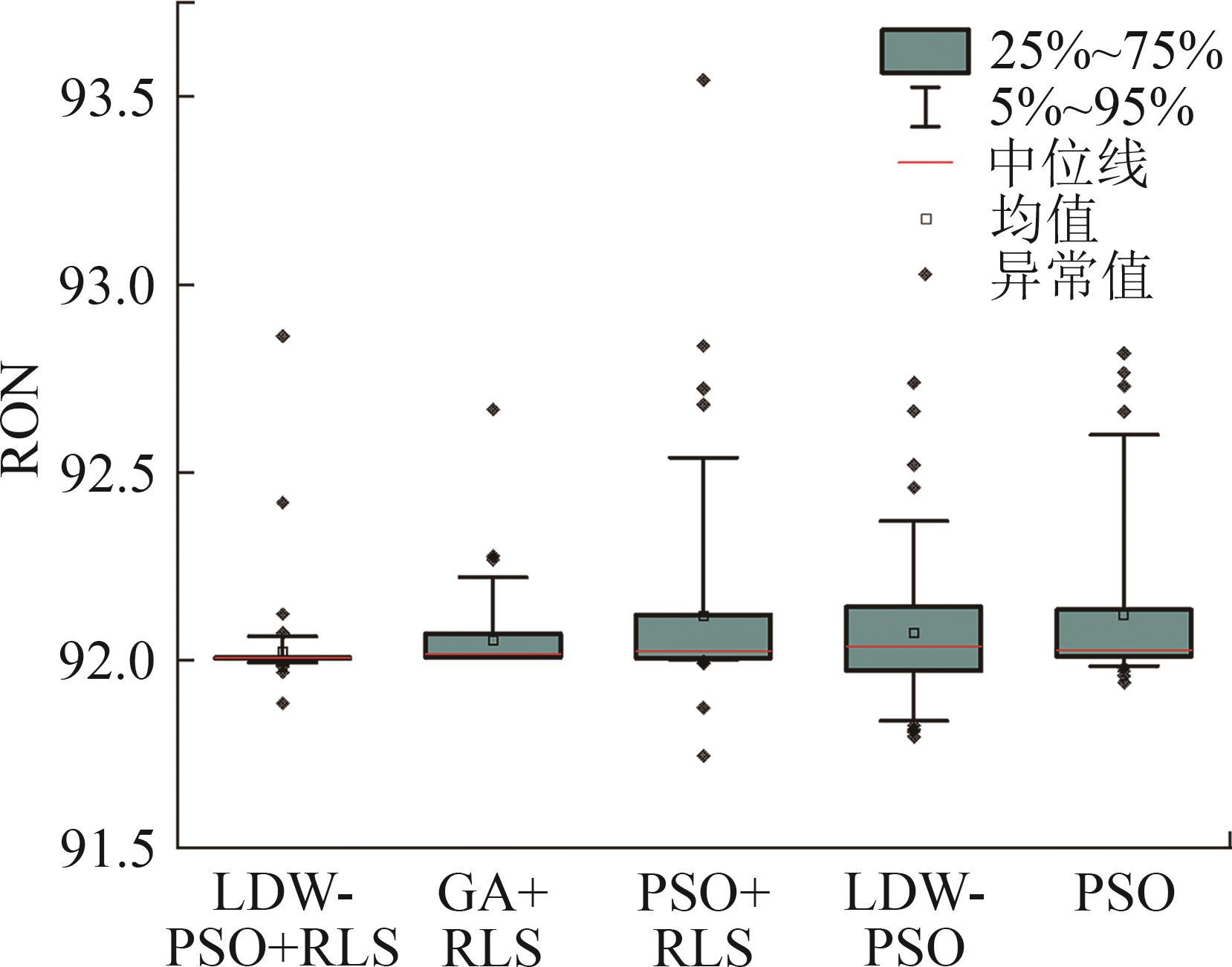
Fig. 13
Box plot statistics of RON control deviations for each algorithm after removing initial states
| [1] | 刘初春. 中国汽油质量再升级的必要性探讨[J]. 国际石油经济, 2021, 29(9): 53-57. |
| Liu Chuchun. Discussion on the Necessity of Gasoline Quality Re-upgrading[J]. International Petroleum Economics, 2021, 29(9): 53-57. | |
| [2] | 刘惠斌. 应对汽油质量升级的生产技术措施探讨[J]. 石油石化绿色低碳, 2024, 9(3): 78-82. |
| Liu Huibin. Exploration of Production Technology Measures for Dealing with Gasoline Quality Upgrade[J]. Green Petroleum & Petrochemicals, 2024, 9(3): 78-82. | |
| [3] | 史乃博, 马社忠. 浅谈当前炼化企业的油品调合工作[J]. 山东化工, 2023, 52(1): 154-156. |
| Shi Naibo, Ma Shezhong. A Brief Introduction to the Oil Blending Work of the Current Refining and Chemical Enterprises[J]. Shandong Chemical Industry, 2023, 52(1): 154-156. | |
| [4] | 张立博, 张蕾, 王雁君, 等. 汽油在线调合配方优化技术研究进展[J]. 石油化工, 2021, 50(8): 855-861. |
| Zhang Libo, Zhang Lei, Wang Yanjun, et al. Research Progress on Optimization Technology of Gasoline on-line Blending Formula[J]. Petrochemical Technology, 2021, 50(8): 855-861. | |
| [5] | Healy W C, Maassen C W, Peterson R T. A New Approach to Blending Octanes[C]//24th Meeting API Refining Division. New York: [s.n.], 1959: 132-136. |
| [6] | Twu C H, Coon J E. Predict Octane Numbers Using a Generalized Interaction Method[J]. Hydrocarbon Processing, 1996, 75(2): 51-58. |
| [7] | 程辉, 刘朝, 钱锋. 新的汽油调合辛烷值模型及其现场应用[J]. 计算机与应用化学, 2010, 27(10): 1317-1320. |
| Cheng Hui, Liu Zhao, Qian Feng. A Novel Octane Number Model for Gasoline Blending and Its Application[J]. Computers and Applied Chemistry, 2010, 27(10): 1317-1320. | |
| [8] | 何仁初, 陈海泉, 杨超文. 面向国Ⅵ标准的汽油调合优化技术探讨与分析[J]. 化工进展, 2018, 37(3): 962-969. |
| He Renchu, Chen Haiquan, Yang Chaowen. Discussion and Analysis on Optimization Technology of Gasoline Blending for Chinese National Standard Ⅵ[J]. Chemical Industry and Engineering Progress, 2018, 37(3): 962-969. | |
| [9] | Carreño Aguilera R, Yu Wen, Tovar Rodríguez J C, et al. Comparative Analysis on Nonlinear Models for RON Gasoline Blending Using Neural Networks[J]. Fractals, 2017, 25(6): 1750064. |
| [10] | 韦修喜, 陶道, 黄华娟. 改进果蝇算法优化BP神经网络预测汽油辛烷值[J]. 山东大学学报(工学版), 2023, 53(5): 20-28, 36. |
| Wei Xiuxi, Tao Dao, Huang Huajuan. Optimizing BP Neural Network to Predict Gasoline Octane Number by Improved Fruit Fly Algorithm[J]. Journal of Shandong University(Engineering Science), 2023, 53(5): 20-28, 36. | |
| [11] | Abdul Gani Abdul Jameel, Van Oudenhoven Vincent, Emwas Abdul-Hamid, et al. Predicting Octane Number Using Nuclear Magnetic Resonance Spectroscopy and Artificial Neural Networks[J]. Energy & Fuels, 2018, 32(5): 6309-6329. |
| [12] | Attaran M, Bilge Gokhan Celik. Digital Twin: Benefits, Use Cases, Challenges, and Opportunities[J]. Decision Analytics Journal, 2023, 6: 100165. |
| [13] | Grieves M, Vickers J. Digital Twin: Mitigating Unpredictable, Undesirable Emergent Behavior in Complex Systems[M]. Cham: Springer International Publishing, 2017: 85-113. |
| [14] | 陶飞, 刘蔚然, 张萌, 等. 数字孪生五维模型及十大领域应用[J]. 计算机集成制造系统, 2019, 25(1): 1-18. |
| Tao Fei, Liu Weiran, Zhang Meng, et al. Five-dimension Digital Twin Model and Its Ten Applications[J]. Computer Integrated Manufacturing Systems, 2019, 25(1): 1-18. | |
| [15] | 庄存波, 刘检华, 熊辉, 等. 产品数字孪生体的内涵、体系结构及其发展趋势[J]. 计算机集成制造系统, 2017, 23(4): 753-768. |
| Zhuang Cunbo, Liu Jianhua, Xiong Hui, et al. Connotation, Architecture and Trends of Product Digital Twin[J]. Computer Integrated Manufacturing Systems, 2017, 23(4): 753-768. | |
| [16] | 赵浩然, 刘检华, 熊辉, 等. 面向数字孪生车间的三维可视化实时监控方法[J]. 计算机集成制造系统, 2019, 25(6): 1432-1443. |
| Zhao Haoran, Liu Jianhua, Xiong Hui, et al. 3D Visualization Real-time Monitoring Method for Digital Twin Workshop[J]. Computer Integrated Manufacturing Systems, 2019, 25(6): 1432-1443. | |
| [17] | 胡春宏, 郭庆超, 张磊, 等. 数字孪生流域模型研发若干问题思考[J]. 中国水利, 2022(20): 7-10. |
| Hu Chunhong, Guo Qingchao, Zhang Lei, et al. Thinking on Some Problems in the Development of Professional Models for Digital Twin Basins[J]. China Water Resources, 2022(20): 7-10. | |
| [18] | Dominguez-Gomez Paula, Zingaro Alberto, Baldo-Canut Laura, et al. Fast and Accurate Prediction of Drug Induced Proarrhythmic Risk with Sex Specific Cardiac Emulators[J]. NPJ Digital Medicine, 2024, 7(1): 380. |
| [19] | Zhang He, Cao Yang, Jiang Haibo, et al. The Present and Future of Digital Health, Digital Medicine, and Digital Therapeutics for Allergic Diseases[J]. Clinical and Translational Allergy, 2025, 15(1): e70020. |
| [20] | Waight M C, Prakosa A, Li A C, et al. Personalized Heart Digital Twins Detect Substrate Abnormalities in Scar-dependent Ventricular Tachycardia[J]. Circulation, 2025, 151(8): 521-533. |
| [21] | 杨传书. 数字孪生技术在钻井领域的应用探索[J]. 石油钻探技术, 2022, 50(3): 10-16. |
| Yang Chuanshu. Exploration for the Application of Digital Twin Technology in Drilling Engineering[J]. Petroleum Drilling Techniques, 2022, 50(3): 10-16. | |
| [22] | 张好林, 杨传书, 李昌盛, 等. 钻井数字孪生系统设计与研发实践[J]. 石油钻探技术, 2023, 51(3): 58-65. |
| Zhang Haolin, Yang Chuanshu, Li Changsheng, et al. Design and Research Practice of a Drilling Digital Twin System[J]. Petroleum Drilling Techniques, 2023, 51(3): 58-65. | |
| [23] | Shirangi M G, Aragall Roger, Osgouei R E, et al. Development of Digital Twins for Drilling Fluids: Local Velocities for Hole Cleaning and Rheology Monitoring[J]. Journal of Energy Resources Technology, 2022, 144(12): 123003. |
| [24] | Shen Fei, Ren Shuangshuang, Zhang Xiangyang, et al. A Digital Twin-based Approach for Optimization and Prediction of Oil and Gas Production[J]. Mathematical Problems in Engineering, 2021, 2021(1): 3062841. |
| [25] | Hu Shaolin, Wang Shihua, Su Naiquan, et al. Digital Twin Based Reference Architecture for Petrochemical Monitoring and Fault Diagnosis[J]. Oil & Gas Science and Technology, 2021, 76: 9. |
| [26] | Ren Hongji, Dai Zongxian, Chen Jiexue, et al. Natural Gas Triethylene Glycol Dehydration Equipment Digital Twin and Condition Evaluation Application[J]. IEEE Transactions on Industrial Informatics, 2024, 20(10): 12147-12156. |
| [27] | 索寒生, 贾梦达, 宋光, 等. 数字孪生技术助力石化智能工厂[J]. 化工进展, 2023, 42(7): 3365-3373. |
| Suo Hansheng, Jia Mengda, Song Guang, et al. Digital Twin-driving Force for Petrochemical Smart Factory[J]. Chemical Industry and Engineering Progress, 2023, 42(7): 3365-3373. | |
| [28] | Pratyush Kumar Pal, Hens Abhiram, Behera Narottam, et al. Digital Twins: Transforming the Chemical Process Industry——A Review[J]. The Canadian Journal of Chemical Engineering, 2025, 103(8): 3611-3636. |
| [29] | Zhan Hanzhang, Hwang Bon-Gang, Krishnankutty Pramesh. Embracing Digital Transformation for Sustainable Development: Barriers to Adopting Digital Twin in Asset Management Within Singapore's Energy and Chemicals Industry[J]. Sustainable Development, 2025, 33(2): 2864-2887. |
| [30] | Edwin Benito Mitacc Meza, Dalton Garcia Borges de Souza, Copetti Alessandro, et al. Tools, Technologies and Frameworks for Digital Twins in the Oil and Gas Industry: An in-depth Analysis[J]. Sensors, 2024, 24(19): 6457. |
| [31] | Hamidishad Nayereh, Rafael Silverio Barbosa, Allahyarzadeh-Bidgoli Ali, et al. Digital Twin Frameworks for Oil and Gas Processing Plants: A Comprehensive Literature Review[J]. Processes, 2025, 13(11): 3488. |
| [32] | Mane Samruddhi, Dhote Ritesh R, Sinha Adityakumar, et al. Digital Twin in the Chemical Industry: A Review[J]. Digital Twins and Applications, 2024, 1(2): 118-130. |
| [33] | Jia Jinyang, Wang Xuetao, Xu Yang, et al. Digital Twin Technology and Ergonomics for Comprehensive Improvement of Safety in the Petrochemical Industry[J]. Process Safety Progress, 2024, 43(3): 507-522. |
| [34] | Wang Jinjiang, Niu Xiaotong, Gao R X, et al. Digital Twin-driven Virtual Commissioning of Machine Tool[J]. Robotics and Computer-Integrated Manufacturing, 2023, 81: 102499. |
| [35] | 苗健, 罗建平, 张卫东, 等. 基于辛烷值调合效应模型的在线更新方法及其应用[J]. 华东理工大学学报(自然科学版), 2014, 40(3): 327-331. |
| Miao Jian, Luo Jianping, Zhang Weidong, et al. Online Update Method of Octane Number Based on the Blending Effect Octane Model and Its Application[J]. Journal of East China University of Science and Technology(Natural Science Edition), 2014, 40(3): 327-331. | |
| [36] | Shi Y, Eberhart R. A Modified Particle Swarm Optimizer[C]//1998 IEEE International Conference on Evolutionary Computation. Piscataway: IEEE, 1998: 69-73. |
| [1] | Jiang Xiaomo, Meng Jigang, Hui Huaiyu, Meng Wenqing, Yang Haibin, Chen Huize. Research of Data-model Integrated Digital Twin-based Health Intelligent Monitoring for Multi-stage Centrifugal Compressors [J]. Journal of System Simulation, 2026, 38(9): 2696-2710. |
| [2] | Mei Zaiwu, Zhou Jiangman, Zhang Cong, Gao Yiping, Zhu Zerun. Robotic Digital Twin Modeling Method Integrating MBSE and Modelica [J]. Journal of System Simulation, 2026, 38(9): 2725-2738. |
| [3] | Liu Ya, Zhang Zhaoyun, An Cheng, Zheng Canguang. Research on Safety Monitoring System for Digital Twin Fully Mechanized Mining Face in Thin Coal Seams [J]. Journal of System Simulation, 2026, 38(7): 1922-1934. |
| [4] | Qin Lang, Xie Jiacheng, Qiao Xiaojun, Wang Xuewen, Xiao Zhijie. Robot Trajectory Planning and Adjustment Method for Abnormal Pose of Actuator [J]. Journal of System Simulation, 2026, 38(5): 1466-1483. |
| [5] | Nan Yandong, Zhu Jinda, Lu Xinbin, Qin Zhiying, Qi Dandan, Ding Zhiheng. State Monitoring of Nuclear Power Connection Sleeve Quality Inspection Equipment Driven by Digital Twin [J]. Journal of System Simulation, 2026, 38(4): 1004-1017. |
| [6] | Yan Dong, Yang Hanzhe, Jiang Fangfang, Liu Chengbao, Zhang Peng. Design and Application of Collaborative Simulation System for Satellite Constellation Flight Missions [J]. Journal of System Simulation, 2026, 38(4): 1067-1079. |
| [7] | Wang Ziying, Sun Congjun, Li Guihu, Zhang Tianhao. Virtual Train Operation Platform Based on Digital Twin [J]. Journal of System Simulation, 2026, 38(3): 736-745. |
| [8] | Lai He, Yang Jinquan, Peng Cong, Li Bei. High-fidelity Dynamic Digital Twin Modeling Method for Permanent Magnet Synchronous Motor [J]. Journal of System Simulation, 2026, 38(10): 2786-2801. |
| [9] | Lu Houjun, Zhu Yifei, Rong Yanping, Zhang Wanghui. Digital Twin Modeling Method for Bulk Cargo Stacks Based on 2D LiDAR [J]. Journal of System Simulation, 2025, 37(9): 2269-2286. |
| [10] | Liu Yongkui, Yang Kang, Tuo Benben, Pan Yaduo, Wang Xinyu, Wang Yihan, Gong Yongqian, Zhang Lin, Wang Lihui, Lin Tingyu, Zi Bin, Li Yuan, You Wei, Xu Xun. Digital Twinned Industrial Robot: Conceptual Framework, Key Technologies, and Case Study [J]. Journal of System Simulation, 2025, 37(7): 1723-1752. |
| [11] | Liu Tao, Li Hanxi, Yin Yong, Liu Jialun. Research Review of Intelligent Navigation Simulation Technology and Its Applications [J]. Journal of System Simulation, 2025, 37(7): 1684-1709. |
| [12] | Chen Qinghua, Liang Zuoyou, Guan Weijuan, Ji Jiadong, Liu Ping. Construction Method of Digital Twin System for High-low Temperature Test Chamber [J]. Journal of System Simulation, 2025, 37(6): 1400-1411. |
| [13] | Zhang Wenjia, Zhang Heming. Research on Grey-box Modeling Method of Digital Twins for Cantilever Structure [J]. Journal of System Simulation, 2025, 37(5): 1158-1168. |
| [14] | Zhang Huimai, Hu Xiaoya, Zhou Chunjie. Digital Twin Framework for the Generation and Optimization of Security Policies for TSN Industrial Control Systems [J]. Journal of System Simulation, 2025, 37(4): 861-874. |
| [15] | Jiang Lun, Wang Dajiang, Sun Wenlei, Bao Shenghui, Liu Han, Chang Saike. Research on Transformer Fault Diagnosis Method Based on Digital Twin [J]. Journal of System Simulation, 2025, 37(3): 775-790. |
| Viewed | ||||||
|
Full text |
|
|||||
|
Abstract |
|
|||||
 http://www.china-simulation.com

