

Journal of System Simulation ›› 2026, Vol. 38 ›› Issue (10): 2786-2801.doi: 10.16182/j.issn1004731x.joss.26-0347
• Simulation Modeling and Digital Twin Technology • Previous Articles Next Articles
Lai He, Yang Jinquan, Peng Cong, Li Bei
Received:2026-04-20
Revised:2026-07-01
Online:2026-10-31
Published:2026-10-20
Contact:
Peng Cong
CLC Number:
Lai He, Yang Jinquan, Peng Cong, Li Bei. High-fidelity Dynamic Digital Twin Modeling Method for Permanent Magnet Synchronous Motor[J]. Journal of System Simulation, 2026, 38(10): 2786-2801.
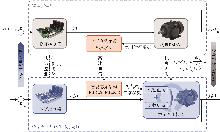
Fig. 1
PMSM digital twin system architecture
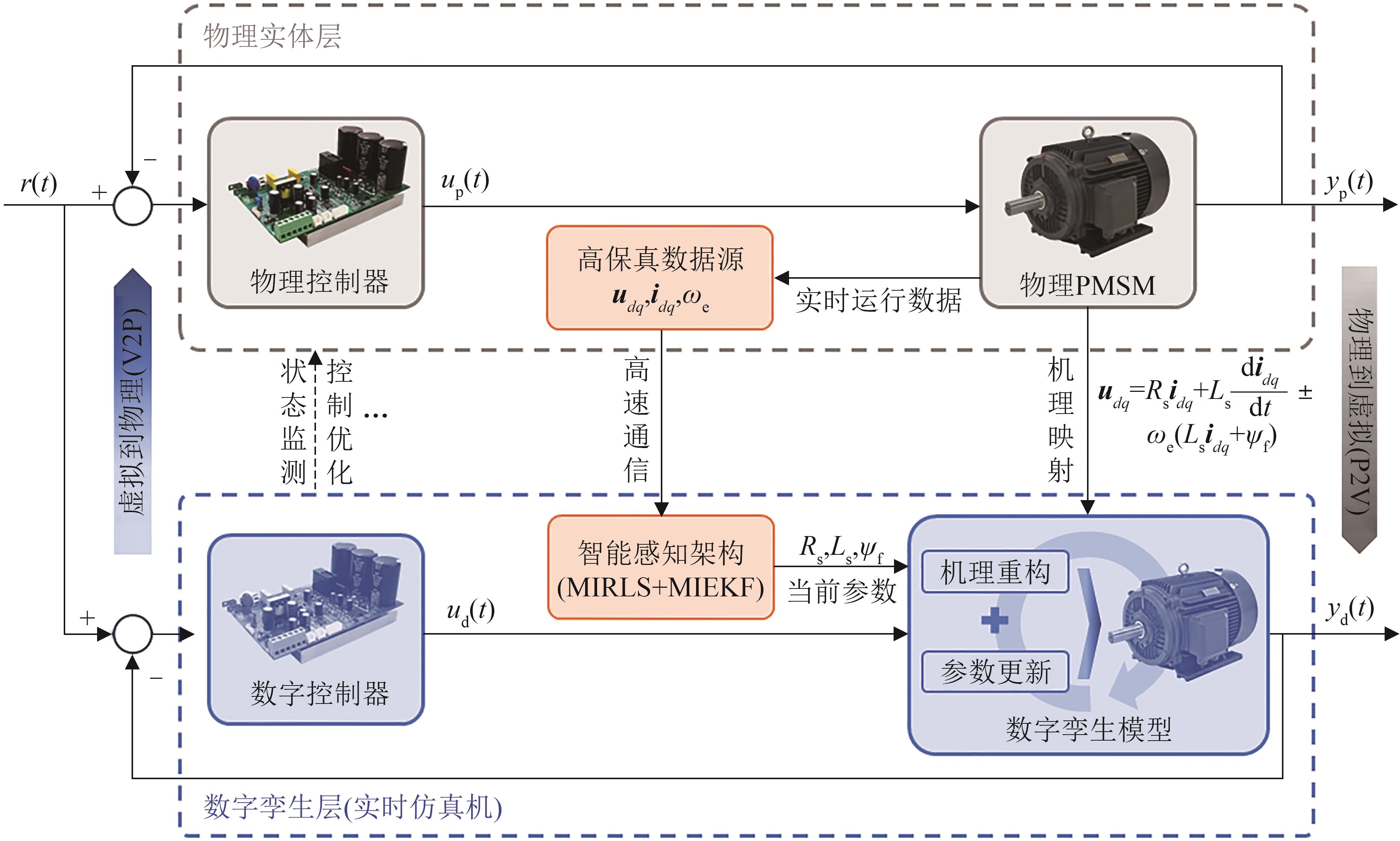
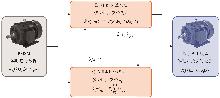
Fig. 2
MIRLS-MIEKF distributed cascaded intelligent sensing architecture
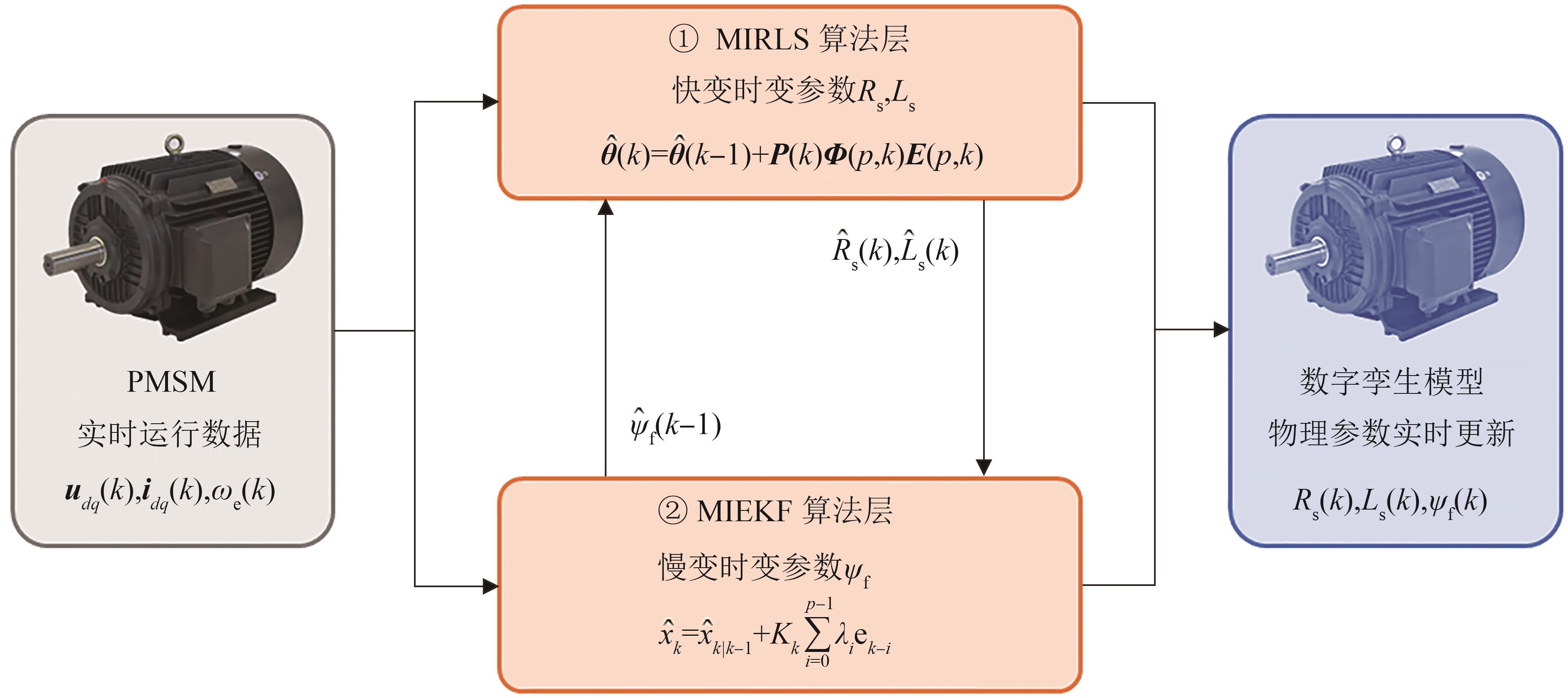
Fig. 3
Convergence results of algorithm under initial parameter mismatch
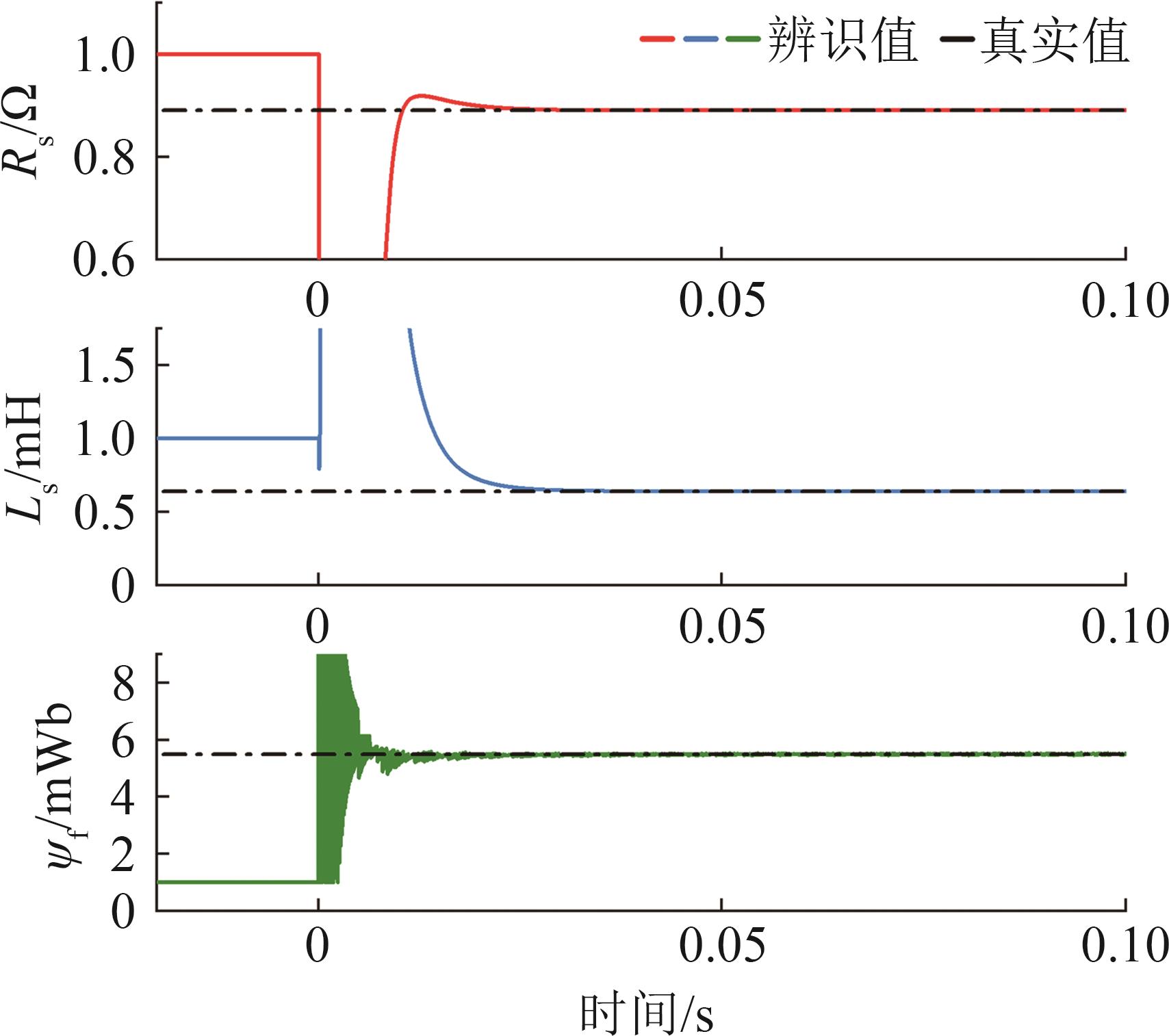
Fig. 4
Dynamic tracking results under temperature rise and magnetic circuit saturation effect
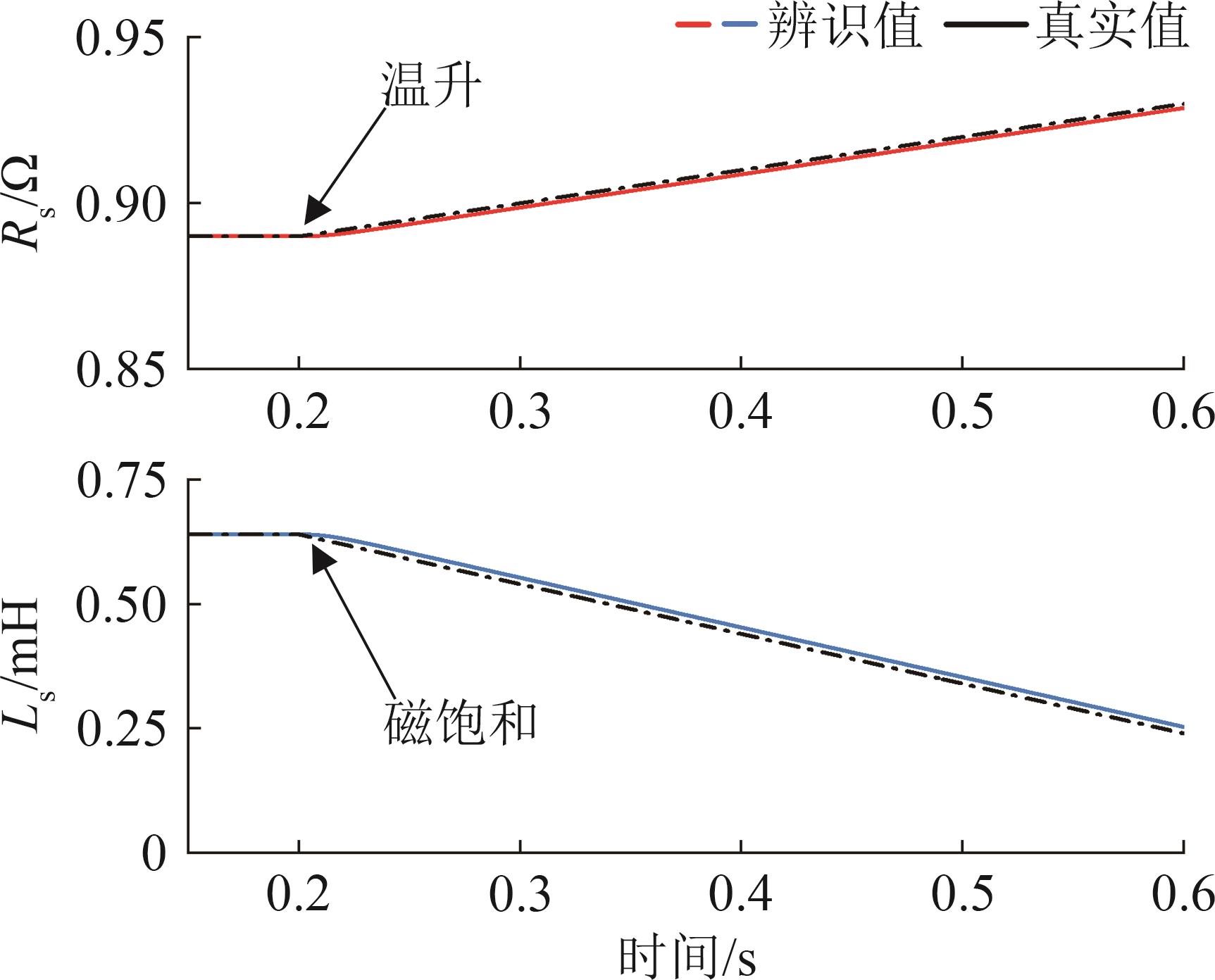
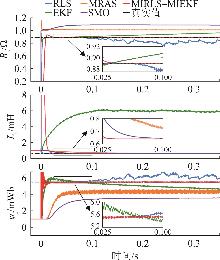
Fig. 5
Performance comparison of multiple algorithms
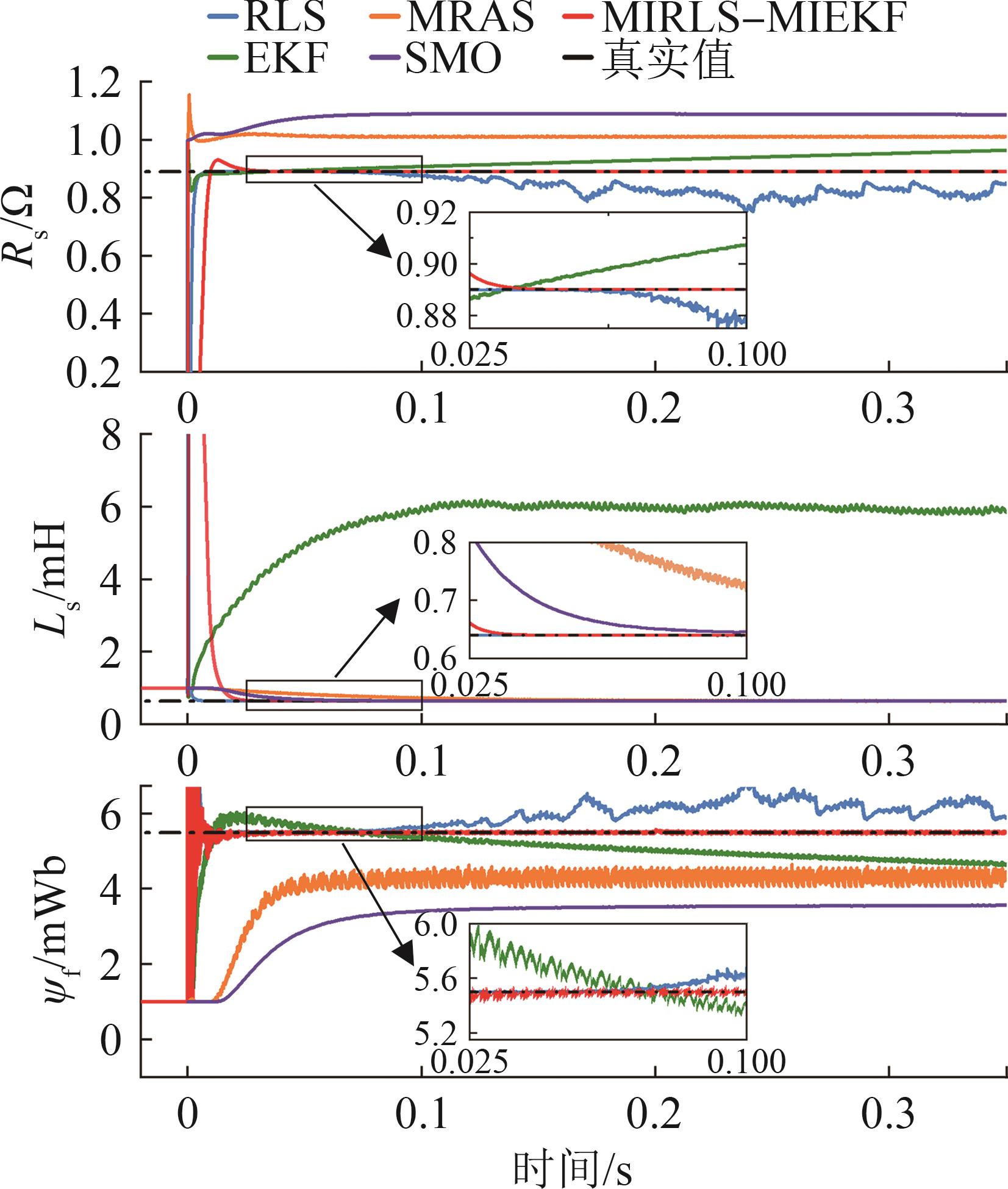

Table 1
Measured values of each algorithm at steady state of motor
| 方法 | Rs/Ω | Ls/mH | ψf/mWb |
|---|---|---|---|
| 真实值 | 0.890 | 0.640 0 | 5.500 |
| MIRLS-MIEKF | 0.889 | 0.640 4 | 5.523 |
| RLS | 0.810 | 0.638 7 | 6.287 |
| EKF | 1.021 | 0.589 0 | 4.096 |
| MRAS | 1.011 | 0.639 3 | 4.350 |
| SMO | 1.081 | 0.643 6 | 3.605 |
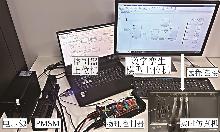
Fig. 6
PMSM semi-physical coupled drive experiment platform
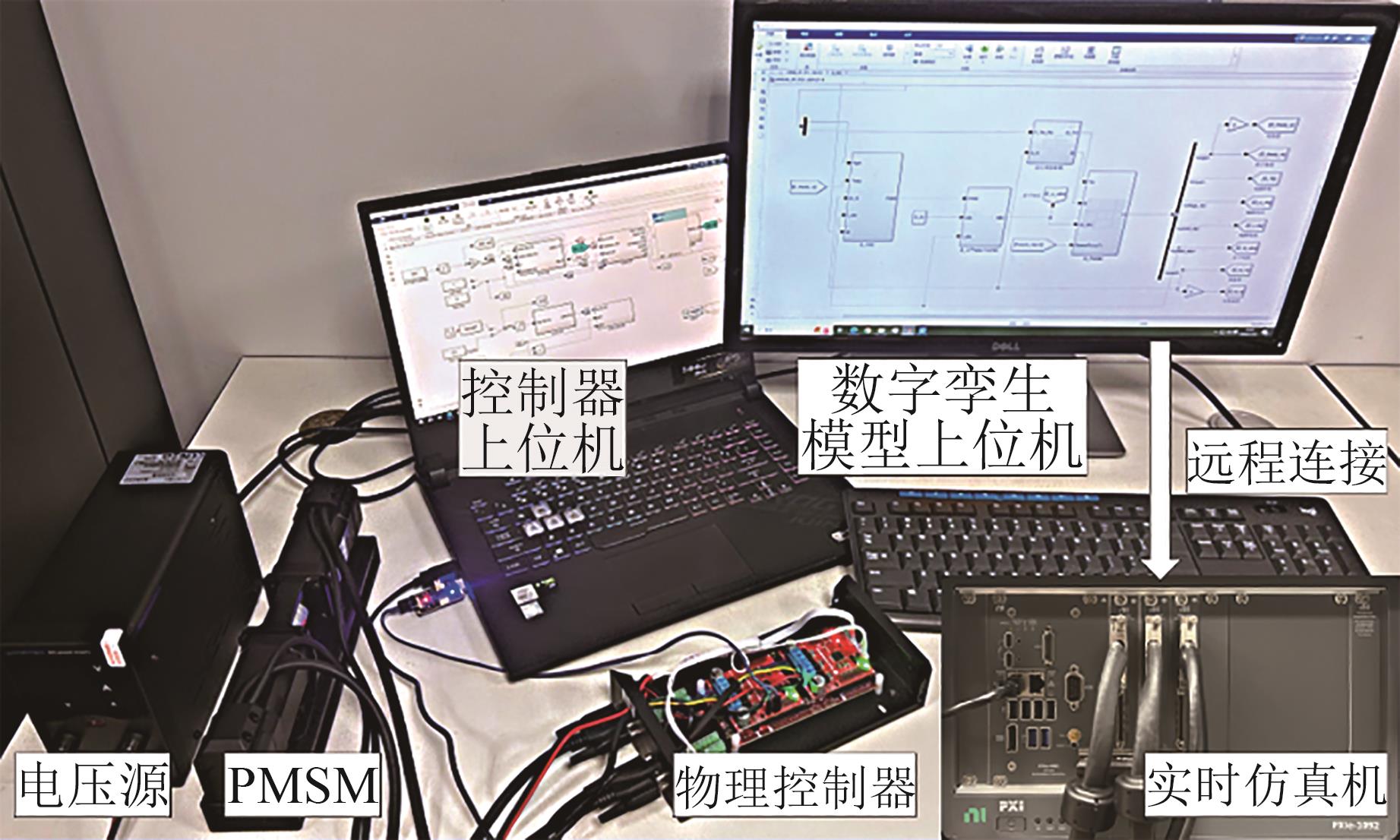
Table 2
Nominal parameters of experimental platform
| 参数 | 标称值 |
|---|---|
| 极对数p | 4 |
| 额定电压U/V | 24 |
| 额定电流I/A | 4 |
| 额定功率P/W | 64 |
| 额定转速ω/(r/min) | 3×10³ |
| 转矩系数Kt/(N·m/A) | 5.9×10⁻² |
| 额定转矩T/(N·m) | 0.2 |
| 转动惯量J/(kg·cm2) | 2.8×10⁻² |
| 阻尼系数B/(N⋅m⋅s/rad) | 3.5×10⁻⁴ |
Fig. 7
Experiment platform composition
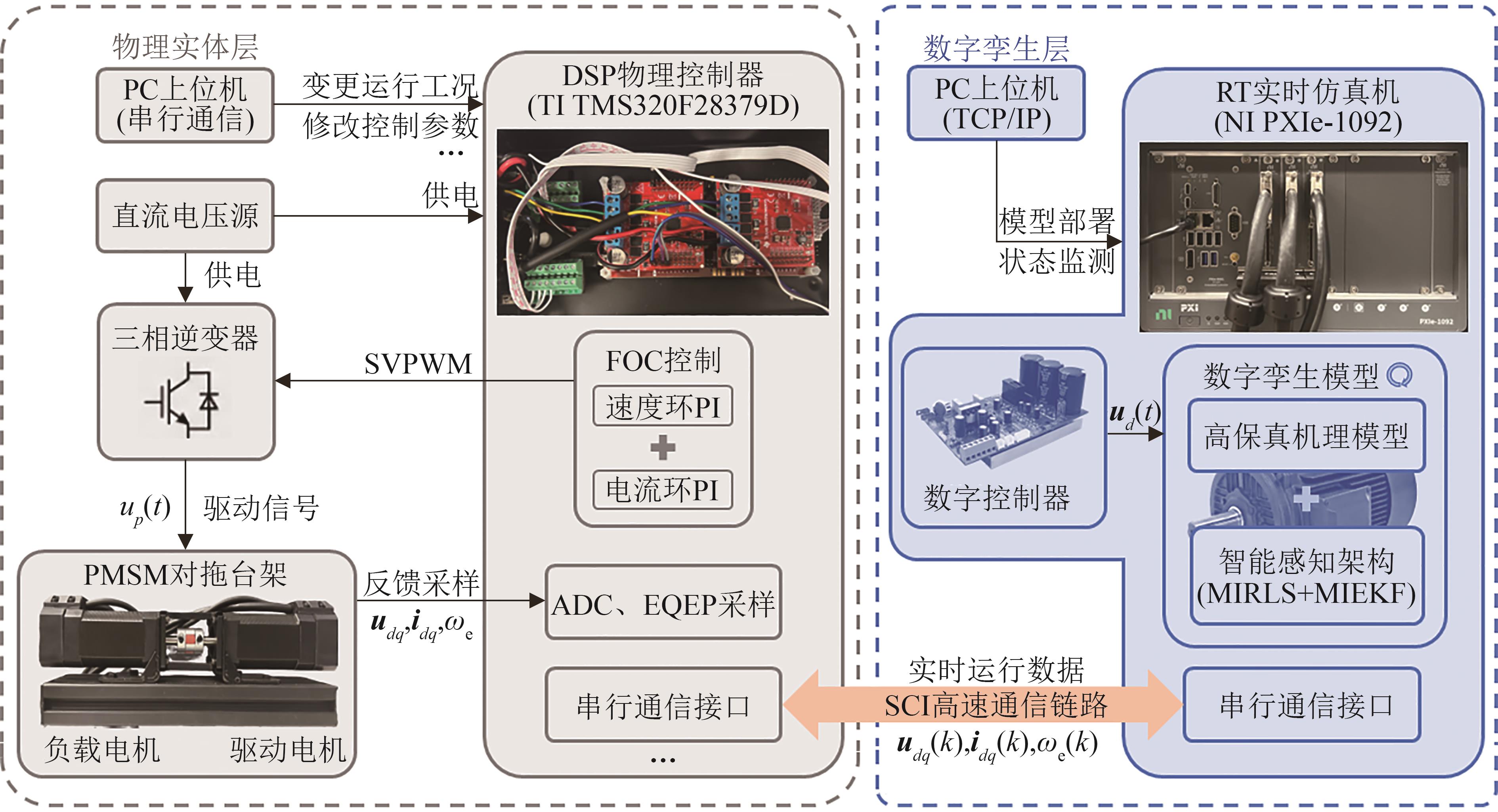
Table 3
Real-time data of experimental platform
| 性能指标 | 数值 |
|---|---|
| 实时系统仿真步长/μs | 100 |
| 架构单次迭代耗时/μs | 16 |
| 平台单步实际耗时/μs | 49.09 |
| 最大支持采样频率/kHz | 20.37 |
Fig. 8
Performance comparison of mapping under sudden load increase and decrease
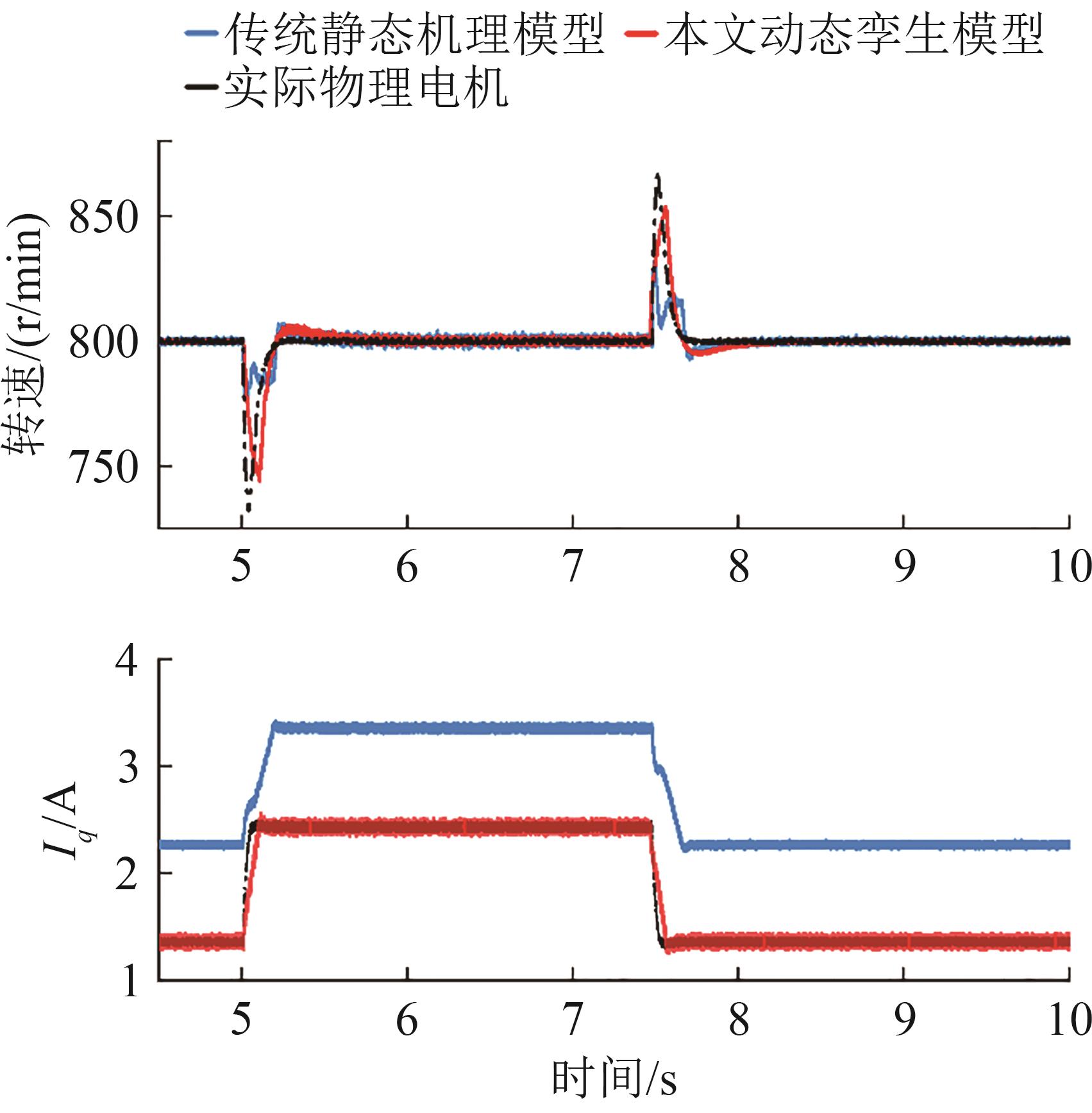
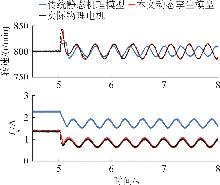
Fig. 9
Performance comparison of mapping under sinusoidal load condition
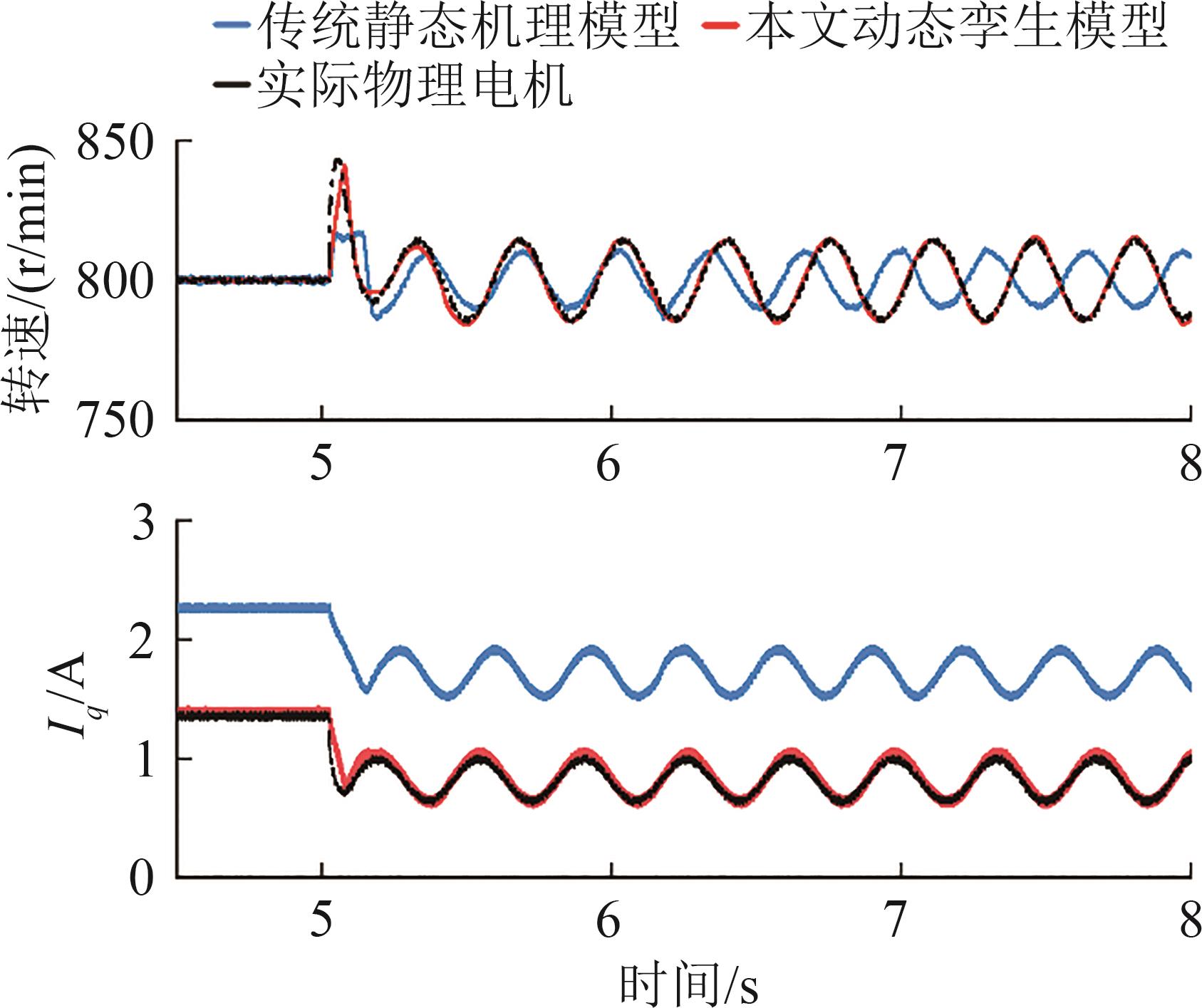
Fig. 10
Measured friction losses under no-load condition
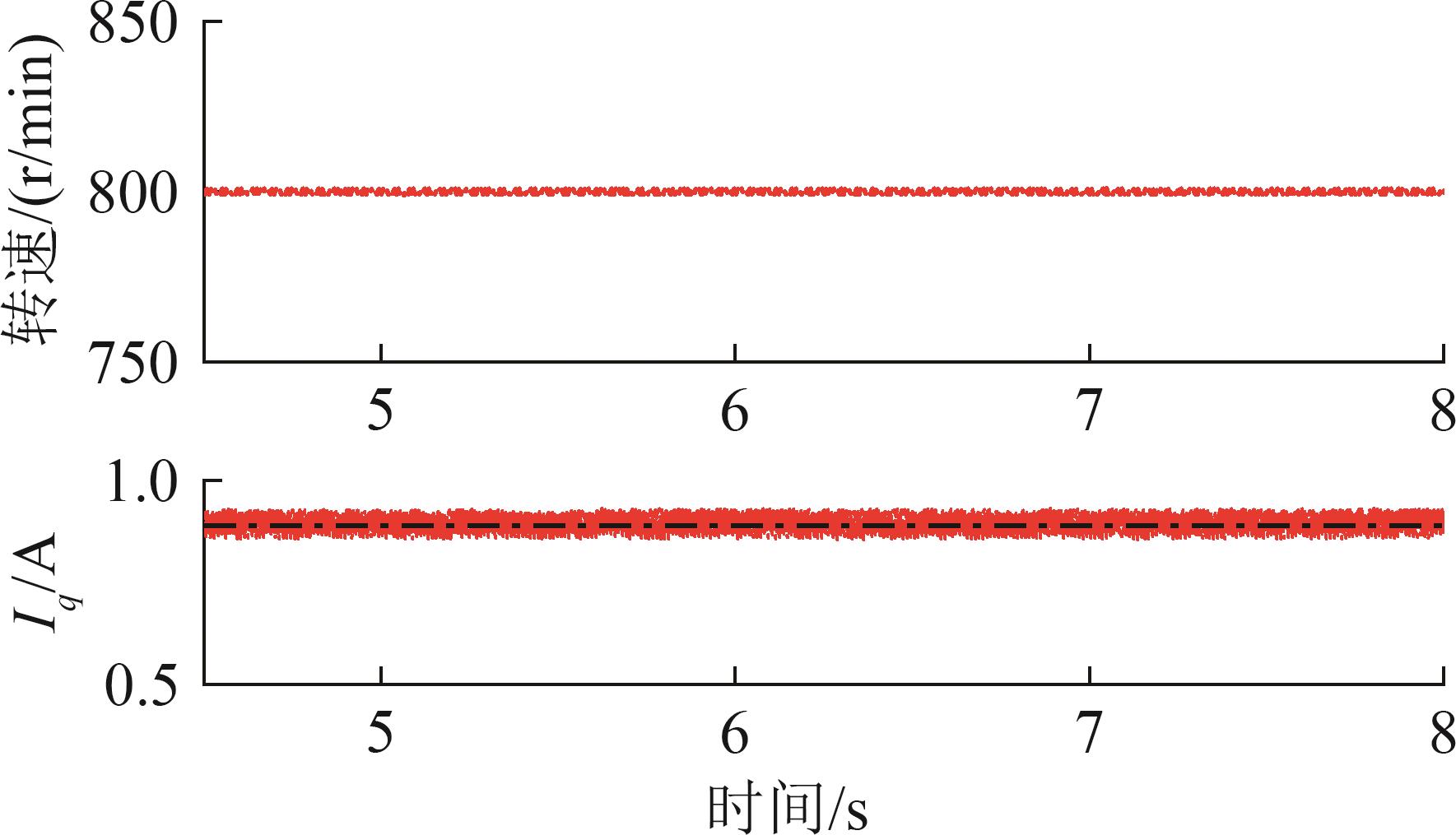
Fig. 11
Performance comparison of mapping under zero-speed startup condition
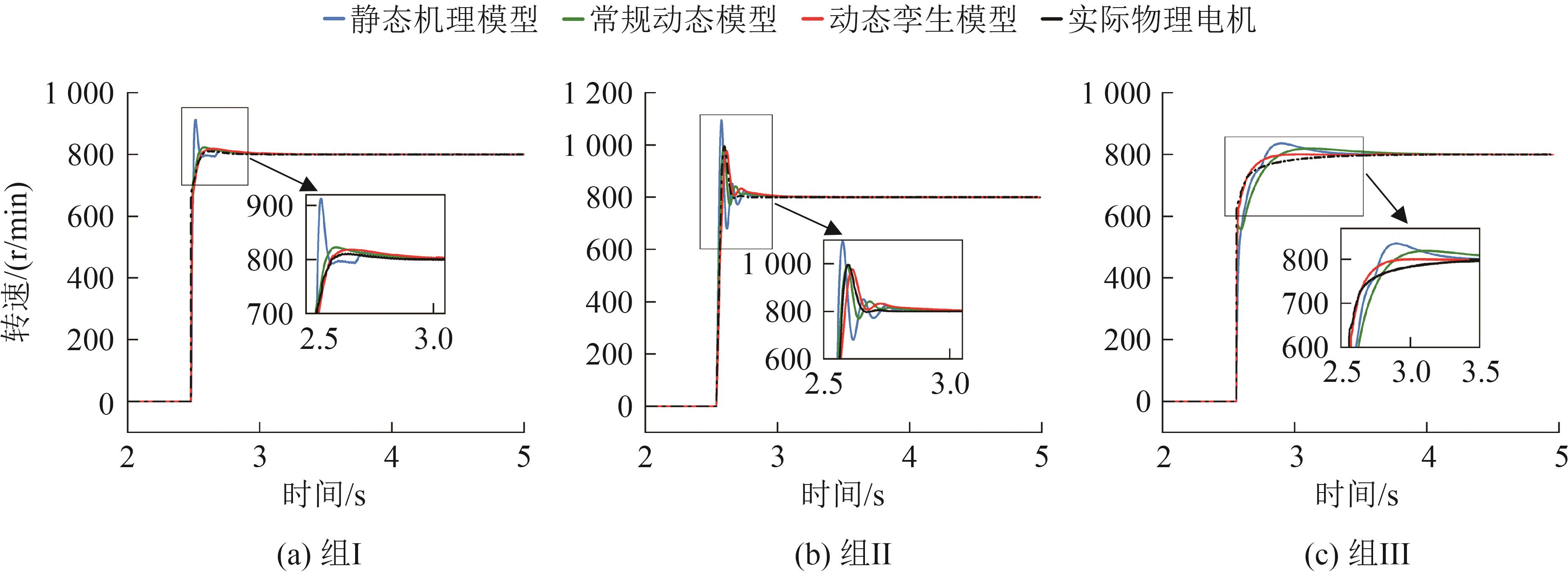
Fig. 12
Performance comparison of mapping under reciprocating step condition
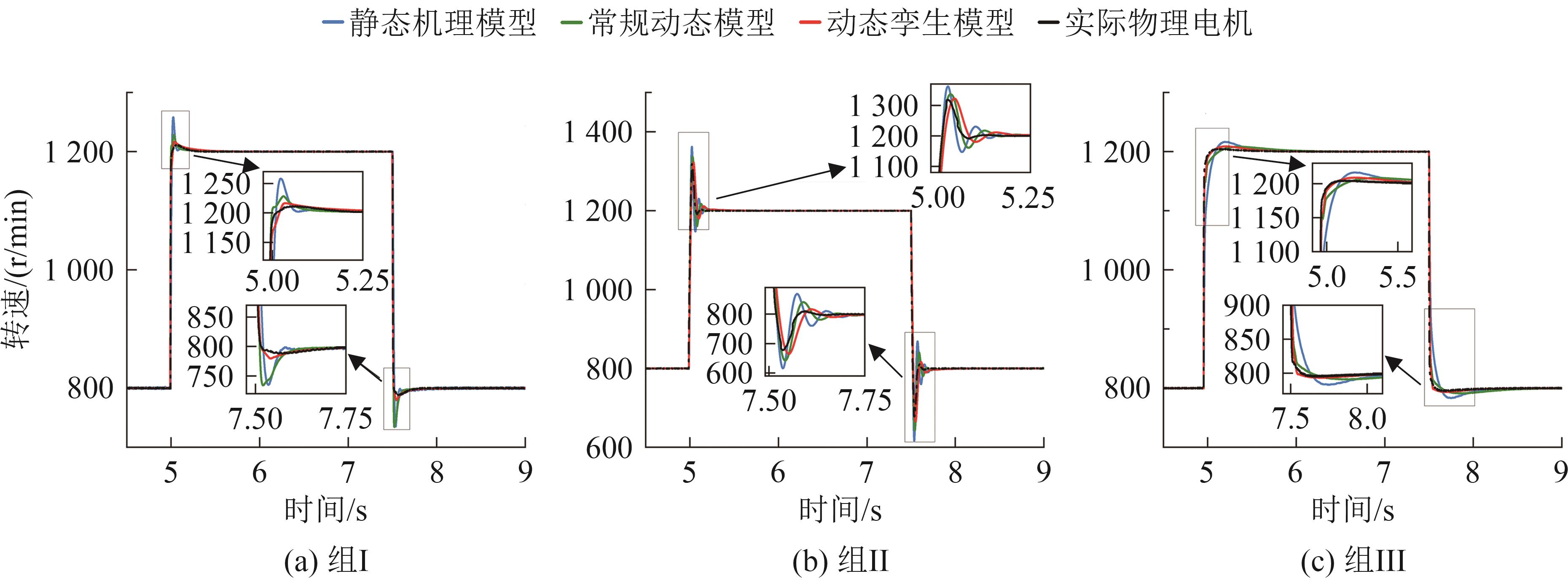

Fig. 13
Performance comparison of mapping under continuous speed-up condition
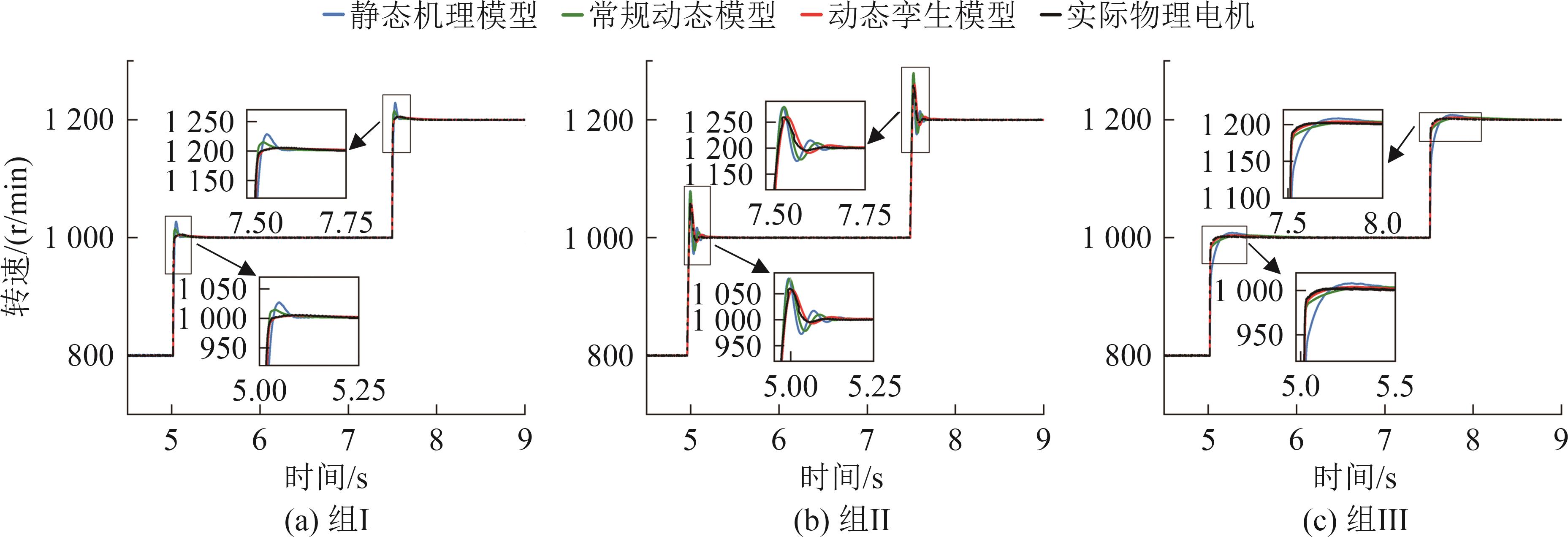
Fig. 14
Performance comparison of mapping under continuous speed-down condition
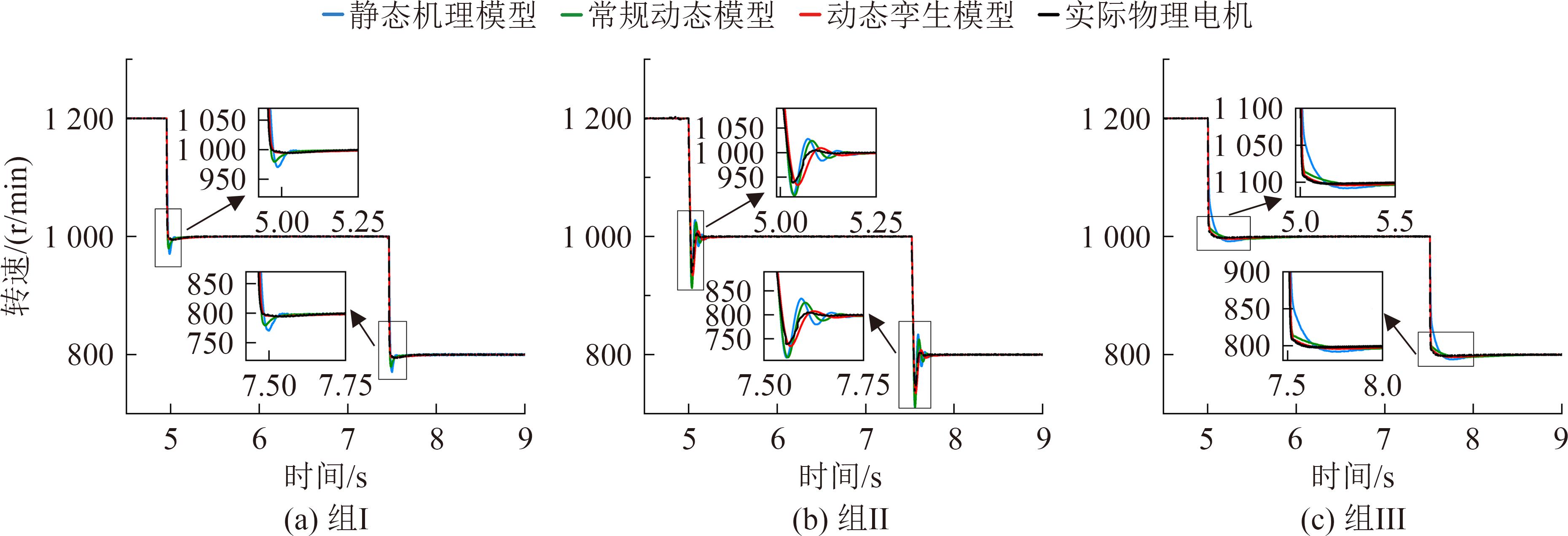
Table 4
MAE comparison data of speed condition experiments
| 组别 | 方法 | A | B | C | D |
|---|---|---|---|---|---|
| I | 机理模型 | 2.732 | 2.555 | 1.894 | 1.356 |
| 动态模型 | 1.733 | 1.723 | 1.701 | 0.935 | |
| 孪生模型 | 1.613 | 1.275 | 0.664 | 0.756 | |
| II | 机理模型 | 5.867 | 3.481 | 1.829 | 1.861 |
| 动态模型 | 4.469 | 2.441 | 1.417 | 1.491 | |
| 孪生模型 | 4.452 | 2.606 | 1.145 | 1.394 | |
| III | 机理模型 | 6.916 | 5.664 | 2.904 | 2.951 |
| 动态模型 | 14.087 | 3.449 | 1.676 | 1.750 | |
| 孪生模型 | 3.454 | 1.917 | 0.988 | 1.060 |
Table 5
RMSE comparison data of speed condition experiments
| 组别 | 方法 | A | B | C | D |
|---|---|---|---|---|---|
| I | 机理模型 | 34.947 | 16.831 | 6.957 | 7.751 |
| 动态模型 | 14.892 | 8.997 | 3.599 | 4.773 | |
| 孪生模型 | 14.704 | 7.241 | 3.367 | 4.505 | |
| II | 机理模型 | 28.599 | 12.622 | 6.157 | 6.031 |
| 动态模型 | 16.354 | 11.742 | 4.359 | 4.549 | |
| 孪生模型 | 15.651 | 11.327 | 3.328 | 4.196 | |
| III | 机理模型 | 26.775 | 20.658 | 9.598 | 10.220 |
| 动态模型 | 26.712 | 12.529 | 4.089 | 5.169 | |
| 孪生模型 | 14.633 | 11.593 | 3.531 | 4.724 |
| [1] | Rafaq M S, Midgley Will, Steffen T. A Review of the State of the Art of Torque Ripple Minimization Techniques for Permanent Magnet Synchronous Motors[J]. IEEE Transactions on Industrial Informatics, 2024, 20(1): 1019-1031. |
| [2] | Osman Emre Özçiflikçi, Koç Mikail, Bahçeci Serkan, et al. Overview of PMSM Control Strategies in Electric Vehicles: A Review[J]. International Journal of Dynamics and Control, 2024, 12(6): 2093-2107. |
| [3] | 刘计龙, 肖飞, 沈洋, 等. 永磁同步电机无位置传感器控制技术研究综述[J]. 电工技术学报, 2017, 32(16): 76-88. |
| Liu Jilong, Xiao Fei, Shen Yang, et al. Position-sensorless Control Technology of Permanent-magnet Synchronous Motor——A Review[J]. Transactions of China Electrotechnical Society, 2017, 32(16): 76-88. | |
| [4] | Chen Haoyu, Zhang Zhenbin, Karamanakos Petros, et al. Digital Twin Techniques for Power Electronics-based Energy Conversion Systems: A Survey of Concepts, Application Scenarios, Future Challenges, and Trends[J]. IEEE Industrial Electronics Magazine, 2023, 17(2): 20-36. |
| [5] | Grieves M. Digital Twin: Manufacturing Excellence Through Virtual Factory Replication[J]. White paper, 2014, 1: 1-7. |
| [6] | Glaessgen E H, Stargel D S. The Digital Twin Paradigm for Future NASA and U.S. Air Force Vehicles[C]//53rd AIAA/ASME/ASCE/AHS/ASC Structures, Structural Dynamics and Materials Conference. Reston: AIAA, 2012: AIAA 2012-1818. |
| [7] | 陶飞, 刘蔚然, 张萌, 等. 数字孪生五维模型及十大领域应用[J]. 计算机集成制造系统, 2019, 25(1): 1-18. |
| Tao Fei, Liu Weiran, Zhang Meng, et al. Five-dimension Digital Twin Model and Its Ten Applications[J]. Computer Integrated Manufacturing Systems, 2019, 25(1): 1-18. | |
| [8] | Jafari Sadiqa, Byun Yung-Cheol. Prediction of the Battery State Using the Digital Twin Framework Based on the Battery Management System[J]. IEEE Access, 2022, 10: 124685-124696. |
| [9] | Branlard E, Jonkman J, Brown Cameron, et al. A Digital Twin Solution for Floating Offshore Wind Turbines Validated Using a Full-scale Prototype[J]. Wind Energy Science, 2024, 9(1): 1-24. |
| [10] | Vishnu V S, Kiran George Varghese, Gurumoorthy B. A Data-driven Digital Twin of CNC Machining Processes for Predicting Surface Roughness[J]. Procedia CIRP, 2021, 104: 1065-1070. |
| [11] | Guo Haoyu, Wang Shaoping, Shi Jian, et al. Dynamically Updated Digital Twin for Prognostics and Health Management: Application in Permanent Magnet Synchronous Motor[J]. Chinese Journal of Aeronautics, 2024, 37(6): 244-261. |
| [12] | Song Wensheng, Zou Yuchao, Ma Chenwei, et al. Digital Twin Modeling Method of Three-phase Inverter-driven PMSM Systems for Parameter Estimation[J]. IEEE Transactions on Power Electronics, 2024, 39(2): 2360-2371. |
| [13] | Maeda Yoshihiro, Harata Kazuya, Iwasaki Makoto. A Friction Model-based Frequency Response Analysis for Frictional Servo Systems[J]. IEEE Transactions on Industrial Informatics, 2018, 14(11): 5146-5155. |
| [14] | Kerid Rachid, Bourouina Hicham, Yahiaoui Réda. Parameter Identification of PMSM Using EKF with Temperature Variation Tracking in Automotive Applications[J]. Periodicals of Engineering and Natural Sciences, 2018, 6(2): 109-119. |
| [15] | 田兵, 安群涛, 孙东阳, 等. 基于磁饱和效应的表贴式永磁同步电机初始位置检测方法[J]. 电工技术学报, 2016, 31(1): 155-164. |
| Tian Bing, An Quntao, Sun Dongyang, et al. Initial Position Estimation for Surface Permanent Magnet Synchronous Motors Based on Magnetic Saturation Effect[J]. Transactions of China Electrotechnical Society, 2016, 31(1): 155-164. | |
| [16] | 顾子杰, 卜飞飞, 张得礼, 等. 考虑参数失配的永磁同步电机电流预测控制研究[J]. 电气工程学报, 2023, 18(4): 50-57. |
| Gu Zijie, Bu Feifei, Zhang Deli, et al. Research on Predictive Current Control of Permanent Magnet Synchronous Motor Considering Parameter Mismatch[J]. Journal of Electrical Engineering, 2023, 18(4): 50-57. | |
| [17] | Ty Trung Nguyen, Hoang Ngoc Tran, Ton Hoang Nguyen, et al. Recurrent Neural Network-based Robust Adaptive Model Predictive Speed Control for PMSM with Parameter Mismatch[J]. IEEE Transactions on Industrial Electronics, 2023, 70(6): 6219-6228. |
| [18] | Sun Pengkun, Ge Qiongxuan, Zhang Bo, et al. Sensorless Control Technique of PMSM Based on RLS On-line Parameter Identification[C]//2018 21st International Conference on Electrical Machines and Systems (ICEMS). Piscataway: IEEE, 2018: 1670-1673. |
| [19] | Dhaouadi R, Mohan N, Norum L. Design and Implementation of an Extended Kalman Filter for the State Estimation of a Permanent Magnet Synchronous Motor[J]. IEEE Transactions on Power Electronics, 1991, 6(3): 491-497. |
| [20] | Boileau Thierry, Leboeuf Nicolas, Nahid-Mobarakeh Babak, et al. Online Identification of PMSM Parameters: Parameter Identifiability and Estimator Comparative Study[J]. IEEE Transactions on Industry Applications, 2011, 47(4): 1944-1957. |
| [21] | 宋文祥, 任航, 叶豪. 基于MRAS的双三相永磁同步电机无位置传感器控制研究[J]. 中国电机工程学报, 2022, 42(3): 1164-1173. |
| Song Wenxiang, Ren Hang, Ye Hao. Position Sensorless Control of Dual Three Phase Permanent Magnet Synchronous Motor Based on MRAS[J]. Proceedings of the CSEE, 2022, 42(3): 1164-1173. | |
| [22] | 张立伟, 张鹏, 刘曰锋, 等. 基于变步长Adaline神经网络的永磁同步电机参数辨识[J]. 电工技术学报, 2018, 33(增2): 377-384. |
| Zhang Liwei, Zhang Peng, Liu Yuefeng, et al. Parameter Identification of Permanent Magnet Synchronous Motor Based on Variable Step-size Adaline Neural Network[J]. Transactions of China Electrotechnical Society, 2018, 33(S2): 377-384. | |
| [23] | Zhang Sai, Shen Anwen, Luo Xin, et al. An Adaptive Strategy for PMSM-based Disturbance Estimation and Online Parameter Identification[J]. IEEE/ASME Transactions on Mechatronics, 2023, 29(4): 2522-2533. |
| [24] | Hu Bo, Li Jiaxi. A Deployment-efficient Energy Management Strategy for Connected Hybrid Electric Vehicle Based on Offline Reinforcement Learning[J]. IEEE Transactions on Industrial Electronics, 2022, 69(9): 9644-9654. |
| [25] | Ding Feng, Chen Tongwen. Multi-innovation Stochastic Gradient Identification Methods[C]//2006 6th World Congress on Intelligent Control and Automation. Piscataway: IEEE, 2006: 1501-1505. |
| [26] | 方八零, 李伟, 陈达伟, 等. 基于多新息递推最小二乘和多新息扩展卡尔曼滤波算法的永磁同步电机参数辨识[J/OL]. 上海交通大学学报. (2025-08-25) [2026-03-03]. . |
| Fang Baling, Li Wei, Chen Dawei, et al. Parameter Identification of Permanent Magnet Synchronous Motors Based on Multi-innovation Recursive Least Squares and Multi-innovation Extended Kalman Filter Algorithms[J/OL]. Journal of Shanghai Jiao Tong University. (2025-08-25) [2026-03-03]. . |
| [1] | Jiang Xiaomo, Meng Jigang, Hui Huaiyu, Meng Wenqing, Yang Haibin, Chen Huize. Research of Data-model Integrated Digital Twin-based Health Intelligent Monitoring for Multi-stage Centrifugal Compressors [J]. Journal of System Simulation, 2026, 38(9): 2696-2710. |
| [2] | Mei Zaiwu, Zhou Jiangman, Zhang Cong, Gao Yiping, Zhu Zerun. Robotic Digital Twin Modeling Method Integrating MBSE and Modelica [J]. Journal of System Simulation, 2026, 38(9): 2725-2738. |
| [3] | Liu Ya, Zhang Zhaoyun, An Cheng, Zheng Canguang. Research on Safety Monitoring System for Digital Twin Fully Mechanized Mining Face in Thin Coal Seams [J]. Journal of System Simulation, 2026, 38(7): 1922-1934. |
| [4] | Qin Lang, Xie Jiacheng, Qiao Xiaojun, Wang Xuewen, Xiao Zhijie. Robot Trajectory Planning and Adjustment Method for Abnormal Pose of Actuator [J]. Journal of System Simulation, 2026, 38(5): 1466-1483. |
| [5] | Nan Yandong, Zhu Jinda, Lu Xinbin, Qin Zhiying, Qi Dandan, Ding Zhiheng. State Monitoring of Nuclear Power Connection Sleeve Quality Inspection Equipment Driven by Digital Twin [J]. Journal of System Simulation, 2026, 38(4): 1004-1017. |
| [6] | Yan Dong, Yang Hanzhe, Jiang Fangfang, Liu Chengbao, Zhang Peng. Design and Application of Collaborative Simulation System for Satellite Constellation Flight Missions [J]. Journal of System Simulation, 2026, 38(4): 1067-1079. |
| [7] | Wang Ziying, Sun Congjun, Li Guihu, Zhang Tianhao. Virtual Train Operation Platform Based on Digital Twin [J]. Journal of System Simulation, 2026, 38(3): 736-745. |
| [8] | Fang Yaning, He Renchu. Five-dimensional Digital Twin System for Closed-loop Gasoline Blending Optimization [J]. Journal of System Simulation, 2026, 38(10): 2840-2856. |
| [9] | Lu Houjun, Zhu Yifei, Rong Yanping, Zhang Wanghui. Digital Twin Modeling Method for Bulk Cargo Stacks Based on 2D LiDAR [J]. Journal of System Simulation, 2025, 37(9): 2269-2286. |
| [10] | Liu Yongkui, Yang Kang, Tuo Benben, Pan Yaduo, Wang Xinyu, Wang Yihan, Gong Yongqian, Zhang Lin, Wang Lihui, Lin Tingyu, Zi Bin, Li Yuan, You Wei, Xu Xun. Digital Twinned Industrial Robot: Conceptual Framework, Key Technologies, and Case Study [J]. Journal of System Simulation, 2025, 37(7): 1723-1752. |
| [11] | Liu Tao, Li Hanxi, Yin Yong, Liu Jialun. Research Review of Intelligent Navigation Simulation Technology and Its Applications [J]. Journal of System Simulation, 2025, 37(7): 1684-1709. |
| [12] | Chen Qinghua, Liang Zuoyou, Guan Weijuan, Ji Jiadong, Liu Ping. Construction Method of Digital Twin System for High-low Temperature Test Chamber [J]. Journal of System Simulation, 2025, 37(6): 1400-1411. |
| [13] | Zhang Wenjia, Zhang Heming. Research on Grey-box Modeling Method of Digital Twins for Cantilever Structure [J]. Journal of System Simulation, 2025, 37(5): 1158-1168. |
| [14] | Zhang Huimai, Hu Xiaoya, Zhou Chunjie. Digital Twin Framework for the Generation and Optimization of Security Policies for TSN Industrial Control Systems [J]. Journal of System Simulation, 2025, 37(4): 861-874. |
| [15] | Jiang Lun, Wang Dajiang, Sun Wenlei, Bao Shenghui, Liu Han, Chang Saike. Research on Transformer Fault Diagnosis Method Based on Digital Twin [J]. Journal of System Simulation, 2025, 37(3): 775-790. |
| Viewed | ||||||
|
Full text |
|
|||||
|
Abstract |
|
|||||
 http://www.china-simulation.com

