

Journal of System Simulation ›› 2026, Vol. 38 ›› Issue (10): 2819-2839.doi: 10.16182/j.issn1004731x.joss.26-0128
• Simulation Modeling and Digital Twin Technology • Previous Articles Next Articles
Zhang Long1, Huang Wenbo1, Feng Xuanming1,2, Lei Zhen1,3, Wang Ying1
Received:2026-02-04
Revised:2026-03-02
Online:2026-10-31
Published:2026-10-20
Contact:
Wang Ying
CLC Number:
Zhang Long, Huang Wenbo, Feng Xuanming, Lei Zhen, Wang Ying. Mission-oriented Combat Effectiveness Evaluation Model for Intelligent Equipment System-of-systems[J]. Journal of System Simulation, 2026, 38(10): 2819-2839.
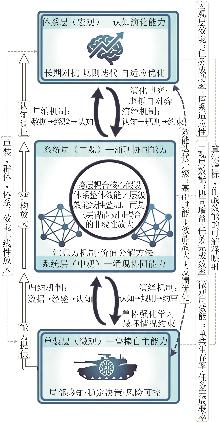
Fig. 1
HEAL framework
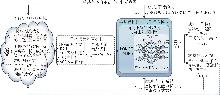
Fig. 2
Robust autonomous decision-making for single units
Fig. 3
Emergent collaboration mechanism of the system at mesoscopic level
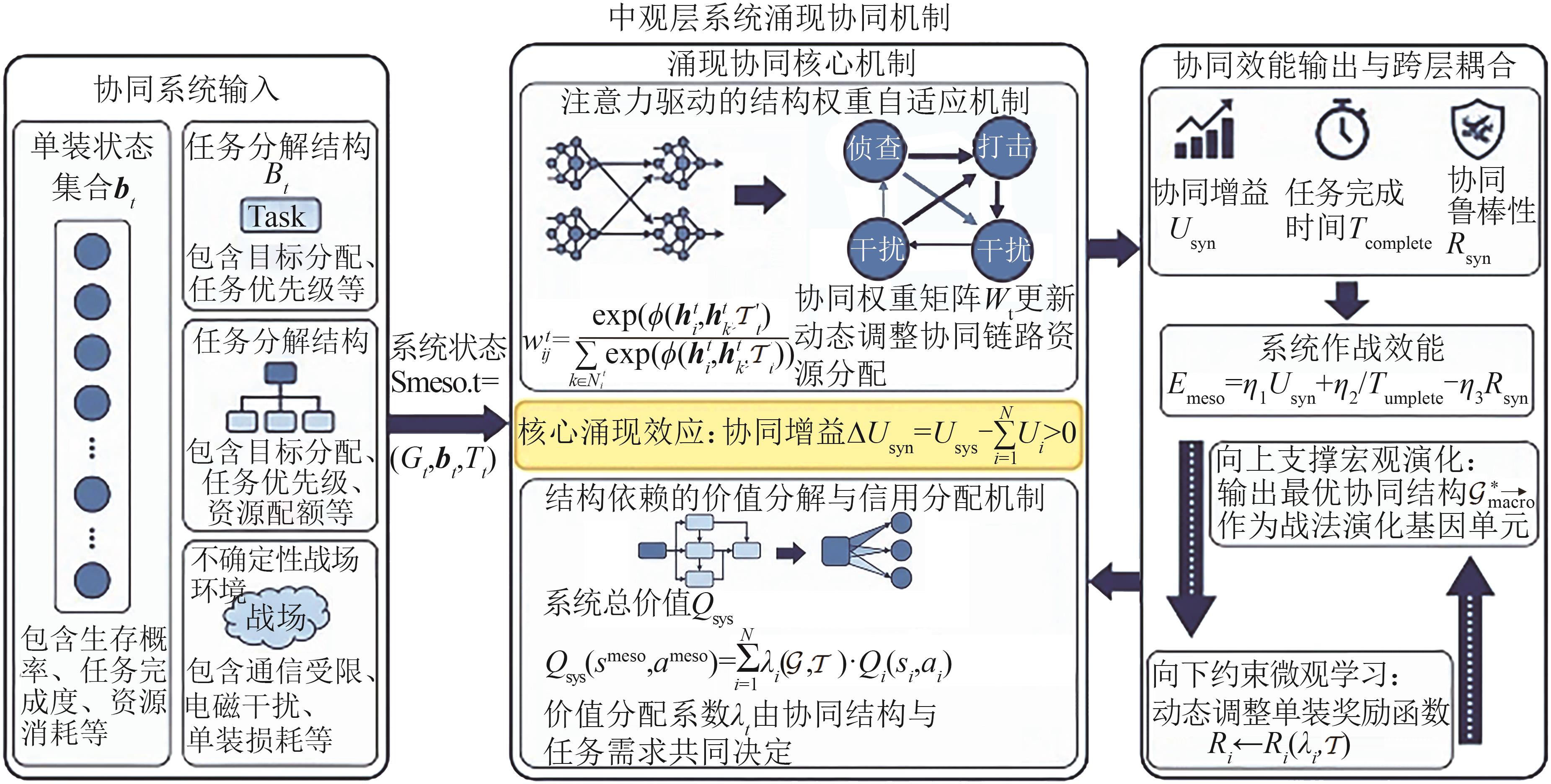
Fig. 4
Cognitive evolution mechanism at the macroscopic level
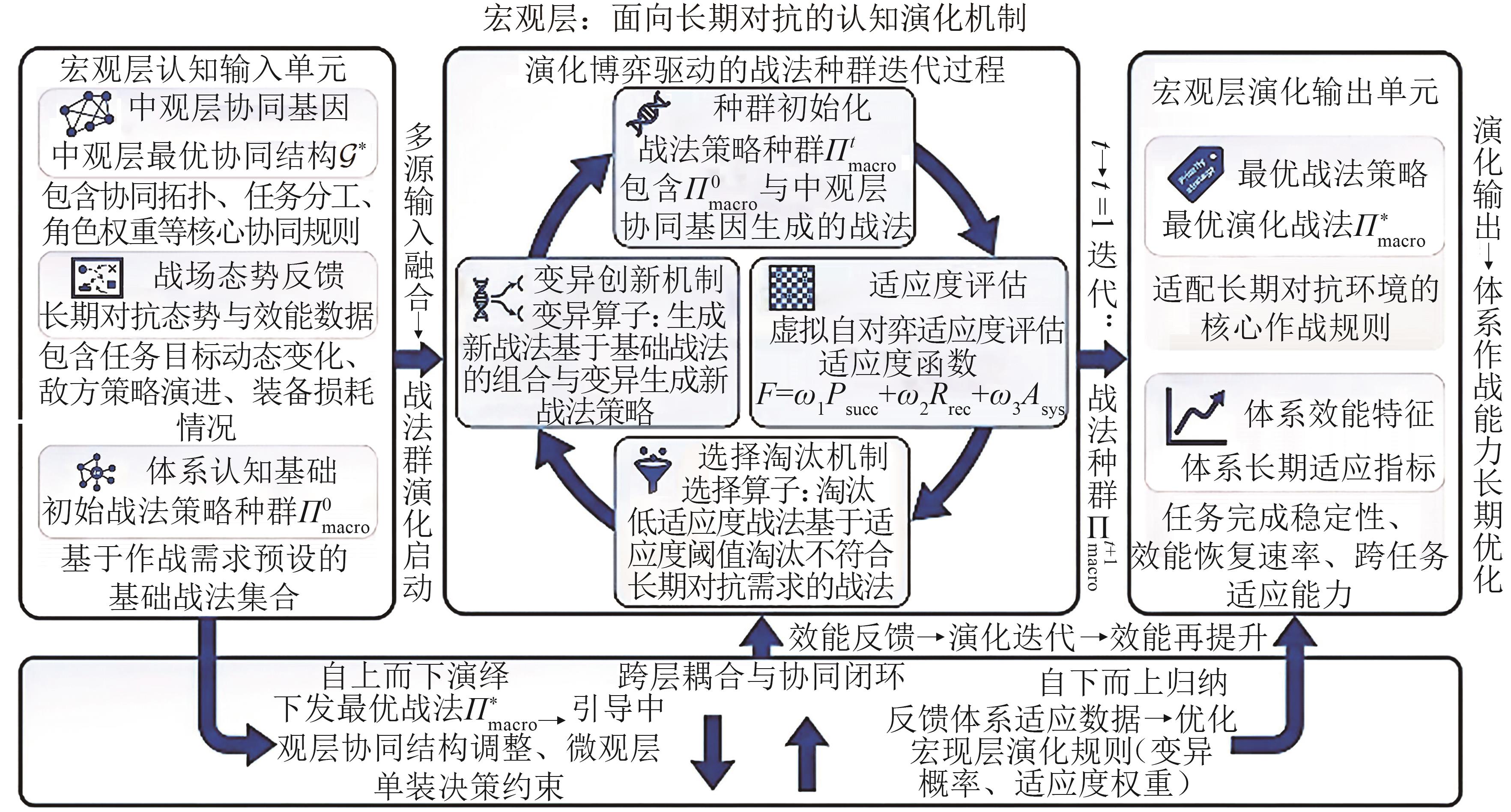
Fig. 5
Simulation scenarios
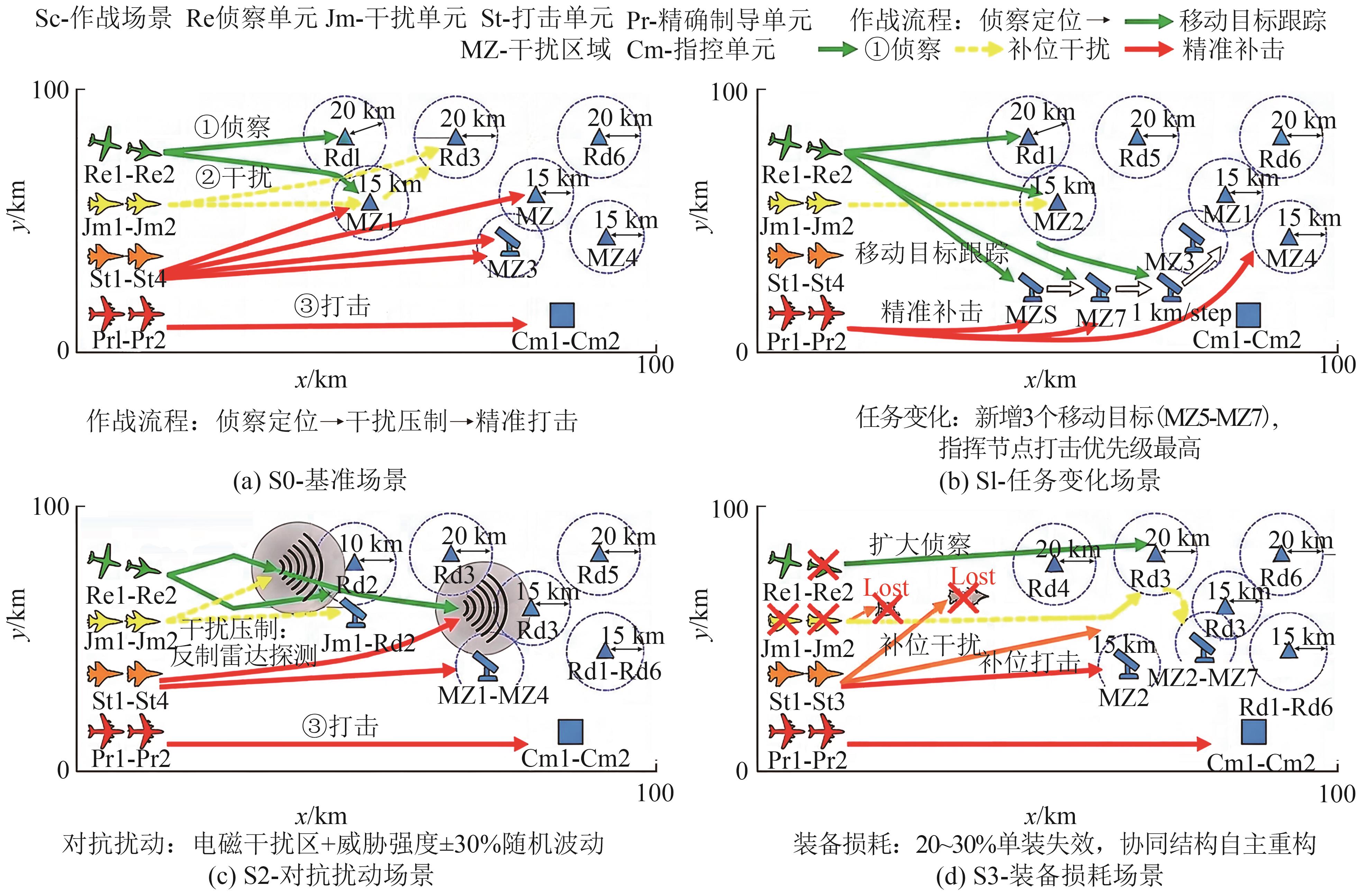
Fig. 6
Detailed configuration of comparative methods
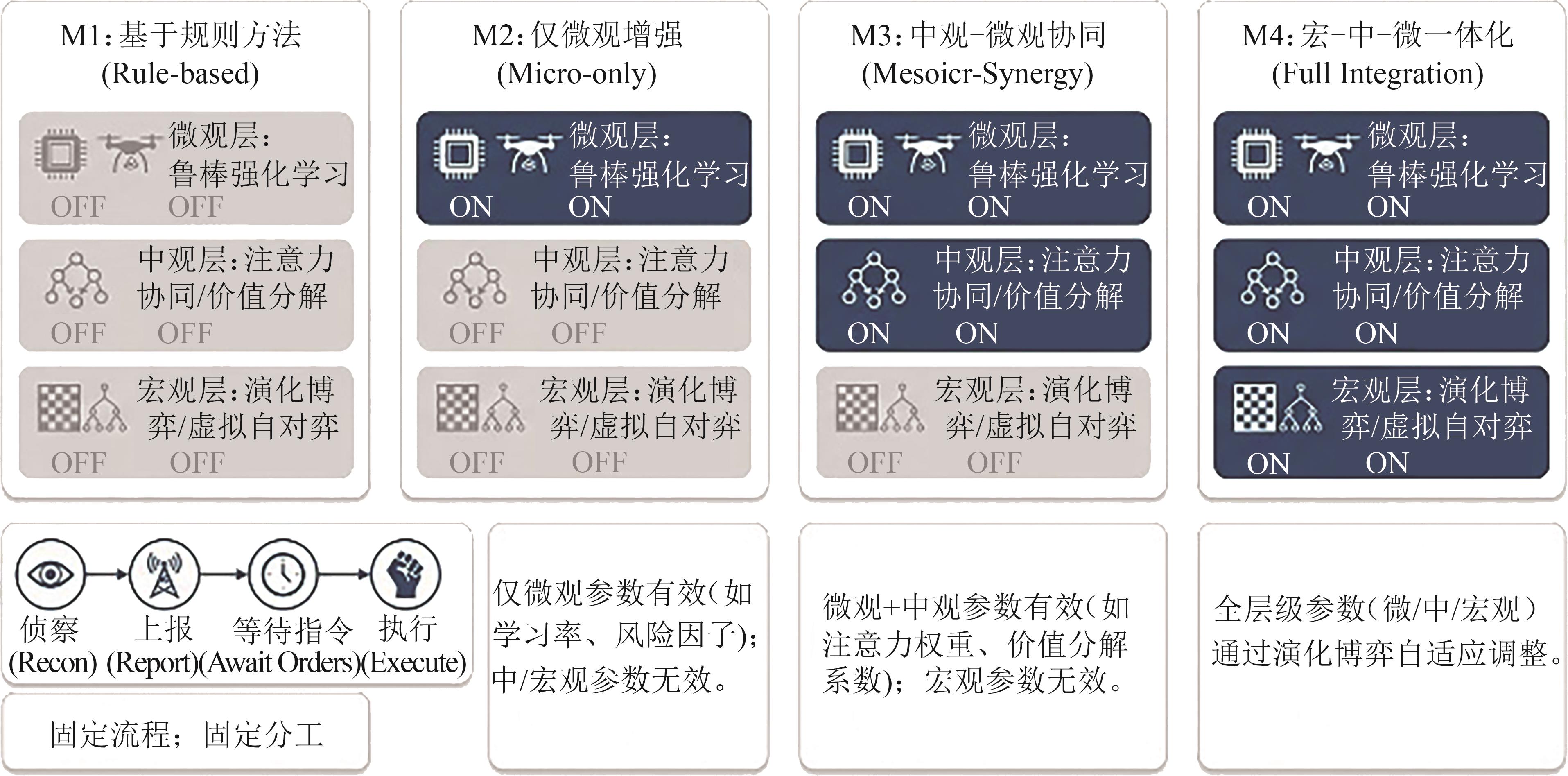
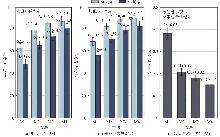
Fig. 7
Comparison of core indicators at the microscopic level
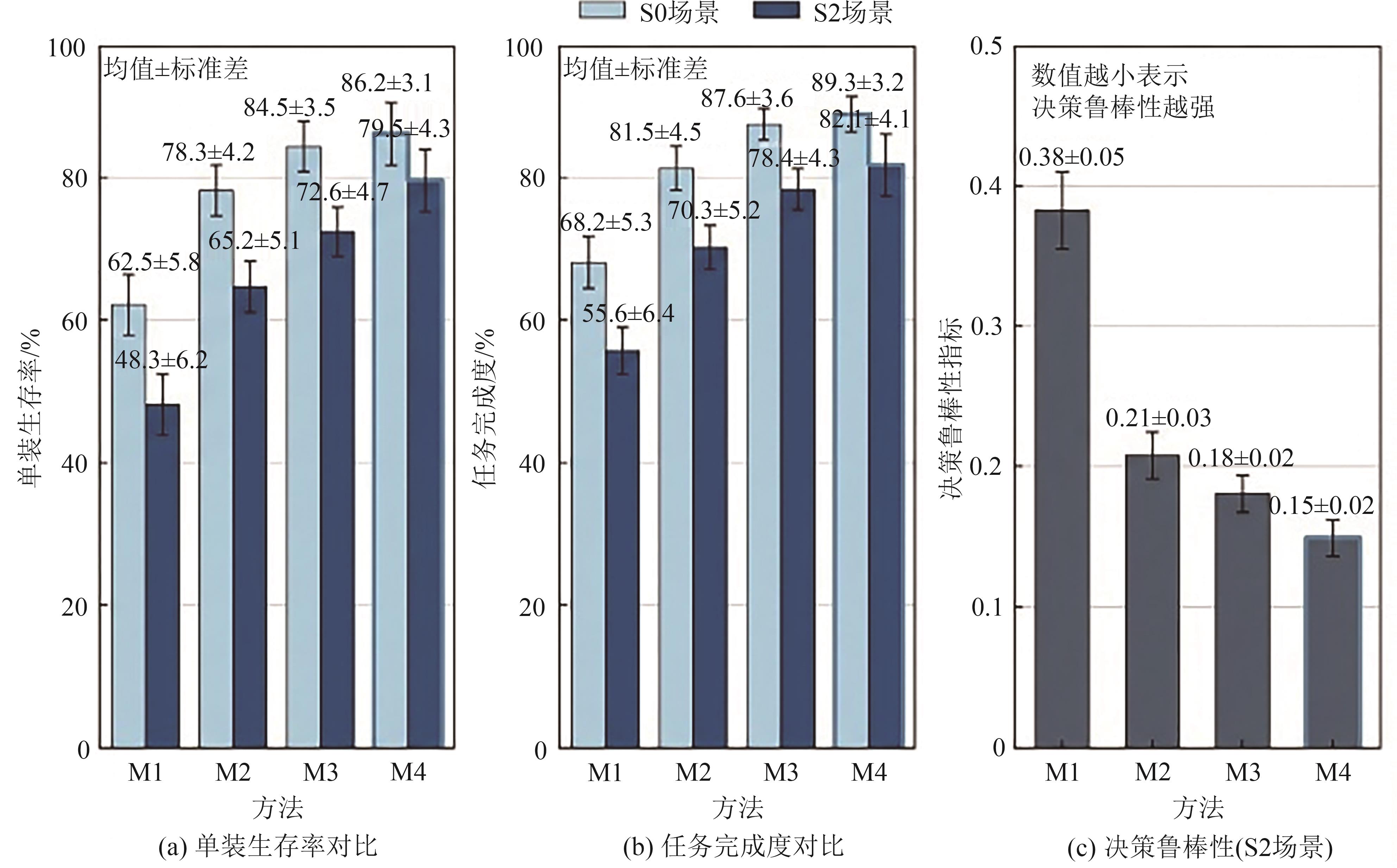
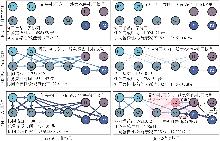
Fig. 8
Comparison of collaborative structure evolution
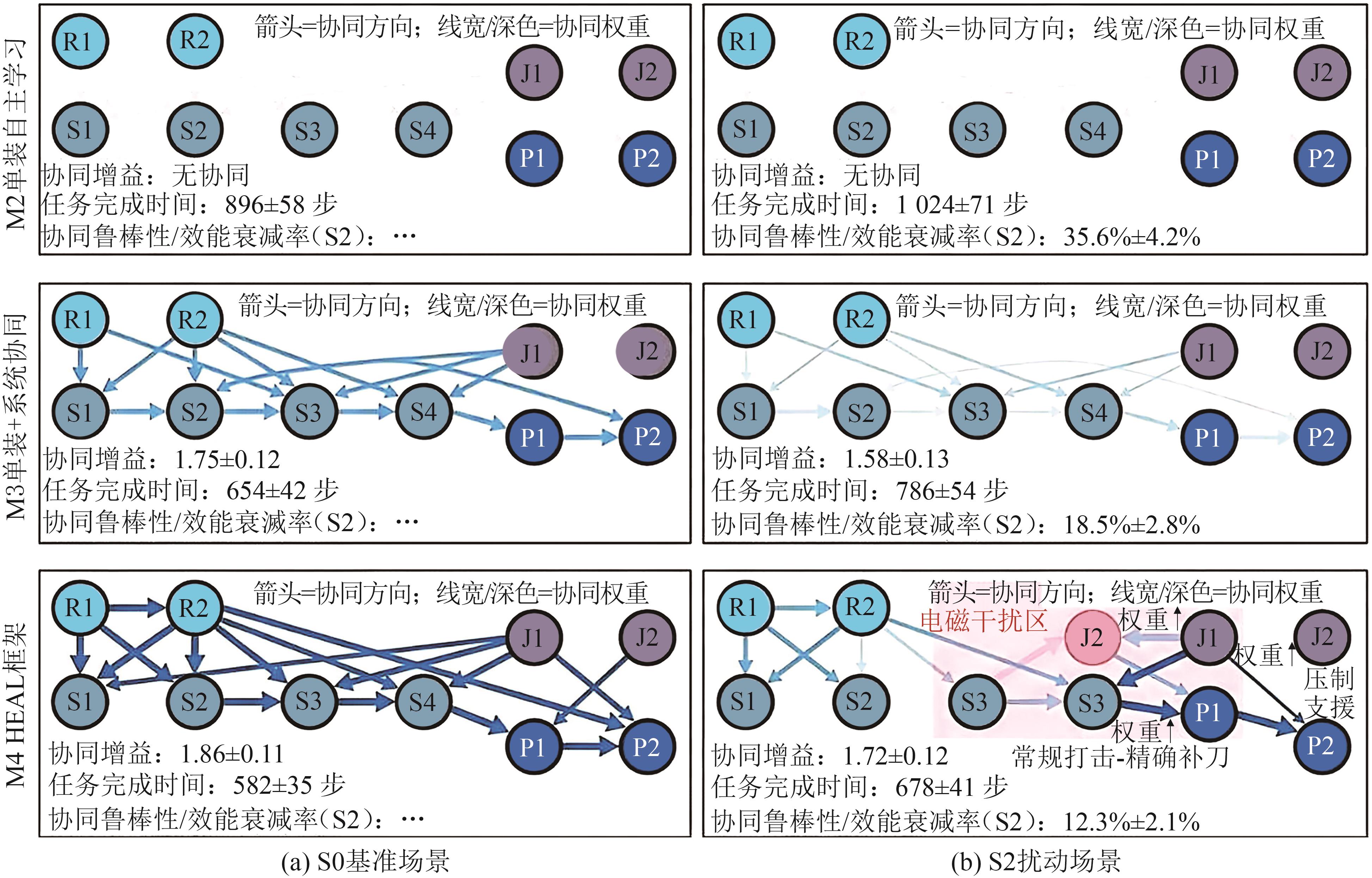
Fig. 9
Comparison results of core indicators at the mesoscopic level
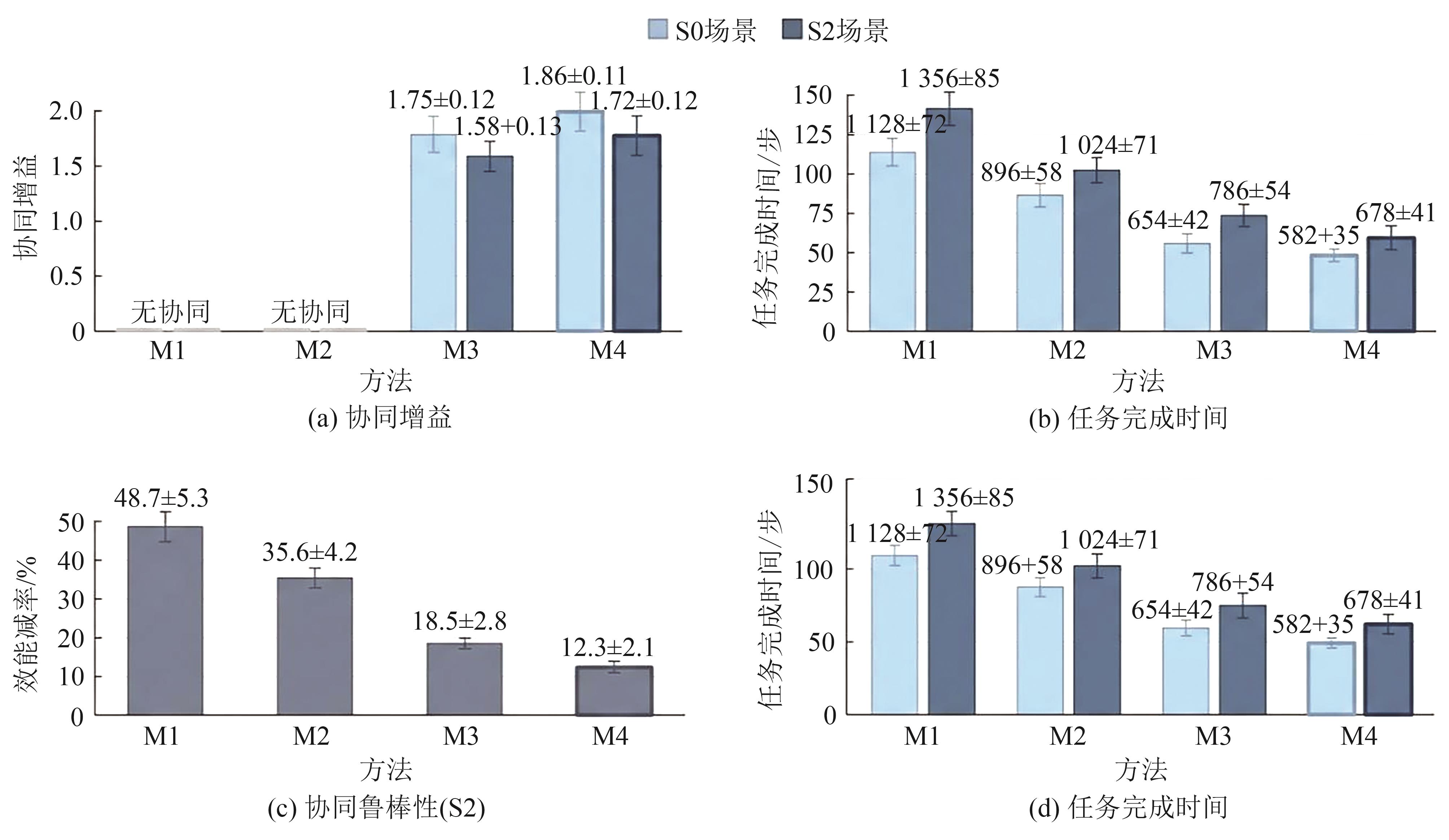
Fig. 10
Comparison results of core indicators at the macroscopic level
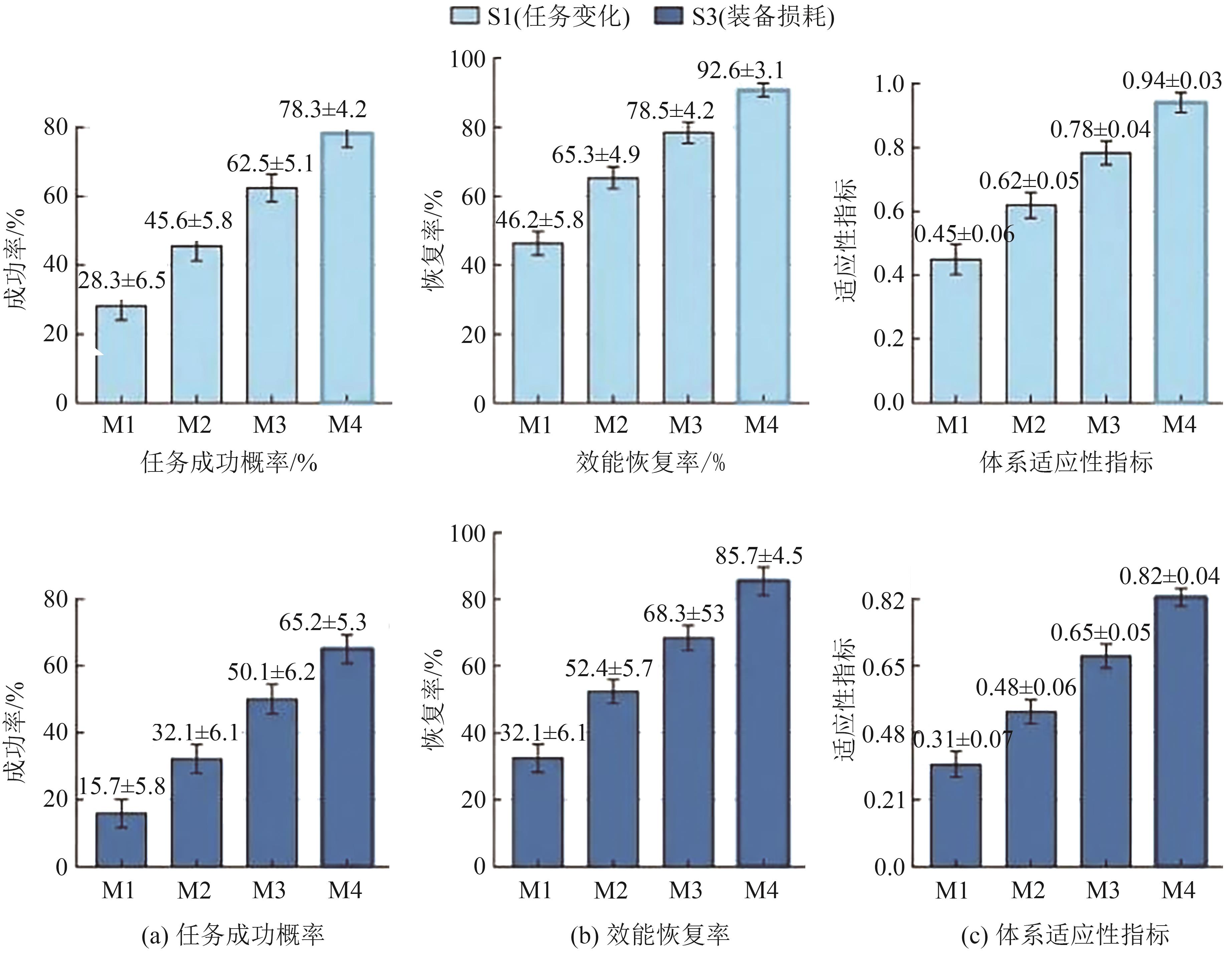
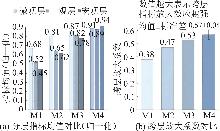
Fig. 11
Comprehensive comparison results of cross-layer core indicators
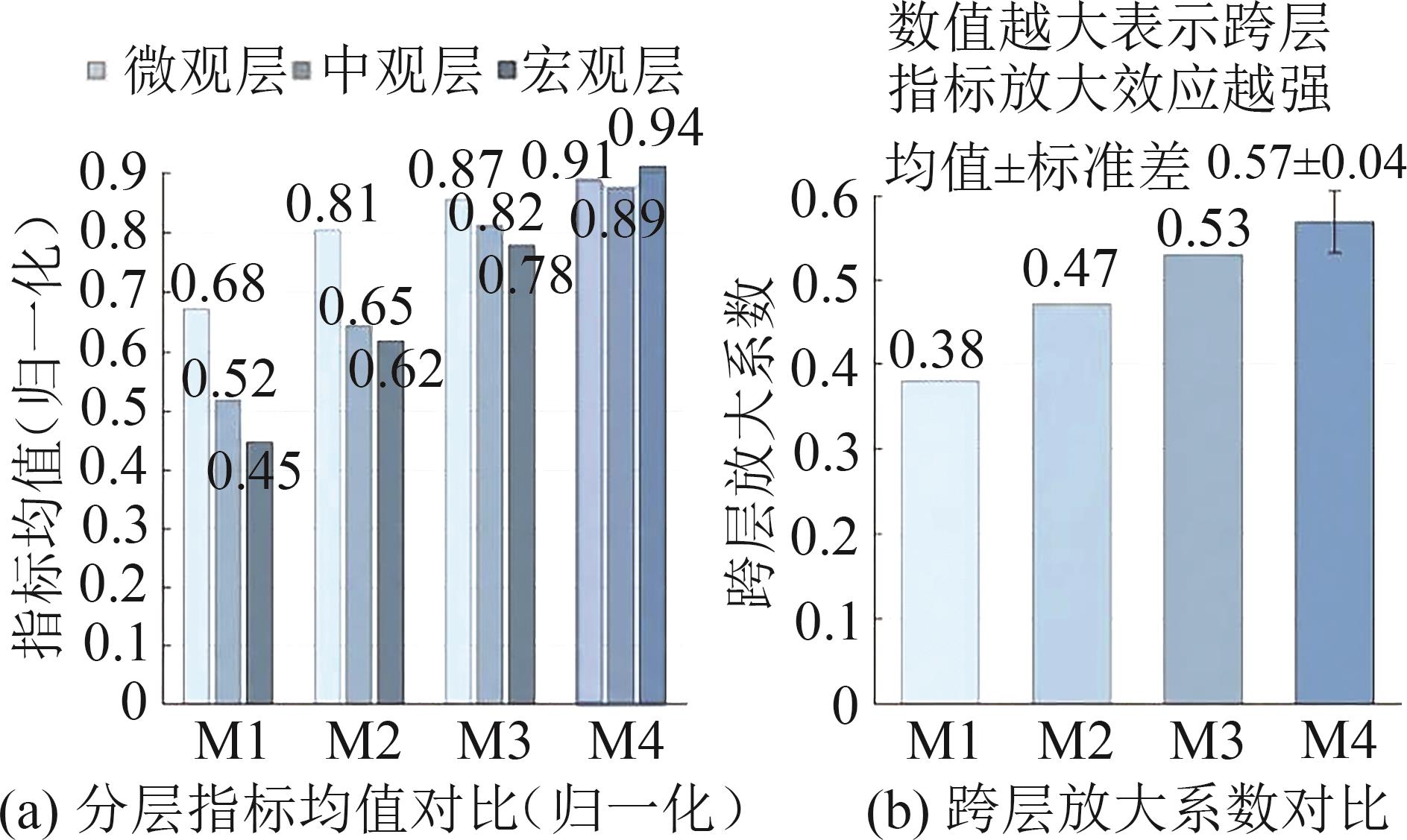
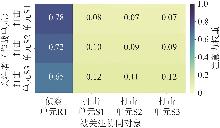
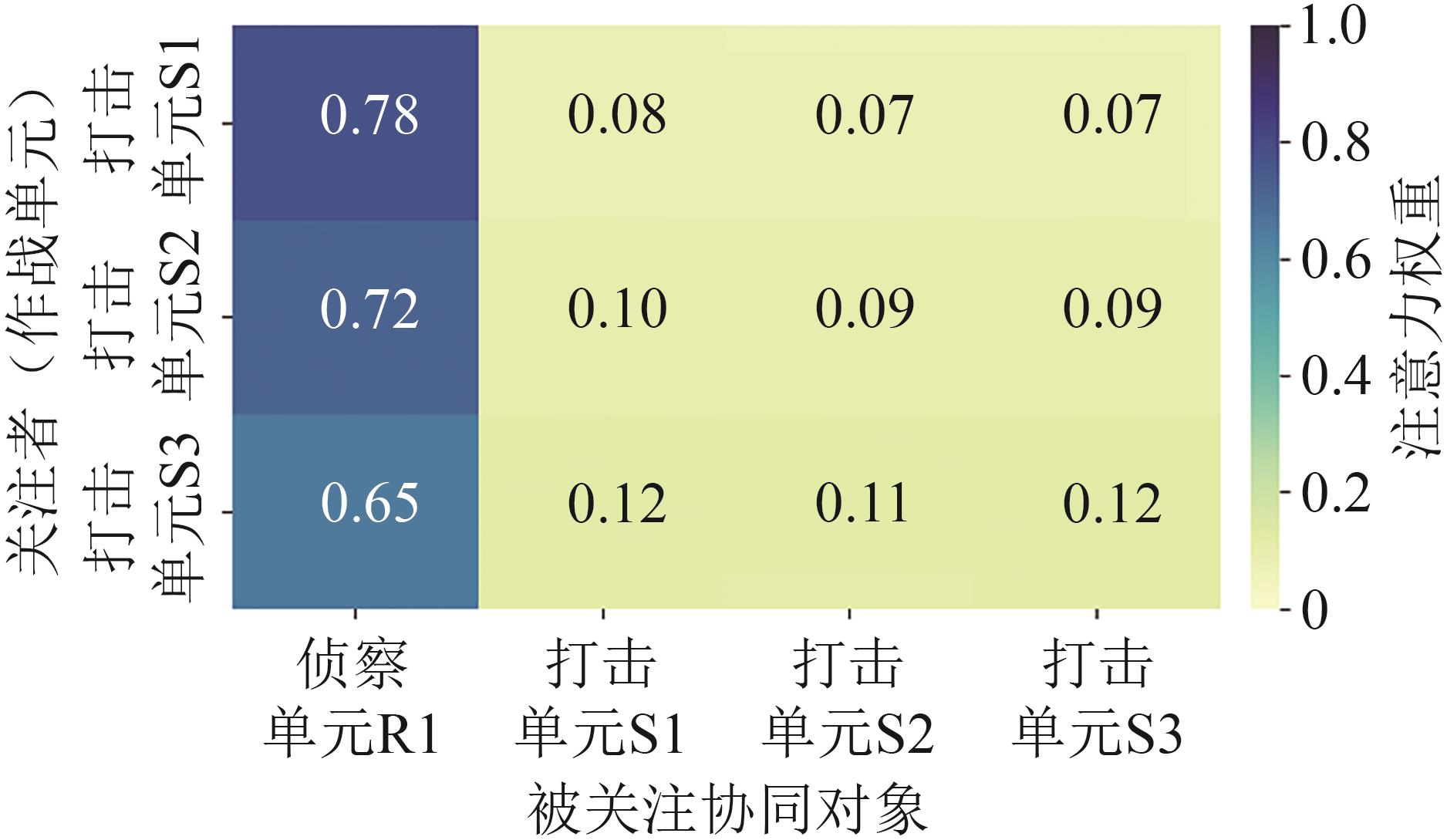
Fig. 12
Heatmap of attention weights at mesoscopic level
| [1] | 熊丽琴, 陈希亮, 赖俊, 等. 面向关系建模的合作多智能体深度强化学习综述[J]. 计算机工程与应用, 2025, 61(18): 41-60. |
| Xiong Liqin, Chen Xiliang, Lai Jun, et al. Survey of Cooperative Multi-agent Deep Reinforcement Learning Based on Relational Modeling[J]. Computer Engineering and Applications, 2025, 61(18): 41-60. | |
| [2] | 罗彪, 胡天萌, 周育豪, 等. 多智能体强化学习控制与决策研究综述[J]. 自动化学报, 2025, 51(3): 510-539. |
| Luo Biao, Hu Tianmeng, Zhou Yuhao, et al. Survey on Multi-agent Reinforcement Learning for Control and Decision-making[J]. Acta Automatica Sinica, 2025, 51(3): 510-539. | |
| [3] | Liu Yu, Li Zhi, Jiang Zhizhuo, et al. Prospects for Multi-agent Collaboration and Gaming: Challenge, Technology, and Application[J]. Frontiers of Information Technology & Electronic Engineering, 2022, 23(7): 1002-1010. |
| [4] | 王刚桥, 邢邗, 陈永强, 等. 深度不确定环境下的系统仿真方法研究[J]. 系统工程理论与实践, 2024, 44(2): 444-465. |
| Wang Gangqiao, Xing Han, Chen Yongqiang, et al. Research on System Simulation Approach Under Deep Uncertainty[J]. Systems Engineering-theory & Practice, 2024, 44(2): 444-465. | |
| [5] | Pu Zhiqiang, Wang Huimu, Liu Zhen, et al. Attention Enhanced Reinforcement Learning for Multi-agent Cooperation[J]. IEEE Transactions on Neural Networks and Learning Systems, 2023, 34(11): 8235-8249. |
| [6] | Park Soohyun, Pyoung Kim Jae, Park Chanyoung, et al. Quantum Multi-agent Reinforcement Learning for Autonomous Mobility Cooperation[J]. IEEE Communications Magazine, 2024, 62(6): 106-112. |
| [7] | 刘洋, 李妮, 于泽熙, 等. 融合大语言模型技术的飞机编队行为智能建模[J/OL]. 航空学报. (2026-01-12) [2026-01-31]. . |
| Liu Yang, Li Ni, Yu Zexi, et al. An Intelligent Modeling Method for Aircraft Formation Behaviors Integrating LLM Technology[J/OL]. Acta Aeronautica et Astronautica Sinica. (2026-01-12) [2026-01-31]. . | |
| [8] | 汪江鹏, 杨萍, 汪民乐, 等. 基于协同和网络效应的作战体系效能评估方法[J]. 系统工程与电子技术, 2025, 47(11): 3754-3764. |
| Wang Jiangpeng, Yang Ping, Wang Minle, et al. Combat System Effectiveness Evaluation Method Based on Coordination and Network Effects[J]. Systems Engineering and Electronics, 2025, 47(11): 3754-3764. | |
| [9] | 赵海燕, 周峰, 杨文静, 等. 数据驱动下的反导装备体系效能评估建模与仿真[J]. 国防科技大学学报, 2025, 47(3): 81-89. |
| Zhao Haiyan, Zhou Feng, Yang Wenjing, et al. Data-driven Effectiveness Evaluation Modeling and Simulation of Anti-missile Equipment System[J]. Journal of National University of Defense Technology, 2025, 47(3): 81-89. | |
| [10] | Li Z, Yang Y, Cheng H. Efficient Multi-agent Cooperation: Scalable Reinforcement Learning with Heterogeneous Graph Networks and Limited Communication[J]. Knowledge-Based Systems, 2024, 300: 112124. |
| [11] | Gong Yalei, Xiong Hongyun, Li Mengmeng, et al. Reinforcement Learning for Multi-agent Formation Navigation with Scalability[J]. Applied Intelligence, 2023, 53(23): 28207-28225. |
| [12] | Liu Haiying, Li Zhihao, Huang Kuihua, et al. Evolutionary Reinforcement Learning Algorithm for Large-scale Multi-agent Cooperation and Confrontation Applications[J]. The Journal of Supercomputing, 2024, 80(2): 2319-2346. |
| [13] | Liu Shanqi, Liu Weiwei, Chen Wenzhou, et al. Learning Multi-agent Cooperation via Considering Actions of Teammates[J]. IEEE Transactions on Neural Networks and Learning Systems, 2024, 35(8): 11553-11564. |
| [14] | Zhao Juan, Zhu Tong, Xiao Shuo, et al. Actor-critic for Multi-agent Reinforcement Learning with Self-attention[J]. International Journal of Pattern Recognition and Artificial Intelligence, 2022, 36(9): 2252014. |
| [15] | Jiang Yuannan, Jiang Shengming, Wang Xiaofeng. A Model-based Reinforcement Learning Algorithm for Multi-agent Cooperation Nash Equilibrium with Unstable Communication[J]. IEEE Transactions on Circuits and Systems II: Express Briefs, 2024, 71(11): 4743-4747. |
| [16] | Zhao Liyang, Chang Tianqing, Zhang Lei, et al. Multi-agent Cooperation Policy Gradient Method Based on Enhanced Exploration for Cooperative Tasks[J]. International Journal of Machine Learning and Cybernetics, 2024, 15(4): 1431-1452. |
| [17] | Rao Jinjun, Wang Cong, Liu Mei, et al. ISFORS-MIX: Multi-agent Reinforcement Learning with Importance-sampling-free Off-policy Learning and Regularized-softmax Mixing Network[J]. Knowledge-Based Systems, 2025, 309: 112881. |
| [18] | 王建峰, 贾高伟, 郭正, 等. 多无人机协同任务规划方法研究综述[J]. 系统工程与电子技术, 2024, 46(10): 3437-3450. |
| Wang Jianfeng, Jia Gaowei, Guo Zheng, et al. Review of Research on Multi-UAV Collaborative Mission Planning Method[J]. Systems Engineering and Electronics, 2024, 46(10): 3437-3450. | |
| [19] | 王辉雄, 洪东跑, 刘宸宁, 等. 武器装备智能保障系统建模与效能分析[J]. 宇航学报, 2023, 44(2): 197-207. |
| Wang Huixiong, Hong Dongpao, Liu Chenning, et al. Modeling and Efficiency Analysis for Intelligent Weapon Equipment Support System[J]. Journal of Astronautics, 2023, 44(2): 197-207. | |
| [20] | 李峻森, 方依宁, 张云安, 等. 面向任务的装备保障体系多Agent建模与评估方法[J]. 系统工程与电子技术, 2023, 45(1): 279-290. |
| Li Junsen, Fang Yining, Zhang Yunan, et al. Multi-agent Modeling and Evaluation Method for Mission-oriented Equipment Support SoS[J]. Systems Engineering and Electronics, 2023, 45(1): 279-290. | |
| [21] | 刘遵飞, 邹波, 陈续麟, 等. 有人与无人联合作战模式下的装备体系结构建模与效能评估[J]. 兵工学报, 2022, 43(增1): 155-161. |
| Liu Zunfei, Zou Bo, Chen Xulin, et al. Architecture Modeling and Effectiveness Evaluation of Equipment System Under Manned and Unmanned Joint Operation Mode[J]. Acta Armamentarii, 2022, 43(S1): 155-161. | |
| [22] | Liu Weiwei, Jing Wei, Liu Shanqi, et al. Expert Demonstrations Guide Reward Decomposition for Multi-agent Cooperation[J]. Neural Computing and Applications, 2023, 35(27): 19847-19863. |
| [23] | Ren Yixiang, Ye Zhenhui, Chen Yining, et al. Soft-HGRNs: Soft Hierarchical Graph Recurrent Networks for Multi-agent Partially Observable Environments[J]. Frontiers of Information Technology & Electronic Engineering, 2023, 24(1): 117-130. |
| [24] | Wang C, Durugkar I, Liebman E, et al. DM2: Decentralized Multi-agent Reinforcement Learning Via Distribution Matching[C]//Proceedings of the Thirty-Seventh AAAI Conference on Artificial Intelligence and Thirty-Fifth Conference on Innovative Applications of Artificial Intelligence and Thirteenth Symposium on Educational Advances in Artificial Intelligence. [S.l.]: AAAI Press, 2023: 11699-11707. |
| [25] | Wang Ni, Das G P, Millard A G. Learning Cooperative Behaviours in Adversarial Multi-agent Systems[C]//Towards Autonomous Robotic Systems. Cham: Springer International Publishing, 2022: 179-189. |
| [26] | Wang Qianhui, Wang Xinzhi, Gao Mingke, et al. Fully Parameterized Dueling Mixing Distributional Q-learning for Multi-agent Cooperation[C]//2022 IEEE 34th International Conference on Tools with Artificial Intelligence (ICTAI). Piscataway: IEEE, 2022: 1147-1151. |
| [27] | Kong He, Xing Qianli, Wang Qi, et al. ADAC: Actor-double-attention-critic for Multi-agent Cooperation in Mixed Cooperative-competitive Environments[J]. IEEE Transactions on Intelligent Transportation Systems, 2025, 26(7): 9579-9592. |
| [28] | Xu Chenhang, Wang Jia, Zhu Xiaohui, et al. Decentralized Multi-agent Cooperation Via Adaptive Partner Modeling[J]. Complex & Intelligent Systems, 2024, 10(4): 4989-5004. |
| [29] | Tan Siyang, Chen Binqiang. Attentional Opponent Modelling for Multi-agent Cooperation[C]//2023 International Joint Conference on Neural Networks (IJCNN). Piscataway: IEEE, 2023: 1-9. |
| [30] | Chen Yiqun, Yang Wei, Zhang Tianle, et al. Commander-soldiers Reinforcement Learning for Cooperative Multi-agent Systems[C]//2022 International Joint Conference on Neural Networks (IJCNN). Piscataway: IEEE, 2022: 1-7. |
| [31] | Liu Boyin, Pu Zhiqiang, Gao Junlong, et al. Tacit Commitments Emergence in Multi-agent Reinforcement Learning[C]//Neural Information Processing. Cham: Springer International Publishing, 2023: 27-36. |
| [32] | 付一阳, 胡博, 刘人鹏, 等. 星地融合网络中基于异质图表征的多智能体协作切换方法[J]. 计算机学报, 2026, 49(2): 347-364. |
| Fu Yiyang, Hu Bo, Liu Renpeng, et al. A Multi-agent Heterogeneous Graph Representation-based Handover Method in Satellite-terrestrial Integrated Network[J]. Chinese Journal of Computers, 2026, 49(2): 347-364. | |
| [33] | 熊骏, 张文博, 熊智, 等. 多智能体协同路径规划综述[J]. 系统仿真学报, 2025, 37(12): 3033-3049. |
| Xiong Jun, Zhang Wenbo, Xiong Zhi, et al. Survey of Cooperative Multi-agent Path Finding[J]. Journal of System Simulation, 2025, 37(12): 3033-3049. | |
| [34] | 张华卿, 张晓飞, 郝明瑞, 等. 鲁棒多智能体协同对抗策略离线强化学习[J]. 系统工程与电子技术, 2026, 48(5): 1670-1681. |
| Zhang Huaqing, Zhang Xiaofei, Hao Mingrui, et al. Robust Multi-agent Cooperative Confrontation Policy Offline Reinforcement Learning[J]. Systems Engineering and Electronics, 2026, 48(5): 1670-1681. |
| [1] | Wang Shaoping, Zhang Chao, Li Ni, Cui Yong, Zhao Yongjia, Quan Quan. Exploration and Practice of Talent Cultivation System for System Modeling and Simulation [J]. Journal of System Simulation, 2026, 38(6): 1485-1490. |
| [2] | Peng Kaitai, Feng Dingyi, Zhao Wenbo, Chen Feier. Research on Digital Shipyard Design-procurement Coupling Based on Multi-agent Systems [J]. Journal of System Simulation, 2026, 38(10): 2857-2871. |
| [3] | Liang Xiaolong, Yang Aiwu, Zhang Jiaqiang, Hou Yueqi, Wang Ning, Huang Xiao, Gong Junbin. Simulation Verification and Decision-making Key Technologies of Unmanned Swarm Game Confrontation: A Survey [J]. Journal of System Simulation, 2024, 36(4): 805-816. |
| [4] | Zhao Zhang, Yujie Guo, Xiaoning Zhao, Baoliang Sun, Shuanghou Deng, Guoxu Feng. Military Metaverse: Key Technologies, Potential Applications and Future Directions [J]. Journal of System Simulation, 2023, 35(7): 1421-1437. |
| [5] | Wu Xiaomeng, Yuan Rongze, Li Yingliang, Zhu Qi. Optimized scheduling of Distribution Network with Distributed Generation Based on Coronavirus Herd Immunity Optimizer Algorithm [J]. Journal of System Simulation, 2023, 35(12): 2692-2702. |
| [6] | Yu Xiaolan, Xiong Wei, Han Chi, Wu Zhenwei. Research on Operational Effectiveness Evaluation Method of Space-based Information Support Equipment System [J]. Journal of System Simulation, 2023, 35(11): 2429-2444. |
| [7] | Shuang Wang, Zhaohui Gao, Siyu Chen, Xiao Tang, Zhan Xi. Research on Algebraic Loop of Synchronous Generator Simulation Based on Simulink [J]. Journal of System Simulation, 2022, 34(3): 482-489. |
| [8] | Fu Yueqiang, Xia Tiantian. Modeling and Simulation of Electric Vehicle Industry Development Based on System Dynamics [J]. Journal of System Simulation, 2021, 33(4): 973-981. |
| [9] | Cao Junhai, Guo Yiming, Zhang Chuang, Guo Qingyi. Research on Simulation and Optimization of Maintenance Support Mode and Human Resources Auocation for Complex Equipment [J]. Journal of System Simulation, 2021, 33(10): 2307-2314. |
| [10] | Zhu Feng, Yao Yiping, Tang Wenjie, Li Jin. Reusability Analysis and Application for Complex System Simulation Model [J]. Journal of System Simulation, 2021, 33(10): 2356-2362. |
| [11] | Qiu Xiaogang, Chen Yazhou, Zhang Peng. The Expansion from System Simulation to Domain Simulation [J]. Journal of System Simulation, 2020, 32(9): 1637-1644. |
| [12] | Du Heng, Gao Chunhai, Huang Qing, Cang Huaiming. Simulation Research and Application on Urban Rail Transit Fully Automatic Operation System [J]. Journal of System Simulation, 2020, 32(2): 157-163. |
| [13] | Wang Shuai, Zhu Feng, Yao Yiping, Tang Wenjie, Xiao Yuhao. Container-based Automatic Packaging Technology for Complex System Simulation Application [J]. Journal of System Simulation, 2020, 32(11): 2199-2207. |
| [14] | Yan Jie, Fu Wenxing, Zhang Kai, Chen Kang, Chang Xiaofei, Zhang Tong, Fu Bin, Wu Sijie. Review of the Weapon System Simulation Technology [J]. Journal of System Simulation, 2019, 31(9): 1775-1789. |
| [15] | Yang Wenguang, Wu Yunjie. Credible Optimum Selection of Guidance System Simulation Based on Entropy Weight VIKOR Method [J]. Journal of System Simulation, 2019, 31(7): 1272-1279. |
| Viewed | ||||||
|
Full text |
|
|||||
|
Abstract |
|
|||||
 http://www.china-simulation.com

