

Journal of System Simulation ›› 2026, Vol. 38 ›› Issue (7): 1993-2006.doi: 10.16182/j.issn1004731x.joss.25-0810
• Papers • Previous Articles Next Articles
Han Yiyong1, Wang Shiyu1, Ye Yang2, Zhang Zhen2, Pei Fengque2, Yuan Minghai2
Received:2025-08-27
Revised:2025-11-17
Online:2026-07-28
Published:2026-07-31
Contact:
Yuan Minghai
CLC Number:
Han Yiyong, Wang Shiyu, Ye Yang, Zhang Zhen, Pei Fengque, Yuan Minghai. Simulation Study of Elevator Group Control Scheduling Based on Real-time Occupancy Perception[J]. Journal of System Simulation, 2026, 38(7): 1993-2006.
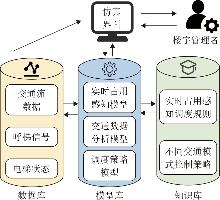
Fig. 1
Elevator group control scheduling architecture based on real-time occupancy awareness
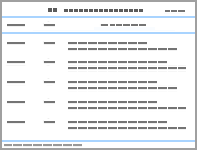
Table 1
Elevator environmental parameters
| 参数名称 | 参数取值 |
|---|---|
| 时间间隔 | 0.5 |
| 楼层数目 | 20 |
| 楼层高度 | 3 |
| 电梯数量 | 4 |
| 电梯最大加速度 | 1 |
| 电梯最大运行速度 | 2 |
| 乘客转移时间 | 3 |
| 乘客并行进出允许人数 | 2 |
| 轿厢最大乘客数 | 12 |
| 门动作时间 | 3 |
| 电梯门开关能耗 | 350 |
| 电梯待机平均功耗 | 100 |
| 电梯额定载重量 | 800 |
| 电梯净重量 | 300 |
| 曳引轮半径 | 0.27 |
| 曳引电机效率 | 0.8 |
| 齿轮传动比 | 0.9 |
| 轿顶反绳轮效率 | 0.9 |
| 轿顶反绳轮半径 | 0.9 |
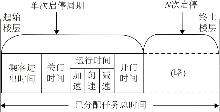
Fig. 2
Elevator Running Time
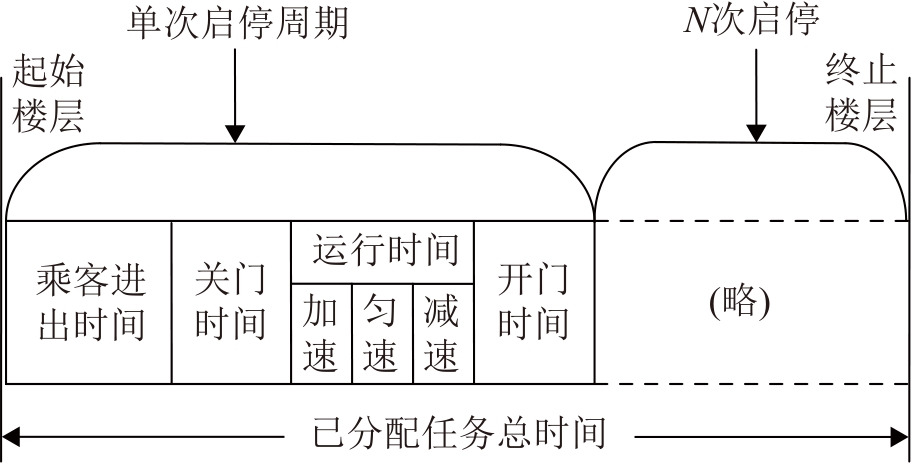
Table 2
Elevator status information
| 环境 | 符号 | 参数说明 |
|---|---|---|
| 楼宇环境 | ||
| 电梯状态 | 电梯 | |
| 电梯 | ||
| 电梯 | ||
| 电梯 | ||
| 电梯 | ||
| 电梯 | ||
| 电梯 | ||
| 电梯 | ||
| 1/0:电梯 |
Table 3
Description of the action space
| 参数符号 | 参数说明 |
|---|---|
1~H:将电梯 -1:电梯 0:电梯 | |
1:电梯 -1:电梯 0:电梯 |
Table 4
Weight allocation of different transportation modes
| 交通流模式 | |||
|---|---|---|---|
| 上行高峰 | 0.6 | 0.3 | 0.1 |
| 下行高峰 | 0.5 | 0.3 | 0.2 |
| 层间交通 | 0.2 | 0.4 | 0.4 |
| 空闲交通 | 0.3 | 0.6 | 0.1 |
Fig. 3
Reinforcement learning framework
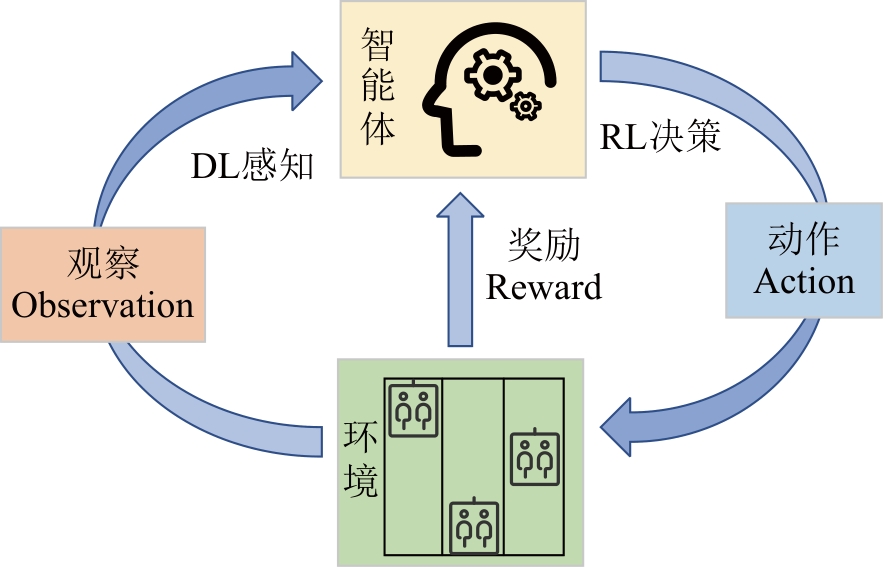
Table 5
Information coding rules and meanings
| 符号 | 维度 | 编码值域/阈值 | 编码规则 | 图4对应 |
|---|---|---|---|---|
| 3 | {上,停,下} | 对应方向置1 | ||
| 20 | {1,2,···,20} | 对应楼层置1 | 紫色块 | |
| 20 | {1,2,···,20} | 紫色块 | ||
| 20 | {1,2,···,20} | 紫色块 | ||
| 20 | {1,2,···,20} | 对应楼层有请求置1 | ||
| 20 | {1,2,···,20} | |||
| 20 | {1,2,···,20} | |||
| 5 | {0-0.2,···,0.8-1.0} | 对应区间范围置1 | ||
| 5 | {0-0.2,···,0.8-1.0} |
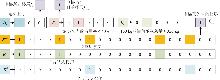
Fig. 4
Examples of information coding
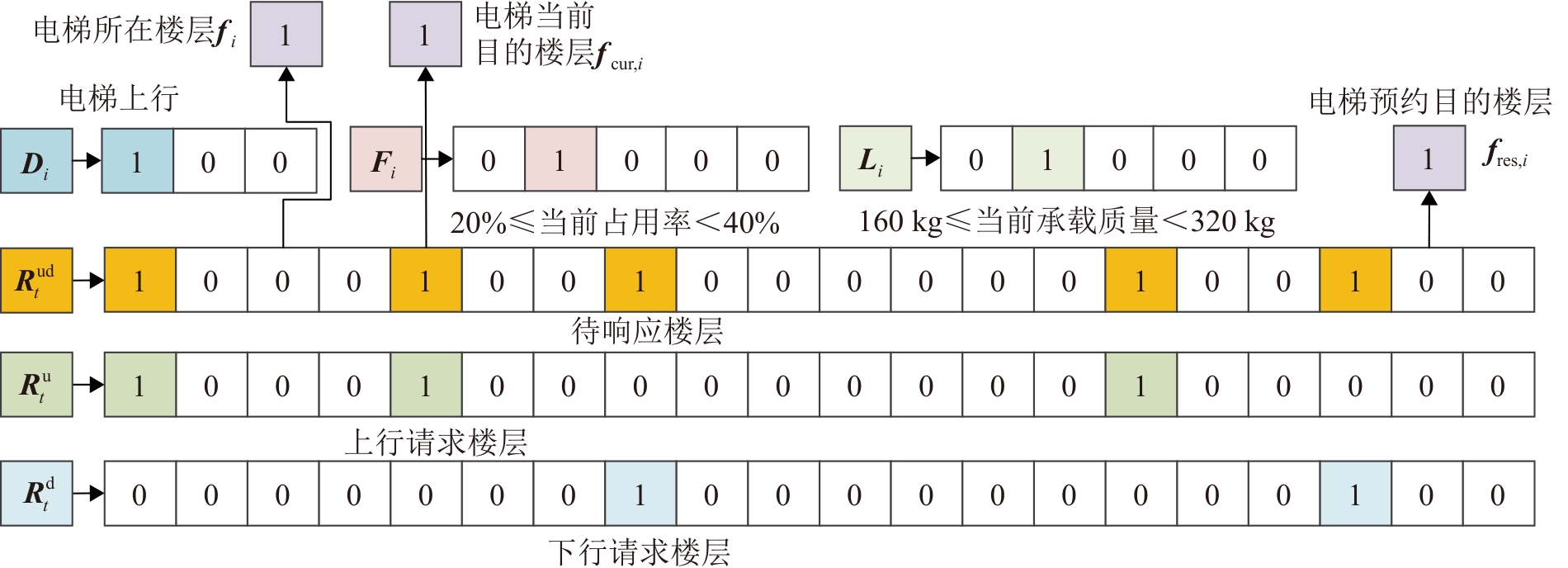
Fig. 5
Implementation process of PPO algorithm
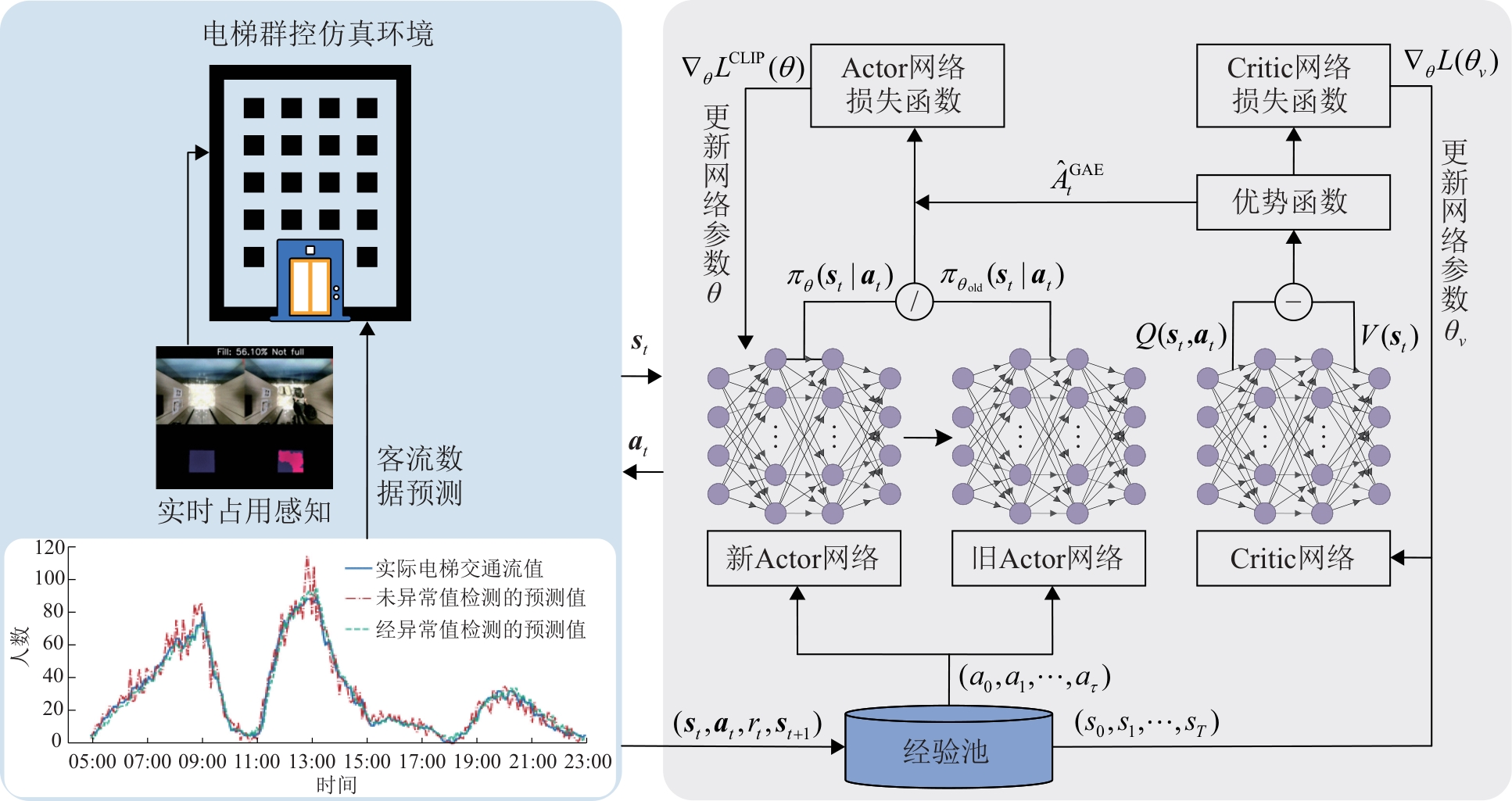
Fig. 6
ECGS simulation interface
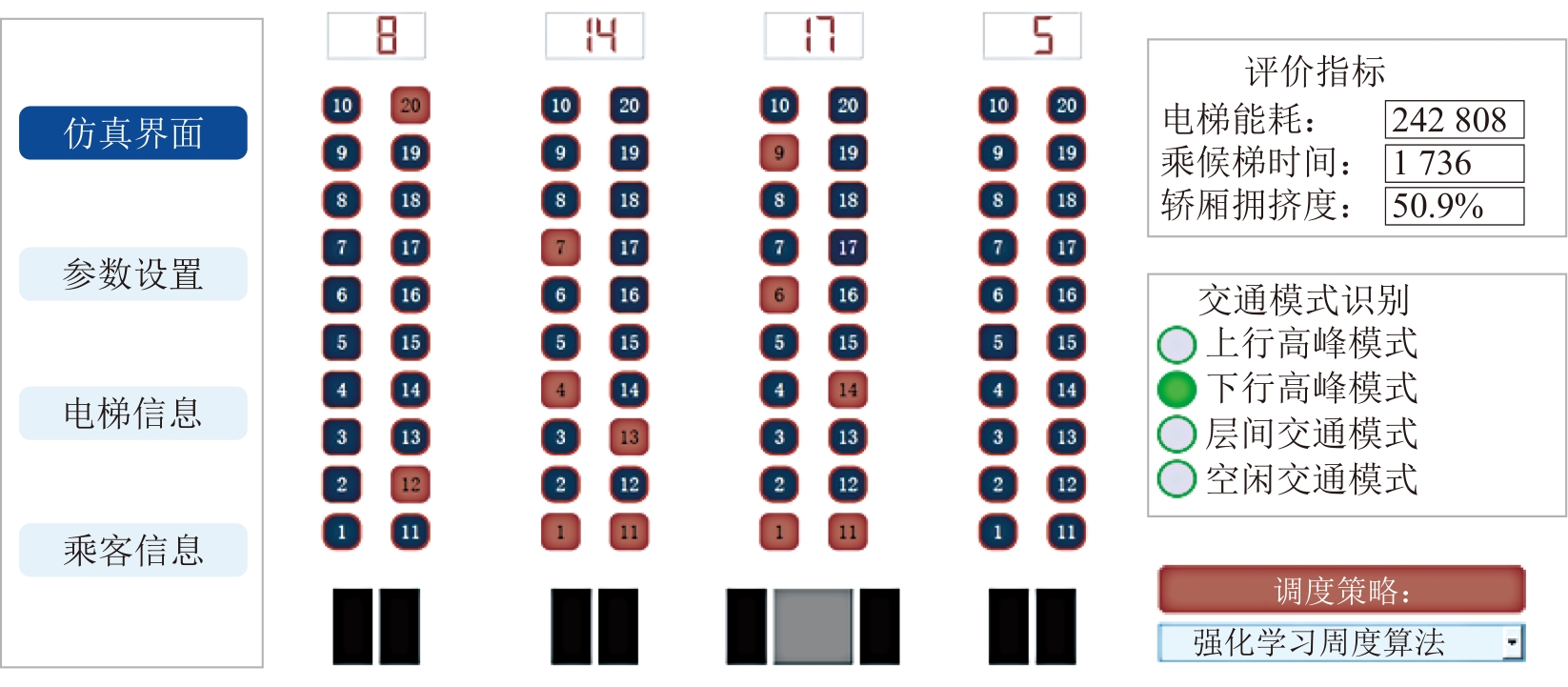
Fig. 7
Module relationship diagram
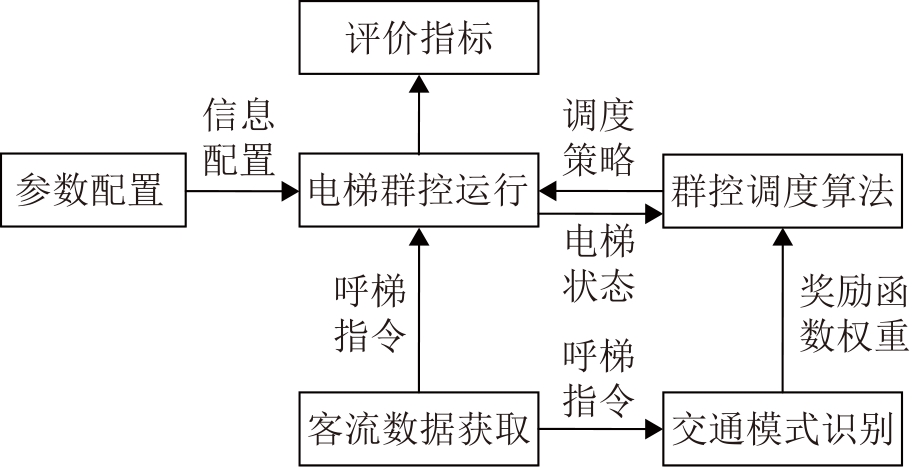
Table 6
Setting of PPO algorithm parameters
| 超参数 | 数值 |
|---|---|
| 裁剪系数 | 0.2 |
| 网络学习率 | 3×10⁻⁴ |
| 最小批次尺寸 | 64 |
| 训练次数 | 50 000 |
| GAE参数 | 0.95 |
| 采样步数 | 2 048 |
| 更新次数间隔/s | 10 |
Table 7
Full-load recognition performance comparison
| 交通模式 | 满载识别 | 电梯能耗/J | 平均候梯时间/s |
|---|---|---|---|
| 上行高峰 | 有 | 9 730 886 | 48.96 |
| 无 | 13 980 575 | 55.41 | |
| 下行高峰 | 有 | 10 947 640 | 49.38 |
| 无 | 12 192 587 | 52.11 | |
| 层间交通 | 有 | 3 281 459 | 27.56 |
| 无 | 3 530 393 | 28.73 | |
| 空闲模式 | 有 | 1 794 582 | 14.90 |
| 无 | 1 872 118 | 15.17 |
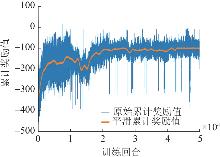
Fig. 8
Convergence curve of PPO algorithm
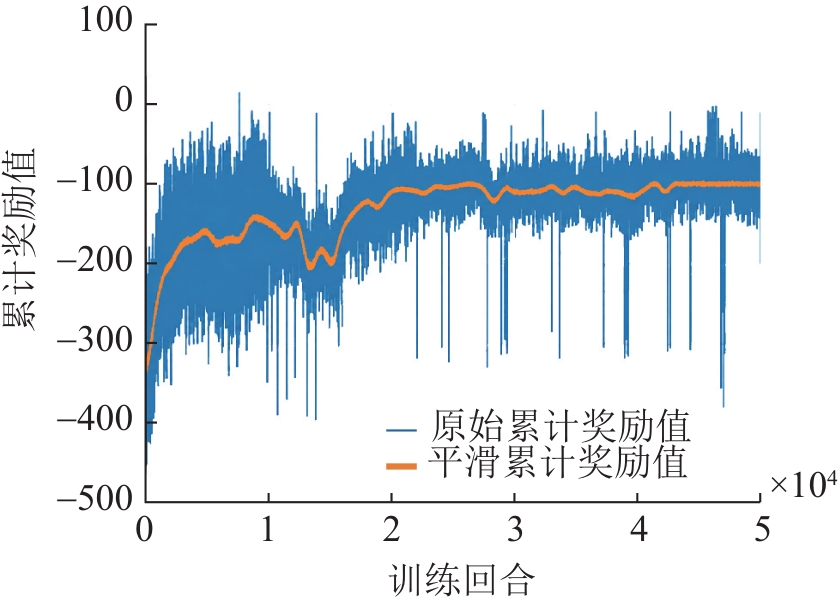
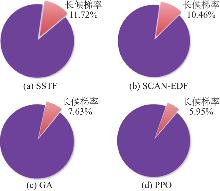
Fig. 9
Comparison of waiting time rates for different algorithms
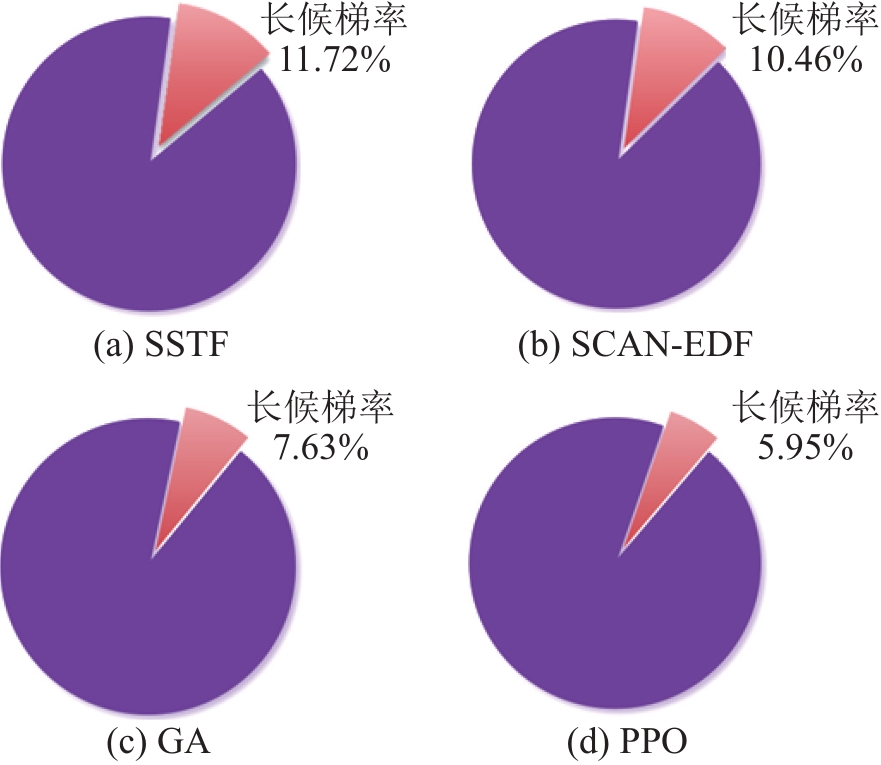
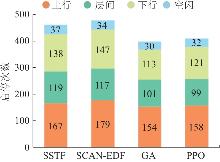
Fig. 10
Comparison of number of algorithm startups and shutdowns
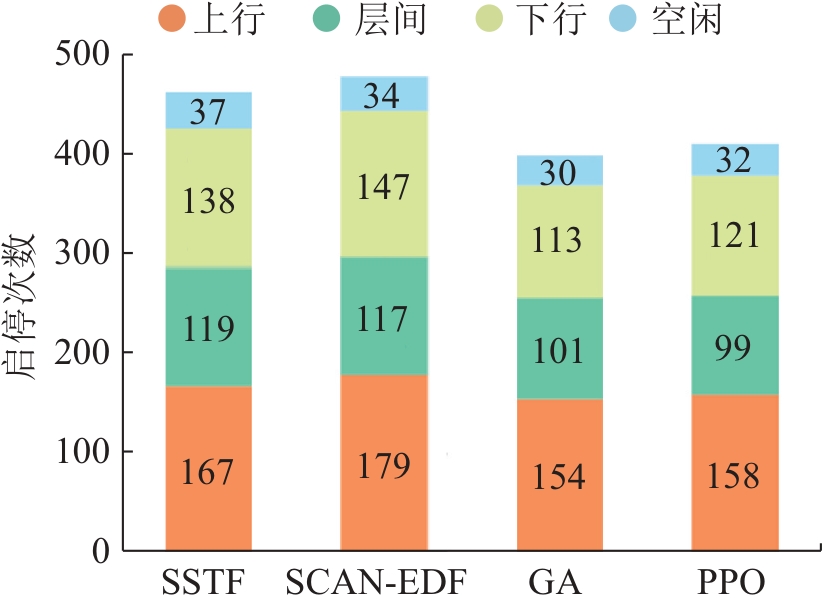
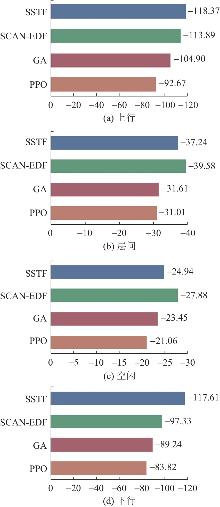
Fig. 11
Cumulative reward values for different transportation modes
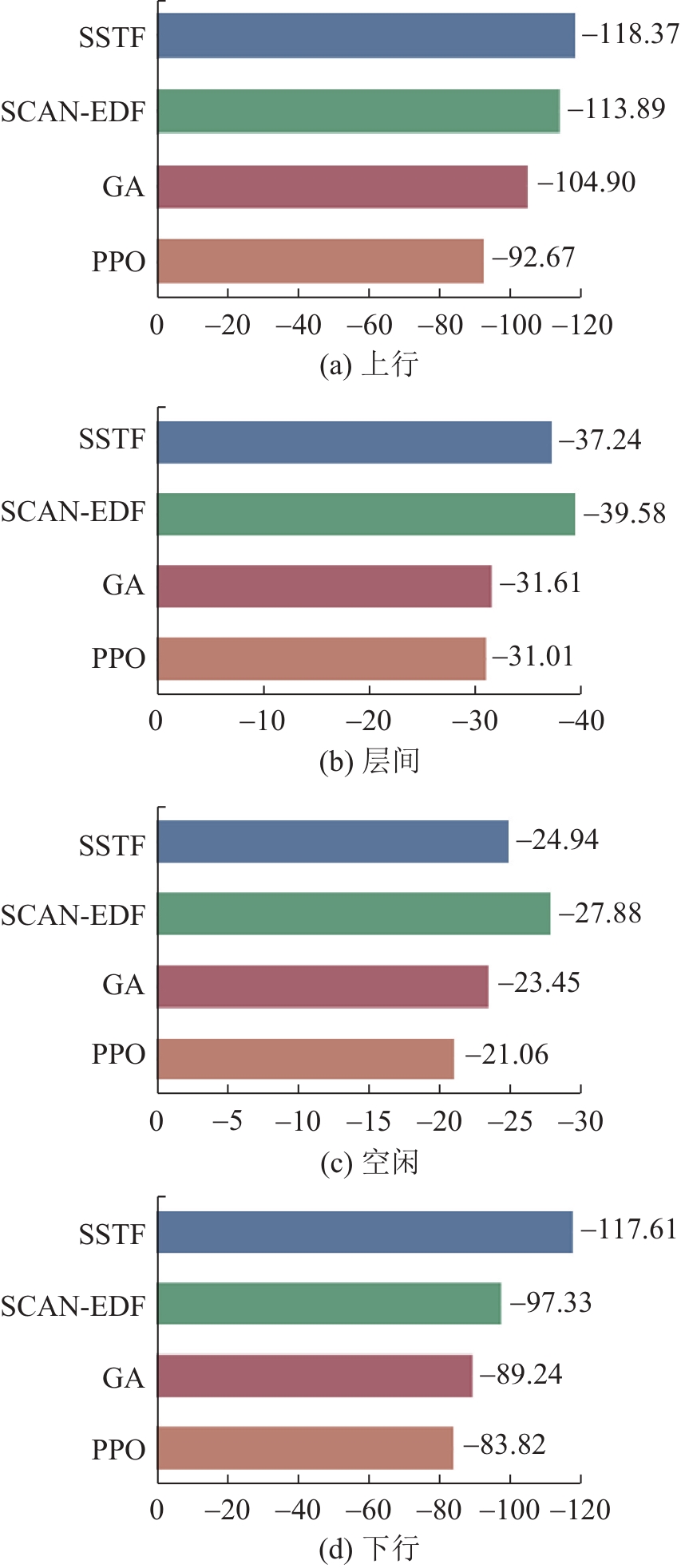
Table 8
Passenger data information during peak travel periods
| 数据序号 | 上行客流 | 下行客流 | 层间客流 | 乘客总数 |
|---|---|---|---|---|
| 1 | 40 | 9 | 16 | 65 |
| 2 | 58 | 4 | 12 | 74 |
| … | ||||
| 24 | 22 | 86 | 27 | 135 |
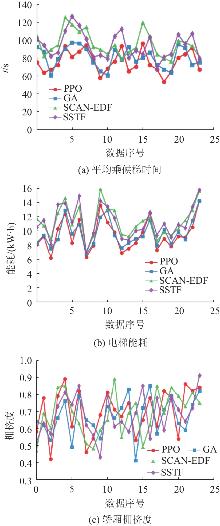
Fig. 12
Comparison of performance indicators of different algorithms for peak passenger flow patterns
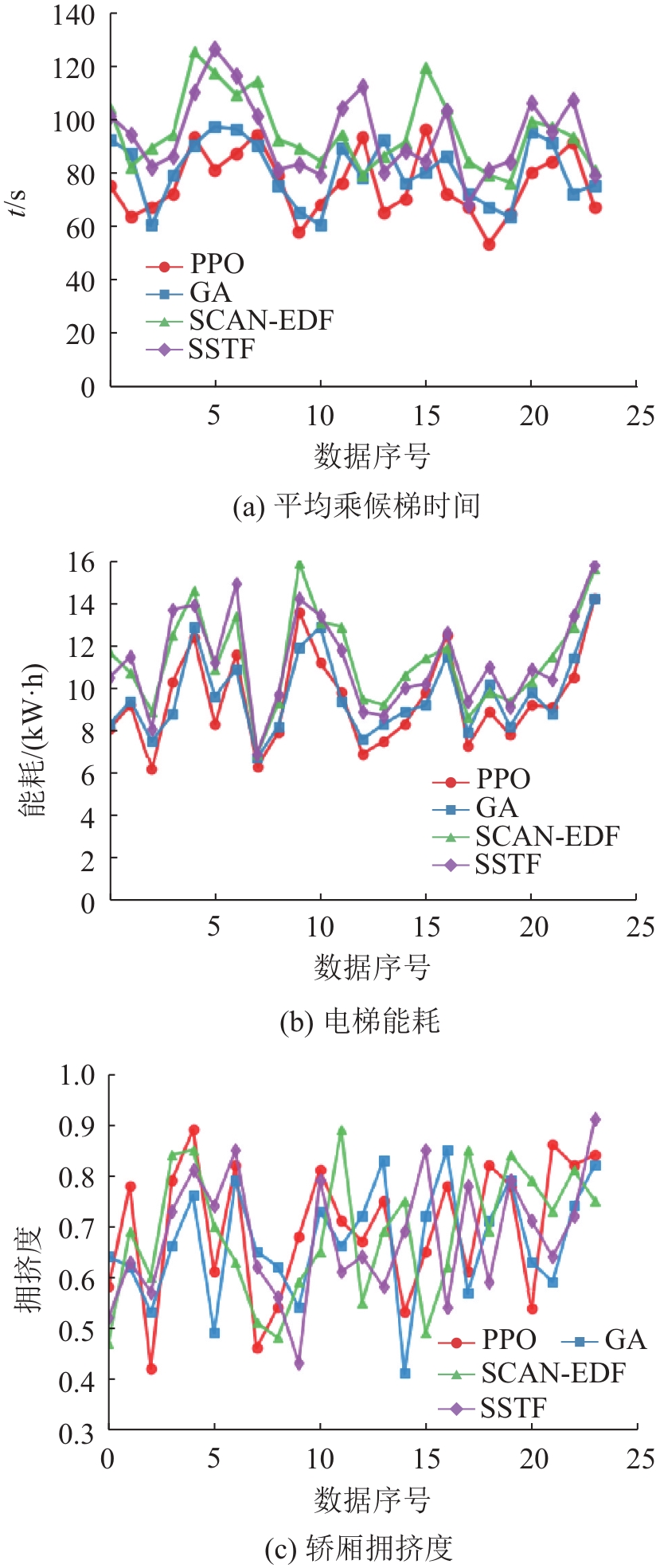
Table 9
Inter-level passenger flow data information
| 数据序号 | 上行客流 | 下行客流 | 层间客流 | 乘客总数 |
|---|---|---|---|---|
| 1 | 18 | 9 | 39 | 66 |
| 2 | 8 | 7 | 37 | 52 |
| … | ||||
| 24 | 6 | 8 | 55 | 69 |
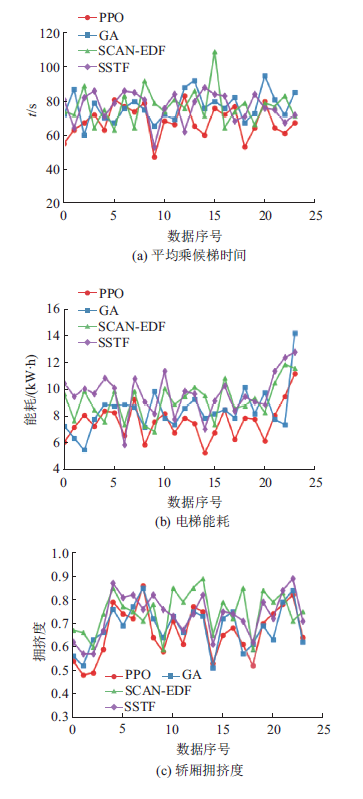
Fig. 13
Comparison of performance indicators of different algorithms for inter-floor passenger flow patterns
| [1] | Li Huayu, Chu E T H. SmartRide: Intelligent Reservation and Scheduling for Elevators[J]. Journal of Ambient Intelligence and Smart Environments, 2025, 17(1): 75-100. |
| [2] | Al-Kodmany K. Smart Elevator Systems[J]. Journal of Mechanical Materials and Mechanics Research, 2023, 6(1): 41-53. |
| [3] | Yang Zhenshan, Yue Wenjiao. Elevator Traffic Pattern Recognition Based on Fuzzy BP Neural Network with SOM Algorithm[J]. Advances in Modelling and Analysis B, 2017, 60(4): 630-645. |
| [4] | Li Zewen, He Kemei. A Review of Research on the Development of Elevator Group Control Technology[J]. Engineering Advances, 2023, 3(5): 438-442. |
| [5] | 田海, 赵小强. 群控电梯调度算法研究[J]. 计算机与网络, 2018, 44(18): 61-63. |
| Tian Hai, Zhao Xiaoqiang. Research on Group Control Elevator Scheduling Algorithm[J]. Computer & Network, 2018, 44(18): 61-63. | |
| [6] | Galarraga Joritz, Aitor Arrieta Marcos, Ali Shaukat, et al. Genetic Algorithm-based Testing of Industrial Elevators Under Passenger Uncertainty[C]//2021 IEEE International Symposium on Software Reliability Engineering Workshops (ISSREW). Piscataway: IEEE, 2021: 353-358. |
| [7] | 高慧生, 许清风, 房志明, 等. 基于遗传算法的多目标电梯紧急疏散问题[J]. 计算机系统应用, 2021, 30(1): 168-173. |
| Gao Huisheng, Xu Qingfeng, Fang Zhiming, et al. Multi-objective Elevator Evacuation Problem Based on Genetic Algorithm[J]. Computer Systems & Applications, 2021, 30(1): 168-173. | |
| [8] | Zhang Yuting, Cui Wei. A Multi-objective Optimization Approach for Elevator Group Control Systems Based on Particle Swarm Algorithm[J]. Journal of Circuits Systems and Computers, 2024, 33(8): 2450138. |
| [9] | Shuoyan Chou, Aditya Budhi D, Dewabharata A, et al. Improving Elevator Dynamic Control Policies Based on Energy and Demand Visibility[C]//2018 3rd International Conference on Intelligent Green Building and Smart Grid (IGBSG). Piscataway: IEEE, 2018: 1-4. |
| [10] | 张家瑞, 李海鹰, 苗建瑞, 等. 电梯群控系统调度模型及其改进ADMM分解算法[J]. 控制与决策, 2023, 38(1): 39-48. |
| Zhang Jiarui, Li Haiying, Miao Jianrui, et al. A Dispatching Model and Improved ADMM Decomposition Algorithm for Elevator Group Control System[J]. Control and Decision, 2023, 38(1): 39-48. | |
| [11] | Bapin Yerzhigit, Zarikas Vasilios. Smart Building's Elevator with Intelligent Control Algorithm Based on Bayesian Networks[J]. International Journal of Advanced Computer Science and Applications, 2019, 10(2): 16-24. |
| [12] | Hanif Mohammad, Mohammad Nur. Metaheuristic Algorithms for Elevator Group Control System: A Holistic Review[J]. Soft Computing, 2023, 27(21): 15905-15936. |
| [13] | 顾玲丽, 董佳琦, 许洪华. 基于强化蚁群算法的高层住宅电梯群调度研究[J]. 计算机仿真, 2022, 39(1): 412-417. |
| Gu Lingli, Dong Jiaqi, Xu Honghua. Research on Elevator Group Control and Scheduling of High-rise Residential Buildings Based on Reinforcement Learning and Ant Colony Algorithm[J]. Computer Simulation, 2022, 39(1): 412-417. | |
| [14] | Wei Qinglai, Wang Lingxiao, Liu Yu, et al. Optimal Elevator Group Control via Deep Asynchronous Actor-critic Learning[J]. IEEE Transactions on Neural Networks and Learning Systems, 2020, 31(12): 5245-5256. |
| [15] | 刘宇, 张聪, 李涛. 强化学习A3C算法在电梯调度中的建模及应用[J]. 计算机工程与设计, 2022, 43(1): 196-202. |
| Liu Yu, Zhang Cong, Li Tao. Modeling and Application of Reinforcement Learning A3C in Elevator Scheduling Algorithm[J]. Computer Engineering and Design, 2022, 43(1): 196-202. | |
| [16] | 魏东, 张靖媛, 方硕. 电梯群控仿真模型构建及群控调度策略研究[J]. 控制工程, 2025, 32(10): 1895-1905. |
| Wei Dong, Zhang Jingyuan, Fang Shuo. Construction of Elevator Group Control Simulation Model and Research on Group Control Scheduling Strategy[J]. Control Engineering of China, 2025, 32(10): 1895-1905. | |
| [17] | Wang Shu, Gong Xuejian, Song Mulang, et al. Smart Dispatching and Optimal Elevator Group Control Through Real-time Occupancy-aware Deep Learning of Usage Patterns[J]. Advanced Engineering Informatics, 2021, 48: 101286. |
| [18] | Othman Saba A, A K Mohammed Jamal, Farag Mahel Mohammed. Variable Speed Drives in Electric Elevator Systems: A Review[J]. Journal of Physics: Conference Series, 2021, 1973(1): 012028. |
| [19] | Ciflikli Cebrail, Emre Oner Tartan. A Model for the Visualization and Analysis of Elevator Traffic[J]. Transportation Planning and Technology, 2019, 42(8): 868-880. |
| [1] | Zhang Wenzhu, Bian Yuewei, Xiong Fuli, Cai Siqi. Online PPO-based Multi-hop Task Offloading Strategy for Vehicular Edge Computing [J]. Journal of System Simulation, 2026, 38(7): 1901-1921. |
| [2] | Yu Junjie, Ji Weixi, Chen Chen, Lu Jingyu, Zhang Chaoyang. Research on Multi-objective Hybrid Flow-shop Scheduling with Order Splitting [J]. Journal of System Simulation, 2026, 38(7): 2020-2036. |
| [3] | Tang Jinjun, Zhang Shuaijie. Energy Management Strategy for Hybrid Electric Buses Considering Vehicle Mass Variation [J]. Journal of System Simulation, 2026, 38(6): 1583-1597. |
| [4] | Zhang Guohui, Ren Yuan, Wu Changjun, Kou Xiaofei. Improved NSGA-II for Dual-resource Flexible Job Shop Scheduling Considering Worker Load [J]. Journal of System Simulation, 2026, 38(6): 1598-1612. |
| [5] | Liu Manqiang, Shang Ziqiang. Application of Improved Multi-objective Differential Algorithm in Robotic Arm Multi-objective Trajectory Planning [J]. Journal of System Simulation, 2026, 38(6): 1647-1668. |
| [6] | Li Minghui, Gao Daoxiang. Research on Output Feedback Control Based on Reinforcement Learning for Overhead Crane [J]. Journal of System Simulation, 2026, 38(6): 1771-1781. |
| [7] | Zhou Zicong, Zeng Junjie, Hu Yue, Zhu Zhengqiu, Yin Quanjun. Multi-agent Reinforcement Learning Method for Wargame Simulation Based on Suboptimal Demonstration Guidance [J]. Journal of System Simulation, 2026, 38(5): 1277-1289. |
| [8] | Li Guozheng, Wang Rui, Fan Shichao, Cai Xintong, Zhai Xinyue. Review on Optimization of Simulation Modeling Strategies for Spacecraft Orbit Avoidance [J]. Journal of System Simulation, 2026, 38(4): 855-868. |
| [9] | Liang Binhao, Wei Jingxuan, Liang Fengqin. Large-scale Multi-objective Evolutionary Algorithm Based on Multi-region Dynamic Grouping [J]. Journal of System Simulation, 2026, 38(4): 974-987. |
| [10] | Li Dequan, Xiong Wan. Robot Path Planning by Reinforcement Learning Based on SAC3Q-HDM [J]. Journal of System Simulation, 2026, 38(3): 714-724. |
| [11] | Yang Can, Chen Kai, Zhu Feng. Reinforcement Learning Based Method for UAV Team Orienteering Optimization under Multi-constraint Condition [J]. Journal of System Simulation, 2026, 38(2): 360-371. |
| [12] | Zheng Wei, Tang Jiahao, Xiong Xiaoping, Fan Xin. Intelligent Decision-making Method in Imbalanced Air Combat Based on Asymmetric Self-play [J]. Journal of System Simulation, 2026, 38(2): 433-446. |
| [13] | Ding Zhengkun, Liu Jiaqi, Xu Junzheng, Xu Yuezhu, Wang Xingmei. Intelligent Air Combat Decision-making Method Based on BiGRU and Priority Dynamic Sampling [J]. Journal of System Simulation, 2026, 38(2): 447-459. |
| [14] | Tao Caixia, Chen Naikun, Gao Fengyang, Zhang Jiangang. Distributed Optimization for Integrated Energy Based on Multi-agent Reinforcement Learning [J]. Journal of System Simulation, 2026, 38(2): 476-487. |
| [15] | Jiang Ming, He Tao. Solving the Vehicle Routing Problem Based on Deep Reinforcement Learning [J]. Journal of System Simulation, 2025, 37(9): 2177-2187. |
| Viewed | ||||||
|
Full text |
|
|||||
|
Abstract |
|
|||||
 http://www.china-simulation.com

