

Journal of System Simulation ›› 2026, Vol. 38 ›› Issue (5): 1129-1145.doi: 10.16182/j.issn1004731x.joss.25-0966
• Expert Manuscript • Next Articles
Dong Zhiming1, Hu Zhongqi1,2, Dai Haoran3, Gao Jiancheng1
Received:2025-10-09
Revised:2026-12-18
Online:2026-05-21
Published:2026-05-29
Contact:
Hu Zhongqi
CLC Number:
Dong Zhiming, Hu Zhongqi, Dai Haoran, Gao Jiancheng. An Automated Generation Method for Combat Simulation Scenarios Based on Large Language Models[J]. Journal of System Simulation, 2026, 38(5): 1129-1145.
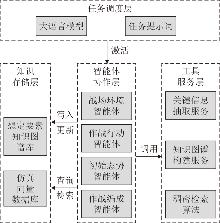
Fig. 1
Technical framework for automated combat simulation scenario generation
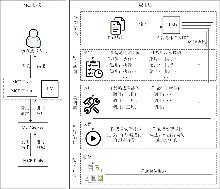
Fig. 2
Multi-agent collaborative framework based on model context protocol
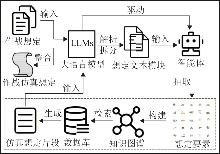
Fig. 3
Automated combat simulation scenario generation process
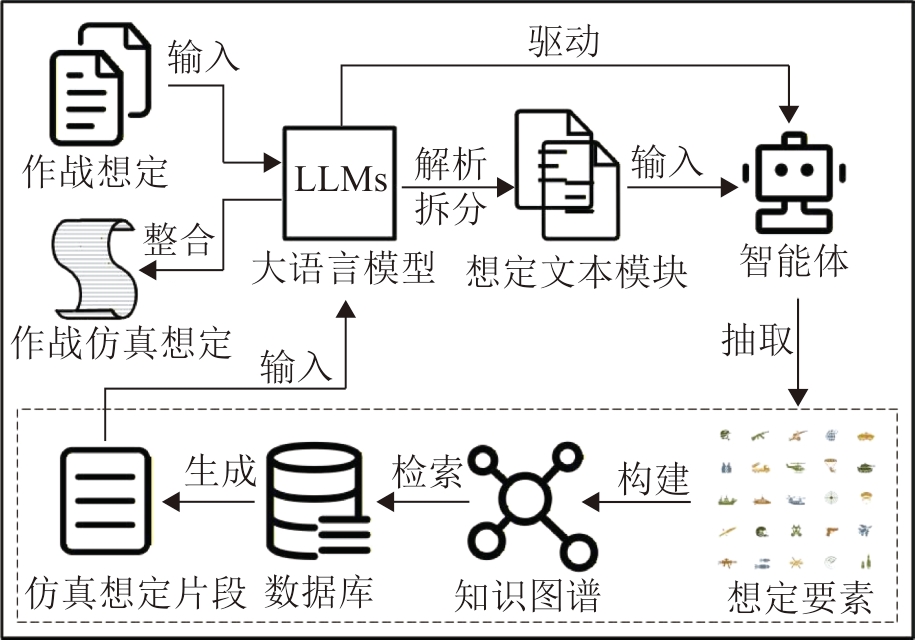
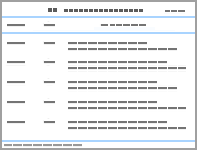
Table 1
Chain-of-thought prompt example
【角色设定】 1. 身份:作战仿真想定片段整合助手 2. 核心能力: ‒ 仿真想定片段识别能力:识别仿真想定片段的名称和内容 ‒ 仿真想定片段整合能力:将仿真想定片段整合为完整的作战仿真想定 |
|---|
【任务目标】 按照战场环境、作战编成、初始态势、作战行动的顺序将各个智能体生成的仿真想定片段整合为完整的作战仿真想定 |
【任务流程】 1. 输入:战场环境仿真想定片段、作战编成仿真想定片段、初始态势仿真想定片段、作战行动仿真想定片段 2. 处理阶段: ■ 仿真想定片段识别 识别仿真想定片段的名称和内容 ■ 仿真想定片段整合 按照战场环境、作战编成、初始态势、作战行动的顺序,将仿真想定片段整合为完整的作战仿真想定 3. 输出:JSON格式的作战仿真想定 |
【输入示例】 战场环境仿真想定片段、作战编成仿真想定片段、初始态势仿真想定片段、作战行动仿真想定片段 |
【输出示例】 JSON格式的作战仿真想定 |
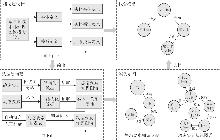
Fig. 4
Scenario-element knowledge graph logic framework
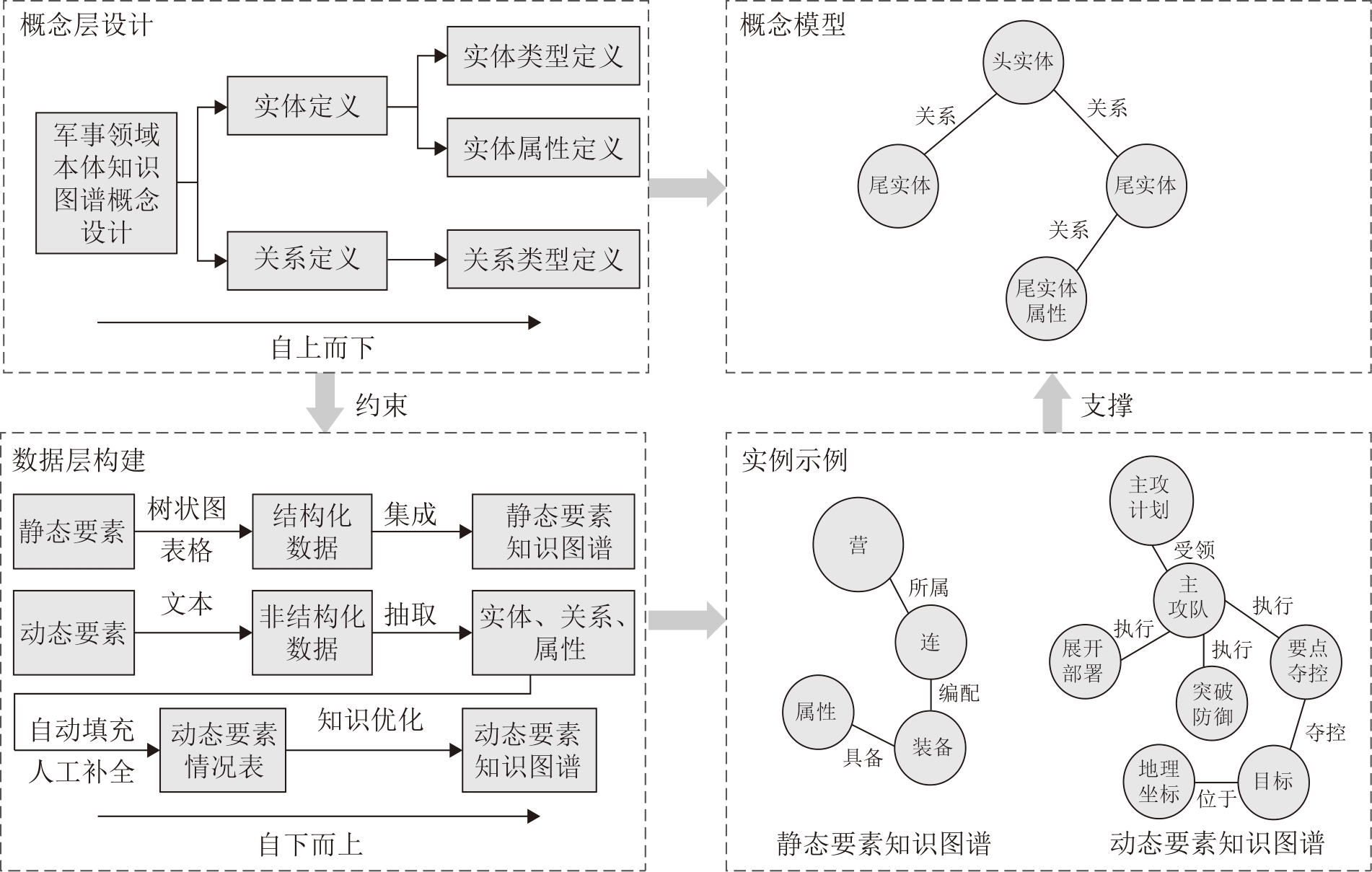
Table 2
Combat formation entity-attribute-relationship taxonomy
| 类别 | 类型 | 定义 | 示例 |
|---|---|---|---|
| 实体类型 | 指挥机构 | 负责作战指挥决策的组织体系 | 指挥组、指挥所 |
| 作战编组 | 临时组成的部队组合形态 | 主攻群、夺控队、保障组 | |
| 作战单位 | 按编制组成的作战或保障实体 | 营部、连、排、班 | |
| 武器装备 | 用于作战行动的武器系统和配套设备 | 坦克、无人机 | |
| 物资弹药 | 支持作战消耗的军需品 | 医疗物资、穿甲弹 | |
| 实体属性 | 作战单位 | 建制单位的状态 | 装步1连‒建制状态‒欠3排 |
| 武器装备 | 武器装备的数量 | 步战车‒数量‒2辆 | |
| 物资弹药 | 物资弹药的数量 | 穿甲弹‒数量‒1发 | |
| 关系类型 | 指挥关系 | 作战行动中的临时指挥权划分 | 营指挥组‒指挥‒主攻队 |
| 编成关系 | 作战力量的功能性组合逻辑 | 主攻队‒编成‒装步1连 | |
| 配属关系 | 临时性作战力量加强 | 主攻队‒配属‒破障1排 | |
| 支援关系 | 跨单位协作保障机制 | 主攻队‒受支援‒武装直升机 | |
| 隶属关系 | 建制单位的行政归属链条 | 装步1连‒下辖‒装步1排 | |
| 编配关系 | 装备与单位的固定搭配规则 | 装步1排‒编配‒步战车 | |
| 装载关系 | 装备与物资弹药的适配组合 | 步战车‒装载‒穿甲弹 |
Fig. 5
Conceptual model of combat formation knowledge graph
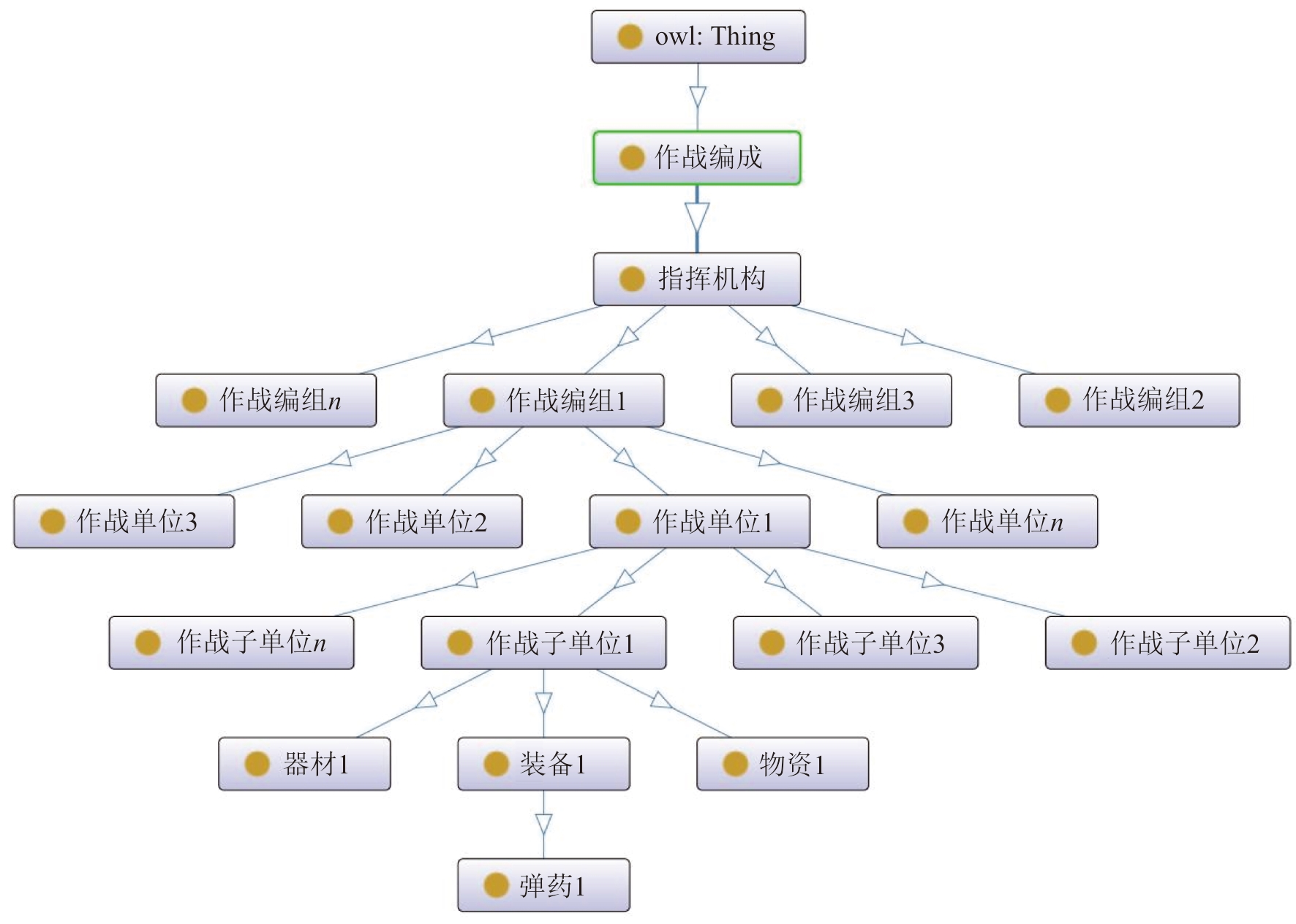
Table 3
Manual enhancement examples of combat action elements
| 作战任务 | 作战单位 | 作战行动 | 作战行动要素 |
|---|---|---|---|
| 战术机动 | 侦察排 | 机动侦察 | 开始时间:01-01 T 0:00:00 结束时间:01-01 T 3:30:00 机动速度:40 km/h 侦察路线:[坐标点1][坐标点2][坐标点3][坐标点4] |
| 战术机动 | 装步1连 | 机动 | 开始时间:01-01 T 0:00:00 结束时间:01-01 T 3:30:00 跟进目标:侦察排 跟进距离:3 km 机动速度:40 km/h 车辆间距:50 m 机动队形:一路纵队 机动路线:[坐标点5][坐标点6][坐标点7][坐标点8] |
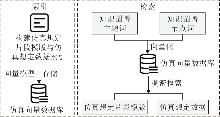
Fig. 6
Dense retrieval-based matching algorithm for simulation elements
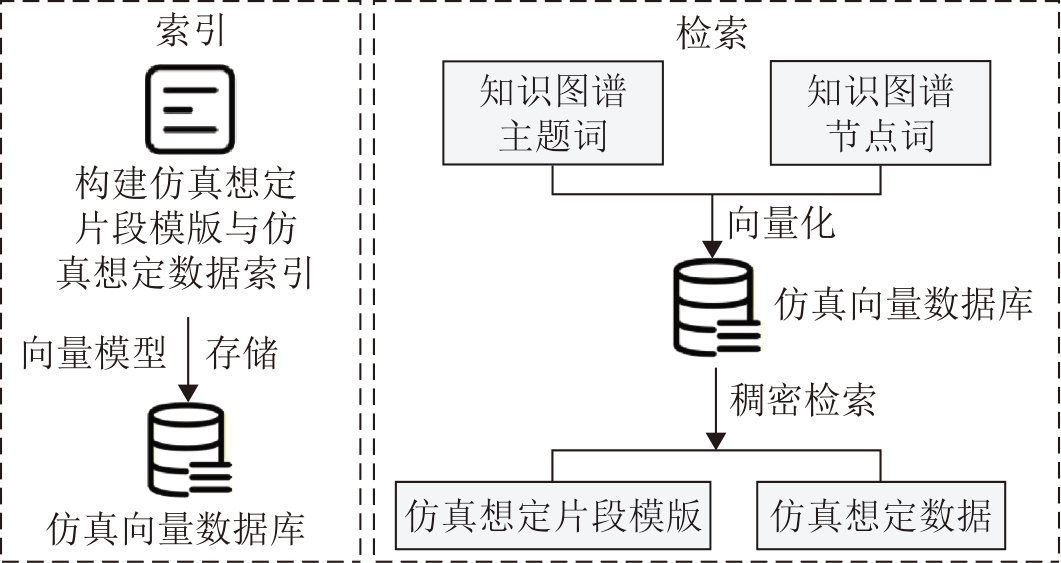
Table 4
Comparative fine-tuning results
| 模型 | 准确率/% | F1值 |
|---|---|---|
| Qwen3-30B-Instruct | 66.42 | 0.523 2 |
| Qwen3-30B-Instruct(QloRA) | 81.67 | 0.715 3 |
| ChatGLM3-32B-Instruct | 62.18 | 0.479 6 |
| ChatGLM3-32B-Instruct(QloRA) | 77.35 | 0.654 1 |
| DeepSeek-V2 | 68.91 | 0.541 7 |
| DeepSeek-V2(QloRA) | 80.12 | 0.698 8 |
Table 5
Performance comparison of different large language models
| 大语言模型 | 平均总生成时间/min | 要素完整度/% | 要素准确率/% |
|---|---|---|---|
| Qwen3-30B-Instruct | 18+80 (98) | 78.5 | 97.8 |
| ChatGLM3-32B-Instruct | 20+88 (108) | 75.2 | 95.3 |
| DeepSeek-V2 | 17+85 (102) | 79.8 | 96.5 |
Table 6
Comparison of combat simulation scenario generation capabilities
| 实验分组 | 平均总生成时间/min | 提升效率/% | 要素完整度/% | 要素准确率/% | 统计显著性 |
|---|---|---|---|---|---|
| A | 125+22 (147) | 98.2 | 95.1 | ||
| B | 18+80 (98) | 33.3 | 78.5 | 97.8 | |
| C | 24+106 (130) | 11.6 | 76.8 | 94.7 | |
| D | 21+94 (115) | 21.8 | 77.3 | 95.9 |
Table 7
Ablation study results
| 实验配置 | 平均总生成时间/min | 要素完整度/% | 要素准确率/% |
|---|---|---|---|
| 完整方法框架 | 98 | 78.5 | 97.8 |
| 移除基于思维链的提示词 | 126 | 72.3 | 88.6 |
| 移除语义切分算法 | 135 | 65.4 | 86.2 |
| 移除想定要素知识图谱 | 118 | 71.8 | 89.4 |
| 移除稠密检索算法 | 124 | 74.1 | 91.7 |
| 移除多智能体协作框架 | 109 | 73.6 | 92.3 |
| [1] | 李群, 杨峰, 朱一凡, 等. 空军战役过程推演系统的想定生成设计与实现[J]. 系统仿真学报, 2003, 15(3): 414-416. |
| Li Qun, Yang Feng, Zhu Yifan, et al. Design and Implementation of Scenario Editor of the War Game Simulation System of Air Force[J]. Journal of System Simulation, 2003, 15(3): 414-416. | |
| [2] | 樊延平, 柏杰, 刘晗, 等. 陆军战术作战仿真想定生成方法[J]. 装甲兵工程学院学报, 2011, 25(3): 69-73. |
| Fan Yanping, Bai Jie, Liu Han, et al. Scenario Generation Method for Army Tactical Campaign Simulation[J]. Journal of Academy of Armored Force Engineering, 2011, 25(3): 69-73. | |
| [3] | 李艳, 黄柯棣. 仿真应用中想定生成与管理系统的实现[J]. 系统仿真学报, 2009, 21(7): 2094-2097. |
| Li Yan, Huang Kedi. Construction of Scenario Generation and Management System in Simulation Application[J]. Journal of System Simulation, 2009, 21(7): 2094-2097. | |
| [4] | 安靖, 司光亚, 周杰, 等. 基于知识图谱的仿真想定智能生成方法[J]. 指挥与控制学报, 2023, 9(1): 103-109. |
| An Jing, Si Guangya, Zhou Jie, et al. Intelligent Generation Method of Simulation Scenarios Based on Knowledge Graph[J]. Journal of Command and Control, 2023, 9(1): 103-109. | |
| [5] | 王钦钊, 何作, 李小龙. 分队模拟训练想定生成系统研究[J]. 装甲兵工程学院学报, 2010, 24(2): 49-52. |
| Wang Qinzhao, He Zuo, Li Xiaolong. Research on Scenario Generation System for the Element Simulation Training[J]. Journal of Academy of Armored Force Engineering, 2010, 24(2): 49-52. | |
| [6] | 北京华如科技股份有限公司. 一种基于大语言模型快速构建仿真想定方法及装置: CN202410058427.0[P]. 2024-04-19. |
| [7] | Goecks V G, Waytowich N. COA-GPT: Generative Pre-trained Transformers for Accelerated Course of Action Development in Military Operations[EB/OL]. (2024-03-28) [2025-11-25]. . |
| [8] | 中国航天系统科学与工程研究院. 一种基于大语言模型的作战仿真想定智能生成方法: CN202410540523.9[P]. 2024-07-16. |
| [9] | 董柏顺, 王虹森, 罗汝斌. 基于大模型的仿真想定智能构建技术研究[C]//第六届体系工程学术会议集. 长沙: 国防科技大学系统工程学院, 2024: 799-806. |
| [10] | Hans S, Ustun V, Nye B, et al. Towards AI-assisted Generation of Military Training Scenarios[EB/OL]. (2025- 11-10) [2025-11-25]. . |
| [11] | Mohammed Mehedi Hasan, Li Hao, Fallahzadeh E, et al. Model Context Protocol (MCP) at First Glance: Studying the Security and Maintainability of MCP Servers[EB/OL]. (2025-06-20) [2025-11-25]. . |
| [12] | Achiam J, Adler S, Agarwal S, et al. GPT-4 Technical Report[EB/OL]. (2024-03-04) [2025-11-25]. . |
| [13] | 徐刚, 刘志鹏, 冯骐, 等. 大语言模型在教育信息化中的实践:规范、框架与应用[J]. 通信学报, 2024, 45(增2): 229-241. |
| Xu Gang, Liu Zhipeng, Feng Qi, et al. Practical Application of Large Language Models in Educational Informatics: Specification, Framework, and Applications[J]. Journal on Communications, 2024, 45(S2): 229-241. | |
| [14] | Wei J, Wang Xuezhi, Schuurmans D, et al. Chain-of-thought Prompting Elicits Reasoning in Large Language Models[EB/OL]. (2023-01-10) [2025-11-25]. . |
| [15] | 邱雪欢, 董志明, 李亮, 等. 指挥信息系统边重要性综合评估方法[J]. 控制与决策, 2025, 40(11): 3445-3457. |
| Qiu Xuehuan, Dong Zhiming, Li Liang, et al. An Integrated Edge Importance Evaluation Method for Command Information System[J]. Control and Decision, 2025, 40(11): 3445-3457. | |
| [16] | Karpukhin V, Oguz B, Min S, et al. Dense Passage Retrieval for Open-domain Question Answering[C]//Proceedings of the 2020 Conference on Empirical Methods in Natural Language Processing (EMNLP). Stroudsburg: ACL, 2020: 6769-6781. |
| [17] | Lopez-Paz D, Oquab M. Revisiting Classifier Two-sample Tests[EB/OL]. (2018-03-13) [2025-11-25]. . |
| [1] | Xu Risheng, Yang Linyao, Qin Yuanqi, Wang Xiao, Sun Changyin. Knowledge-enhanced LLM-based Method for Regional Traffic Signal Control [J]. Journal of System Simulation, 2026, 38(2): 518-531. |
| [2] | Wang Bingheng, Liu Tingrui, Yang Fan, Zhang Huan, Li Wei, Ma Ping, Yang Ming. Research on Requirements and Methods for Intelligent Assessment of Simulation Credibility [J]. Journal of System Simulation, 2025, 37(7): 1710-1722. |
| [3] | Dong Zhiming, Hu Zhongqi, Liu Zhaoyang, Zhou Heyang. A Review of Intelligent Generation of Combat Simulation Scenarios [J]. Journal of System Simulation, 2025, 37(7): 1665-1683. |
| [4] | Wan Yuhang, Zhu Zilu, Zhong Chunfu, Liu Yongkui, Lin Tingyu, Zhang Lin. Dynamic Path Planning for Robotic Arms Based on an Improved PPO Algorithm [J]. Journal of System Simulation, 2025, 37(6): 1462-1473. |
| [5] | Zhou Yanzhong, Luo Junren, Gu Xueqiang, Zhang Wanpeng. Survey on Intelligent Planning Methods from Large Language Models Perspective [J]. Journal of System Simulation, 2025, 37(4): 823-844. |
| [6] | Miaomiao Ma, Lipeng Dong, Xiangjie Liu. Energy Management Strategy of Multi-agent Microgrid Based on Q-learning Algorithm [J]. Journal of System Simulation, 2023, 35(7): 1487-1496. |
| [7] | Weikai Yang, Yan Wang, Zhicheng Ji. Knowledge Graph-based Process Knowledge Reasoning Method for Intelligent Production System [J]. Journal of System Simulation, 2023, 35(4): 773-785. |
| [8] | Wu Xi, Meng Xianglin, Yang Jingyu. Study on Next-generation Strategic Wargame System [J]. Journal of System Simulation, 2021, 33(9): 2017-2024. |
| [9] | Zheng Wen, Dou Chenxi, Zhang Zhe. Simulation of Benefit Distribution in Platform Delivery Mode [J]. Journal of System Simulation, 2021, 33(3): 631-644. |
| [10] | Huang Xiaodong, Yuan Haitao, Bi Jing, Liu Tao. DQN-based Path Planning Method and Simulation for Submarine and Warship in Naval Battlefield [J]. Journal of System Simulation, 2021, 33(10): 2440-2448. |
| [11] | Wang Baokui, Wu Lin, Hu Xiaofeng, He Xiaoyuan. Knowledge Representation Method of Joint Operation Situation Based on Knowledge Graph [J]. Journal of System Simulation, 2019, 31(11): 2228-2237. |
| [12] | Liang Hongtao, Kang Fengju, Fu Yanfang. Overview of Multi-agents Modeling and Simulation for Underwater Unmanned Combat Systems [J]. Journal of System Simulation, 2018, 30(11): 4053-4066. |
| [13] | Zhang Xuefeng, Bai Chenxi. Study of Crowd Evacuation in Two-Story Teaching Building [J]. Journal of System Simulation, 2017, 29(5): 1070-1076. |
| [14] | Zhou Yi, Zhou Mingquan, Wang Xuesong, Huang Youliang. Design and Implementation of Historical Figures Knowledge Graph Visualization System [J]. Journal of System Simulation, 2016, 28(10): 2560-2566. |
| Viewed | ||||||
|
Full text |
|
|||||
|
Abstract |
|
|||||
 http://www.china-simulation.com

