

Journal of System Simulation ›› 2026, Vol. 38 ›› Issue (10): 3052-3067.doi: 10.16182/j.issn1004731x.joss.26-0395
• Aerospace Mission Planning and Scheduling • Previous Articles Next Articles
Zhao Haoyu, Zhang Guanghui, Hao Lanting, Guo Meijia
Received:2026-04-30
Revised:2026-06-21
Online:2026-10-31
Published:2026-10-20
Contact:
Zhang Guanghui
CLC Number:
Zhao Haoyu, Zhang Guanghui, Hao Lanting, Guo Meijia. Hybrid Jaya-Transformer-based Task Scheduling Algorithm for Super-agile Satellites[J]. Journal of System Simulation, 2026, 38(10): 3052-3067.
Fig. 1
Transformer network architecture
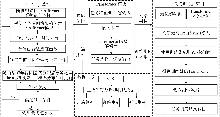
Fig. 2
Hybrid Jaya-Transformer algorithm framework
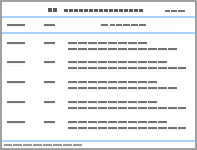
Table 1
Satellite parameters
| 卫星参数 | 值 |
|---|---|
| 半长轴/km | 6 678.14 |
| 偏心率 | 0 |
| 轨道倾角/(°) | 97.406 5 |
| 升交点赤经/(°) | 120 |
| 近地点幅角/(°) | 0 |
| 真近点角/(°) | 34 |
| 时间 | 2025-04-20T04:00:00—21T04:00:00 |
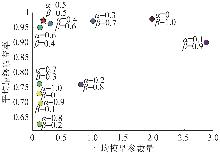
Fig. 3
Distributions of model parameter count and task profit ratio under different weights
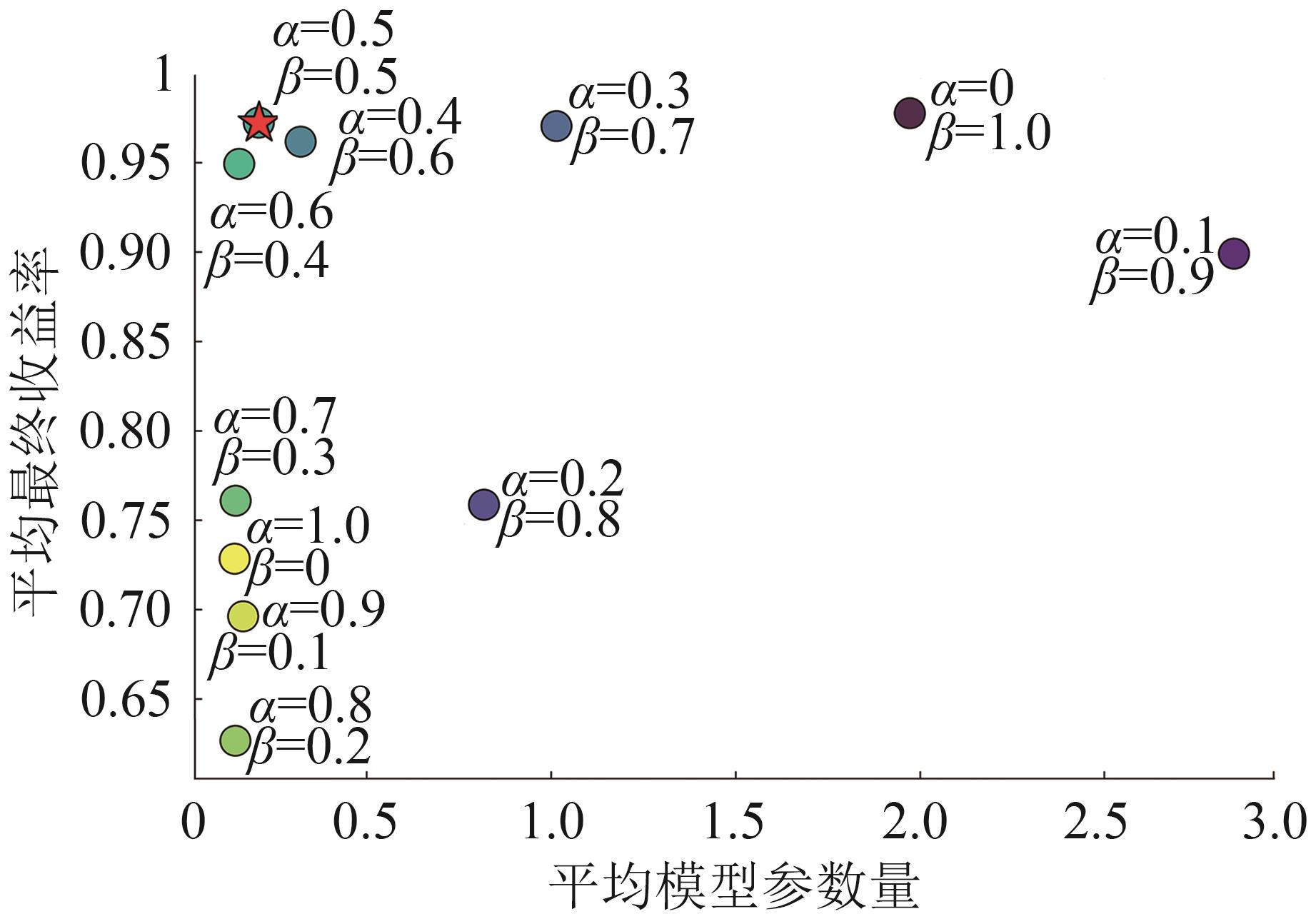
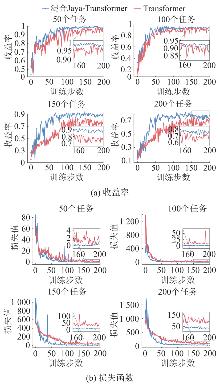
Fig. 4
Training performance comparison between hybrid Jaya-Transformer and Transformer for different task scales
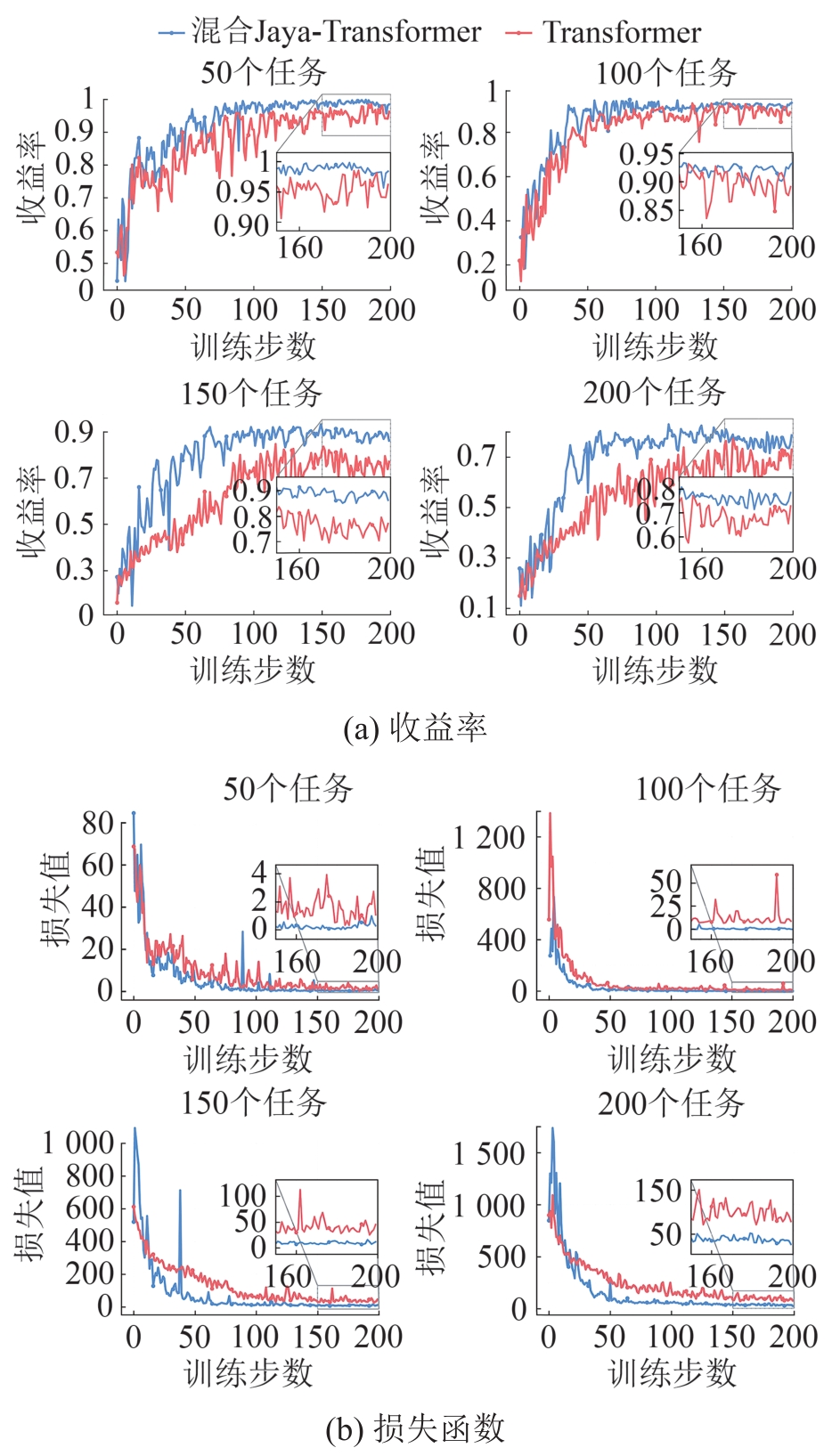
Table 2
Performance comparison of different algorithms
任务 数目 | 算法 | 任务收益率/% | 平均求解时间/s | ||
|---|---|---|---|---|---|
| 最小值 | 最大值 | 平均值 | |||
| 50 | ALNS | 99.21 | 100 | 99.69 | 8.34 |
| IGA-LS | 96.85 | 100 | 99.22 | 6.21 | |
| Transformer | 96.55 | 97.68 | 97.07 | 0.20 | |
| 本文 | 98.26 | 100 | 99.65 | 0.21 | |
| 100 | ALNS | 90.58 | 94.38 | 92.32 | 29.74 |
| IGA-LS | 85.58 | 94.57 | 90.34 | 24.34 | |
| Transformer | 87.23 | 89.94 | 88.03 | 0.40 | |
| 本文 | 89.10 | 94.94 | 93.24 | 0.45 | |
| 150 | ALNS | 80.25 | 84.65 | 82.33 | 67.43 |
| IGA-LS | 75.35 | 83.40 | 79.52 | 67.80 | |
| Transformer | 69.24 | 72.36 | 71.27 | 0.59 | |
| 本文 | 81.73 | 85.68 | 83.16 | 0.61 | |
| 200 | ALNS | 70.98 | 75.23 | 72.48 | 106.42 |
| IGA-LS | 63.31 | 74.68 | 70.71 | 108.90 | |
| Transformer | 63.92 | 65.22 | 64.41 | 0.84 | |
| 本文 | 70.33 | 77.41 | 74.36 | 0.78 | |
Table 3
Standard deviations and significance test results of task profit ratios for different algorithms
| 任务数目 | 算法 | 标准差/% | p-value | 显著性 |
|---|---|---|---|---|
| 50 | ALNS | 0.25 | 0.556 4 | ns |
| IGA-LS | 1.33 | 0.345 2 | ns | |
| Transformer | 0.37 | 0.002 9 | ** | |
| 本文 | 0.62 | -- | -- | |
| 100 | ALNS | 1.27 | 0.042 | * |
| IGA-LS | 2.67 | 0.037 1 | * | |
| Transformer | 0.80 | 0.002 9 | ** | |
| 本文 | 1.66 | -- | -- | |
| 150 | ALNS | 1.63 | 0.065 4 | ns |
| IGA-LS | 2.32 | 0.013 7 | * | |
| Transformer | 1.00 | 0.002 9 | ** | |
| 本文 | 1.21 | -- | -- | |
| 200 | ALNS | 1.34 | 0.037 1 | * |
| IGA-LS | 3.60 | 0.037 1 | * | |
| Transformer | 0.44 | 0.002 9 | ** | |
| 本文 | 2.07 | -- | -- |
Fig. 5
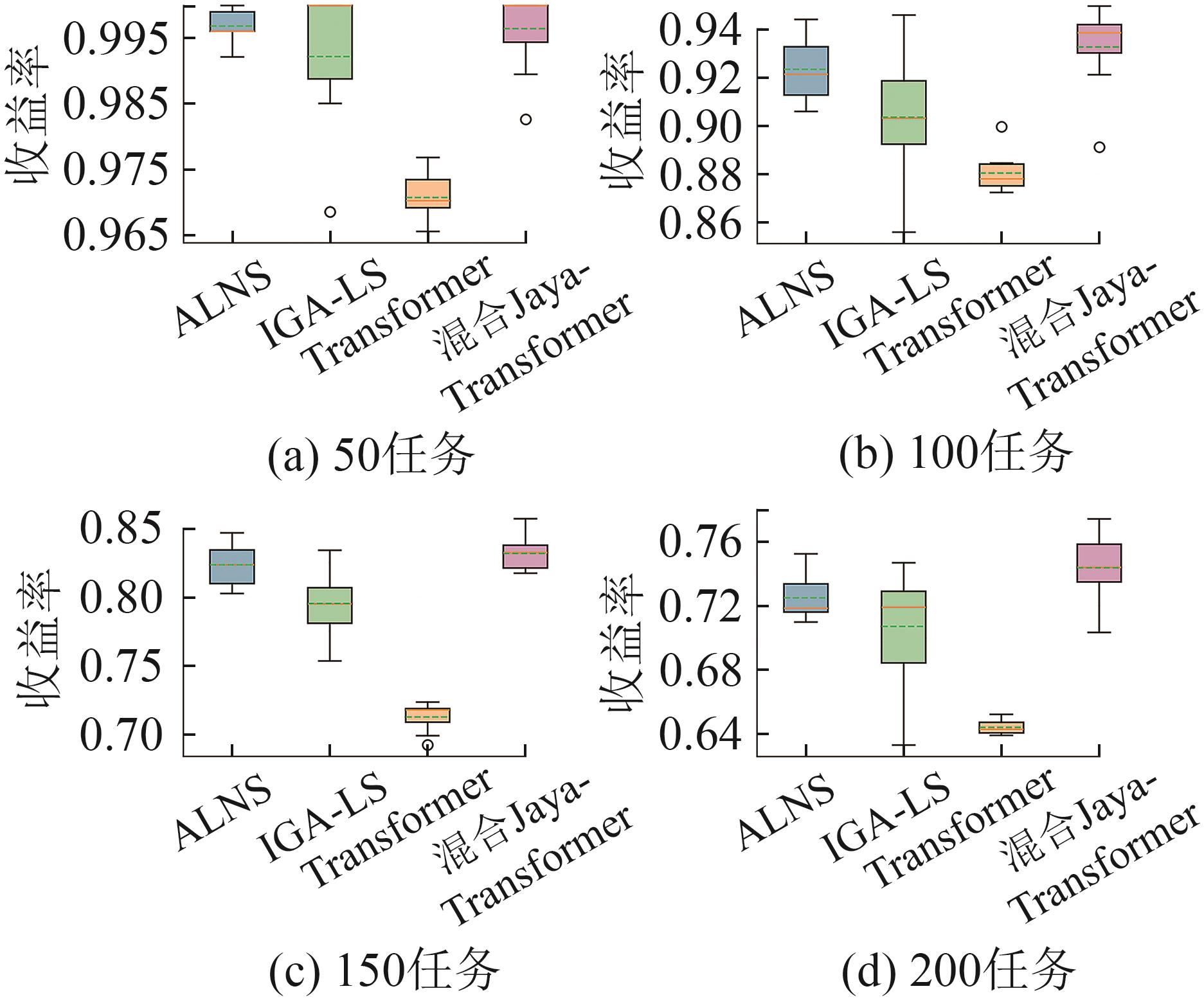
Box plots of different algorithms for different task scales
| [1] | Ferrari Benedetta, Cordeau Jean-François, Delorme Maxence, et al. Satellite Scheduling Problems: A Survey of Applications in Earth and Outer Space Observation[J]. Computers & Operations Research, 2025, 173: 106875. |
| [2] | Wu Guohua, Luo Qizhang, Du Xiao, et al. Ensemble of Metaheuristic and Exact Algorithm Based on the Divide-and-conquer Framework for Multisatellite Observation Scheduling[J]. IEEE Transactions on Aerospace and Electronic Systems, 2022, 58(5): 4396-4408. |
| [3] | Wang Jianjiang, Zhu Xiaomin, Qiu Dishan, et al. Dynamic Scheduling for Emergency Tasks on Distributed Imaging Satellites with Task Merging[J]. IEEE Transactions on Parallel and Distributed Systems, 2014, 25(9): 2275-2285. |
| [4] | Wei Luona, Xing Lining, Wan Qian, et al. A Multi-objective Memetic Approach for Time-dependent Agile Earth Observation Satellite Scheduling Problem[J]. Computers & Industrial Engineering, 2021, 159: 107530. |
| [5] | 毛成辉, 胡淦, 顾轶, 等. 基于改进自适应大邻域搜索的低轨预警卫星调度算法[J/OL]. 控制理论与应用. (2025-07-17)[2026-03-15]. . |
| Mao Chenghui, Hu Gan, Gu Yi, et al. Low Earth Orbit Early Warning Satellite Scheduling Algorithm Based on Improved Adaptive Large Neighborhood Search[J/OL]. Control Theory & Applications. (2025-07-17) [2026-03-15]. . | |
| [6] | 李庥甜, 王凌, 陈英武, 等. 基于自适应大邻域搜索的多场景多卫星任务规划方法[J]. 系统仿真学报, 2025, 37(7): 1836-1847. |
| Li Xiutian, Wang Ling, Chen Yingwu, et al. Multi-scenario Multi-satellite Mission Planning Method Based on Adaptive Large Neighborhood Search[J]. Journal of System Simulation, 2025, 37(7): 1836-1847. | |
| [7] | Sun Xiaohan, Ren Yuan, Yu Linghui. Adaptive-strategies-based Quantum Genetic Algorithm for Agile Earth Observation Satellite Scheduling Problem[J]. IEEE Aerospace and Electronic Systems Magazine, 2025, 40(7): 4-15. |
| [8] | 张广辉, 魏晨轩, 冯彦翔, 等. 基于分布式元强化学习的多敏捷卫星多目标调度算法[J]. 控制与决策, 2026, 41(4): 1065-1076. |
| Zhang Guanghui, Wei Chenxuan, Feng Yanxiang, et al. Multiple Agile Satellites Multi-objective Scheduling Algorithm Based on Distributed Meta-reinforcement Learning[J]. Control and Decision, 2026, 41(4): 1065-1076. | |
| [9] | 张广辉, 魏晨轩, 冯彦翔, 等. 基于混合进化博弈的多敏捷卫星多目标调度优化[J]. 控制理论与应用, 2025, 42(11): 2341-2351. |
| Zhang Guanghui, Wei Chenxuan, Feng Yanxiang, et al. Multi-agile Satellites Multi-objective Scheduling Based on Hybrid Evolutionary Game Theory[J]. Control Theory & Applications, 2025, 42(11): 2341-2351. | |
| [10] | Lu Zezhong, Shen Xin, Li Deren, et al. A Mission Planning Modeling Method of Multipoint Target Imaging Within a Single Pass for Super-agile Earth Observation Satellite[J]. IEEE Systems Journal, 2022, 16(2): 1921-1932. |
| [11] | Lu Zezhong, Shen Xin, Li Deren, et al. Integrated Imaging Mission Planning Modeling Method for Multi-type Targets for Super-agile Earth Observation Satellite[J]. IEEE Journal of Selected Topics in Applied Earth Observations and Remote Sensing, 2022, 15: 4156-4169. |
| [12] | Wu Guohua, Xiang Zhiqing, Wang Yalin, et al. Improved Adaptive Large Neighborhood Search Algorithm Based on the Two-stage Framework for Scheduling Multiple Super-agile Satellites[J]. IEEE Transactions on Aerospace and Electronic Systems, 2024, 60(5): 7185-7200. |
| [13] | Caleiras Margarida, Moniz Samuel, Paulo Jorge Nascimento. A Constraint Programming Model for the Super-agile Earth Observation Satellite Imaging Scheduling Problem[EB/OL]. (2026-01-21) [2026-02-09]. . |
| [14] | Bresson Xavier, Laurent Thomas. The Transformer network for the traveling salesman problem[EB/OL]. (2021-03-04)[2025-12-09]. . |
| [15] | Liu Zheng, Xiong Wei, Han Chi, et al. A Multi-pointer Network for Multiple Agile Optical Satellite Scheduling Problem[J]. Aerospace, 2024, 11(10): 792. |
| [16] | Liu Zheng, Wei Xiong, Jian Ping. An Agile Optical Satellite Scheduling Method Based on Transformer Networks[C]//Third International Conference on Electronic Information Engineering, Big Data, and Computer Technology (EIBDCT 2024). Bellingham: SPIE, 2024: 131811E. |
| [17] | Goismi Mohamed, Debbab Mohamed, Maaskri Moustafa, et al. Enhanced Spam Detection Using Mutual Information Feature Selection and JAYA-tuned Tab Transformer[J]. Journal of Engineering and Technology for Industrial Applications, 2026, 12(57): 1084-1093. |
| [18] | Dash Nitu, Chakravarty Sujata, Amiya Kumar Rath, et al. An Optimized LSTM-based Deep Learning Model for Anomaly Network Intrusion Detection[J]. Scientific Reports, 2025, 15(1): 1554. |
| [19] | Gundu Venkateswarlu, Simon Sishaj P, Kumba Krishna. Short-term Solar Power Forecasting—An Approach Using JAYA Based Recurrent Network Model[J]. Multimedia Tools and Applications, 2024, 83(11): 32411-32422. |
| [20] | Vaswani A, Shazeer N, Parmar N, et al. Attention is All You Need[C]//Proceedings of the 31st International Conference on Neural Information Processing Systems. Red Hook: Curran Associates Inc., 2017: 6000-6010. |
| [21] | Xu Shengwei, Han Jieie, Liu Yilong, et al. Few-shot Traffic Classification Based on Autoencoder and Deep Graph Convolutional Networks[J]. Scientific Reports, 2025, 15(1): 8995. |
| [22] | Adak Sumit, Witt Carsten. Mathematical Runtime Analysis of a Multi-valued Estimation of Distribution Algorithm[J]. Artificial Intelligence, 2026, 353: 104501. |
| [23] | Liu Xiaolu, Laporte Gilbert, Chen Yingwu, et al. An Adaptive Large Neighborhood Search Metaheuristic for Agile Satellite Scheduling with Time-dependent Transition Time[J]. Computers & Operations Research, 2017, 86: 41-53. |
| [24] | Song Yanjie, Zhang Zhongshan, Song Bingyu, et al. Improved Genetic Algorithm with Local Search for Satellite Range Scheduling System and Its Application in Environmental monitoring[J]. Sustainable Computing: Informatics and Systems, 2019, 21: 19-27. |
| [1] | Cheng Guozhu, Wang Changyuan, Wang Wenzhi, Zhang Yifan, Feng Tianjun. Vehicle Cross-modal Trajectory Prediction Model Based on Driving Style Hypergraphs [J]. Journal of System Simulation, 2026, 38(9): 2486-2501. |
| [2] | Li Tan, Wu Congying, Li Shenghua, Chen Nanjiang, Song Weining, Gao Fangfang, Wang Qi, Lin Yanwen, Yin Runmin. ACT Action Chunk Adaptive Optimization Method for Chemistry-oriented Robots [J]. Journal of System Simulation, 2026, 38(9): 2559-2573. |
| [3] | Yang Yongqi, Wang Cong, Zhang Hongli, Ma Ping, Meng Yue, Zhou Tianhao. Adaptive Spatiotemporal Graph Neural Network-based Net Load Forecasting for Residential Areas [J]. Journal of System Simulation, 2026, 38(7): 2007-2019. |
| [4] | Zhang Kun, Qian Jiajie, Ma Shuhong, Zhao Zengxu, Pan Yuchen, Tang Yaoqi. Research on Optimization Modeling Method for Eye Tracking in Solfeggio Cognitive Simulation [J]. Journal of System Simulation, 2026, 38(6): 1749-1760. |
| [5] | Mei Huawei, Yang Penghui, Yu Yang. Ultra-short-term Photovoltaic Power Prediction Based on Improved PatchTST Considering Data Drift [J]. Journal of System Simulation, 2026, 38(5): 1239-1254. |
| [6] | Tao Ye, Tang Jinhui, Zhou Chen, Wang Chong. Research on Completion Method for Trajectory Based on Image Representation and Collaborative Feature Perception [J]. Journal of System Simulation, 2026, 38(5): 1333-1349. |
| [7] | Zhang Ziyao, Ji Yunfeng. Simulation of Robotic Arm Ball-catching Strategy Based on Curriculum RL of Transformer [J]. Journal of System Simulation, 2026, 38(2): 321-331. |
| [8] | Zou Jing, Tan Xu, Mao Junji, Gao Haidong, Tan Jianrong. Defect Detection Method Based on Hierarchical Microscopic Feature Modeling and Simulation [J]. Journal of System Simulation, 2026, 38(1): 1-13. |
| [9] | Zou Changjun, Ge Zhiyu, Zhong Chenxi. Spatio-temporal Swin Transformer-based Flow-solid Coupling Interaction Sequence Image Prediction Network [J]. Journal of System Simulation, 2026, 38(1): 112-124. |
| [10] | Zhang Shuozhe, Song Wenfeng, Hou Xia, Li Shuai. Full-body Co-speech Gesture Generation Based on Spatial-temporal Enhanced Generation Model [J]. Journal of System Simulation, 2026, 38(1): 211-224. |
| [11] | Yang Chao, Zheng Ruiqun, Li Zhen, Zhang Hongwei, Tang Yanqun, Li Dongze. Parallel Task Transmission and Processing Optimization Scheme for UAV-assisted Internet of Vehicles [J]. Journal of System Simulation, 2025, 37(3): 635-645. |
| [12] | Jiang Lun, Wang Dajiang, Sun Wenlei, Bao Shenghui, Liu Han, Chang Saike. Research on Transformer Fault Diagnosis Method Based on Digital Twin [J]. Journal of System Simulation, 2025, 37(3): 775-790. |
| [13] | Gu Hao, Wang Jiayu, Xiong Weili. Soft Sensor Modeling Based on Improved Transformer in Dual-stream Framework [J]. Journal of System Simulation, 2025, 37(10): 2594-2604. |
| [14] | Li Dongxue, Liu Yan, Shen Boyao, Jing Yongteng, Ma Qiang, Liu Ran. Carbon Footprint Analysis and Low-carbon Optimization Method Simulation Study of Power Transformer Based on Digital Twin Technology [J]. Journal of System Simulation, 2024, 36(9): 2075-2085. |
| [15] | Liu Peijin, Fu Xuefeng, Sun Haofeng, He Lin, Liu Shujie. A Highly Robust Target Tracking Algorithm Merging CNN and Transformer [J]. Journal of System Simulation, 2024, 36(8): 1854-1868. |
| Viewed | ||||||
|
Full text |
|
|||||
|
Abstract |
|
|||||
 http://www.china-simulation.com

