

系统仿真学报 ›› 2022, Vol. 34 ›› Issue (7): 1639-1650.doi: 10.16182/j.issn1004731x.joss.21-0175
聂慧1,2( ), 李康顺1,2,3(), 苏洋1
收稿日期:2021-03-07
修回日期:2021-06-09
出版日期:2022-07-30
发布日期:2022-07-20
通讯作者:
李康顺
E-mail:928753616@qq.com;likangshun@sina.com
第一作者简介:聂慧(1987-),女,硕士,讲师,研究方向为图像处理,机器学习。E-mail:928753616@qq.com
基金资助:
Hui Nie1,2(), Kangshun Li1,2,3(), Yang Su1
Received:2021-03-07
Revised:2021-06-09
Online:2022-07-30
Published:2022-07-20
Contact:
Kangshun Li
E-mail:928753616@qq.com;likangshun@sina.com
摘要:
深度神经网络因参数量过多而影响嵌入式部署,解决的办法之一是模型小型化(如模型量化,知识蒸馏等)。针对这一问题,提出了一种基于BN(batch normg lization)折叠的量化因子自适应学习的量化训练算法(简称为LSQ-BN算法)。采用单个CNN(convolutional neural)构造BN折叠以实现BN与CNN融合;在量化训练过程中,将量化因子设置成模型参数;提出了一种自适应量化因子初始化方案以解决量化因子难以初始化的问题。实验结果表明:8bit的权重和激活量化,量化模型的精度与FP32预制模型几乎一致;4bit的权重量化和8 bit的激活量化,量化模型的精度损失在3%以内。因此,LSQ-BN是一种优异的模型量化算法。
中图分类号:
聂慧,李康顺,苏洋 . 一种量化因子自适应学习量化训练算法[J]. 系统仿真学报, 2022, 34(7): 1639-1650.
Hui Nie,Kangshun Li,Yang Su . A Quantization Training Algorithm of Adaptive Learning Quantization Scale Fators[J]. Journal of System Simulation, 2022, 34(7): 1639-1650.
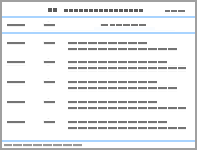
表1
不同bit表示的数据范围
| bit 长度 | 最小值 | 最大值 |
|---|---|---|
| INT8 | -128 | 127 |
| UINT8 | 0 | 255 |
| FP32 | -3.4e38 | 3.4e38 |
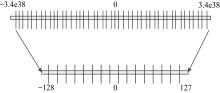
图1
浮点型量化成整型的精度示意图
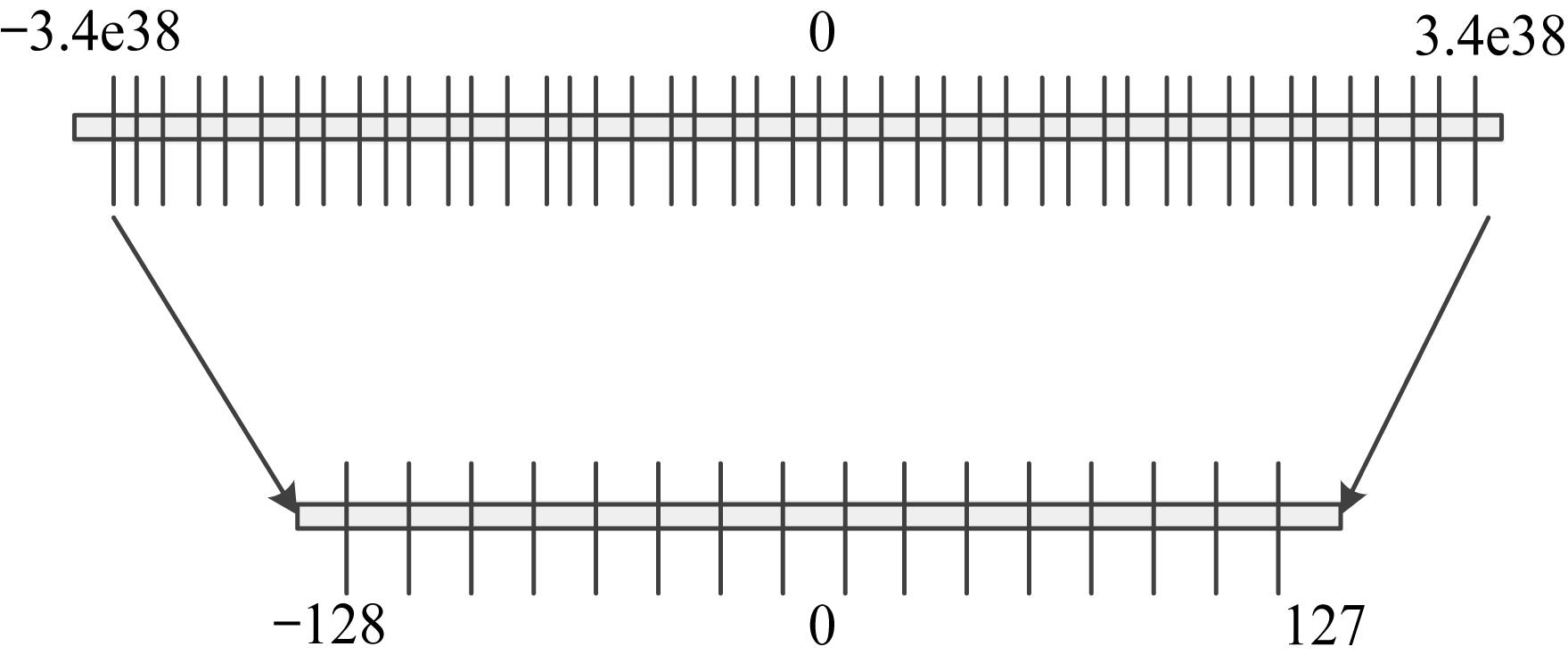
表2
量化范围
| 类别 | 符号项 | 取值(b表示给定的 量化数据位长) |
|---|---|---|
对于无符号的bit位 量化 | ||
对于有符号的bit位 量化 | ||
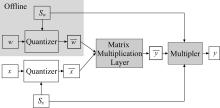
图2
LSQ量化推理的计算数据流程图
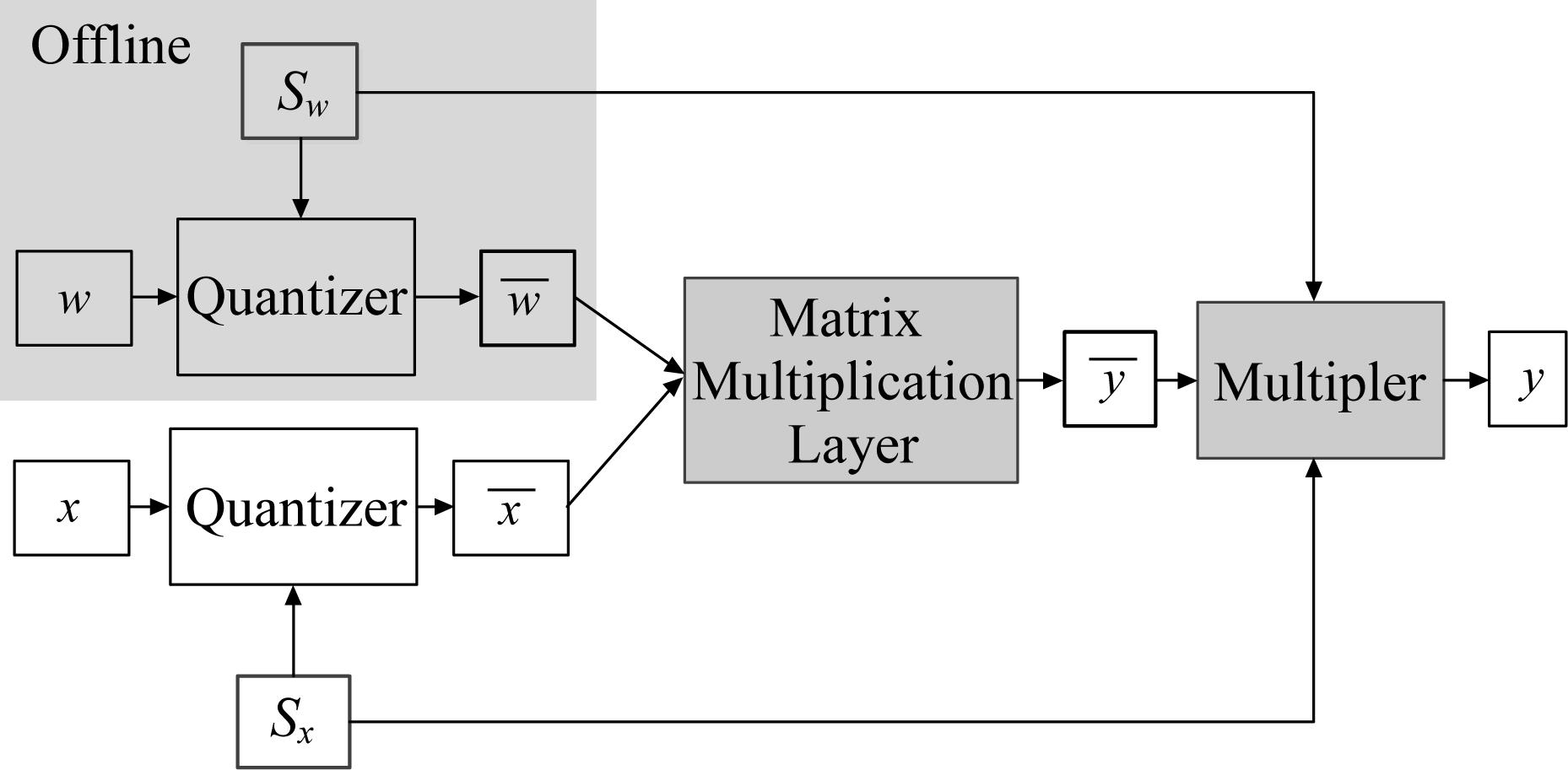
表3
算子融合表
| 序号 | 融合形式 | 融合后的算子 |
|---|---|---|
| 1 | conv+BN | ConvBn算子 |
| 2 | conv+BN+ReLU | ConvBnRelu算子 |
| 3 | conv+BN+ReLU6 | ConvBnRelu6算子 |
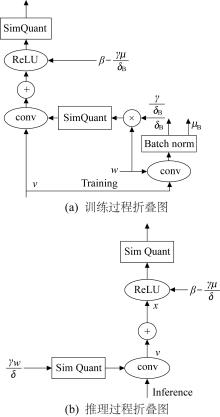
图3
Google的BN折叠方案
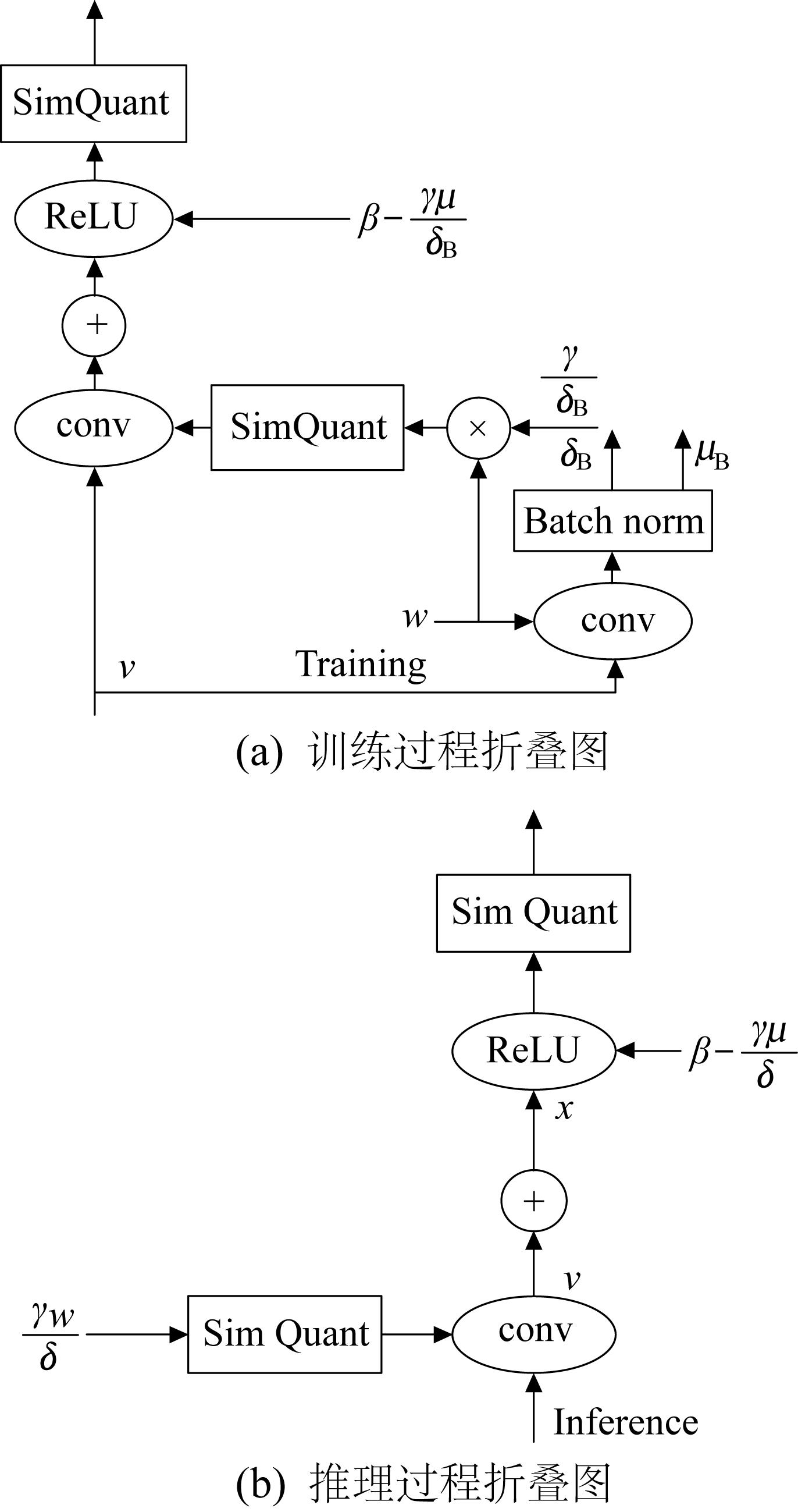
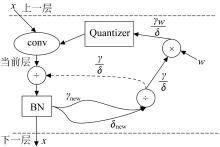
图4
ConvBn算子的融合原理过程图
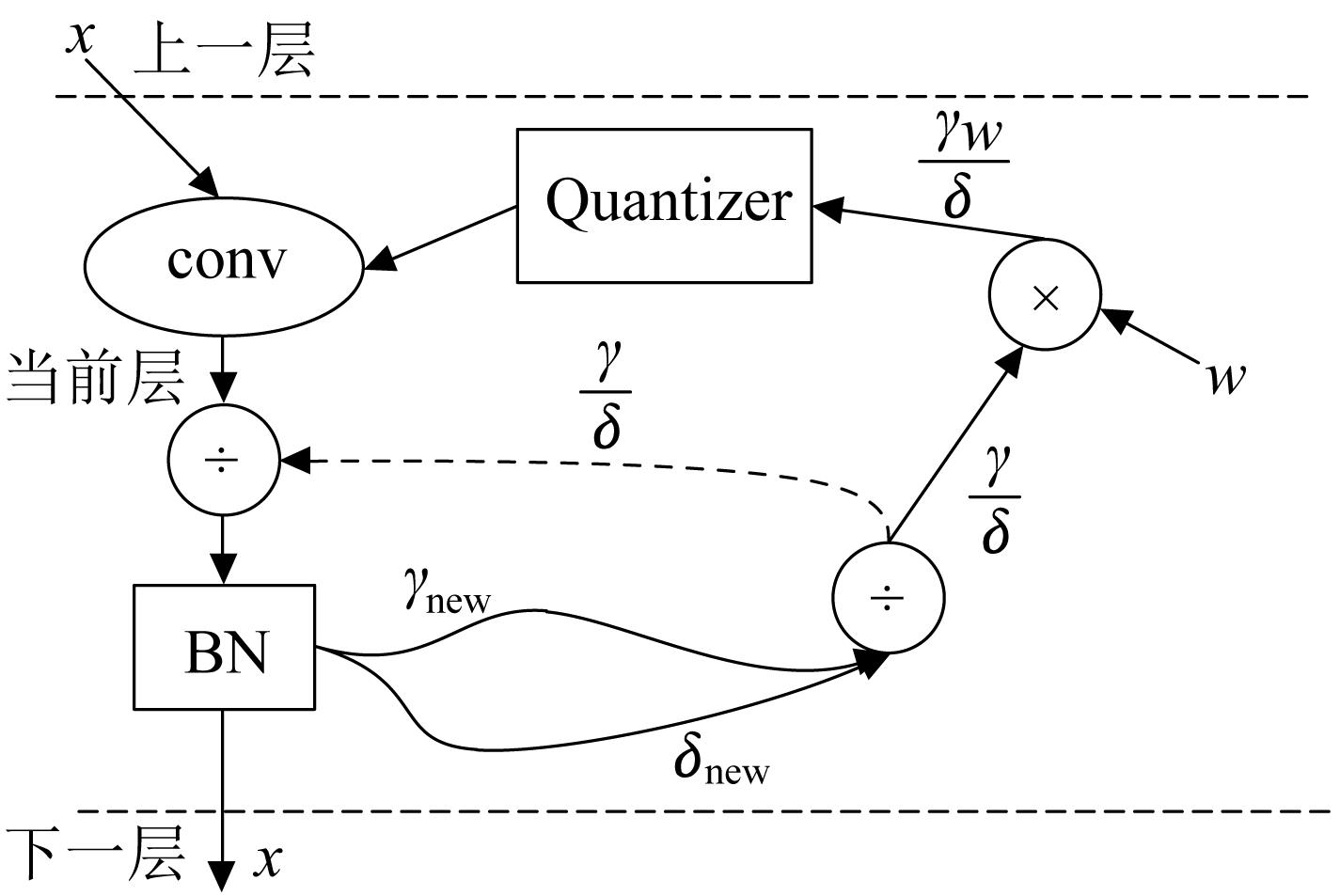

图5
CNN+BN融合算子的示意图

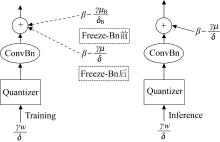
图6
LSQ-BN算法的BN折叠方案图
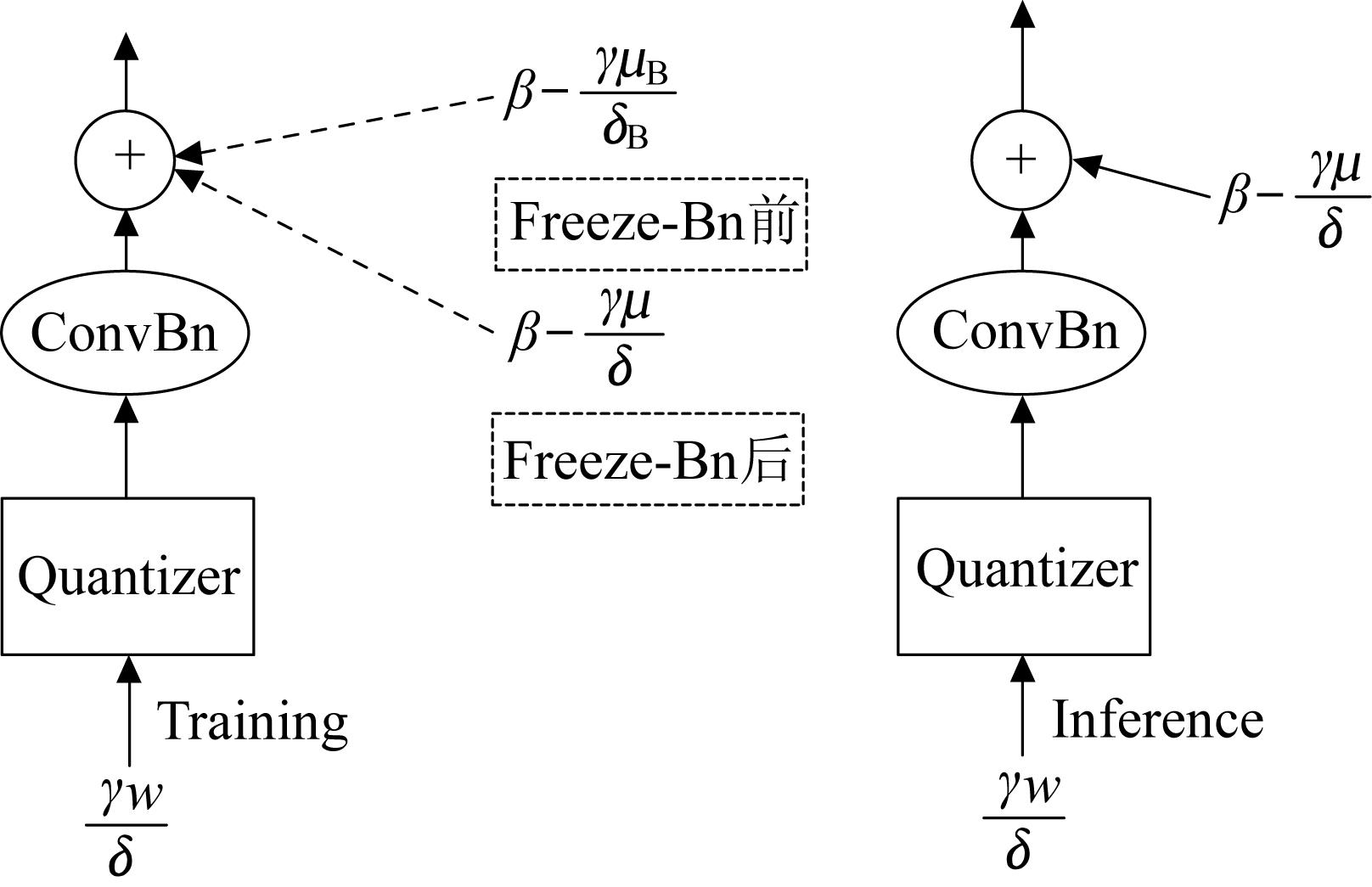
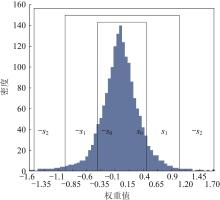
图7
权重分布直方图
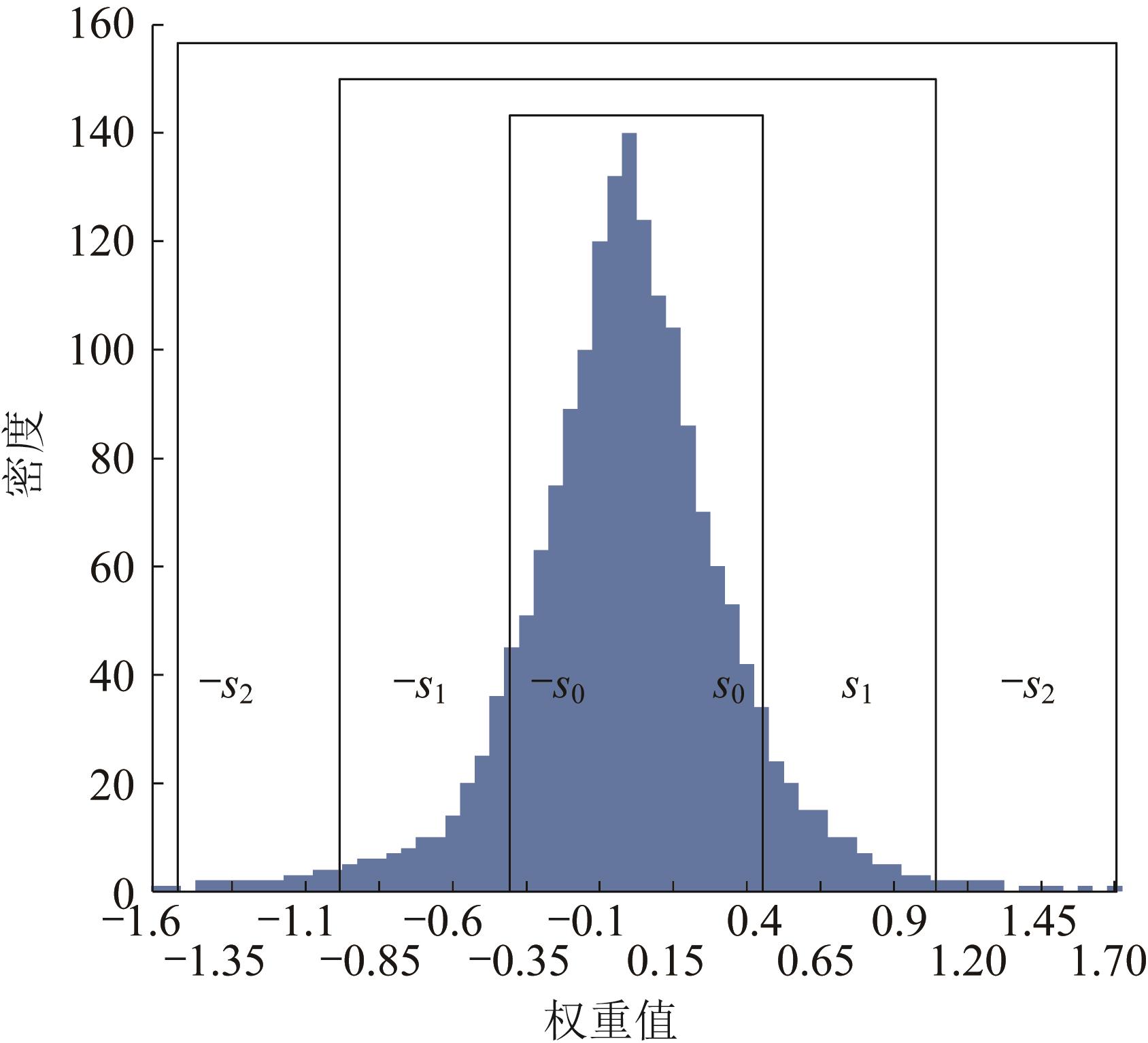

图8
BN折叠后量化因子初始化过程

表4
MobileNet-v 2-1.0-224网络下不同算法的量化结果
| 算法 | 量化精度(W/A) | 准确率(%)Top-1 | 精度损失(FP32-其他) | 压缩率 |
|---|---|---|---|---|
| MobileNet-v 2-1.0-224 | ||||
| FP32(ours) | 32/32 | 72.5 | - | |
| LSQ-BN(ours) | 8/8 | 72.3 | 0.2 | 4x |
| LSQ-BN(ours) | 4/8 | 69.8 | 2.7 | 8x |
| PTQ | 8/8 | 68.7 | 3.8 | 4x |
| PTQ | 4/8 | 67.2 | 5.3 | 8x |
| QAT | 8/8 | 70.9 | 1.4 | 4x |
| QAT | 4/8 | 62 | 10.5 | 8x |
| LSQ | 8/8 | 72.9 | -0.4 | 4x |
| LSQ | 4/8 | 70.3 | 2.2 | 4x |
表5
ResNet v1 50网络下不同算法的量化结果
| 算法 | 量化精度(W/A) | 准确率(%)Top-1 | 精度损失(FP32-其他) | 压缩率 |
|---|---|---|---|---|
| ResNet-v1-50 | ||||
| FP32(ours) | 32/32 | 75.6 | - | |
| LSQ-BN(ours) | 8/8 | 75.2 | 0.4 | 4x |
| LSQ-BN(ours) | 4/8 | 74.1 | 1.5 | 8x |
| PTQ | 8/8 | 69.8 | 5.8 | 4x |
| PTQ | 4/8 | 67.9 | 7.7 | 8x |
| QAT | 8/8 | 71.2 | 4.4 | 4x |
| QAT | 4/8 | 64.9 | 10.7 | 8x |
| LSQ | 8/8 | 75.0 | 0.6 | 4x |
| LSQ | 4/8 | 73.8 | 1.8 | 4x |
表6
ResNet v1 101网络下不同算法的量化结果
| 算法 | 量化精度(W/A) | 准确率(%)Top-1 | 精度损失(FP32-其他) | 压缩率 |
|---|---|---|---|---|
| ResNet-v1-101 | ||||
| FP32(ours) | 32/32 | 76.2 | - | |
| LSQ-BN(ours) | 8/8 | 75.7 | 0.5 | 4x |
| LSQ-BN(ours) | 4/8 | 75.1 | 1.1 | 8x |
| PTQ | 8/8 | 73.6 | 2.6 | 4x |
| PTQ | 4/8 | 70.4 | 5.8 | 8x |
| QAT | 8/8 | 75.8 | 0.4 | 4x |
| QAT | 4/8 | 74.5 | 1.7 | 8x |
| LSQ | 8/8 | 75.5 | 0.7 | 4x |
| LSQ | 4/8 | 75.1 | 1.1 | 4x |
图9
4 bit量化准确率对比图
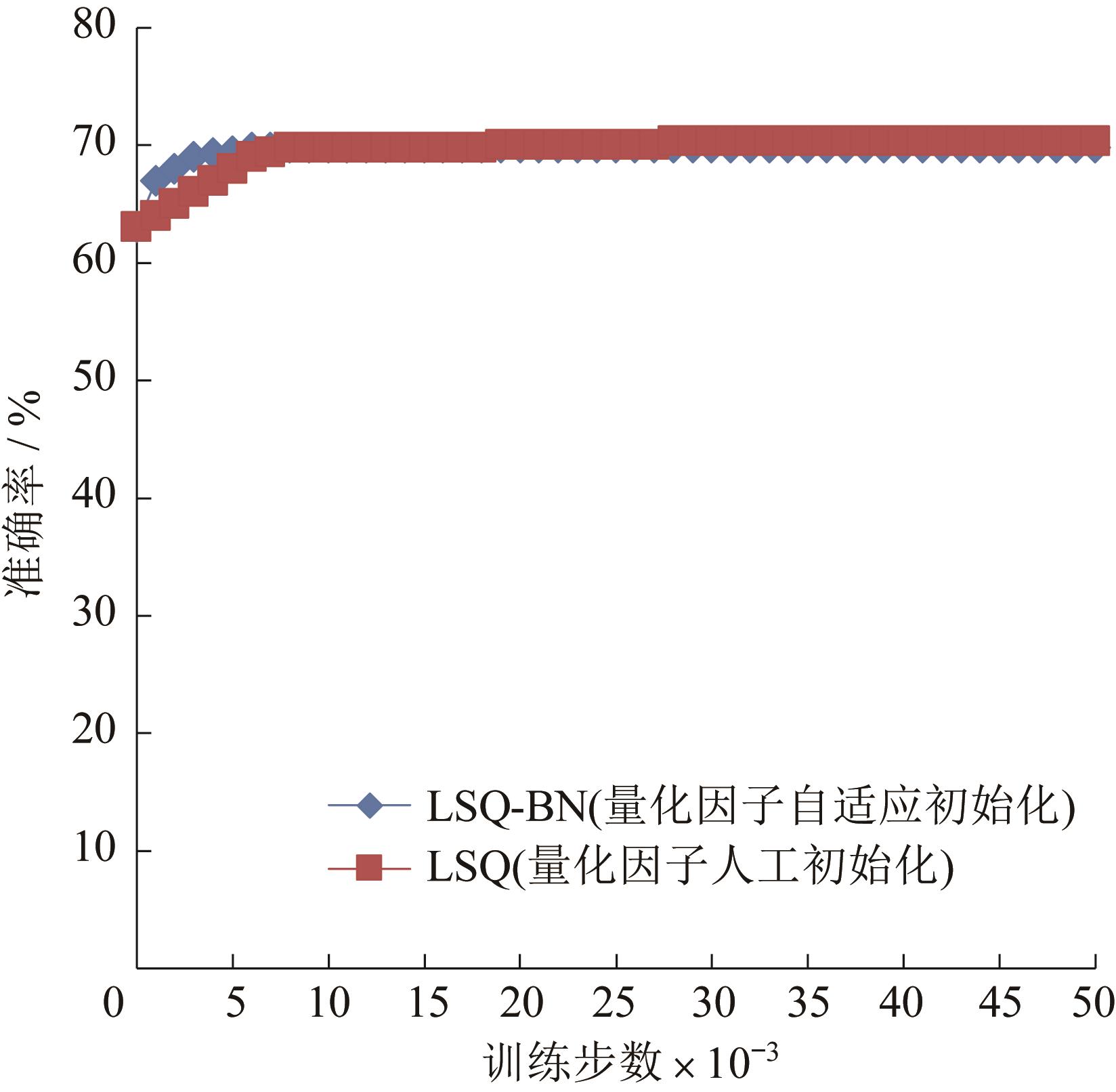
图10
4 bit量化整体损失对比图
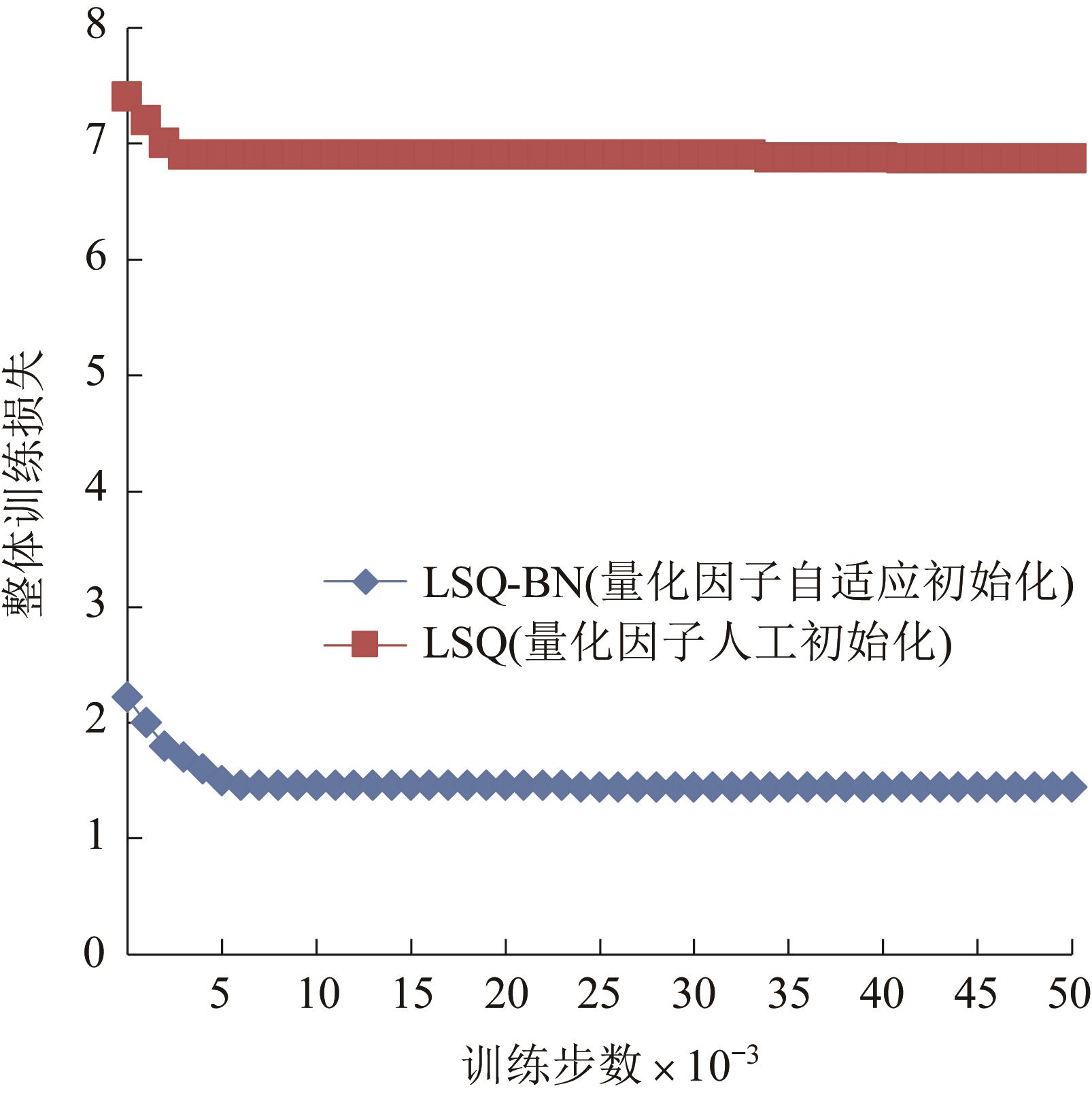
图11
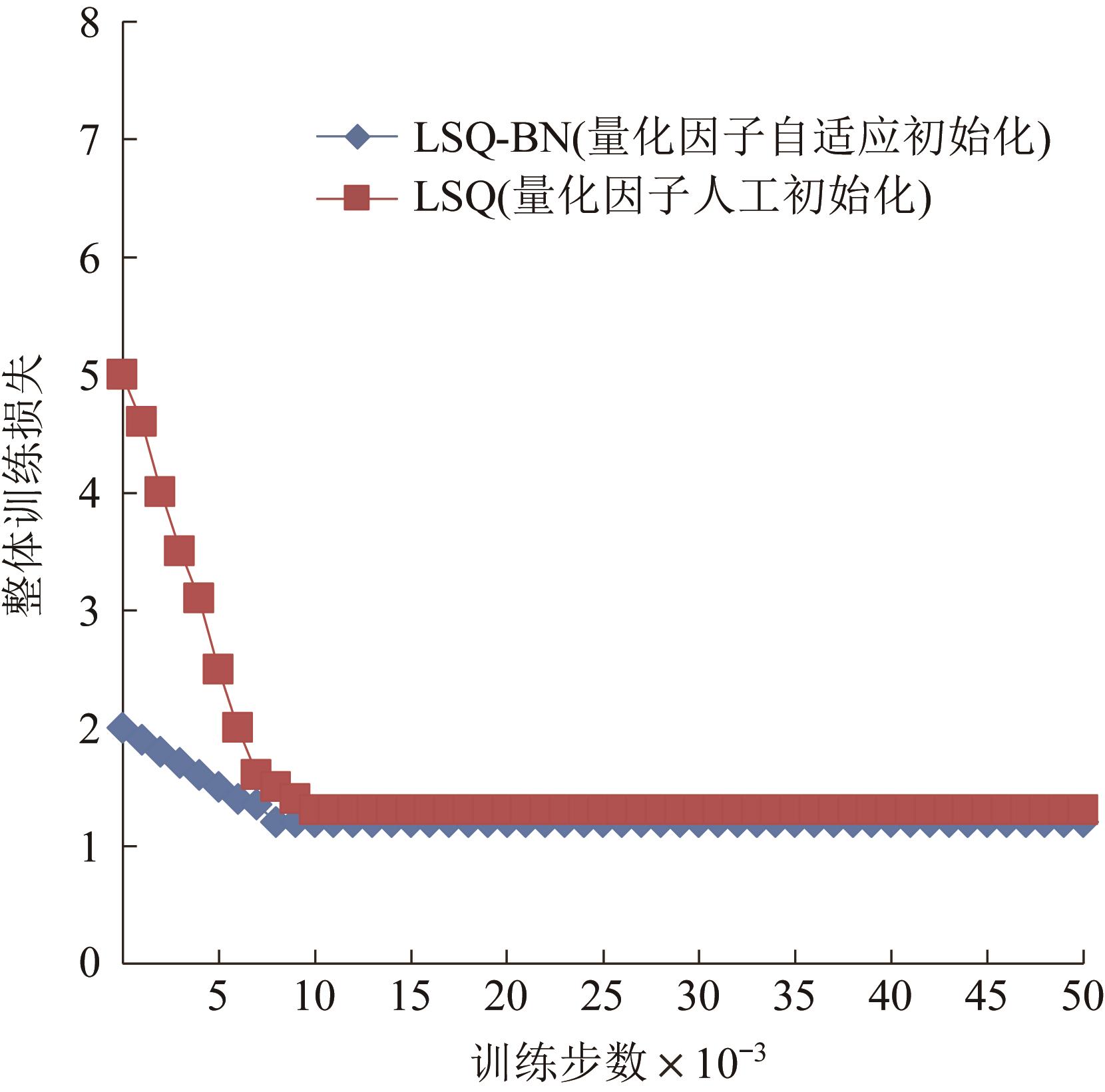
8 bit量化整体损失对比图
| 1 | Zhang L, Li K, Qi Y, et al. Local Feature Extracted by the Improved Bag of Features Method for Person re-Identification[J]. Neurocomputing (S0925-2312), 2021, 458: 690-700. |
| 2 | Tan Zhiping, Li Kangshun, Wang Yi. Differential Evolution with Adaptive Mutation Strategy Based on Fitness Landscape Analysis[J]. Information Sciences(S0020-0255), 2021,549:142-163. |
| 3 | 阴敬方, 朱登明, 石敏, 等. 基于引导对抗网络的人体深度图像修补方法[J]. 系统仿真学报, 2020,32(7): 1312-1321. |
| Yin Jingfang, Zhu Dengming, Shi Min, et al. Human Depth Image Repairing Method Based on Guided adversation Network[J]. Journal of System Simulation, 2020, 32(7): 1312-1321. | |
| 4 | 黄欣, 方钰, 顾梦丹. 基于卷积神经网络的X线胸片疾病分类研究[J]. 系统仿真学报, 2020, 32(6): 1188-1194. |
| Huang Xin, Fang Yu, Gu Mengdan. Study on Disease Classification of X-chest Radiographs based on Convolutional Neural Network[J].Journal of System Simulation, 2020, 32(6): 1188-1194. | |
| 5 | Jacob B, Kligys S, Chen B, et al. Quantization and Training of Neural Networks for Efficient Integer-Arithmetic-only Inference[C]// IEEE Conference on Computer Vision and Pattern recognition Salt Bake City, USA: IEEE, 2018: 2704-2713. |
| 6 | Banner Ron, Nahshan Yury, Soudry Daniel. Post Training 4-bit Quantization of Convolutional Networks for Rapid-Deployment[C]// Neural Information Processing Systems(NeurIPS).Vancouver: IEEE Press,2019: 7950-7958. |
| 7 | Mishchenko Yuriy, Goren Yusuf, Ming Sun, et al. Low-Bit Quantization and Quantization-Aware Training for Small-Footprint Keyword Spotting[C]// International Conference On Machine Learning And Applications (ICMLA). Florida: IEEE Press, 2019: 706-711. |
| 8 | Zhang Xiangyu, Zhou Xinyu, Lin Mengxiao, et al.ShuffleNet: An Extremely Efficient Convolutional Neural Network for Mobile Devices [C]// Computer Vision and Pattern Recognition (CVPR). Salt Lake City, USA: IEEE Press, 2018: 6848-6856. |
| 9 | Yin Penghang, Zhang Shuai, Jiancheng Lyuet al. BinaryRelax: A Relaxation Approach for Training Deep Neural Networks with Quantized Weights[J]. SIAM Journal on Imaging Sciences (S1936-494), 2018, 11(4): 2205-2223. |
| 10 | Cao Z, Long M, Wang J, et al. Hashnet: Deep Learning to Hash by Continuation[C]// International Conference on computer vision. Venice, Italy: IEEE Press, 2017: 5608-5617. |
| 11 | Nagel Markus, van Baalen Mart, Blankevoort Tijmen, et al. Data-Free Quantization Through Weight Equalization and Bias Correction [C]// International Conference on Computer Vision (ICCV). Seoul, Korea: IEEE Press, 2019: 1325-1334. |
| 12 | Esser Steven K., McKinstry Jeffrey L., Bablani Deepika, et al. Learned Step Size Quantization[C]// International Conference on Learning Representations (ICLR).Ethiopia, Africa: IEEE Press, 2020: 1-12. |
| 13 | Bhalgat Y, Lee J, Nagel M, et al. Lsq+: Improving low-bit quantization through learnable offsets and better initialization[C]// IEEE/CVF Conference on Computer Vision and Pattern Recognition Workshops. Seattle, USA: IEEE/CVF Press, 2020: 696-697. |
| 14 | Jain S, Gural A, Wu M, et al. Trained Quantization Thresholds for Accurate and Efficient Fixed-point Inference of Deep Neural Networks[J]. Machine Learning and Systems (S1002-137X), 2020, 2: 112-128. |
| 15 | Cai Zhaowei, He Xiaodong, Jian Sun, et al. Deep Learning With Low Precision by Half-Wave Gaussian Quantization[C]// Computer Vision and Pattern Recognition (CVPR). Honolulu, USA: IEEE Press, 2017:5918-5926. |
| 16 | Choi Jungwook, Venkataramani Swagath, Vijayalakshmi (Viji) Srinivasan, et al. Accurate and Efficient 2-bit Quantized Neural Networks[J]. Proceedings of Machine Learning and Systems (S1002-137X), 2019, 1: 348-359. |
| 17 | Ioffe S, Szegedy C. Batch normalization: Accelerating Deep Network Training by Reducing Internal Covariate shift[C]// International Conference on Machine Learning. PMLR, Miami, Horida, USA: IEEE, 2015: 448-456. |
| 18 | Chmiel B, Banner R, Shomron G, et al. Robust Quantization: One Model to Rule Them All[M]. Vancouver: Advances in Neural Information Processing Systems, 2020: 5308-5317. |
| 19 | Debnath Bappaditya, O'Brien Mary, Yamaguchi Motonori, et al. Adapting MobileNets for Mobile Based Upper Body Pose Estimation[C]// Advanced Video and Signal Based Surveillance (AVSS). Auckland, Auckland: IEEE Press, 2018: 1-6. |
| 20 | Sandler M, Howard A, Zhu M, et al. Mobilenetv2: Inverted Residuals and Linear Bottlenecks[C]// IEEE Conference on Computer Vision and Pattern Recognition. Salt Lake City,USA: IEEE, 2018: 4510-4520. |
| 21 | He K, Zhang X, Ren S, et al. Deep residual learning for image recognition[C]// Computer Vision and Pattern Recognition. Las vegas, USA: IEEE Press, 2016: 770-778. |
| [1] | 董志明, 胡忠奇, 戴浩然, 高建成. 基于大语言模型的作战仿真想定自动化生成方法[J]. 系统仿真学报, 2026, 38(5): 1129-1145. |
| [2] | 李校男, 晁涛, 马萍, 杨明, 王玉轩. 基于期望最大化方法的非线性SSM黑箱鲁棒辨识[J]. 系统仿真学报, 2026, 38(5): 1146-1158. |
| [3] | 刘银钢, 马明, 张荣华. 基于大语言模型的兵棋推演动态任务规划[J]. 系统仿真学报, 2026, 38(5): 1187-1204. |
| [4] | 苏泓嘉, 张成, 刘飞. 基于模糊功能依赖网分析的体系效能评估方法[J]. 系统仿真学报, 2026, 38(5): 1224-1238. |
| [5] | 梅华威, 杨鹏慧, 余洋. 计及数据漂移改进PatchTST的超短期光伏功率预测[J]. 系统仿真学报, 2026, 38(5): 1239-1254. |
| [6] | 李权, 苏鹏, 万海英, 张承玺, 何志坚, 倪艺洋, 赵忠盖, 刘飞. 基于多阶段LHS-EPRCC方法的青霉素发酵过程建模[J]. 系统仿真学报, 2026, 38(5): 1255-1276. |
| [7] | 周子聪, 曾俊杰, 胡越, 朱正秋, 尹全军. 基于次优示例引导的兵棋推演多智能体强化学习方法[J]. 系统仿真学报, 2026, 38(5): 1277-1289. |
| [8] | 石敏, 郭诗盛, 王素琴, 李兆歆, 朱登明. 融合物理与几何先验的无抓取标注6-DoF抓取检测方法[J]. 系统仿真学报, 2026, 38(5): 1290-1302. |
| [9] | 姜彦吉, 肖星佚, 董浩, 于淼, 黄金山, 刘大千, 费博雯. 融合点线特征的图关系优化3D车道线检测方法[J]. 系统仿真学报, 2026, 38(5): 1303-1319. |
| [10] | 张鑫, 张平, 张琛, 刘威, 韩博阳. 非均质土壤条件下挖掘阻力计算模型研究[J]. 系统仿真学报, 2026, 38(5): 1320-1332. |
| [11] | 陶冶, 汤锦辉, 周臣, 王冲. 基于图像表征与特征协同感知的航迹补全方法研究[J]. 系统仿真学报, 2026, 38(5): 1333-1349. |
| [12] | 王伟, 刘东, 崔新豪, 李博, 肖依永, 任羿. 复杂项目多级动态挣值管理数字化模型及应用[J]. 系统仿真学报, 2026, 38(5): 1350-1364. |
| [13] | 彭莉峻, 苏庭琪, 刘沛津, 何林, 周协武, 张闽心. 融合人体关键点的实验室PPE规范穿戴检测方法[J]. 系统仿真学报, 2026, 38(5): 1365-1382. |
| [14] | 滕靖, 童文聪, 张中杰, 姚幸, 李君羡. 有轨电车交叉口速度自动引导方法及仿真评价[J]. 系统仿真学报, 2026, 38(5): 1426-1439. |
| [15] | 范双豪, 何芳, 赵建伟, 胡豪杰, 朱丰超, 李向阳. 基于窗口重构协同表示的高光谱异常检测算法[J]. 系统仿真学报, 2026, 38(5): 1440-1452. |
| 阅读次数 | ||||||
|
全文 |
|
|||||
|
摘要 |
|
|||||
 http://www.china-simulation.com

