

系统仿真学报 ›› 2026, Vol. 38 ›› Issue (8): 2152-2166.doi: 10.16182/j.issn1004731x.joss.26-0057
• 专栏:基于仿真的优化及其在新型电力系统中的应用 • 上一篇
朱彦恺1,2, 黄玉晶1,2, 王庆华2, 张效宁2, 房方1, 牛玉广1,2
收稿日期:2026-01-19
修回日期:2026-05-26
出版日期:2026-08-28
发布日期:2026-08-31
通讯作者:
黄玉晶
第一作者简介:朱彦恺(1997-),男,博士生,研究方向为火电运行控制、综合能源系统。
基金资助:Zhu Yankai1,2, Huang Yujing1,2, Wang Qinghua2, Zhang Xiaoning2, Fang Fang1, Niu Yuguang1,2
Received:2026-01-19
Revised:2026-05-26
Online:2026-08-28
Published:2026-08-31
Contact:
Huang Yujing
摘要:
为探索能源服务商(energy service provider,ESP)与多用户互动的新机制,(提出了一种用户社会属性驱动的综合能源系统复杂建模与能量管理 方法 。)构建包含ESP与用户集群的多主体交互框架;以最大化ESP运行效益与最小化用户用能成本为目标,基于强化学习框架建立主从博弈能量管理模型,(提出一种结合Q学习与二次规划的分布式协同求解算法。)仿真结果表明:相较于传统综合需求响应方法,该方法在考虑用户社会属性后,ESP运行效益提升10.79%,用户集群I和II的总运行成本分别降低6.98%和0.36%,系统碳排放降低5.05%,算法在收敛精度与计算效率之间实现了良好平衡。
中图分类号:
朱彦恺,黄玉晶,王庆华等 . 用户社会属性驱动的综合能源能量管理方法[J]. 系统仿真学报, 2026, 38(8): 2152-2166.
Zhu Yankai,Huang Yujing,Wang Qinghua,et al . Energy Management Method for Integrated Energy Driven by Users’ Social Attributes[J]. Journal of System Simulation, 2026, 38(8): 2152-2166.
图1
含ESP和多用户的综合能源系统结构
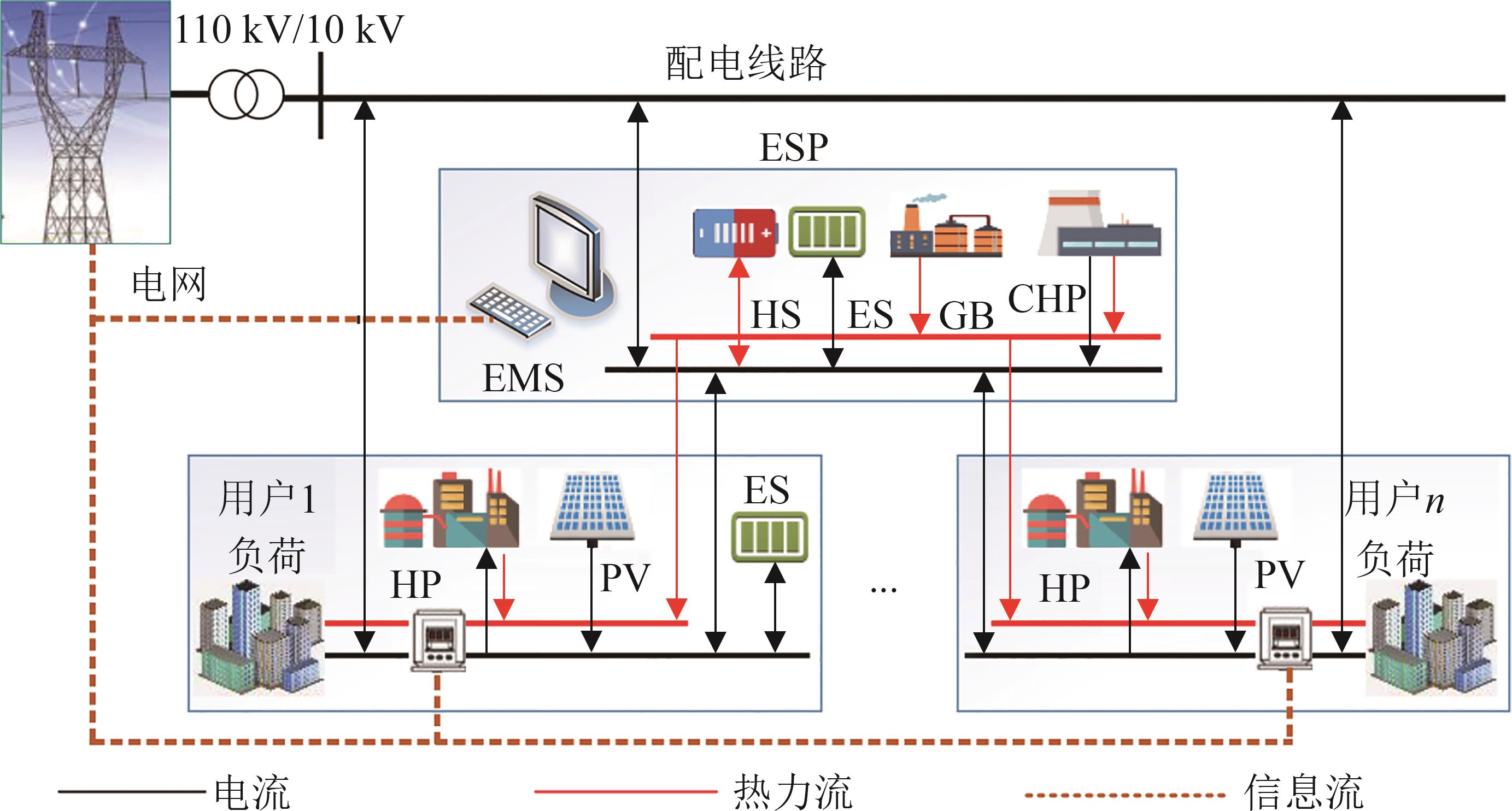
图2
基于强化学习的能量管理框架
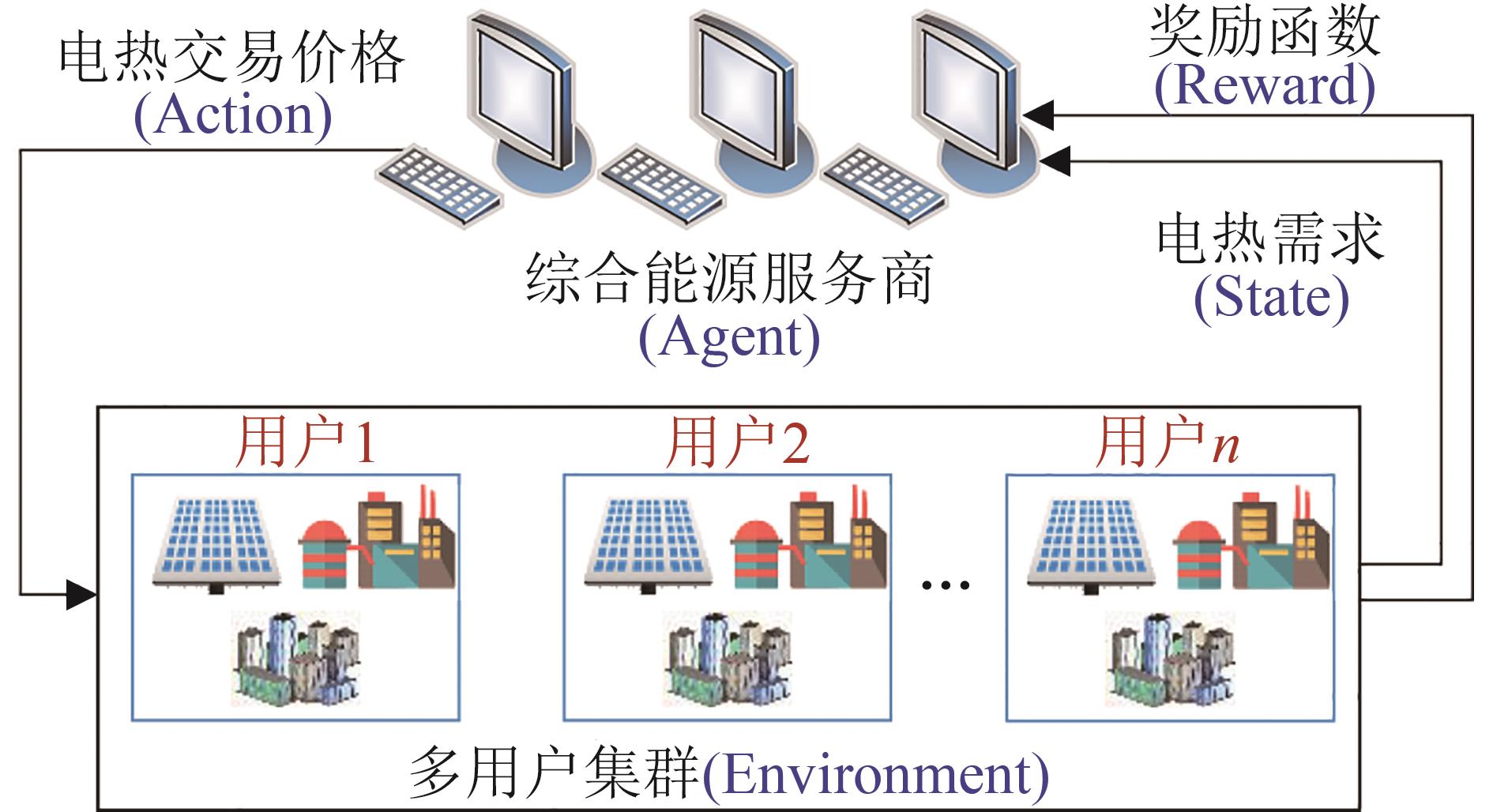
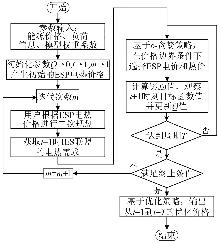
图3
Q-learning-QP算法流程
表1
电网分时电价
| 时段 | 售电价/(元/kW·h) |
|---|---|
| 01:00-8:00 | 0.45 |
| 09:00-11:00; 16:00-17:00; 23:00-24:00 | 0.86 |
| 12:00-15:00; 20:00-22:00 | 1.35 |
表2
用户社会属性及行为参数
| 参数 | 参数名称 | 用户1 | 用户2 |
|---|---|---|---|
| 价格敏感与偏好 | 电价敏感系数 | 0.8 | 0.6 |
| 热价敏感系数 | 0.9 | 0.7 | |
| 热价容忍度 | 0.05 | 0.03 | |
| 心理热价参考阈值 | 0.4 | 0.4 | |
| 社会网络影响 | 电能选择社会影响依赖度 | 0.3 | 0.3 |
| 热能选择社会影响依赖度 | 0.3 | 0.3 | |
| 信息传播延迟系数 | 0.8 | 0.3 | |
| 异质性信任系数 | 0.7~0.9 | 0.4~0.6 | |
| 网络节点度均值 | 15 | 8 | |
| 社会影响权重矩阵 | 权重和为1 | ||
| 不确定性扰动 | 随机扰动方差 | 高峰段:0.05 平时段:0.03 低谷时段:0.01 | |
| 负荷弹性与满意度 | 电负荷价格弹性系数 | 0.5 | 0.5 |
| 热负荷价格弹性系数 | 0.4 | 0.4 | |
| 电能满意度损失系数 | 0.02 | 0.02 | |
| 热能满意度损失系数 | 0.03 | 0.03 | |
表3
IES机组参数
| 设备 | 参数 | ESP | 用户1 | 用户2 |
|---|---|---|---|---|
| CHP | 机组容量/kW | 1 500 | — | — |
| 运维系数/(元/kW) | 0.05 | — | — | |
| 热电比 | 1.35 | — | — | |
| HP | 机组容量/kW | — | 1 500 | 1 000 |
| 运维系数/(元/kW) | — | 0.026 | 0.026 | |
| 制热系数 | — | 0.90 | 0.86 | |
| GB | 机组容量/kW | 1 500 | — | — |
| 运维系数/(元/kW) | 0.15 | — | — | |
| 制热系数 | 0.85 | — | — | |
| PV | 机组容量/kW | — | 1 000 | 2 500 |
| 运维系数/(元/kW) | — | 0.025 | 0.025 | |
| ES | 机组容量/kW | 1 000 | — | 2 000 |
| 运维系数/(元/kW) | 0.02 | — | 0.02 | |
| HS | 机组容量/kW | 1 000 | — | — |
| 运维系数/(元/kW) | 0.02 | — | — |
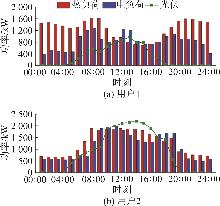
图4
各用户的电、热负荷及光伏功率
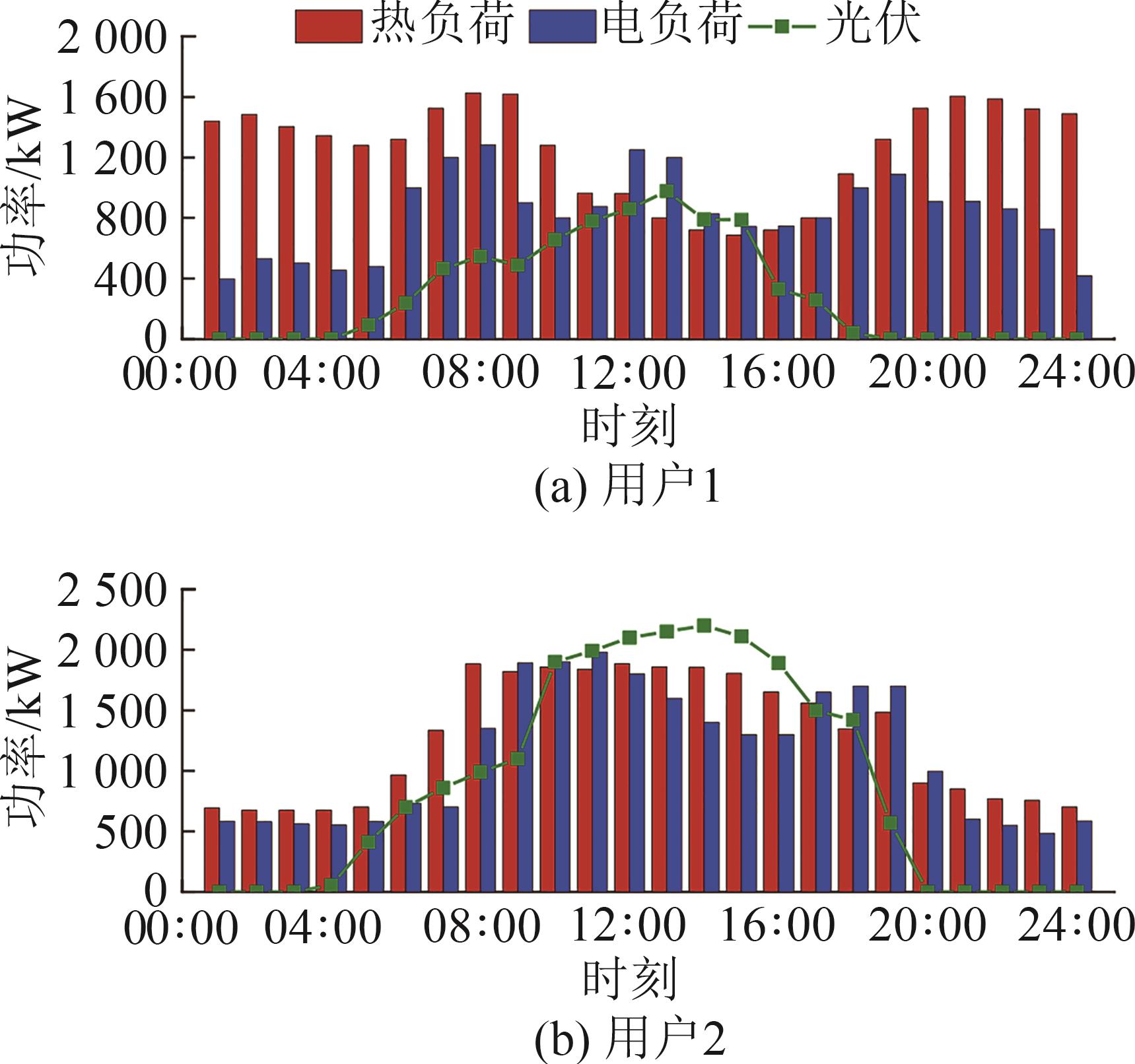
图5
ESP电价策略
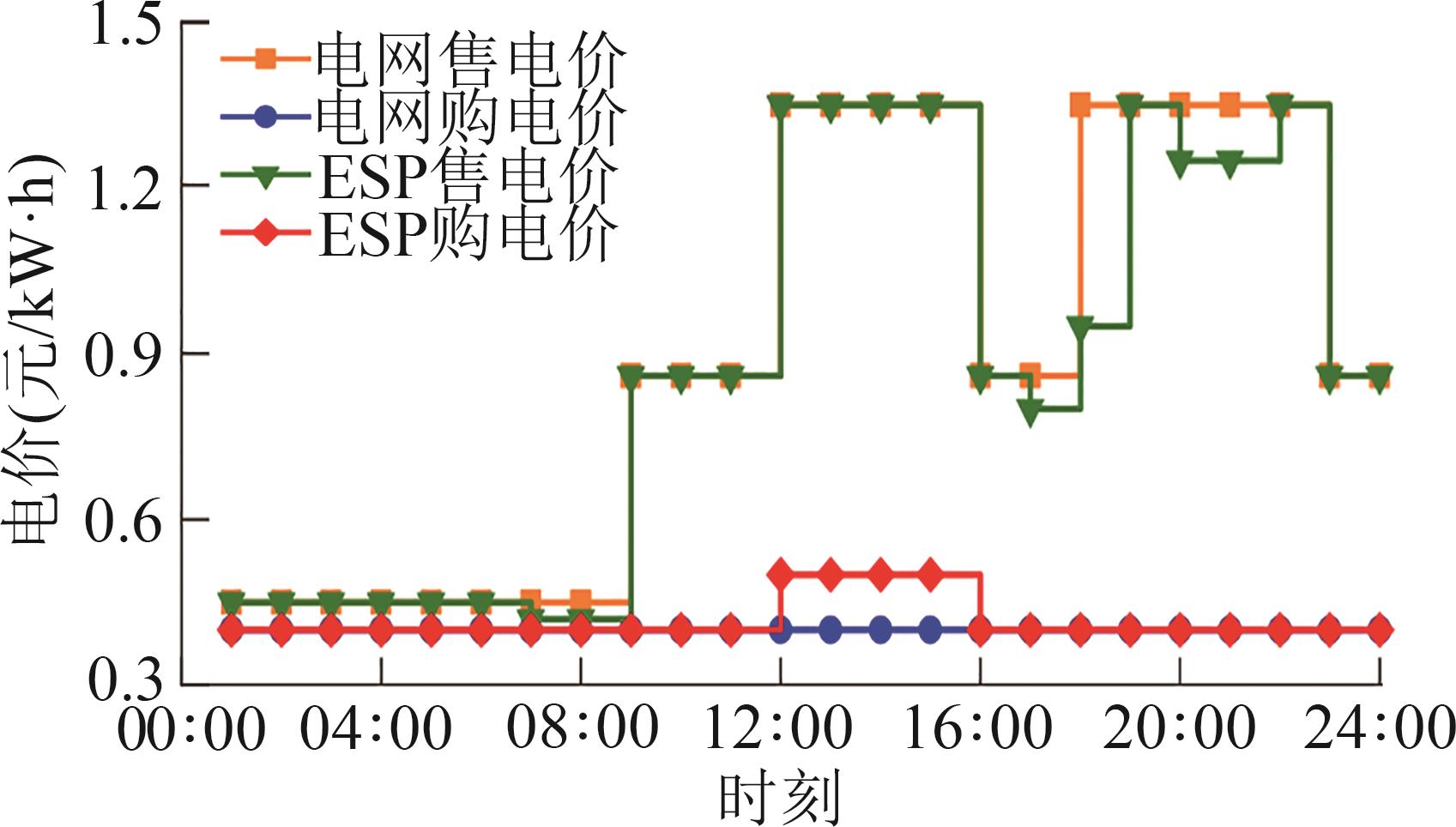
图6
ESP热价策略
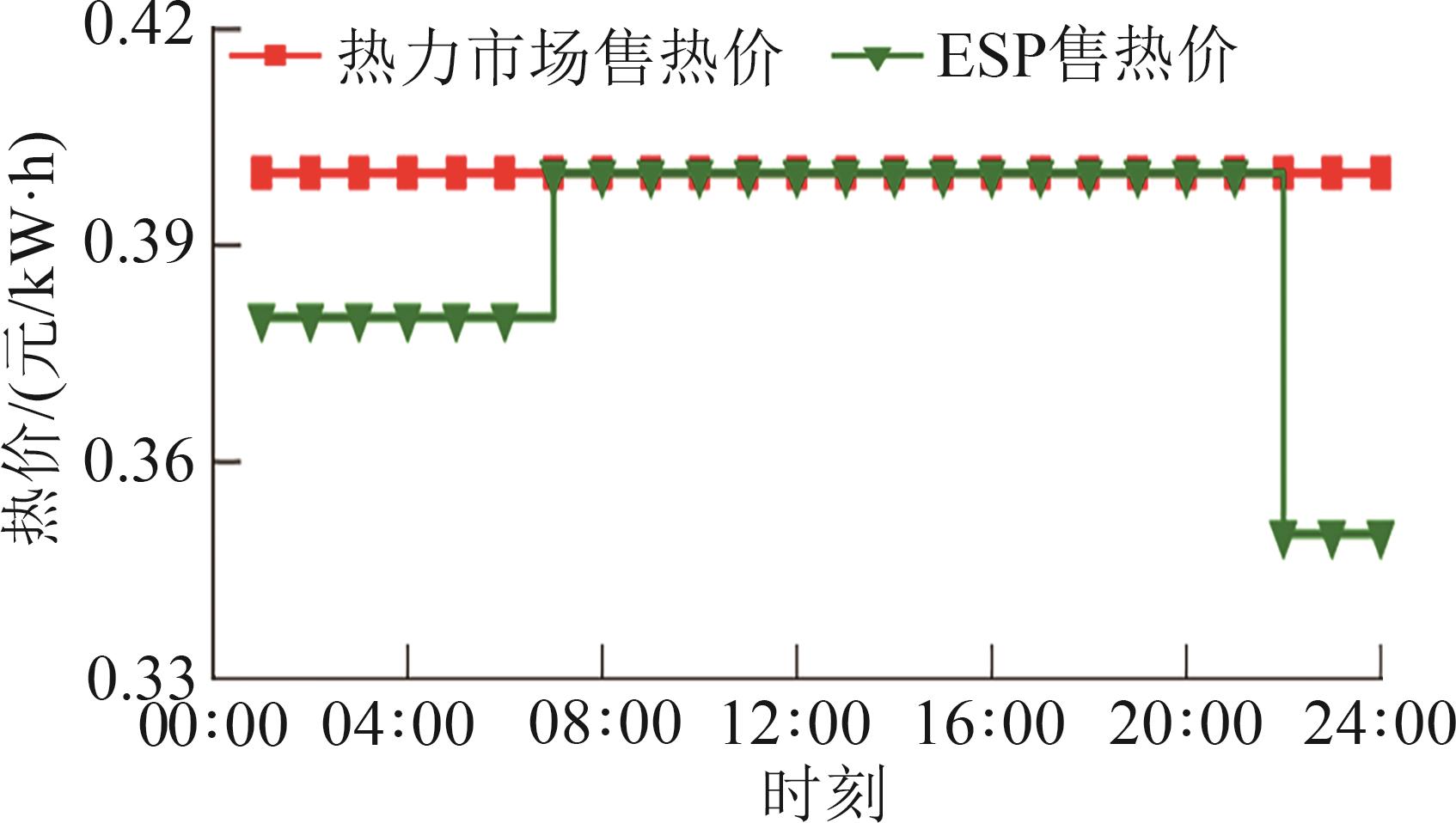
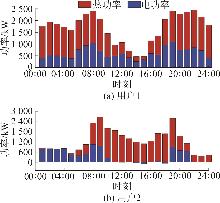
图7
ESP和用户集群间的能量交互策略
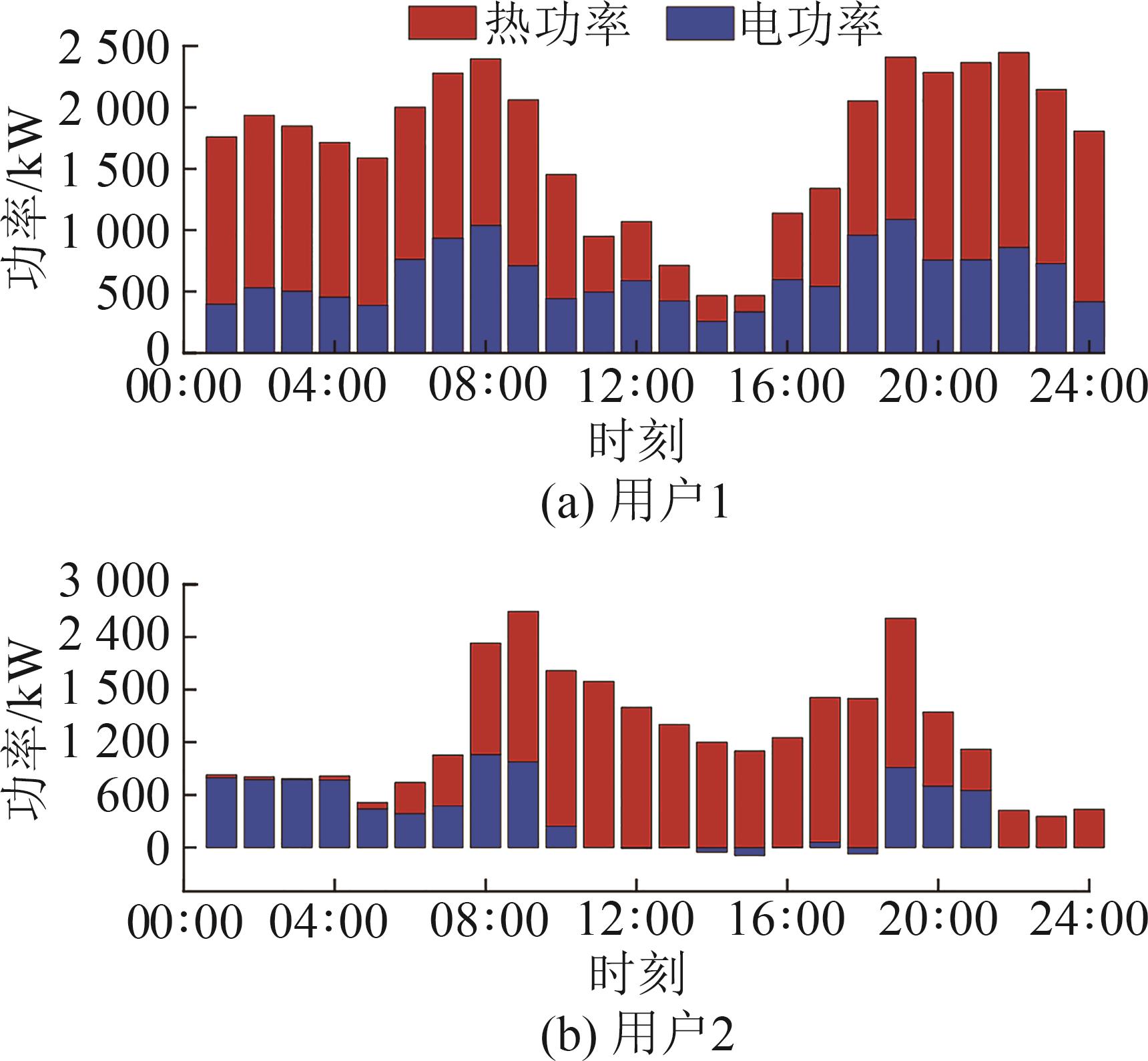
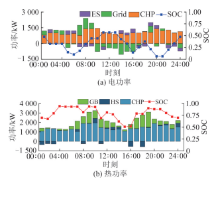
图8
ESP最优的机组运行策略
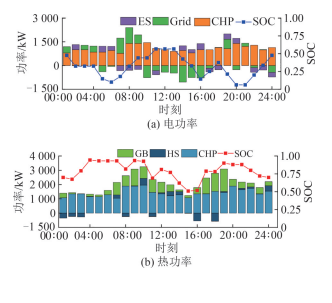
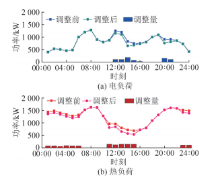
图9
用户1负荷优化结果
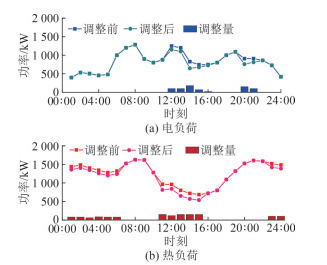
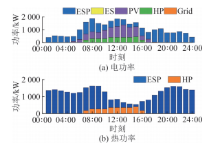
图10
用户1的最优运行策略
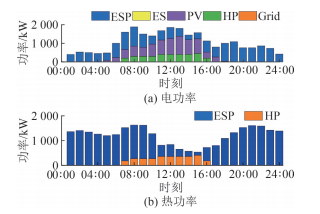
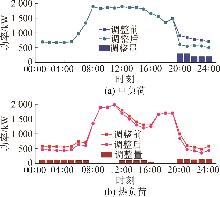
图11
用户2负荷优化结果
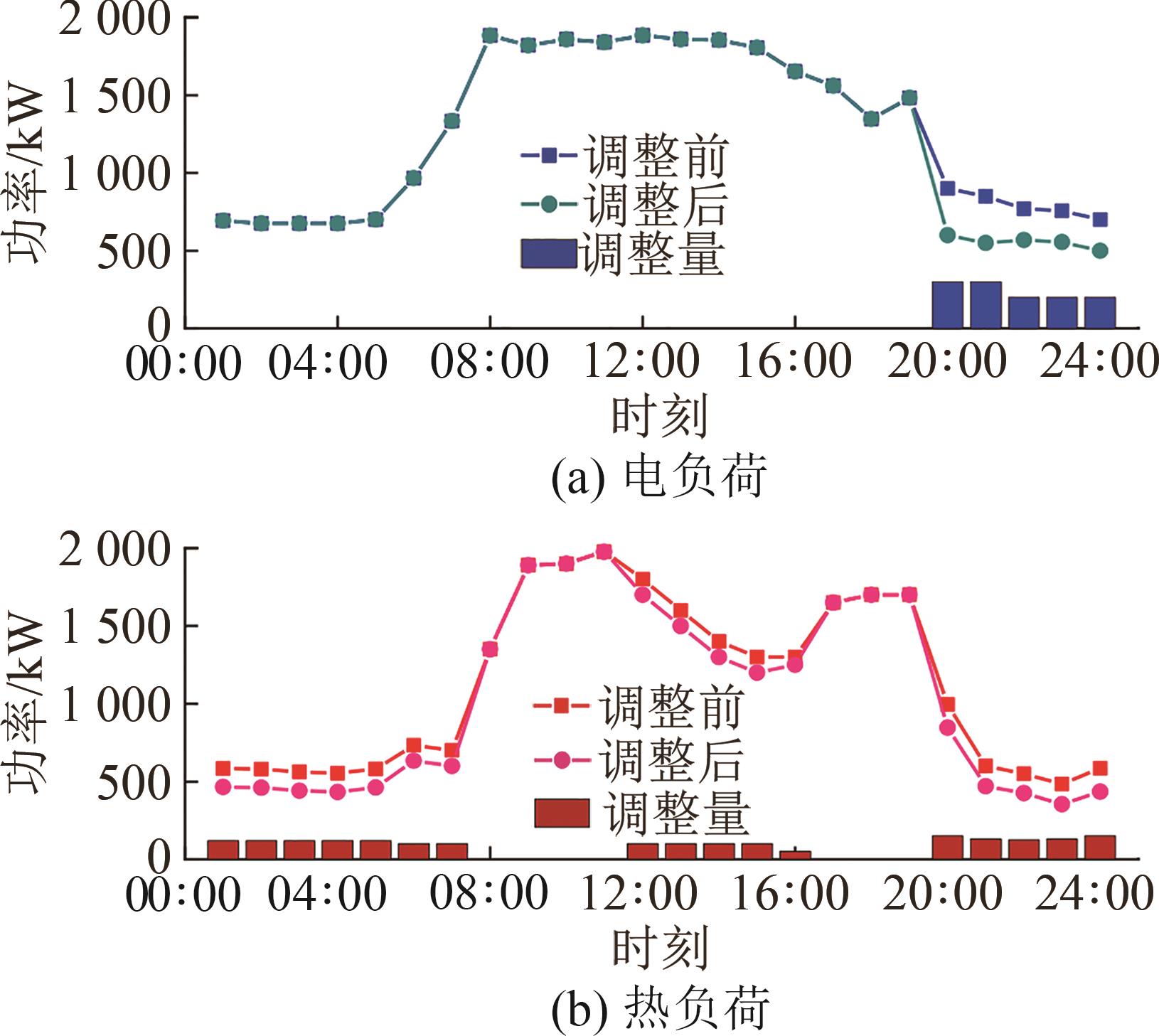
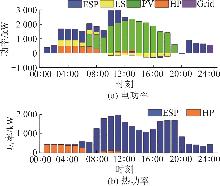
图12
用户集群2的最优运行策略
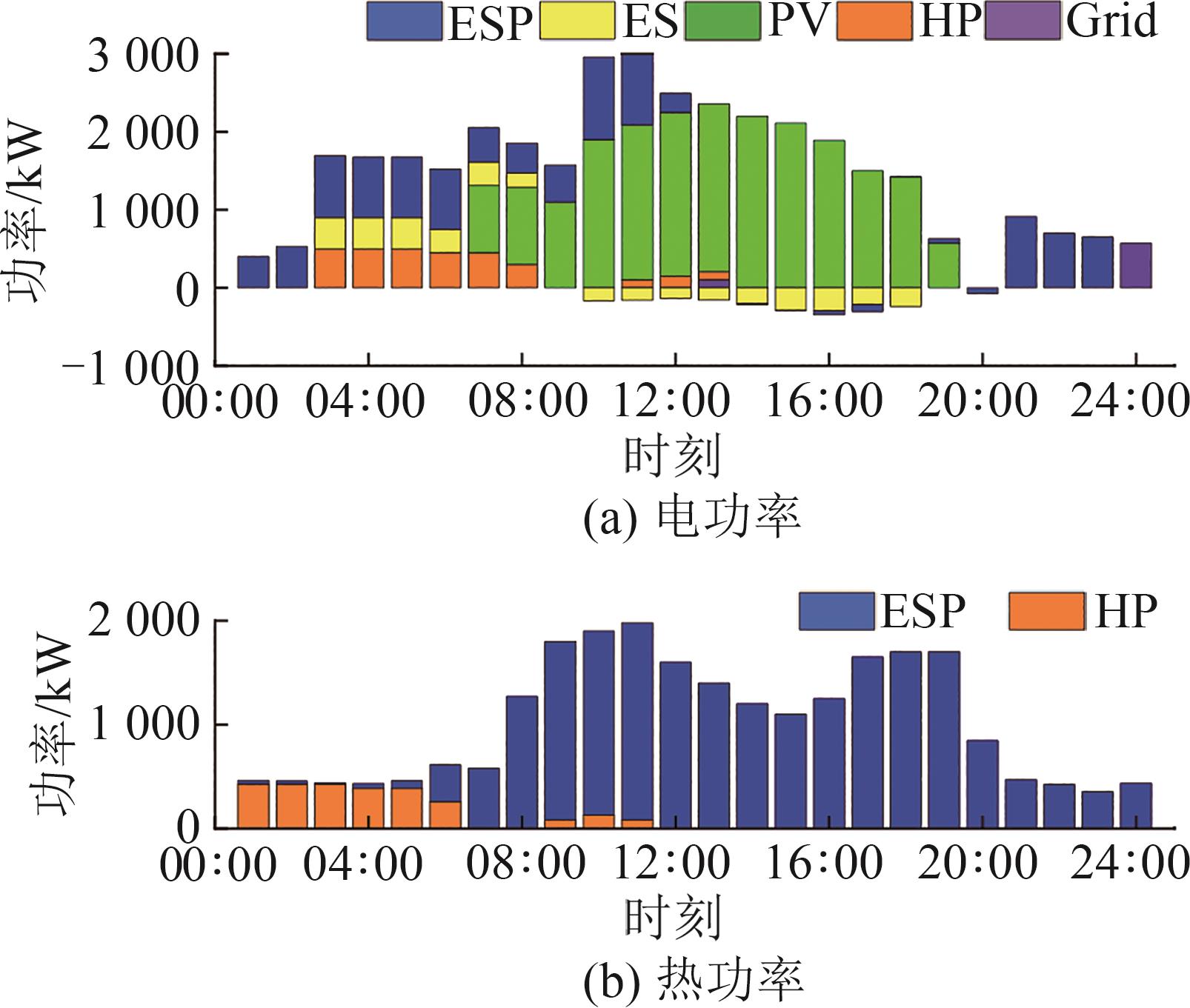
表4
算法收敛性能对比结果
| 性能指标 | 场景I | 场景II |
|---|---|---|
| 收敛迭代次数 | 35 | 48 |
| 总求解时间/s | 24.15 | 27.68 |
| 最终系统Q值/元 | 48 229.79 | 47 913.14 |
| 相对理论最优误差/% | 0.24 | 0.05 |
图13
算法收敛性能对比分析
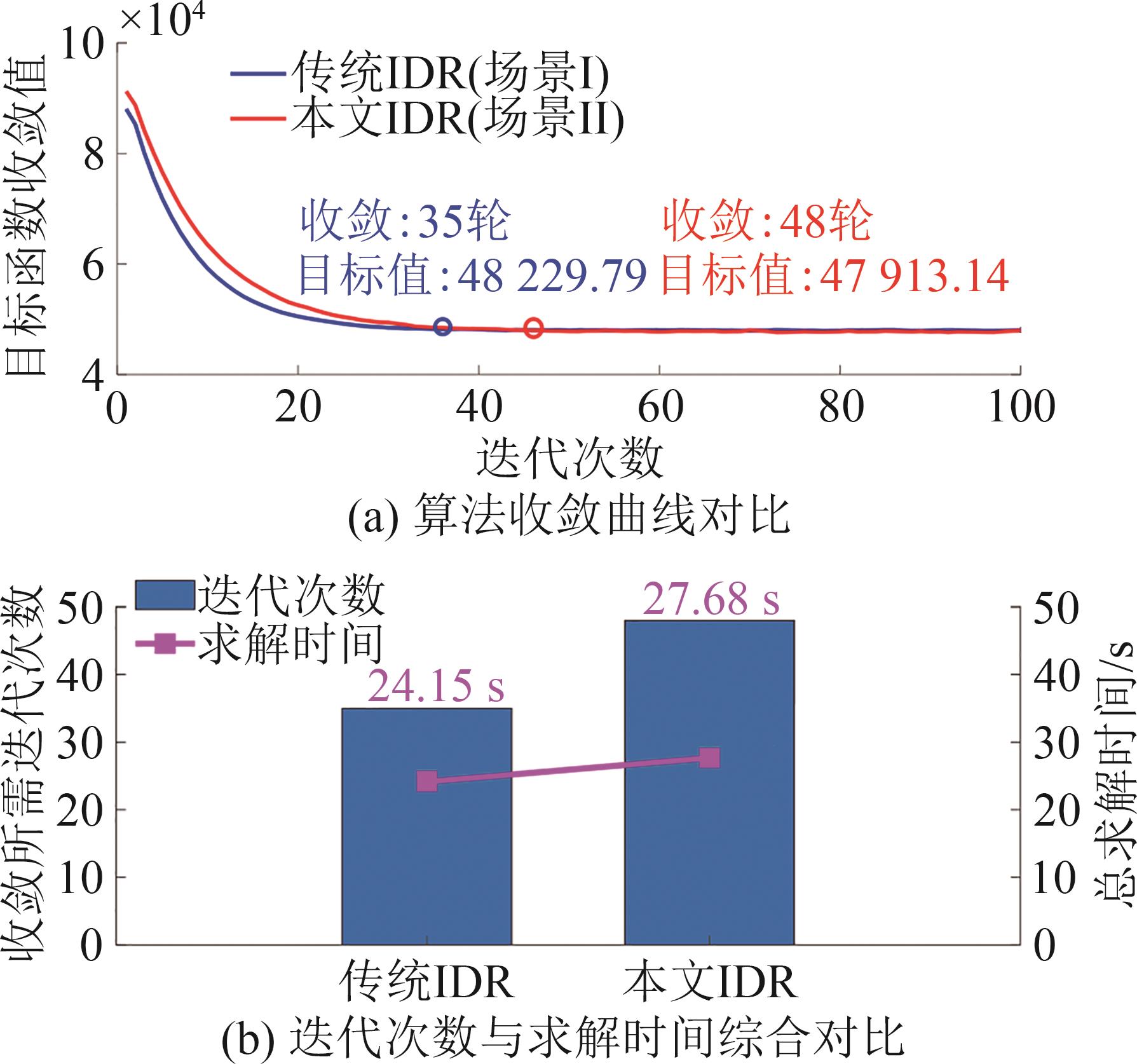
表5
算法收敛性能对比结果
| 性能指标 | 本文方法 | DRL方法 |
|---|---|---|
| 收敛迭代次数 | 48 | 152 |
| 总求解时间/s | 27.68 | 68.42 |
| 最终系统Q值/元 | 47 913.14 | 48 120.56 |
| 相对理论最优误差/% | 0.05 | 0.18 |
表6
算法鲁棒性测试结果
| 性能指标 | 基准场景 | 场景A | 场景B |
|---|---|---|---|
| 收敛迭代次数 | 48 | 76 | 65 |
| 总求解时间/s | 27.68 | 42.35 | 36.82 |
最终系统 Q值/元 | 47 913.14 | 48 036.52 | 47 971.38 |
| 相对理论最优误差/% | 0.05 | 0.11 | 0.08 |
表7
用户集群成本-效益分析
| 成本 | 场景I | 场景II | ||
|---|---|---|---|---|
| 用户1 | 用户2 | 用户1 | 用户2 | |
| ESP电力交易 | 13 322.06 | 5 968.64 | 13 489.56 | 4 892.61 |
| ESP热力交易 | 10 244.04 | 8 644.99 | 8 536.97 | 8 536.97 |
| 电网电力交易 | 0 | 2 044.99 | 0 | 3 793.04 |
| 满意度损失 | 2 780.52 | 3 892.95 | 2 462.21 | 3 224.27 |
| 运行维护 | 269.77 | 707.12 | 269.77 | 735.72 |
| 总运行 | 26 616.39 | 21 258.70 | 24 758.50 | 21 182.61 |
表8
ESP成本-效益分析 (元)
| ESP效益构成 | 场景I | 场景II |
|---|---|---|
| 与电网间电力交互收益 | 3 601.02 | 3 245.98 |
| 与用户间电力交互收益 | 19 290.70 | 18 382.17 |
| 与用户间热力交互收益 | 18 889.03 | 17 073.93 |
| 天然气成本 | 29 778.75 | 28 274.97 |
| 运行维护成本 | 3 464.13 | 1 876.47 |
| 环境成本 | 5 736.60 | 5 446.91 |
| 总运行效益 | 2 801.27 | 3 103.72 |
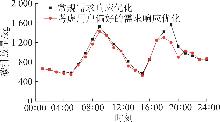
图14
碳排放结果分析
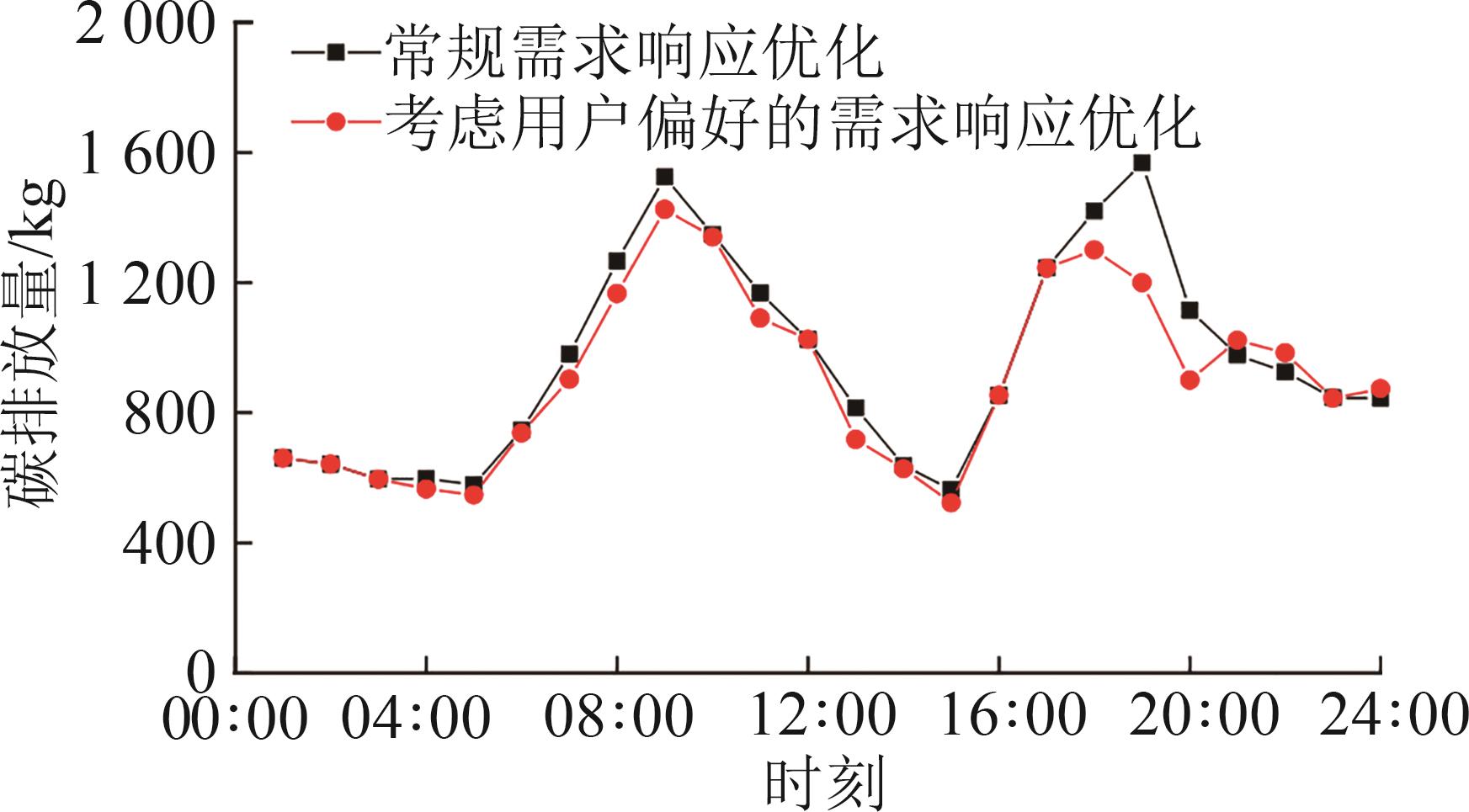
表9
拉偏检验场景设计与结果
| 编号 | 场景 | 关键参数设定 | 系统Q值/元 | 相对最优误差/% | 碳排放/kg | 总成本变化/% |
|---|---|---|---|---|---|---|
| S0 | 基准场景 | 原场景2参数 | 47 913.14 | 0.05 | 21 787.64 | — |
| S1 | 高价格敏感 | 电价敏感系数+50% | 47 801.23 | 0.18 | 21 423.17 | 集群1:–9.2 集群2: –1.8 |
| S2 | 强社会网络 | 社会影响依赖度+100% | 47 889.56 | 0.12 | 21 601.32 | 集群1: –7.5 集群2: –0.9 |
| S3 | 高不确定环境 | 随机扰动方差×2 | 48 036.52 | 0.11 | 21 902.45 | 集群1: +2.1 集群2: +0.5 |
| S4 | 强心理阈值 | 热价容忍度-50% | 47 971.38 | 0.08 | 21 845.76 | 集群1: –4.8 集群2: –0.3 |
| S5 | 组合极端场景 | S1+S2+S3+S4同时激活 | 48 123.47 | 0.24 | 22 087.92 | 集群1: +3.5 集群2: +1.2 |
| [1] | 龙传煜, 张靖, 何宇, 等. 基于绿证-碳交易等价交互的综合能源系统低碳优化调度[J]. 电力自动化设备, 2026, 46(4): 149-156. |
| Long Chuanyu, Zhang Jing, He Yu, et al. Low-carbon Optimal Dispatch of Integrated Energy Systems Considering Green Certificate-carbon Trading Equivalent Interactions[J]. Electric Power Automation Equipment, 2026, 46(4): 149-156. | |
| [2] | Wang Ziren, Zhang Yuanan, Li Wei. A Bi-level Optimization Operation Method for Hydrogen-enriched Integrated Energy Systems Incorporating Dynamic Carbon Emission Factors[J]. Renewable Energy, 2026, 256: 124168. |
| [3] | 谢晗烁. 基于博弈论的区域综合能源系统服务商运行策略研究[D]. 北京: 华北电力大学(北京), 2024. |
| Xie Hanshuo. Research on Operational Strategies of Regional Integrated Energy System Service Providers Based on Game Theory[D]. Beijing: North China Electric Power University(Beijing), 2024. | |
| [4] | 李振坤, 王茹楠, 徐琛, 等. 基于混合博弈的社区综合能源服务商与微网群二阶段协同运行策略[J]. 现代电力, 2025, 42(2): 302-313. |
| Li Zhenkun, Wang Runan, Xu Chen, et al. A Two-stage Collaborative Operation Strategy for Community Integrated Energy Service Provider and Microgrid Group Based on Mixed Game[J]. Modern Electric Power, 2025, 42(2): 302-313. | |
| [5] | 杨欣怡, 陈涛, 高赐威, 等. 虚拟电厂调节能力评估与典型运行模式用户画像方法[J]. 电网技术, 2026, 50(5): 1801-1811. |
| Yang Xinyi, Chen Tao, Gao Ciwei, et al. Regulation Capability Assessment and User Profiling Methods for Typical Operational Modes of Virtual Power Plant[J]. Power System Technology, 2026, 50(5): 1801-1811. | |
| [6] | 李鹏, 吴迪凡, 李雨薇, 等. 基于综合需求响应和主从博弈的多微网综合能源系统优化调度策略[J]. 中国电机工程学报, 2021, 41(4): 1307-1321. |
| Li Peng, Wu Difan, Li Yuwei, et al. Optimal Dispatch of Multi-microgrids Integrated Energy System Based on Integrated Demand Response and Stackelberg Game[J]. Proceedings of the CSEE, 2021, 41(4): 1307-1321. | |
| [7] | 王珂, 吴峰, 曹若琳, 等. 市场环境下需求响应行为特性及模型研究综述[J]. 电力系统自动化, 2024, 48(15): 1-14. |
| Wang Ke, Wu Feng, Cao Ruolin, et al. Review on Characteristics and Models of Demand Response Behavior in Market Environment[J]. Automation of Electric Power Systems, 2024, 48(15): 1-14. | |
| [8] | 王仕炬, 刘天琪, 何川, 等. 基于舒适度的需求响应与碳交易的园区综合能源经济调度[J]. 电测与仪表, 2022, 59(11): 1-7. |
| Wang Shiju, Liu Tianqi, He Chuan, et al. Comfort Demand Response and Carbon Trading Based Comprehensive Energy Economic Dispatching in Industrial Parks[J]. Electrical Measurement & Instrumentation, 2022, 59(11): 1-7. | |
| [9] | 陈钱蓁, 高红均, 王晓辉, 等. 面向产消用户的售电公司发-用电多元电力套餐优化[J]. 电力自动化设备, 2023, 43(5): 154-162. |
| Chen Qianzhen, Gao Hongjun, Wang Xiaohui, et al. Prosumer Oriented Multiple Generation-consumption Electricity Package Optimization for Electricity Retailers[J]. Electric Power Automation Equipment, 2023, 43(5): 154-162. | |
| [10] | 段新会, 程泽龙, 张东超, 等. 考虑需求响应与两阶段P2G的综合能源系统优化调度[J]. 系统仿真学报, 2025, 37(8): 2139-2151. |
| Duan Xinhui, Cheng Zelong, Zhang Dongchao, et al. Optimal Scheduling of an Integrated Energy System Considering Demand Response and Two-stage P2G[J]. Journal of System Simulation, 2025, 37(8): 2139-2151. | |
| [11] | 王玉东, 胡俊杰. 考虑多主体交互策略的综合能源系统P2P能-碳管理方法[J]. 系统仿真学报, 2024, 36(10): 2488-2502. |
| Wang Yudong, Hu Junjie. Peer-to-peer Energy-carbon Management Method of Multiple Integrated Energy Systems Considering Multi-agent Interaction Strategy[J]. Journal of System Simulation, 2024, 36(10): 2488-2502. | |
| [12] | Zhang Bowen, Baligen Talihati, Fan Hongtao, et al. A Dynamic Carbon Flow Traceability Framework for Integrated Energy Systems[J]. Journal of Cleaner Production, 2025, 518: 145878. |
| [13] | An Na, Liu Tingxiang, Yang Libin, et al. Low Carbon Economic Dispatch of Integrated Energy Systems with Multiple Types of Energy Storage Considering Uncertainty[J]. Renewable Energy, 2025, 43(9): 1529-1671. |
| [14] | 钟华平, 范钰波, 税纪钧, 等. 考虑源荷不确定性和线性碳交易的综合能源系统优化调度[J]. 系统仿真学报, 2025, 37(10): 2485-2499. |
| Zhong Huaping, Fan Yubo, Shui Jijun, et al. Optimal Scheduling of Integrated Energy Systems Considering Source-load Uncertainty and Linear Carbon Trading[J]. Journal of System Simulation, 2025, 37(10): 2485-2499. | |
| [15] | Wang Fulin, Wang Bozhao, Tang Wentao. Reinforcement Learning Optimization Scheduling of Micro-integrated Energy Systems Under Uncertain Factors[J]. Journal of Physics: Conference Series, 2025, 3012(1): 012089. |
| [16] | Araújo David, Santos Gabriel, Teixeira Brígida, et al. Reinforcement Learning for Real-time Price Prediction in Energy Systems[C]//Progress in Artificial Intelligence. Cham: Springer Nature Switzerland, 2026: 451-463. |
| [17] | 庞超, 霍现旭, 王智爽, 等. 面向用户隐私保护的综合能源系统博弈与强化学习协同调度方法[J/OL]. 电力系统及其自动化学报. (2025-12-23) [2026-01-06]. . |
| Pang Chao, Huo Xianxu, Wang Zhishuang, et al. A Game-theoretic and Reinforcement Learning-based Cooperative Scheduling Method for Integrated Energy Systems with User Privacy Preservation[J/OL]. Proceedings of the CSU-EPSA. (2025-12-23) [2026-01-06]. . | |
| [18] | 李玉璟, 李泽宁, 郝军强. 基于多智能体深度强化学习的充电站实时协调定价方法[J]. 电力系统自动化, 2026, 50(3): 125-134. |
| Li Yujing, Li Zening, Hao Junqiang. Real-time Coordinated Pricing Method for Charging Stations Based on Multi-agent Deep Reinforcement Learning[J]. Automation of Electric Power Systems, 2026, 50(3): 125-134. | |
| [19] | 郑颖颖, 缪新义, 王晖, 等. 支持时变需求响应激励价格的电动汽车优化充电策略[J]. 电力系统自动化, 2025, 49(9): 96-106. |
| Zheng Yingying, Miao Xinyi, Wang Hui, et al. Optimal Charging Strategies for Electric Vehicles Supporting Time-varying Demand Response Incentive Price[J]. Automation of Electric Power Systems, 2025, 49(9): 96-106. | |
| [20] | Khorramdel Hossein, Gitizadeh Mohsen, Siano Pierluigi, et al. Evaluating the Economic Impact of Users' Personality on Selection of Demand Response Programs[J]. CSEE Journal of Power and Energy Systems, 2023, 9(3): 1036-1050. |
| [21] | Edomah Norbert. Who Triggers Change? Social Network Mapping, Stakeholder Analysis and Energy Systems Interventions in Nigeria's Electricity Sector[J]. International Journal of Sustainable Energy Planning and Management, 2023, 37: 5-20. |
| [22] | Peralta Jaime, Velar Victor, Quintana Eugenio, et al. Dynamic Behavior of Grid-forming Inverters in Large-scale Low-strength Power Grids[C]//2024 IEEE/PES Transmission and Distribution Conference and Exposition (T&D). Piscataway: IEEE, 2024: 1-5. |
| [23] | Talab Odia A, Avci Isa. Energy Management in Microgrids Using Model-free Deep Reinforcement Learning Approach[J]. IEEE Access, 2025, 13: 5871-5891. |
| [24] | Siti Nuraishah Agos Jawaddi, Ismail Azlan, Mohd Suffian Sulaiman, et al. Analyzing Energy-efficient and Kubernetes-based Autoscaling of Microservices Using Probabilistic Model Checking[J]. Journal of Grid Computing, 2025, 23(1): 3. |
| [25] | Fernandez S. Energy and Memory: A New Neural Network Paradigm[EB/OL]. (2025-05-14) [2026-01-06]. . |
| [26] | Uralde Jokin, Barambones Oscar, Calvo Isidro, et al. Neural Network Approach for the Energy Management and Gear Selection of a Fuel Cell Electric Vehicle[J]. International Journal of Hydrogen Energy, 2025, 171: 151196. |
| [27] | 马苗苗, 董利鹏, 刘向杰. 基于Q-learning算法的多智能体微电网能量管理策略[J]. 系统仿真学报, 2023, 35(7): 1487-1496. |
| Ma Miaomiao, Dong Lipeng, Liu Xiangjie. Energy Management Strategy of Multi-agent Microgrid Based on Q-learning Algorithm[J]. Journal of System Simulation, 2023, 35(7): 1487-1496. | |
| [28] | 王海洋, 李珂, 张承慧, 等. 基于主从博弈的社区综合能源系统分布式协同优化运行策略[J]. 中国电机工程学报, 2020, 40(17): 5435-5444. |
| Wang Haiyang, Li Ke, Zhang Chenghui, et al. Distributed Coordinative Optimal Operation of Community Integrated Energy System Based on Stackelberg Game[J]. Proceedings of the CSEE, 2020, 40(17): 5435-5444. | |
| [29] | Niromandfam Amir, Saeid Pashaei Choboghloo. Modeling Electricity Demand, Welfare Function and Elasticity of Electricity Demand Based on the Customers Risk Aversion Behavior[EB/OL]. (2020-10-15) [2026-01-06]. . |
| [30] | Eric John Wilczynski, Chambers Jonathan, Patel Martin K, et al. Assessment of the Thermal Energy Flexibility of Residential Buildings with Heat Pumps Under Various Electric Tariff Designs[J]. Energy and Buildings, 2023, 294: 113257. |
| [31] | Yang Yang, Raman Gurupraanesh, Chih-Hsien Peng Jimmy. Shaping Residential Electricity Demand with Negative Pricing[J]. Nature Energy, 2026, 11(1): 58-65. |
| [32] | Cassidy A, Strube M, Nehorai A. A Framework for Exploring Social Network and Personality-based Predictors of Smart Grid Diffusion[J]. IEEE Transactions on Smart Grid, 2015, 6(3): 1314-1322. |
| [33] | Chen Weilong, Liu Xinru, Zhang Xinran, et al. SocioDiff: A Socio-aware Diffusion Model for Residential Electricity Consumption Data Generation[J]. IEEE Transactions on Smart Grid, 2025, 16(5): 3786-3800. |
| [34] | Marrero Lester, Sbárbaro Daniel, García-Santander Luis. Online Demand Response Characterization Based on Variability in Customer Behavior[J]. Journal of Modern Power Systems and Clean Energy, 2024, 12(3): 936-946. |
| [35] | Chen Liudong, Liu Nian, Li Chenchen, et al. Peer-to-peer Energy Sharing with Social Attributes: A Stochastic Leader-follower Game Approach[J]. IEEE Transactions on Industrial Informatics, 2021, 17(4): 2545-2556. |
| [1] | 刘铜锤, 谭联, 鲍冬暄, 曾岚婷, 侯鹏飞, 凌荣华. 台风灾害下电热综合能源系统紧急风险调度[J]. 系统仿真学报, 2026, 38(8): 2119-2131. |
| [2] | 唐进君, 张帅杰. 考虑车载质量变化的混合动力公交车能量管理策略[J]. 系统仿真学报, 2026, 38(6): 1583-1597. |
| [3] | 陶彩霞, 陈乃焜, 高锋阳, 张建刚. 基于多智能体强化学习的综合能源分布式优化[J]. 系统仿真学报, 2026, 38(2): 476-487. |
| [4] | 段新会, 程泽龙, 张东超, 段晓冲. 考虑需求响应与两阶段P2G的综合能源系统优化调度[J]. 系统仿真学报, 2025, 37(8): 2139-2151. |
| [5] | 马苗苗, 龙紫娟, 任智伟, 成永强. 基于EMPC的含电动汽车综合能源系统分层优化调度[J]. 系统仿真学报, 2025, 37(5): 1116-1128. |
| [6] | 刘建功, 张远辉, 魏菲, 王毅颖, 李晓岭, 刘佩情, 司冯淼. 基于规则的混合动力矿用自卸车能量管理策略研究[J]. 系统仿真学报, 2025, 37(2): 487-497. |
| [7] | 张润昭, 陈艳波, 黄涛, 田昊欣, 强涂奔, 张智. 基于异构负荷特征解析预测的虚拟电厂调度方法[J]. 系统仿真学报, 2025, 37(12): 2994-3006. |
| [8] | 钟华平, 范钰波, 税纪钧, 王丹豪, 彭道刚. 考虑源荷不确定性和线性碳交易的综合能源系统优化调度[J]. 系统仿真学报, 2025, 37(10): 2485-2499. |
| [9] | 马苗苗, 王浩, 董利鹏, 刘向杰. 基于主从博弈的微电网分布式能量管理策略[J]. 系统仿真学报, 2024, 36(4): 834-843. |
| [10] | 贾东梨, 刘科研, 任昭颖, 汪泽州, 汤东升. 计及能源优先级的综合能源系统优化运行调度[J]. 系统仿真学报, 2024, 36(12): 2771-2781. |
| [11] | 王玉东, 胡俊杰. 考虑多主体交互策略的综合能源系统P2P能-碳管理方法[J]. 系统仿真学报, 2024, 36(10): 2488-2502. |
| [12] | 马苗苗, 董利鹏, 刘向杰. 基于Q-learning算法的多智能体微电网能量管理策略[J]. 系统仿真学报, 2023, 35(7): 1487-1496. |
| [13] | 朱永宁, 楼泽如, 吴天翔, 王建民. 虚实融合的探究式实验系统研究[J]. 系统仿真学报, 2023, 35(1): 82-94. |
| [14] | 王俐英, 林嘉琳, 董厚琦, 曾鸣, 王雨晴. 计及阶梯式碳交易的综合能源系统优化调度[J]. 系统仿真学报, 2022, 34(7): 1393-1404. |
| [15] | 李启锐, 彭心怡. 基于深度强化学习的云作业调度及仿真研究[J]. 系统仿真学报, 2022, 34(2): 258-268. |
| 阅读次数 | ||||||
|
全文 |
|
|||||
|
摘要 |
|
|||||
 http://www.china-simulation.com

