

系统仿真学报 ›› 2026, Vol. 38 ›› Issue (5): 1365-1382.doi: 10.16182/j.issn1004731x.joss.25-0415
彭莉峻1, 苏庭琪2, 刘沛津2, 何林3, 周协武2, 张闽心2
收稿日期:2025-05-12
修回日期:2025-07-22
出版日期:2026-05-21
发布日期:2026-05-29
通讯作者:
刘沛津
第一作者简介:彭莉峻(1986-),女,高级实验师,硕士,研究方向为计算机视觉应用、电力电子技术。
基金资助:Peng Lijun1, Su Tingqi2, Liu Peijin2, He Lin3, Zhou Xiewu2, Zhang Minxin2
Received:2025-05-12
Revised:2025-07-22
Online:2026-05-21
Published:2026-05-29
Contact:
Liu Peijin
摘要:
针对实验室复杂环境中,实验人员穿戴安全防护装备多尺度、多类目标检测时存在漏检率高、穿戴规范性判断不准等问题,提出一种融合多尺度特征与人体关键点的实验室人员PPE (personal protective equipment)规范穿戴检测方法(multi-scale multi-target joint key point detection method, MSMT-JKDM)。引入多尺度自适应下采样模块与级联组注意力变换器,增强实验室检测场景下PPE的特征表达能力,有效缓解小目标易被忽略、特征混淆等问题;采用选择性边界感知多尺度重校准金字塔网络,通过多尺度融合、边界重校准及注意力引导的方式,提升跨尺度特征的表达能力。设计自适应无锚检测头,以提升多尺度目标的定位精度和检测效率。在此基础上,通过将防护装备和人体部位两个对象分支获得的相关坐标信息进行联合推断,准确判断实验人员PPE穿戴的规范性。仿真实验结果表明:MSMT-JKDM的mAP50、mAP50~95以及规范穿戴性指标SWA较基线模型提升3.7%、6.2%和5%;在数据集GDUT-HWD和SHWD上mAP50分别达到82.8%和87.9%,优于现有主流检测方法,进一步验证了模型的有效性。
中图分类号:
彭莉峻,苏庭琪,刘沛津等 . 融合人体关键点的实验室PPE规范穿戴检测方法[J]. 系统仿真学报, 2026, 38(5): 1365-1382.
Peng Lijun,Su Tingqi,Liu Peijin,et al . Detection Method for Laboratory PPE Compliance Wearing Based on Human Key Points[J]. Journal of System Simulation, 2026, 38(5): 1365-1382.
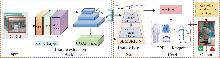
图1
MSMT-JKDM整体网络结构
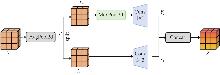
图2
MSA-Down模块
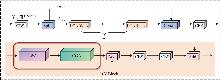
图3
CAG Former模块
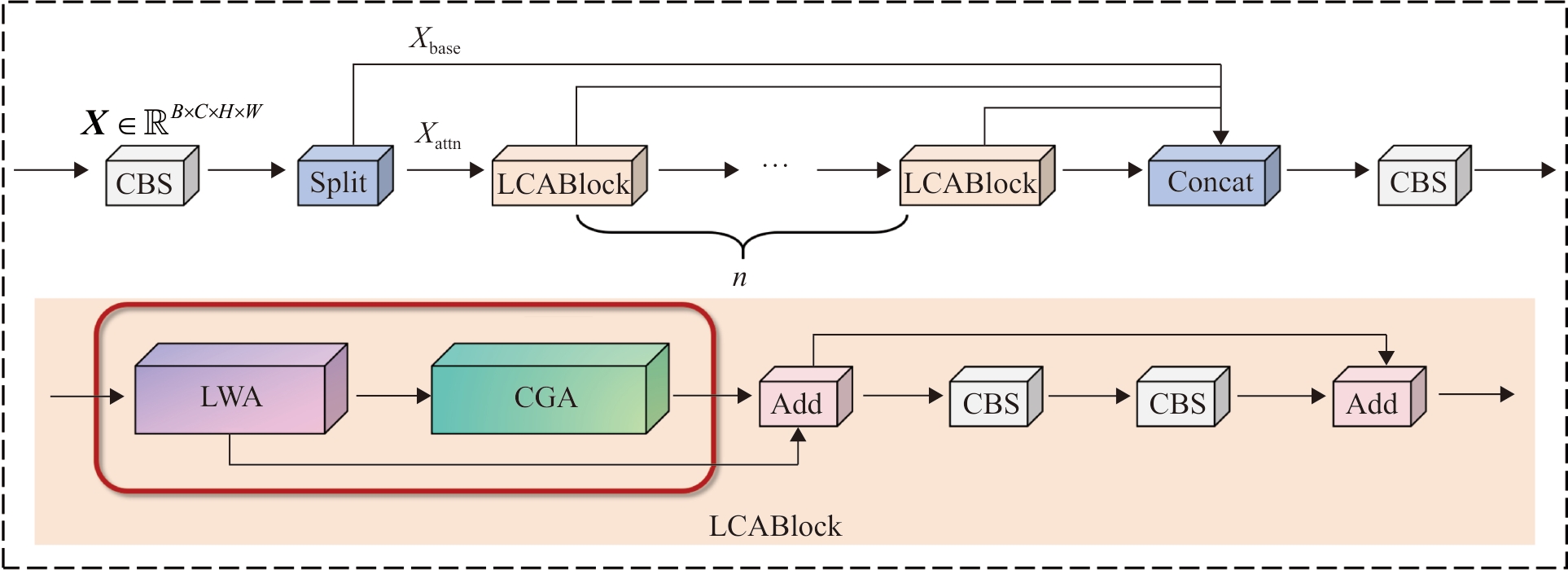
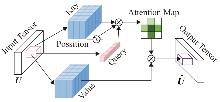
图4
LWA模块
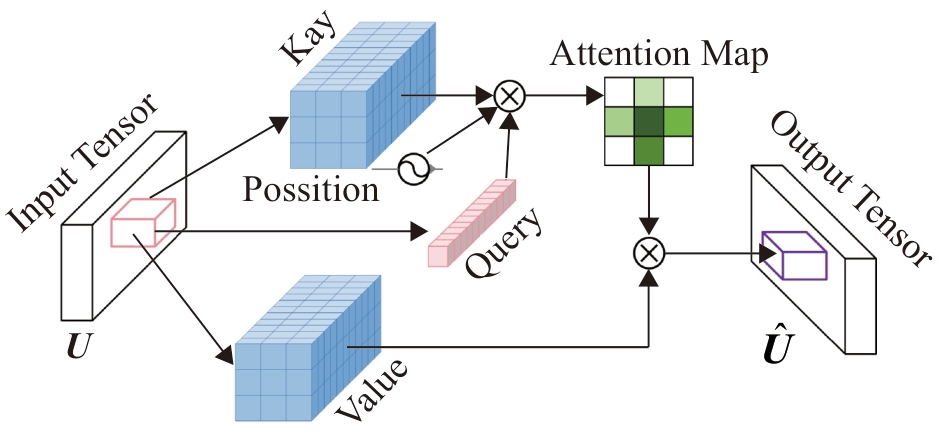
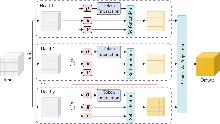
图5
级联组注意力机制
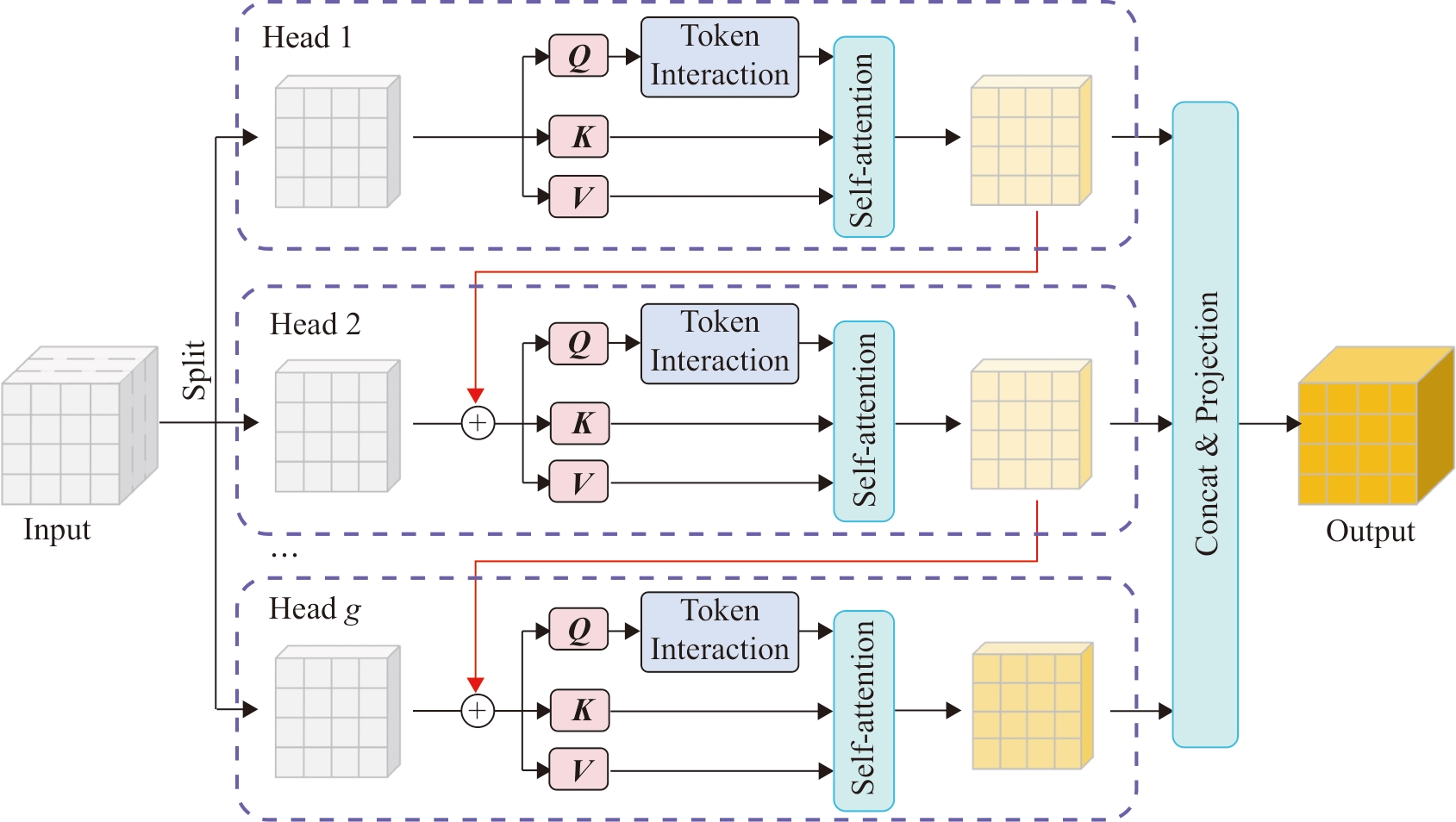
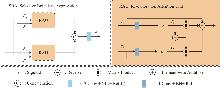
图6
SBA模块
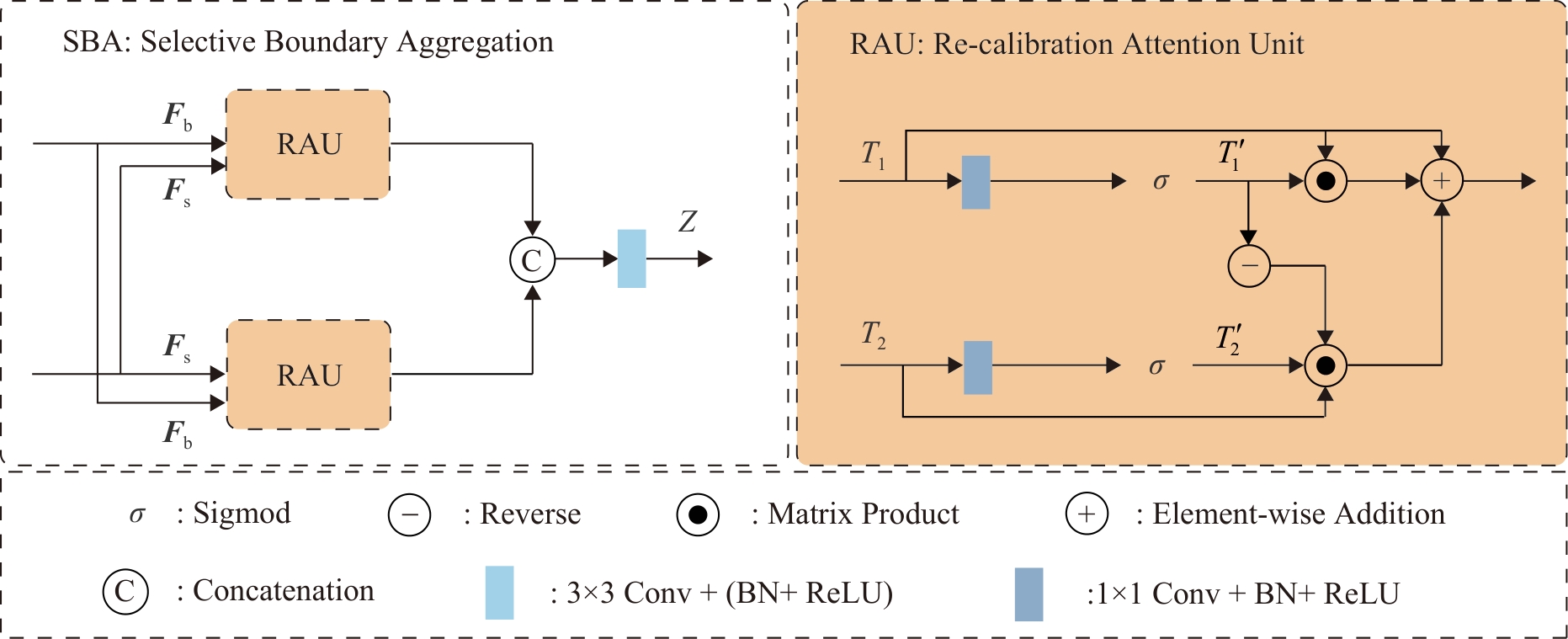
图7
SBMSRFPN模块
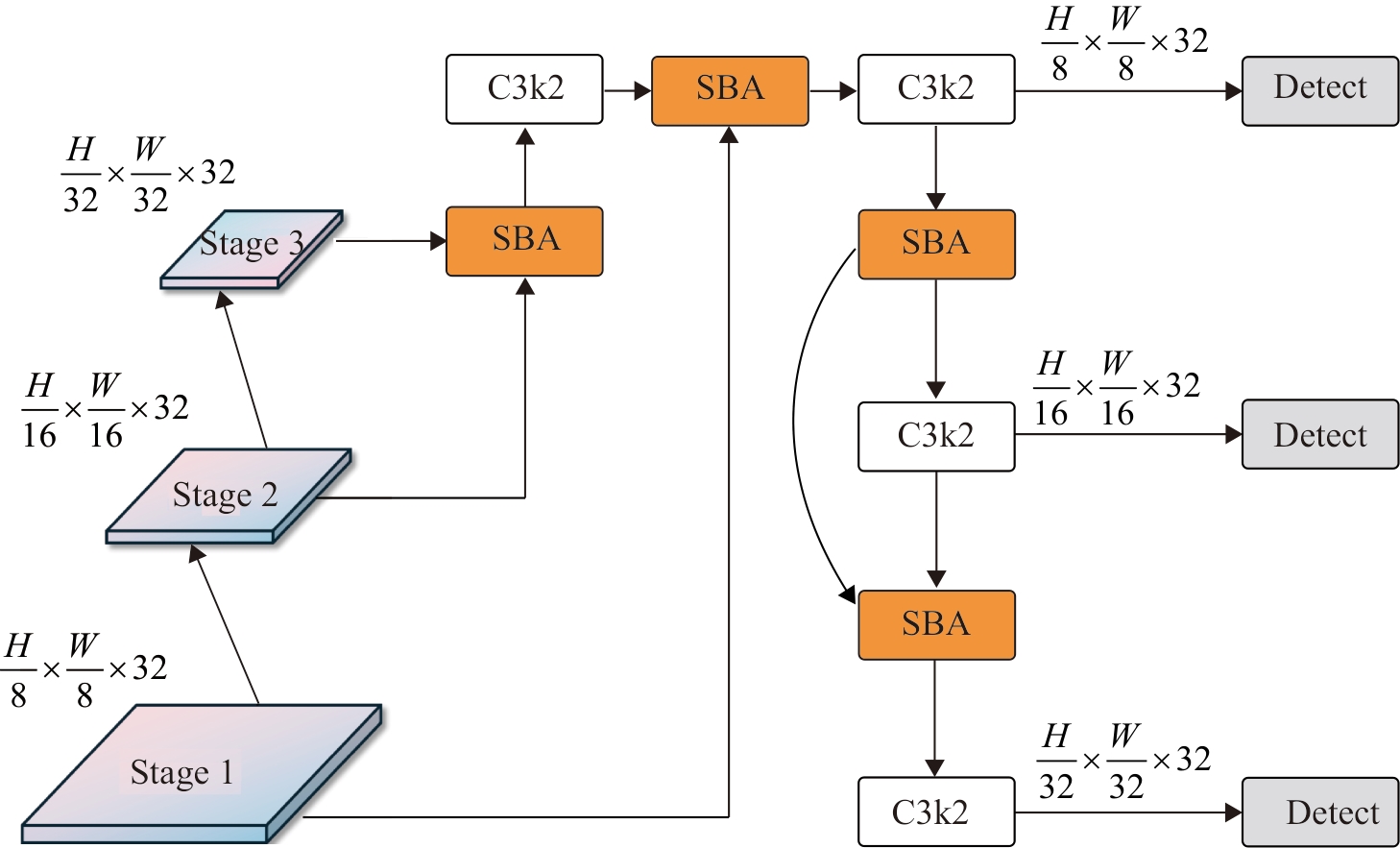
图8
规范穿戴判断流程
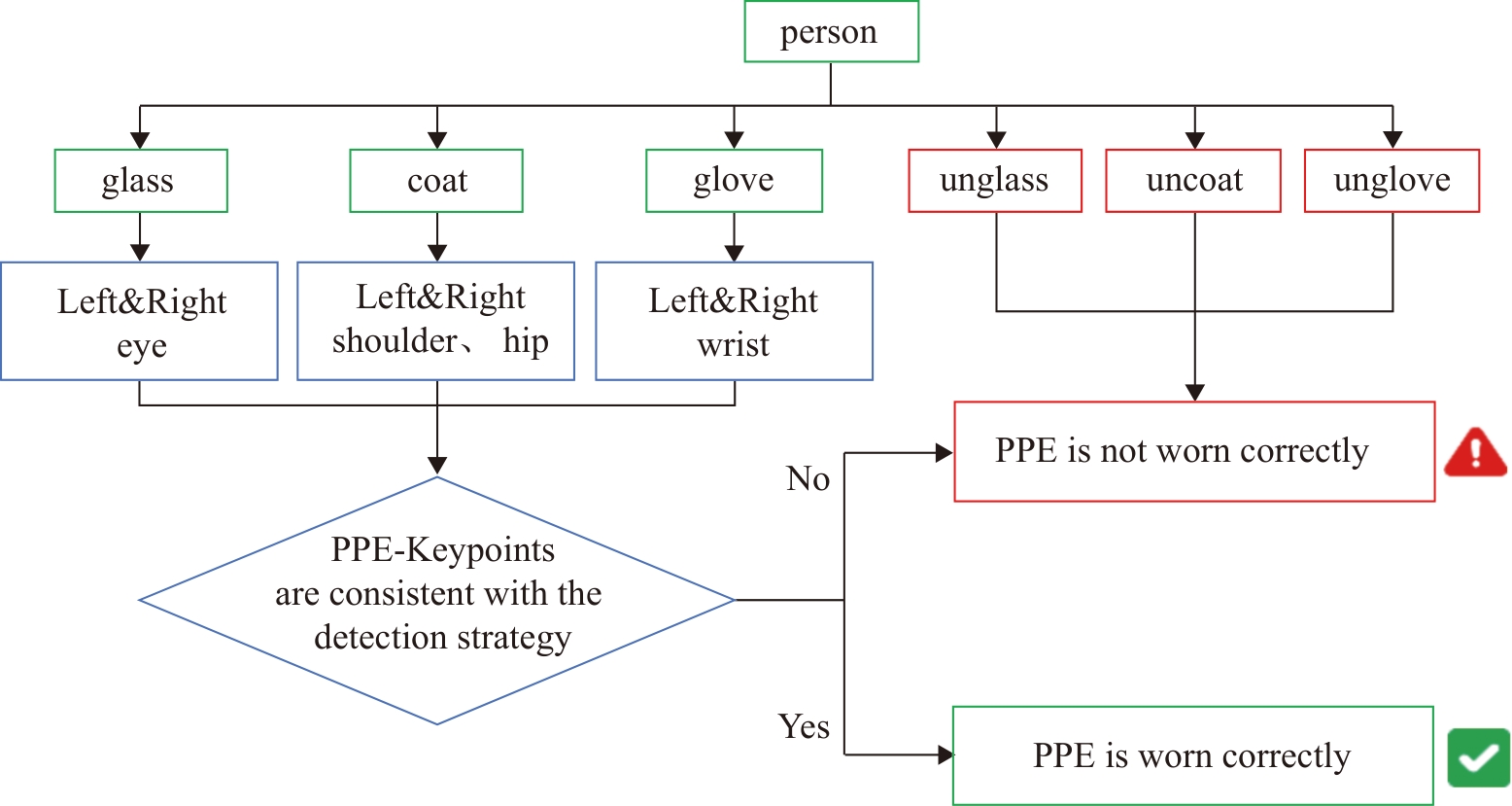

图9
DCDLE中不同的PPE组合穿戴图像
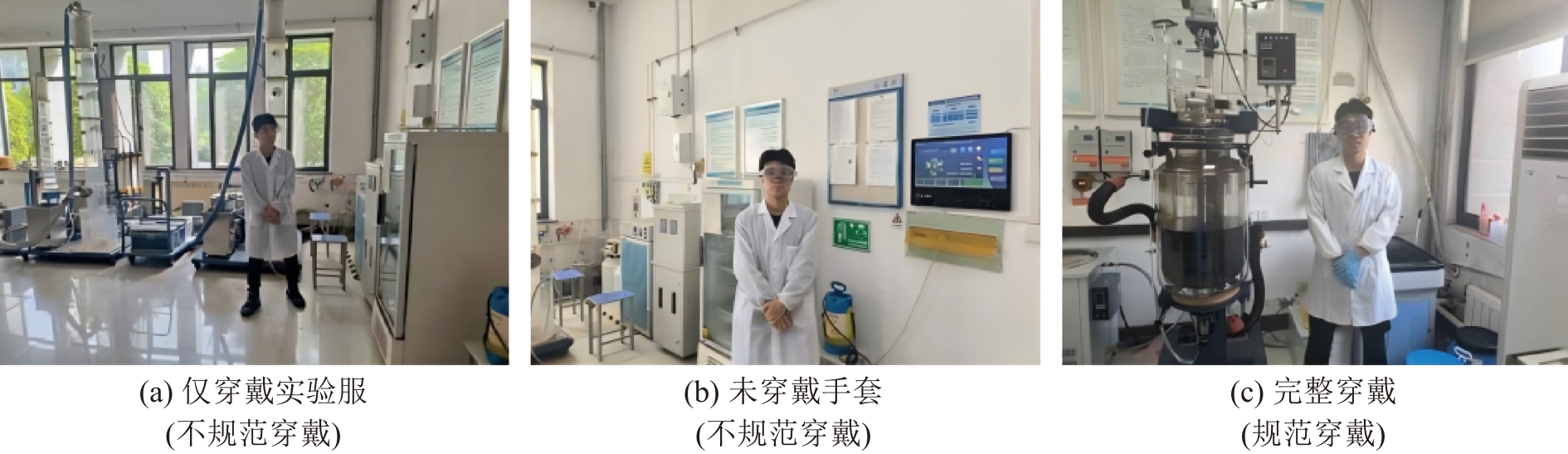
图10
标签框标注展示
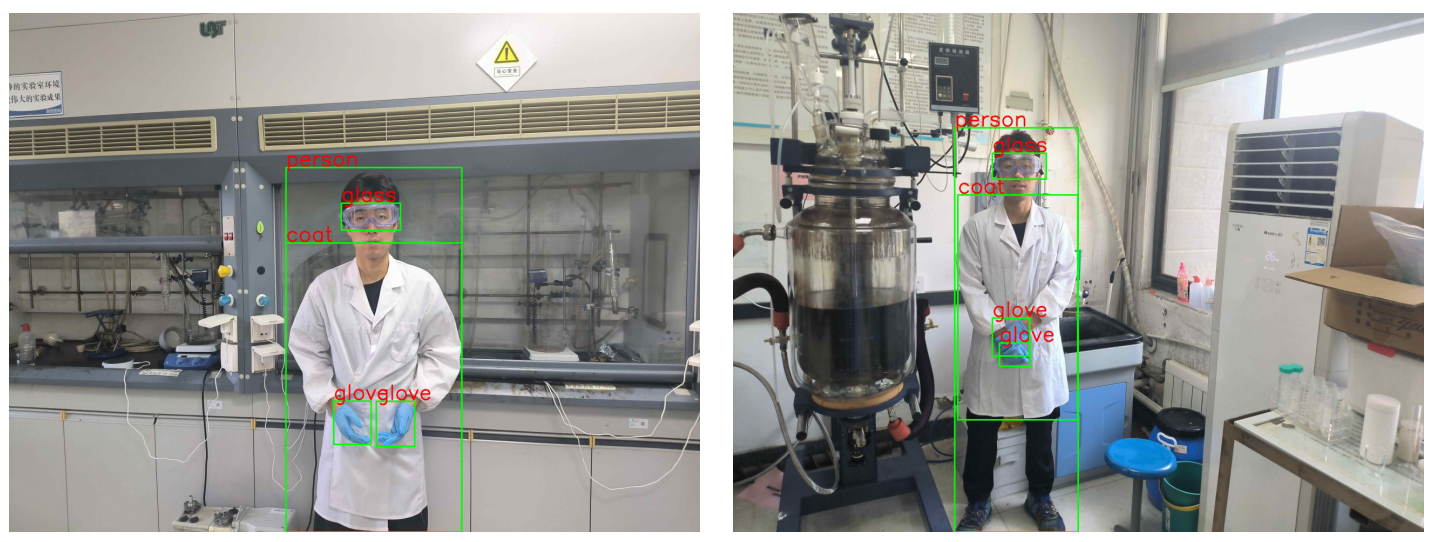

表1
不同身体关键点PPE穿戴使用情况分类
| 关键点 | Class 1 (正确穿戴) | Class 2 (未正确穿戴) | 验证逻辑 |
|---|---|---|---|
| Left eye | glass | unglass | 护目镜是否覆盖左眼 |
| Right eye | glass | unglass | 护目镜是否覆盖右眼 |
| Left shoulder | coat | uncoat | 实验服是否覆盖左肩 |
| Right shoulder | coat | uncoat | 实验服是否覆盖右肩 |
| Left hip | coat | uncoat | 实验服是否覆盖左髋 |
| Right hip | coat | uncoat | 实验服是否覆盖右髋 |
| Left wrist | glove | unglove/mismatch | 手套是否覆盖左手腕 |
| Right wrist | glove | unglove/mismatch | 手套是否覆盖右手腕 |
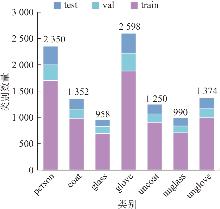
图11
数据集样本分布图
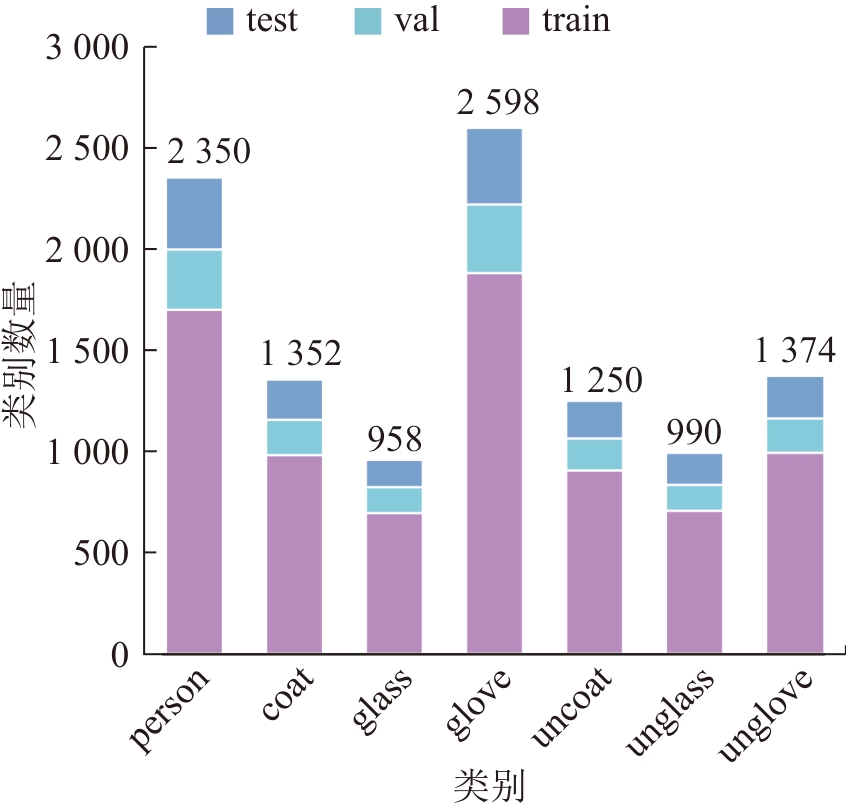
表2
不同算法在 DCDLE数据集上的对比结果
| 模型 | P/% | R/% | mAP50/% | 计算量×109 | 参数量×106 | SWA/% | |
|---|---|---|---|---|---|---|---|
| YOLOv5n | 91.4 | 81.5 | 86.3 | 57.7 | 7.1 | 25.0 | 71.7 |
| YOLOv6n | 90.3 | 85.1 | 87.5 | 61.0 | 11.8 | 42.3 | 85.0 |
| YOLOv8n | 91.0 | 83.7 | 87.7 | 60.2 | 8.1 | 30.1 | 68.3 |
| YOLOv9t | 91.6 | 82.7 | 87.3 | 60.0 | 7.6 | 19.7 | 96.7 |
| YOLOv10n | 78.5 | 71.9 | 79.6 | 53.8 | 8.2 | 26.9 | 75.0 |
| YOLO11n | 88.0 | 84.1 | 86.7 | 58.0 | 6.3 | 25.8 | 93.3 |
| YOLOv12n | 88.7 | 81.5 | 85.6 | 57.9 | 5.8 | 25.1 | 75.0 |
| Hyper-YOLO | 90.3 | 84.3 | 88.2 | 59.5 | 9.5 | 36.2 | 70.0 |
| RT-DETRl | 71.0 | 75.1 | 78.3 | 54.2 | 100.6 | 284.6 | 95.0 |
| RT-DERT-resnet50 | 78.6 | 80.3 | 85.0 | 60.3 | 125.7 | 419.5 | 86.7 |
| Ours | 94.0 | 85.1 | 89.9 | 61.6 | 10.6 | 28.7 | 98.3 |
表3
对比基础算法在DCDLE数据集上小目标(加粗类别)的检测结果
| 模型 | 类别 | P/% | R/% | mAP50/% | mAP50~95/% | PC-SWA/% |
|---|---|---|---|---|---|---|
| YOLO11n | person | 98.9 | 98.6 | 99.1 | 79.6 | |
| coat | 99.3 | 99.5 | 99.5 | 87.4 | 100 | |
| glass | 94.2 | 96.8 | 97.5 | 62.4 | 94.7 | |
| glove | 81.6 | 81.0 | 87.2 | 55.3 | 85.9 | |
| uncoat | 78.2 | 70.9 | 76.3 | 32.7 | ||
| unglass | 98.5 | 96.1 | 97.6 | 71.6 | ||
| unglove | 65.2 | 45.9 | 49.5 | 17.1 | ||
| Ours | person | 98.3 | 98.3 | 99.3 | 82.5 | |
| coat | 99.6 | 98.5 | 99.2 | 88.4 | 100 | |
| glass | 96.7 | 94.9 | 96.7 | 65.2 | 95.4 | |
| glove | 92.0 | 82.8 | 89.5 | 60.6 | 88.0 | |
| uncoat | 89.4 | 71.7 | 83.6 | 37.0 | ||
| unglass | 98.9 | 97.0 | 97.7 | 77.2 | ||
| unglove | 83.3 | 52.4 | 63.0 | 25.7 |
表4
消融实验
| 实验 | MSA-Down | CGAFormer | SBMSRFPN | AFF-Head | mAP50/% | mAP50~95/% | PSWA/% |
|---|---|---|---|---|---|---|---|
| 1 | 86.7 | 58.0 | 93.3 | ||||
| 2 | √ | 87.9 | 60.3 | 92.5 | |||
| 3 | √ | 88.7 | 59.4 | 93.6 | |||
| 4 | √ | 88.9 | 60.3 | 94.7 | |||
| 5 | √ | 87.2 | 58.4 | 95.7 | |||
| 6 | √ | √ | 88.4 | 59.9 | 96.2 | ||
| 7 | √ | √ | 89.7 | 61.0 | 97.2 | ||
| 8 | √ | √ | √ | 88.8 | 61.2 | 97.9 | |
| 9 | √ | √ | √ | √ | 89.9 | 61.6 | 98.3 |
表5
对比不同算法在公开数据集GDUT-HWD上的结果
| 模型 | P/% | R/% | mAP50/% | mAP50~95/% | 参数量×106 | 计算量×109 |
|---|---|---|---|---|---|---|
| YOLOv5n | 86.2 | 72.7 | 80.3 | 48.4 | 25.0 | 7.1 |
| YOLOv8n | 88.8 | 72.9 | 80.7 | 48.8 | 26.8 | 6.8 |
| YOLOv9t | 86.5 | 71.1 | 79.6 | 47.6 | 17.3 | 6.4 |
| YOLOv10n | 82.5 | 68.0 | 75.9 | 45.3 | 26.9 | 8.2 |
| YOLO11n | 85.4 | 74.6 | 80.9 | 48.4 | 25.8 | 6.3 |
| YOLOv12n | 86.9 | 72.8 | 80.0 | 47.1 | 25.1 | 5.8 |
| RT-DERT-l | 75.5 | 66.4 | 72.8 | 42.0 | 284.5 | 100.6 |
| Hyper-YOLO | 88.4 | 74.9 | 82.1 | 48.2 | 36.2 | 9.5 |
| Ours | 89.7 | 74.1 | 82.8 | 49.0 | 28.7 | 10.6 |
表6
对比不同算法在公开数据集SHWD上的结果
| 模型 | P/% | R/% | mAP50/% | mAP50~95/% | 参数量×106 | 计算量×109 |
|---|---|---|---|---|---|---|
| YOLOv5n | 88.7 | 80.4 | 87.2 | 51.9 | 25.3 | 7.1 |
| YOLOv8n | 88.9 | 80.1 | 87.9 | 52.7 | 30.1 | 8.1 |
| YOLOv9t | 88.8 | 79.8 | 86.9 | 52.1 | 19.7 | 7.6 |
| YOLOv10n | 84.7 | 76.4 | 84.1 | 49.8 | 26.9 | 8.2 |
| YOLO11n | 88.8 | 79.7 | 87.7 | 52.5 | 25.8 | 6.3 |
| YOLOv12n | 88.5 | 78.7 | 86.7 | 51.4 | 25.1 | 5.8 |
| RTDERT-l | 82.0 | 72.1 | 80.0 | 45.6 | 254.5 | 100.6 |
| Hyper-YOLO | 88.3 | 80.1 | 85.9 | 51.1 | 36.2 | 9.5 |
| Improvement of Faster RCNN[ | 82.2 | 79.2 | 80.3 | 54.4 | ||
| Improvement of YOLOv4[ | 88.4 | 74.0 | 79.4 | 44.1 | ||
| Improvement of YOLOv5[ | 85.3 | 75.2 | 81.2 | 52.6 | ||
| BiFEL-YOLOv5s[ | 86.5 | 77.9 | 82.8 | 57.7 | ||
| Ours | 90.2 | 80.8 | 87.9 | 59.0 | 28.7 | 10.6 |
图12
PEE检测可视化
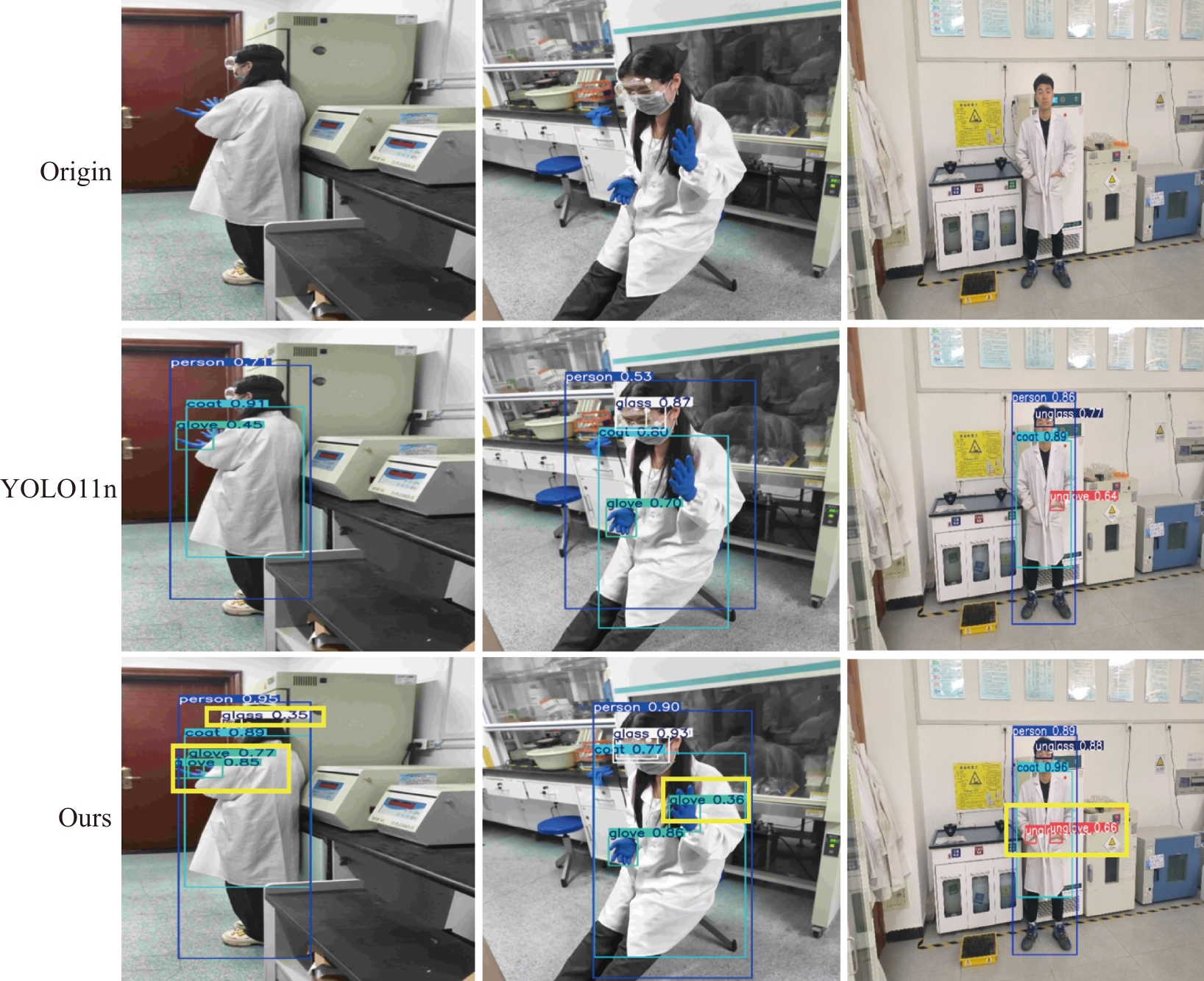
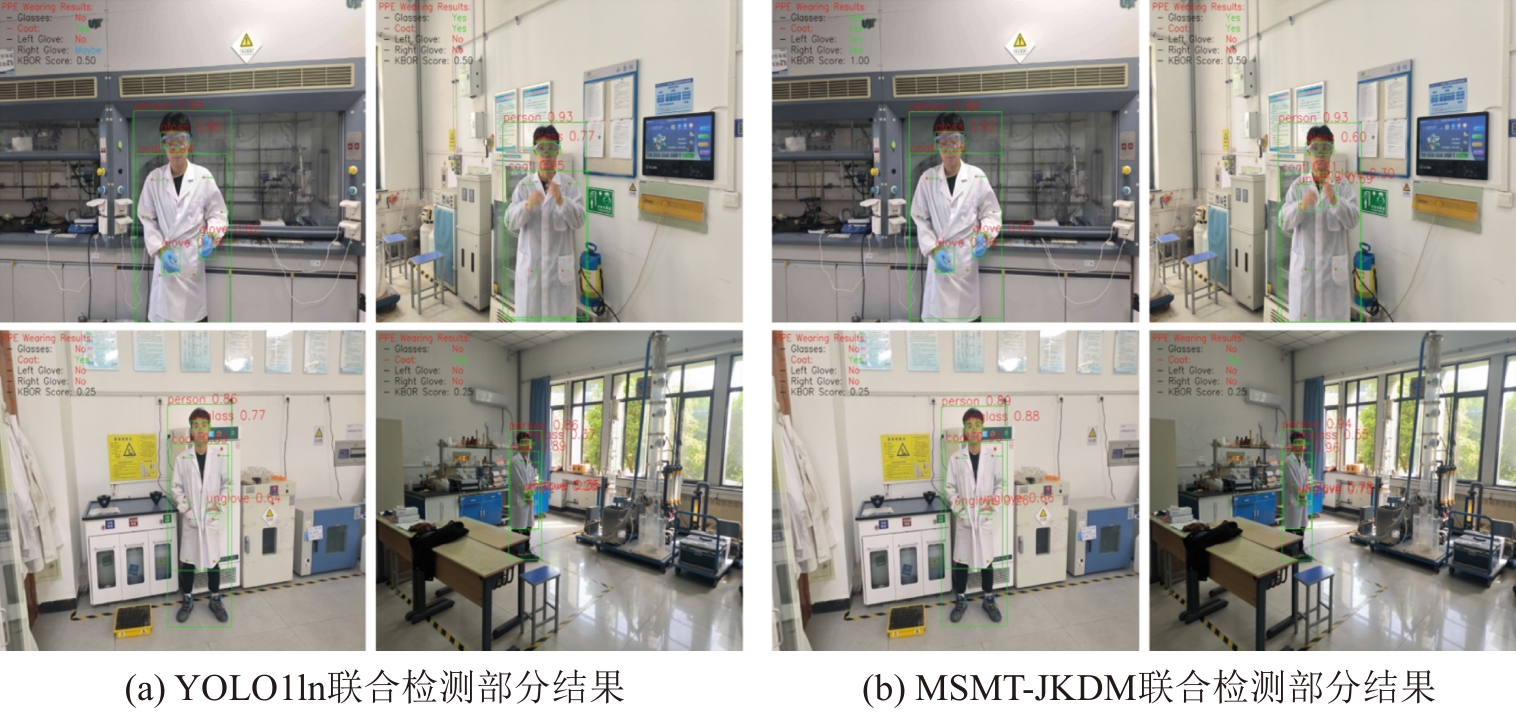
图13
规范穿戴联合检测结果可视化
| [1] | 教育部. 关于加强高校实验室安全工作的意见[J]. 中华人民共和国教育部公报, 2019(5): 29-31. |
| [2] | Blacksell S D, Dhawan Sandhya, Kusumoto Marina, et al. Laboratory-acquired Infections and Pathogen Escapes Worldwide Between 2000 and 2021: A Scoping Review[J]. The Lancet. Microbe, 2024, 5(2): e194-e202. |
| [3] | 王忠玉. 智能视频监控下的安全帽佩戴检测系统的设计与实现[D]. 北京: 北京邮电大学, 2018. |
| Wang Zhongyu. Design and Implementation of Detection System of Wearing Helmets Based on Intelligent Video Surveillance[D]. Beijing: Beijing University of Posts and Telecommunications, 2018. | |
| [4] | 李春亚, 王建华, 尹土兵, 等. 个人防护装备穿戴安全检测技术的进展与应用[J]. 武汉理工大学学报, 2024, 46(10): 149-155, 162. |
| Li Chunya, Wang Jianhua, Yin Tubing, et al. Advancements and Applications of Wearable Safety Detection Technology for Personal Protective Equipment[J]. Journal of Wuhan University of Technology, 2024, 46(10): 149-155, 162. | |
| [5] | Jiang Huaizu, Learned-Miller E. Face Detection with the Faster R-CNN[C]//2017 12th IEEE International Conference on Automatic Face & Gesture Recognition (FG 2017). Piscataway: IEEE, 2017: 650-657. |
| [6] | Zhang Qiang, Pei Ziyu, Guo Rong, et al. An Automated Detection Approach of Protective Equipment Donning for Medical Staff Under COVID-19 Using Deep Learning[J]. CMES - Computer Modeling in Engineering and Sciences, 2022, 132(3): 845-863. |
| [7] | Chen Weiming, Li Changfan, Guo Hailin. A Lightweight Face-assisted Object Detection Model for Welding Helmet Use[J]. Expert Systems with Applications, 2023, 221: 119764. |
| [8] | Cao Zhe, Hidalgo G, Simon T, et al. OpenPose: Realtime Multi-person 2D Pose Estimation Using Part Affinity Fields[J]. IEEE Transactions on Pattern Analysis and Machine Intelligence, 2021, 43(1): 172-186. |
| [9] | Sun Ke, Xiao Bin, Liu Dong, et al. Deep High-resolution Representation Learning for Human Pose Estimation[C]//2019 IEEE/CVF Conference on Computer Vision and Pattern Recognition (CVPR). Piscataway: IEEE, 2019: 5686-5696. |
| [10] | Xiong Ruoxin, Tang Pingbo. Pose Guided Anchoring for Detecting Proper Use of Personal Protective Equipment[J]. Automation in Construction, 2021, 130: 103828. |
| [11] | Gong Faming, Ji Xiaofeng, Gong Wenjuan, et al. Deep Learning Based Protective Equipment Detection on Offshore Drilling Platform[J]. Symmetry, 2021, 13(6): 954. |
| [12] | Su Qin, Zhang Juling, Chen Mingju, et al. PW-YOLO-pose: A Novel Algorithm for Pose Estimation of Power Workers[J]. IEEE Access, 2024, 12: 116841-116860. |
| [13] | Yang Bin, Xiao Hongru, Zhang Binghan. A Unified Object and Keypoint Detection Framework for Personal Protective Equipment Use[J]. Developments in the Built Environment, 2024, 20: 100559. |
| [14] | Jamali Ali, Kumar Roy Swalpa, Bhattacharya Avik, et al. Local Window Attention Transformer for Polarimetric SAR Image Classification[J]. IEEE Geoscience and Remote Sensing Letters, 2023, 20: 1-5. |
| [15] | Liu Xinyu, Peng Houwen, Zheng Ningxin, et al. EfficientViT: Memory Efficient Vision Transformer with Cascaded Group Attention[C]//2023 IEEE/CVF Conference on Computer Vision and Pattern Recognition (CVPR). Piscataway: IEEE, 2023: 14420-14430. |
| [16] | Tang Feilong, Xu Zhongxing, Huang Qiming, et al. DuAT: Dual-aggregation Transformer Network for Medical Image Segmentation[C]//Chinese Conference on Pattern Recognition and Computer Vision. Singapore: Springer Nature Singapore, 2024: 343-356. |
| [17] | Lin T Y, Maire M, Belongie S, et al. Microsoft COCO: Common Objects in Context[C]//Computer Vision – ECCV 2014. Cham: Springer International Publishing, 2014: 740-755. |
| [18] | Wu Jixiu, Cai Nian, Chen Wenjie, et al. Automatic Detection of Hardhats Worn by Construction Personnel: A Deep Learning Approach and Benchmark Dataset[J]. Automation in Construction, 2019, 106: 102894. |
| [19] | Njvisionpower. Safety-helmet-wearing-dataset[EB/OL]. [2025-05-01]. . |
| [20] | Fang Qi, Li Heng, Luo Xiaochun, et al. Detecting Non-hardhat-use by a Deep Learning Method from Far-field Surveillance Videos[J]. Automation in Construction, 2018, 85: 1-9. |
| [21] | Yang Bin, Wang Jie. An Improved Helmet Detection Algorithm Based on YOLO V4[J]. International Journal of Foundations of Computer Science, 2022, 33(06N07): 887-902. |
| [22] | Zhou Fangbo, Zhao Huailin, Nie Zhen. Safety Helmet Detection Based on YOLOv5[C]//2021 IEEE International Conference on Power Electronics, Computer Applications (ICPECA). Piscataway: IEEE, 2021: 6-11. |
| [23] | Wei Lihong, Liu Panpan, Ren Haihui, et al. Research on Helmet Wearing Detection Method Based on Deep Learning[J]. Scientific Reports, 2024, 14(1): 7010. |
| [1] | 董志明, 胡忠奇, 戴浩然, 高建成. 基于大语言模型的作战仿真想定自动化生成方法[J]. 系统仿真学报, 2026, 38(5): 1129-1145. |
| [2] | 李校男, 晁涛, 马萍, 杨明, 王玉轩. 基于期望最大化方法的非线性SSM黑箱鲁棒辨识[J]. 系统仿真学报, 2026, 38(5): 1146-1158. |
| [3] | 刘银钢, 马明, 张荣华. 基于大语言模型的兵棋推演动态任务规划[J]. 系统仿真学报, 2026, 38(5): 1187-1204. |
| [4] | 苏泓嘉, 张成, 刘飞. 基于模糊功能依赖网分析的体系效能评估方法[J]. 系统仿真学报, 2026, 38(5): 1224-1238. |
| [5] | 梅华威, 杨鹏慧, 余洋. 计及数据漂移改进PatchTST的超短期光伏功率预测[J]. 系统仿真学报, 2026, 38(5): 1239-1254. |
| [6] | 李权, 苏鹏, 万海英, 张承玺, 何志坚, 倪艺洋, 赵忠盖, 刘飞. 基于多阶段LHS-EPRCC方法的青霉素发酵过程建模[J]. 系统仿真学报, 2026, 38(5): 1255-1276. |
| [7] | 周子聪, 曾俊杰, 胡越, 朱正秋, 尹全军. 基于次优示例引导的兵棋推演多智能体强化学习方法[J]. 系统仿真学报, 2026, 38(5): 1277-1289. |
| [8] | 石敏, 郭诗盛, 王素琴, 李兆歆, 朱登明. 融合物理与几何先验的无抓取标注6-DoF抓取检测方法[J]. 系统仿真学报, 2026, 38(5): 1290-1302. |
| [9] | 姜彦吉, 肖星佚, 董浩, 于淼, 黄金山, 刘大千, 费博雯. 融合点线特征的图关系优化3D车道线检测方法[J]. 系统仿真学报, 2026, 38(5): 1303-1319. |
| [10] | 张鑫, 张平, 张琛, 刘威, 韩博阳. 非均质土壤条件下挖掘阻力计算模型研究[J]. 系统仿真学报, 2026, 38(5): 1320-1332. |
| [11] | 王伟, 刘东, 崔新豪, 李博, 肖依永, 任羿. 复杂项目多级动态挣值管理数字化模型及应用[J]. 系统仿真学报, 2026, 38(5): 1350-1364. |
| [12] | 滕靖, 童文聪, 张中杰, 姚幸, 李君羡. 有轨电车交叉口速度自动引导方法及仿真评价[J]. 系统仿真学报, 2026, 38(5): 1426-1439. |
| [13] | 蒋圣超, 裴云庆, 翟宏营, 吴国键, 高放. 基于块编码绝热量子牛顿‒拉夫逊法的潮流计算[J]. 系统仿真学报, 2026, 38(5): 1453-1465. |
| [14] | 秦浪, 谢嘉成, 乔晓军, 王学文, 肖智杰. 执行器位姿异常的机器人轨迹规划调整方法[J]. 系统仿真学报, 2026, 38(5): 1466-1483. |
| [15] | 南焱栋, 朱金达, 路鑫彬, 秦志英, 齐丹丹, 丁智恒. 数字孪生驱动的核电连接套质检设备状态监测[J]. 系统仿真学报, 2026, 38(4): 1004-1017. |
| 阅读次数 | ||||||
|
全文 |
|
|||||
|
摘要 |
|
|||||
 http://www.china-simulation.com

