

系统仿真学报 ›› 2026, Vol. 38 ›› Issue (7): 1832-1848.doi: 10.16182/j.issn1004731x.joss.25-0848
熊雨阳, 李春涛, 邱文浩
收稿日期:2025-09-04
修回日期:2025-11-04
出版日期:2026-07-28
发布日期:2026-07-31
通讯作者:
李春涛
第一作者简介:熊雨阳(2001-),男,硕士生,研究方向为无人机集群。
Xiong Yuyang, Li Chuntao, Qiu Wenhao
Received:2025-09-04
Revised:2025-11-04
Online:2026-07-28
Published:2026-07-31
Contact:
Li Chuntao
摘要:
针对大规模蜂群无人机协同控制以及队形保持问题,提出一种基于多航线集群的分布式无人机协同控制方法。利用多航线特性,将集群总体协同控制问题解耦为同航线内的协同控制与多航线间的一致性控制。在同航线内,设计前向邻居信息交互机制以确定邻居关系,并利用速度引导协同算法实现无人机期望的速度匹配与间距保持;在多航线间,设计邻航线头机信息交互机制,建立分布式头机选举策略,由头机根据航线类型设计队形一致量,并利用一致性算法维持集群期望队形。为定量评估集群协同控制效果,引入同航线邻居间距、序参量、航线跟踪误差及队形一致误差作为评价指标。仿真结果表明:该方法能使大规模蜂群无人机在集结阶段快速达成有序状态,并在任务飞行阶段有效维持期望队形,显著提高了协同效率,且具备优良的扩展性。
中图分类号:
熊雨阳,李春涛,邱文浩 . 基于多航线集群的蜂群无人机分布式协同控制[J]. 系统仿真学报, 2026, 38(7): 1832-1848.
Xiong Yuyang,Li Chuntao,Qiu Wenhao . Distributed Cooperative Control of Swarm Unmanned Aerial Vehicles Based on Multi-route Clustering[J]. Journal of System Simulation, 2026, 38(7): 1832-1848.
图1
无人机蜂群典型作战流程
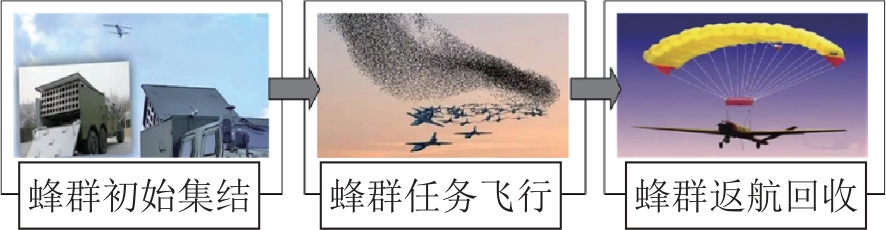
图2
无人机前向视野范围
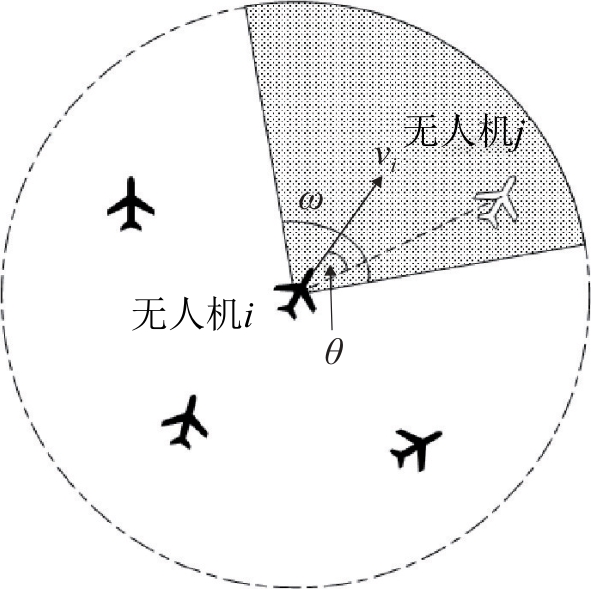
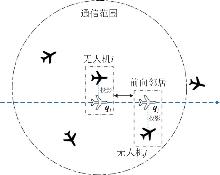
图3
前向邻居信息交互机制
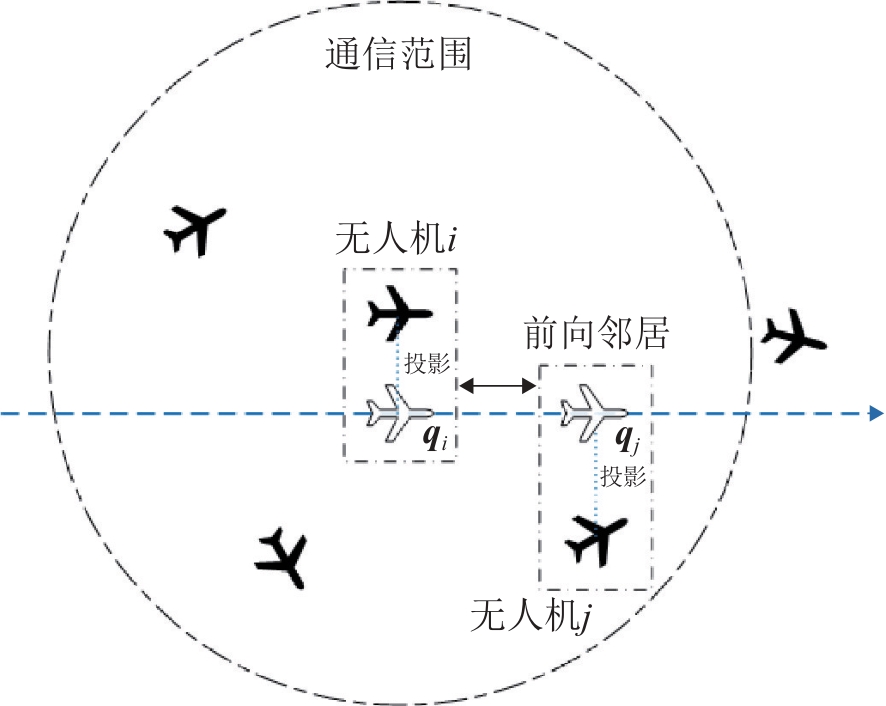
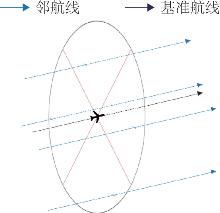
图4
邻航线示意图
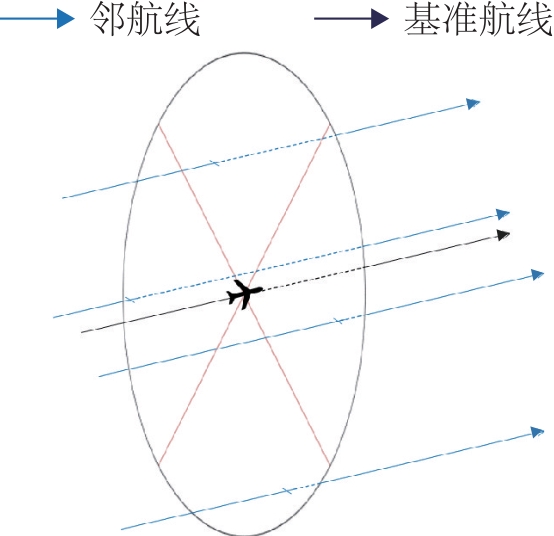
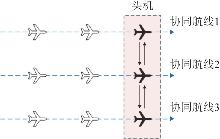
图5
邻航线邻居信息交互机制
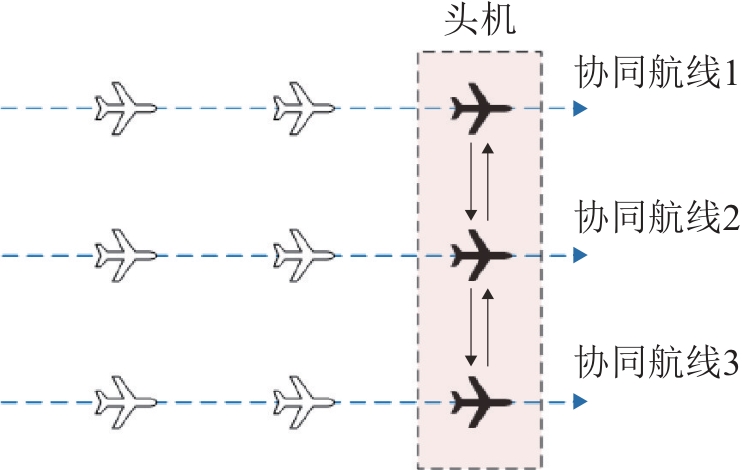
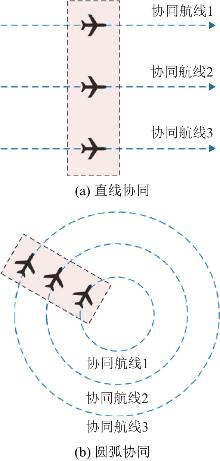
图6
协同航线类型
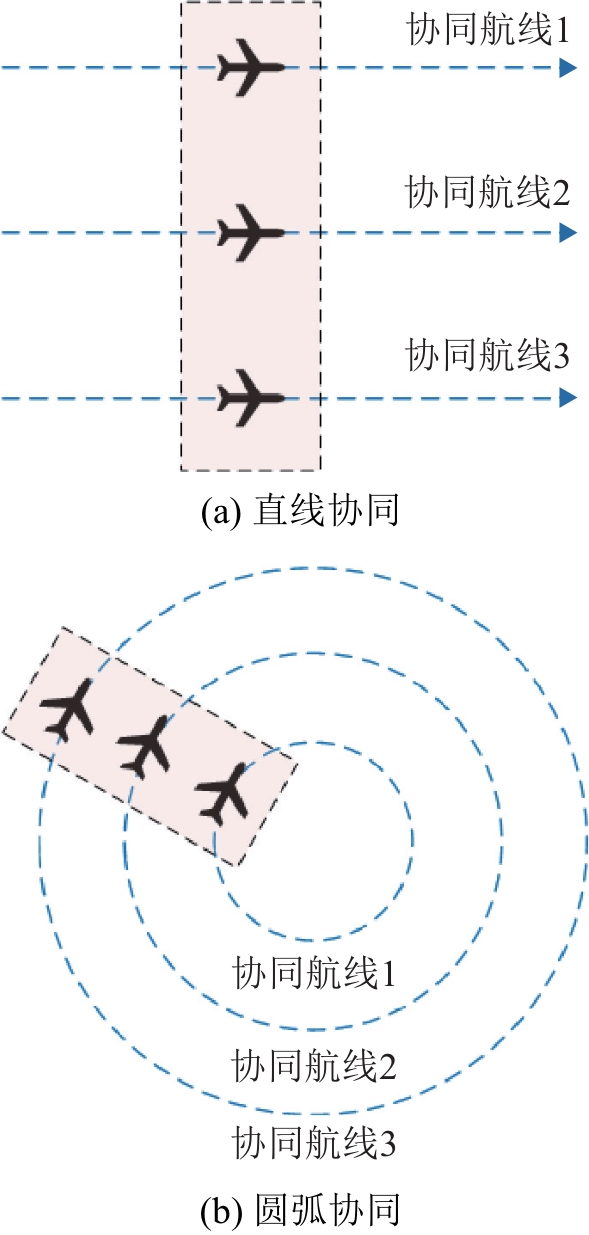
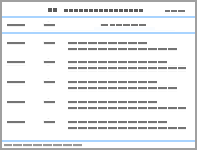
表1
仿真参数设置
| 参数 | 数值 |
|---|---|
| 无人机总数 | 72/120 |
| 邻居期望间距 | 100 |
| 位置协同衰减系数 | 5 |
| 前向视野范围 | 60 |
| 速度项增益 | (5,1,1,10) |
| 水平速度限制 | (50,200) |
| 垂直速度限制 | (-5,5) |
| 目标速度 | 120 |
| 自驾仪系数 | (2,1,1,5) |
表2
初始集结段参考直线航线 (m)
| 航线 | 航点1 | 航点2 |
|---|---|---|
| Ⅰ | (0,-300,500) | (5 000,-300,500) |
| Ⅱ | (0,-400,500) | (5 000,-400,500) |
| Ⅲ | (0,-500,500) | (5 000,-500,500) |
| Ⅳ | (0,-600,500) | (5 000,-600,500) |
| Ⅴ | (0,-700,500) | (5 000,-700,500) |
| Ⅵ | (0,-800,500) | (5 000,-800,500) |
| Ⅶ | (0,-900,500) | (5 000,-900,500) |
| Ⅷ | (0,-1 000,500) | (5 000,-1 000,500) |
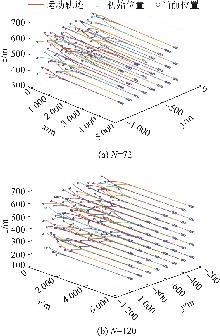
图7
不同规模蜂群初始集结阶段三维轨迹
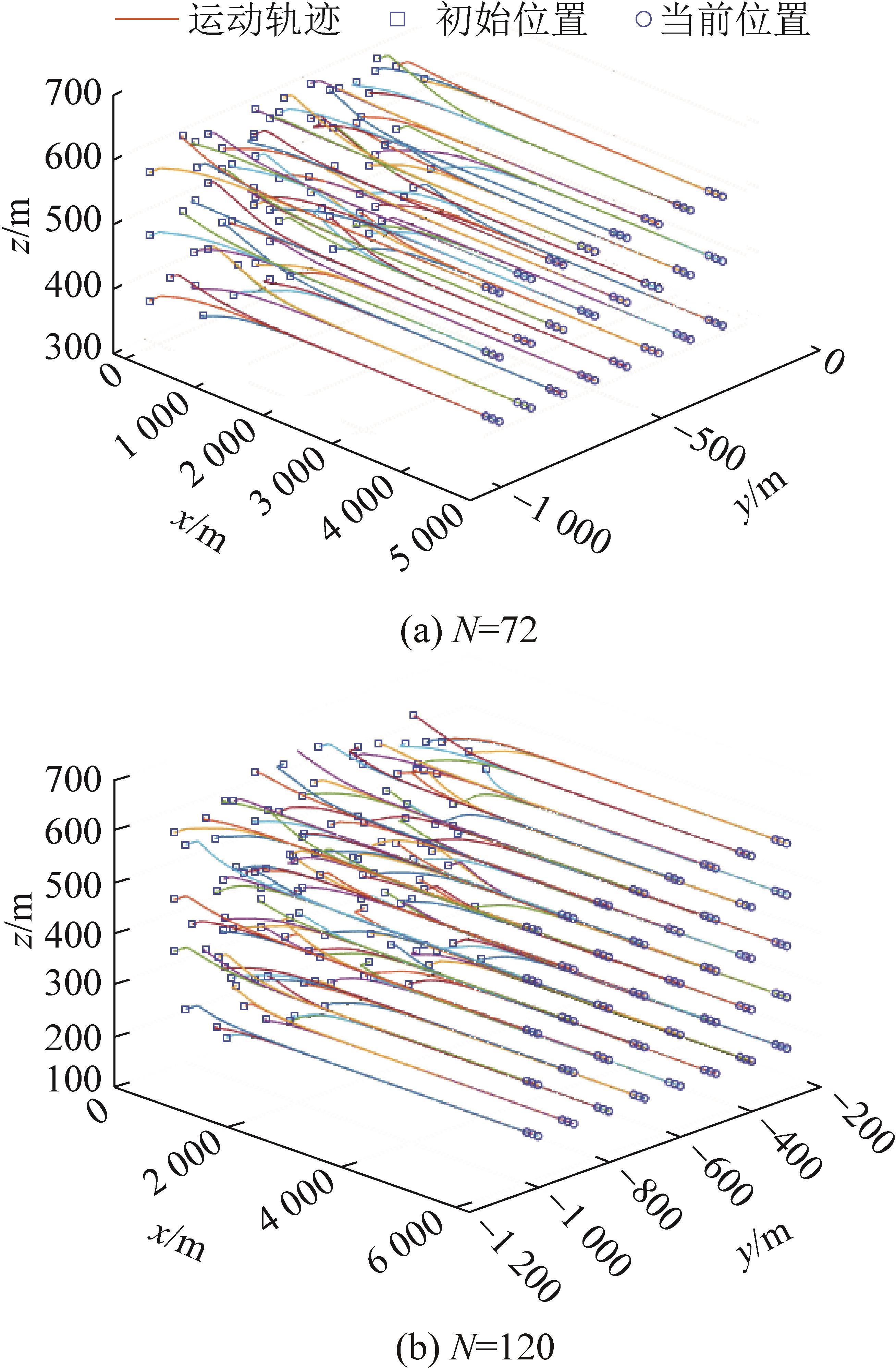
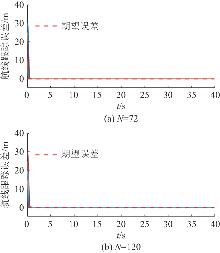
图8
不同规模蜂群航线误差变化
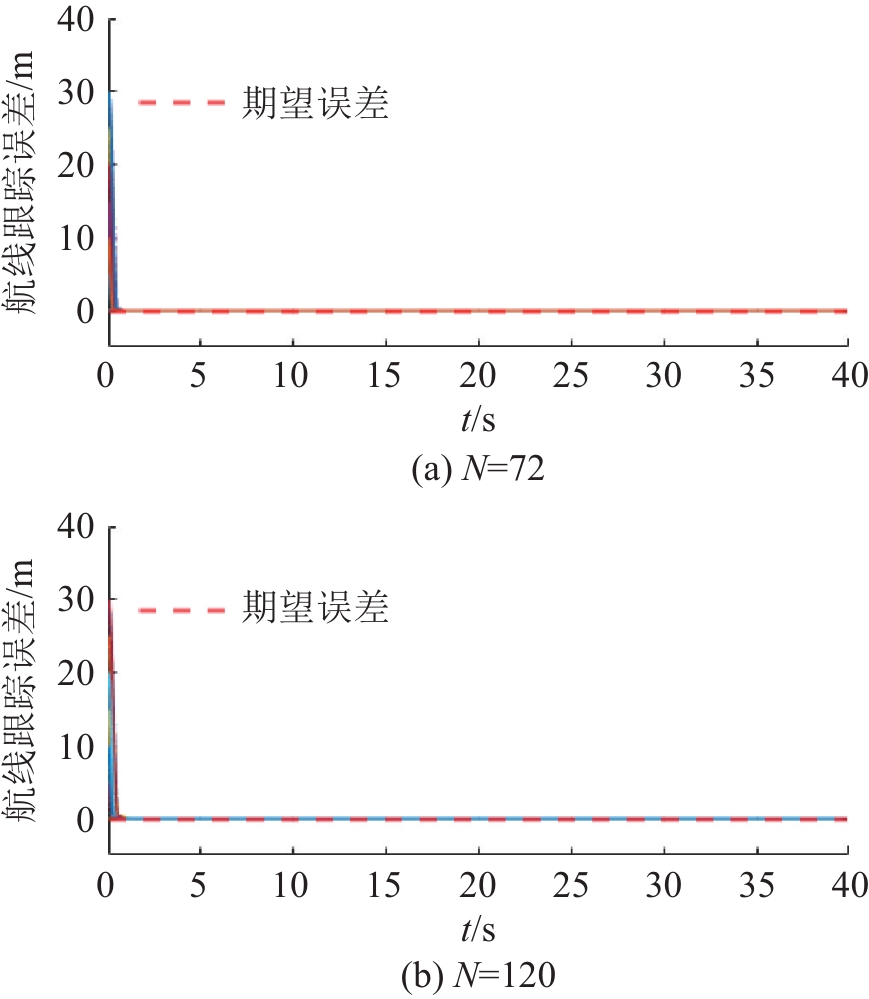
图9
不同规模蜂群同航线邻居间距变化
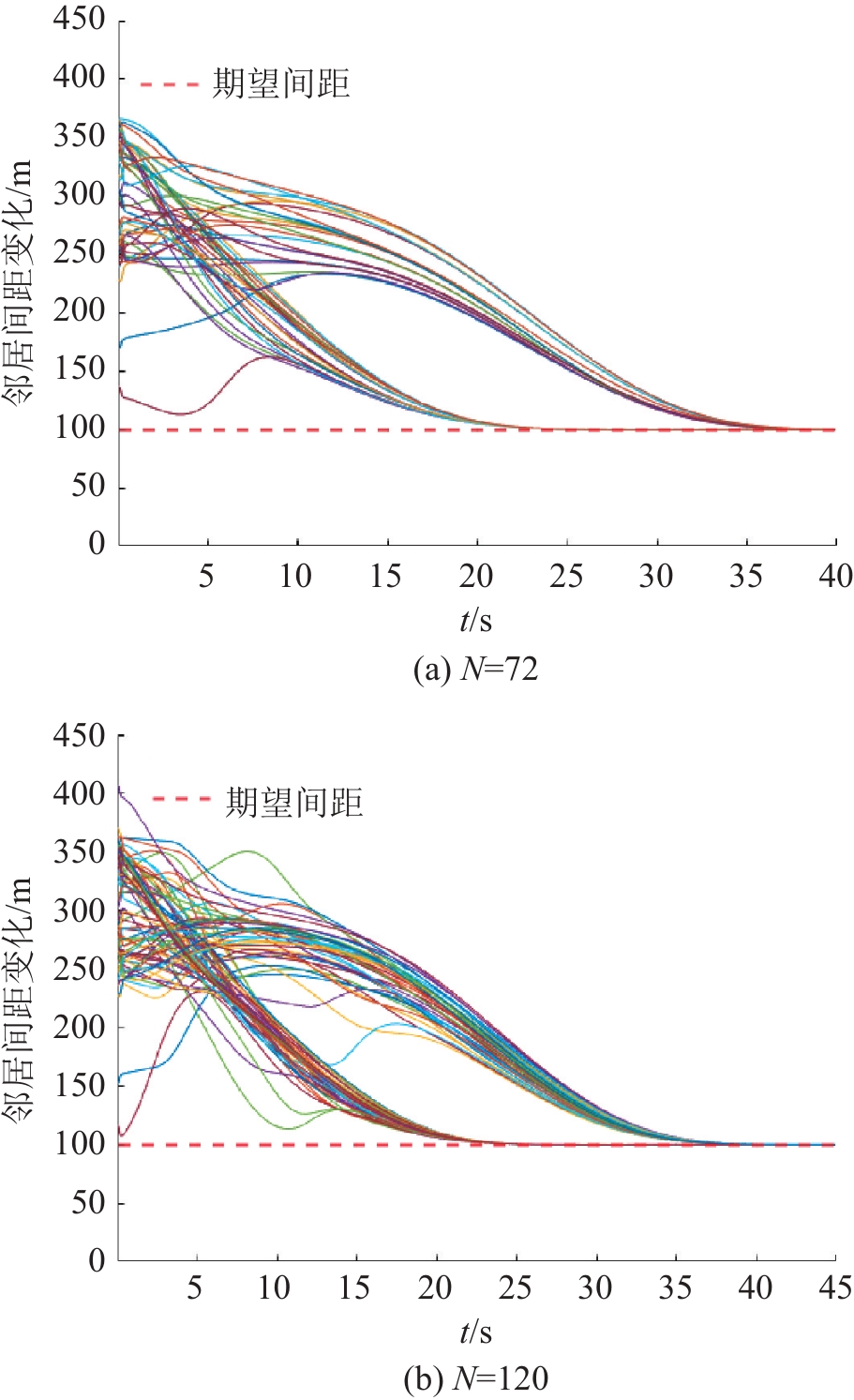
图10
不同规模蜂群航线距离差
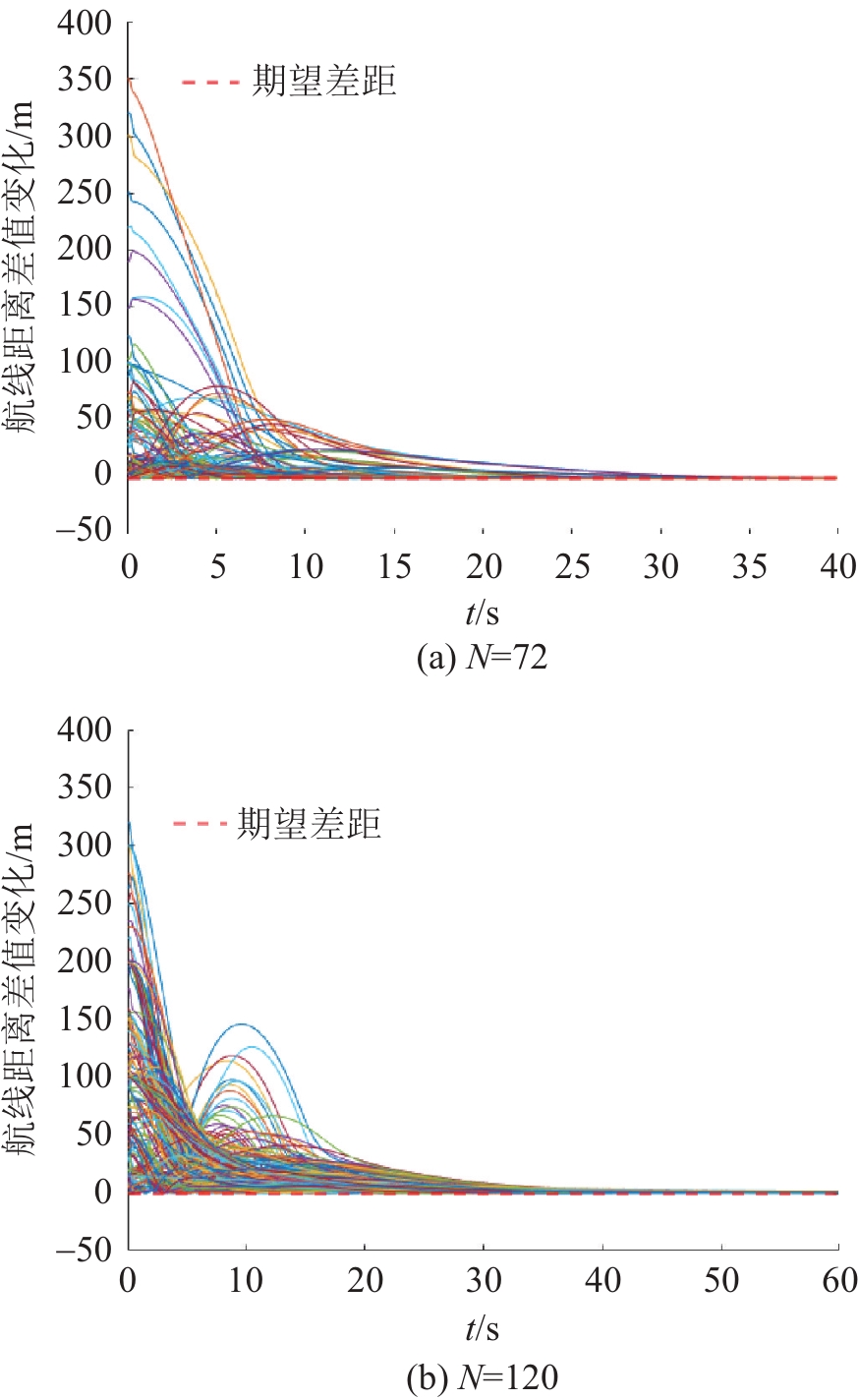
表3
不同规模下初始集结阶段协同效果对比
| 评价指标 | 数量规模 | 完成收敛时间/s |
|---|---|---|
| 航线误差变化 | 72 | 2 |
| 120 | 2 | |
| 同航线邻居间距 | 72 | 36 |
| 120 | 38 | |
| 航线距离差值 | 72 | 35 |
| 120 | 45 |
表4
任务飞行段参考直线航线 (m)
| 航线 | 航点 | 航段 | |
|---|---|---|---|
| 第1段 | 第3段 | ||
| Ⅰ | 1 | (0,-300,500) | (10 000,2 300,500) |
| 2 | (10 000,-300,500) | (0,2 300,500) | |
| Ⅱ | 1 | (0,-400,500) | (10 000,2 400,500) |
| 2 | (10 000,-400,500) | (0,2 400,500) | |
| Ⅲ | 1 | (0,-500,500) | (10 000,2 500,500) |
| 2 | (10 000,-500,500) | (0,2 500,500) | |
| Ⅳ | 1 | (0,-600,500) | (10 000,2 600,500) |
| 2 | (10 000,-600,500) | (0,2 600,500) | |
| Ⅴ | 1 | (0,-700,500) | (10 000,2 700,500) |
| 2 | (10 000,-700,500) | (0,2 700,500) | |
| Ⅵ | 1 | (0,-800,500) | (10 000,2 800,500) |
| 2 | (10 000,-800,500) | (0,2 800,500) | |
| Ⅶ | 1 | (0,-900,500) | (10 000,2 900,500) |
| 2 | (10 000,-900,500) | (0,2 900,500) | |
| Ⅷ | 1 | (0,-10 00,500) | (10 000,3 000,500) |
| 2 | (10 000,-1 000,500) | (0,3 000,500) | |
表5
任务飞行段参考圆弧航线
| 航段 | 圆心/m | 半径/m | 角度/rad |
|---|---|---|---|
| 第2段 | (10 000, 1 000,500) | 1 300:100:2000 | |
| 第4段 | (0,1 000,500) | 1 300:100:2000 |
图11
不同规模蜂群任务飞行阶段三维轨迹变化
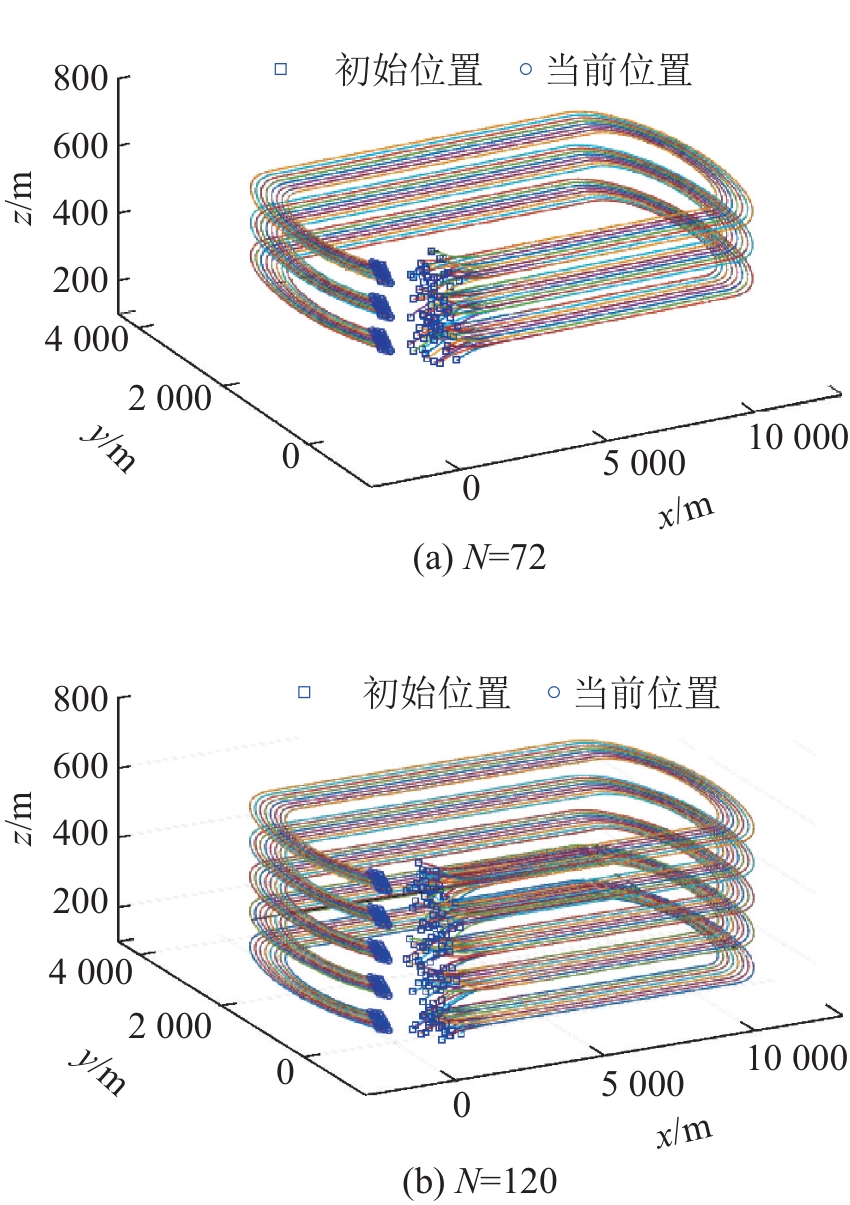
图12
不同规模蜂群任务飞行阶段轨迹变化俯视图
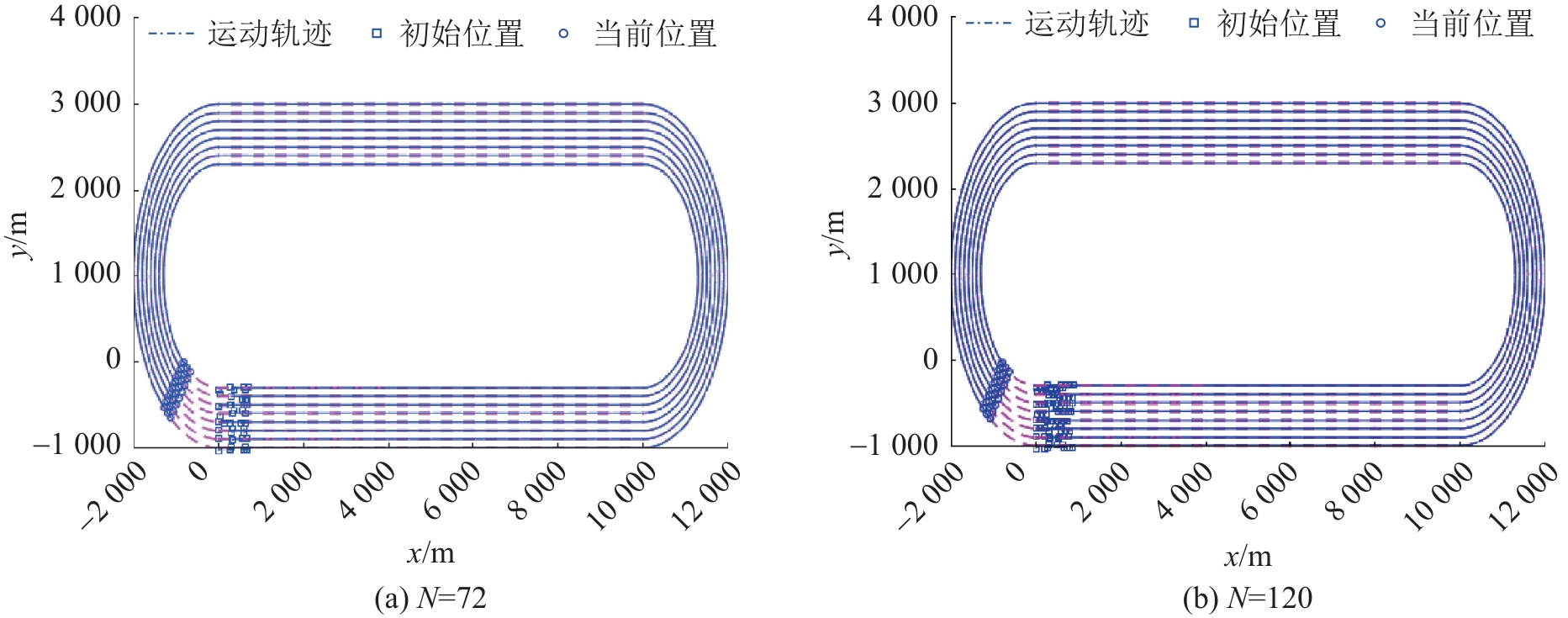
图13
不同规模蜂群任务飞行阶段轨迹变化侧视图
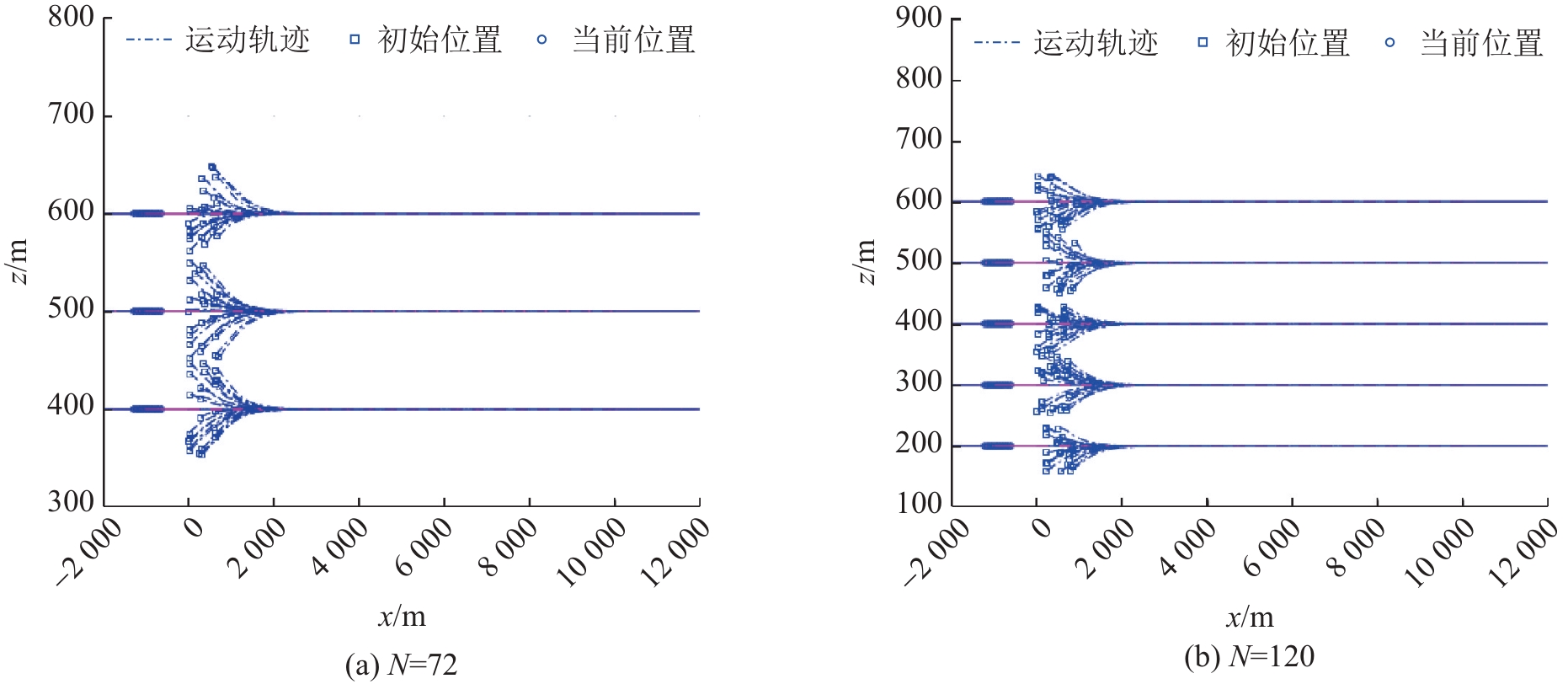
图14
不同规模蜂群无人机速度变化
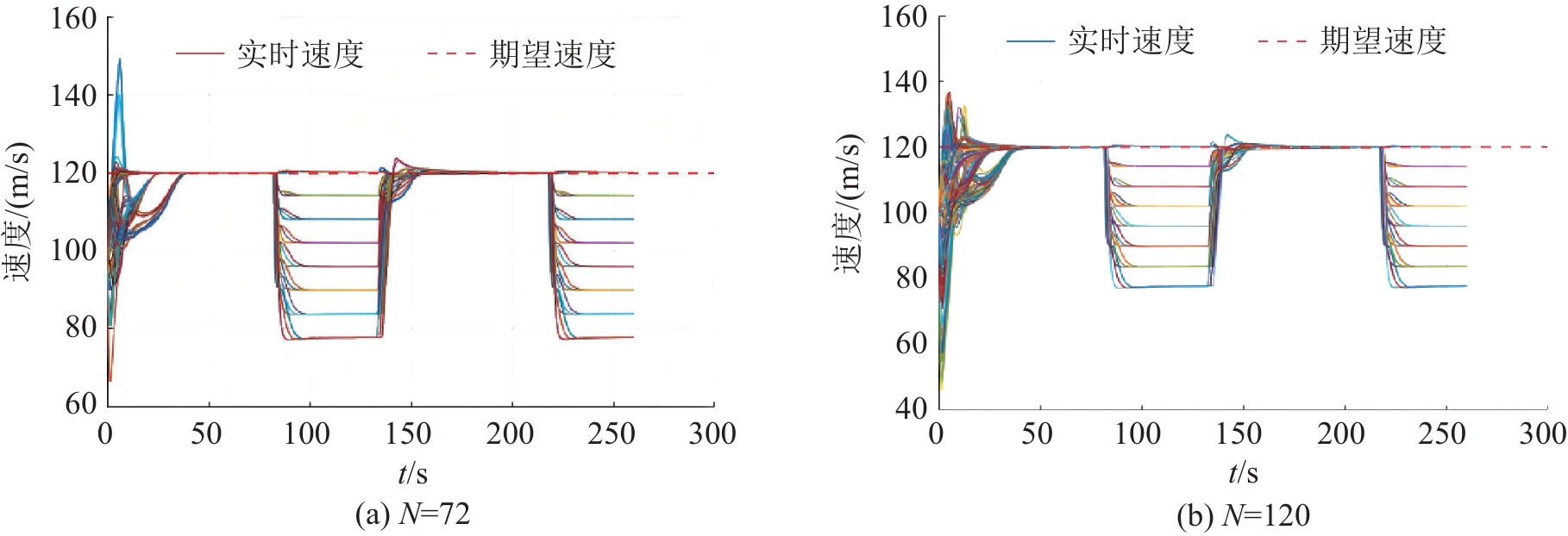
图15
不同规模蜂群无人机序参量变化
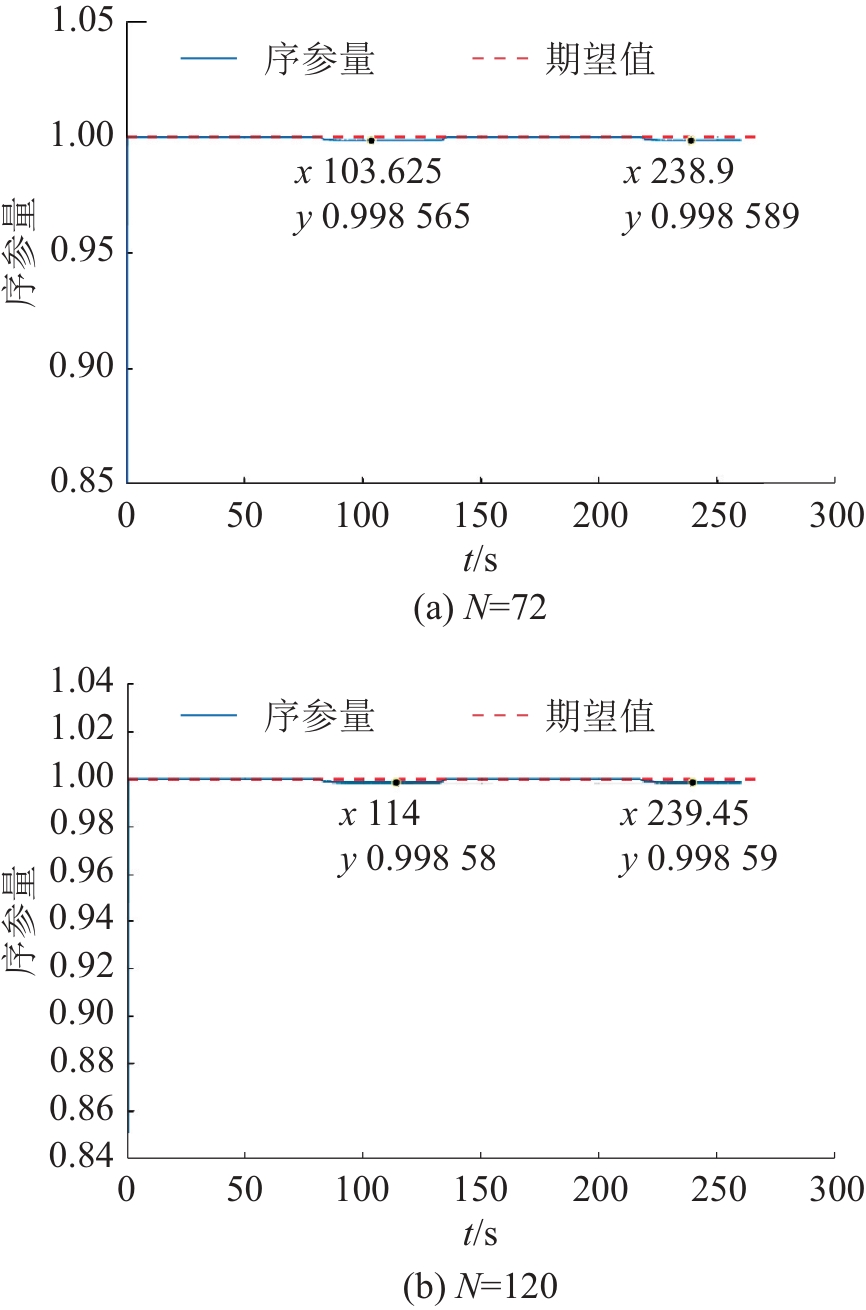
图16
不同规模蜂群同航线邻居间距变化
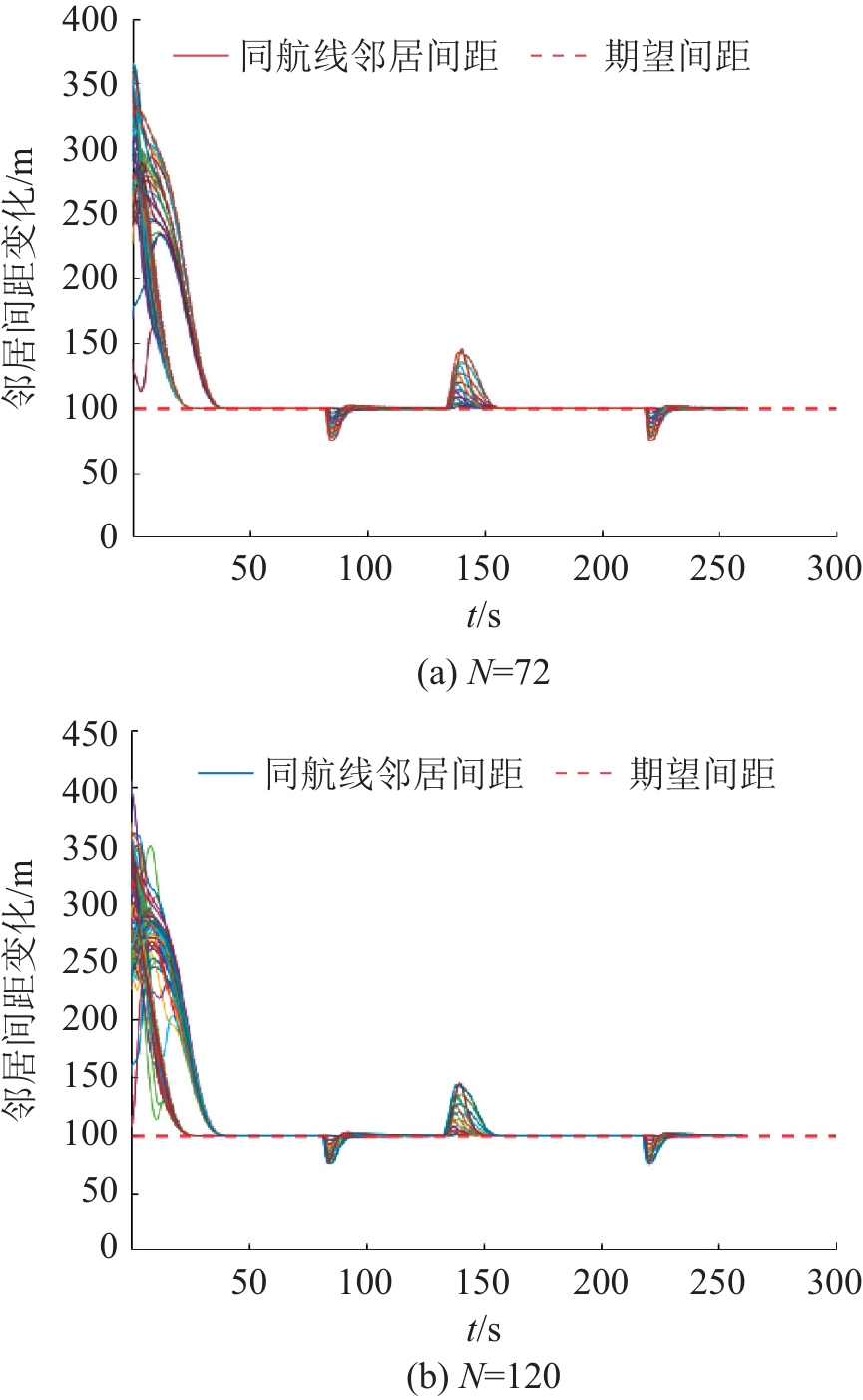
图17
不同规模蜂群多航线头机队形一致差
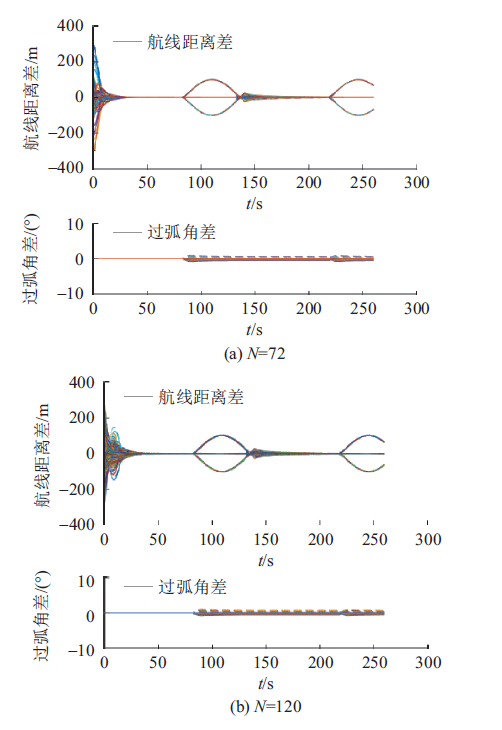
表6
不同规模下任务飞行阶段协同效果对比
| 评价指标 | 数量规模N | |
|---|---|---|
| 72 | 120 | |
| 序参量最小值 | 0.996 5 | 0.995 8 |
同航线邻居间距 偏差参考值/m | 44 | 46 |
航线距离差值 偏差参考值/m | 25 | 28 |
多航线头机队形一致 差偏差参考值/(°) | 0.9 | 1 |
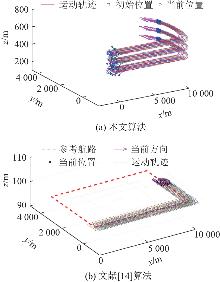
图18
不同算法三维轨迹变化
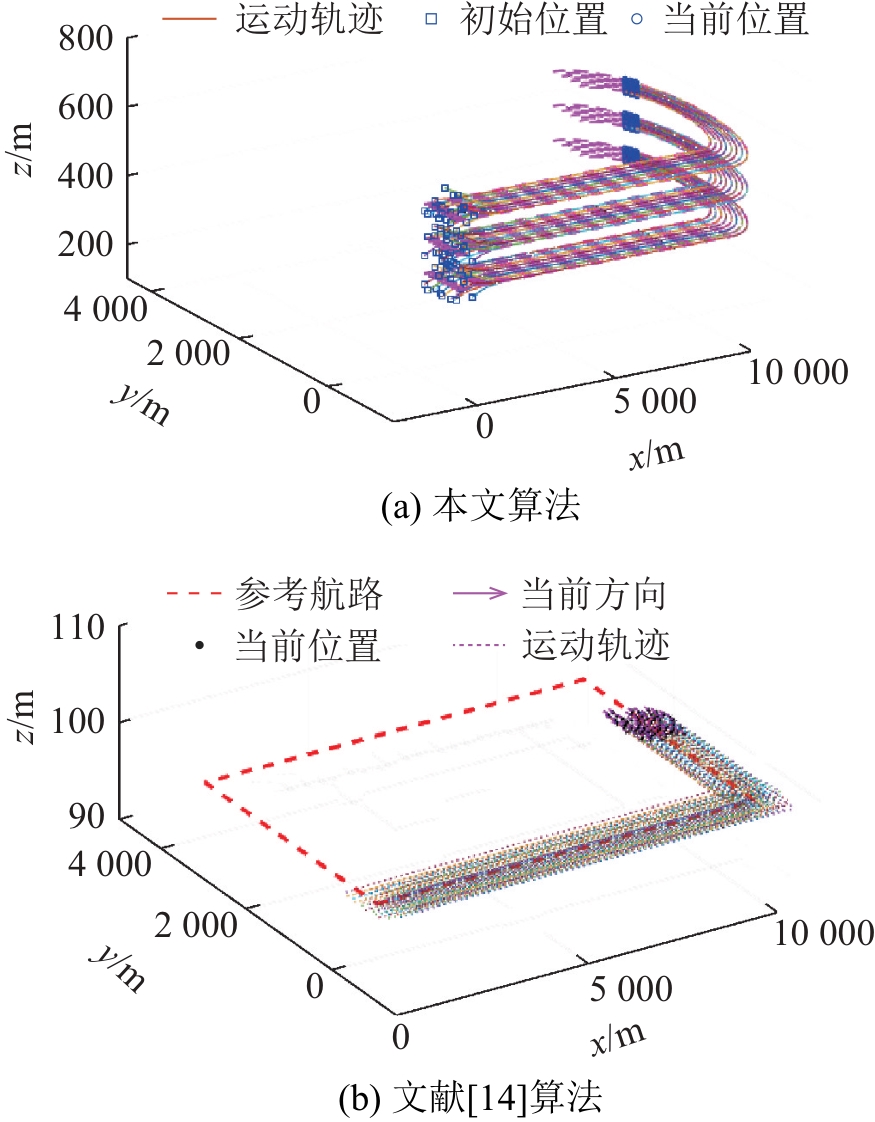
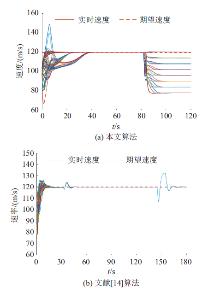
图19
不同算法速度变化
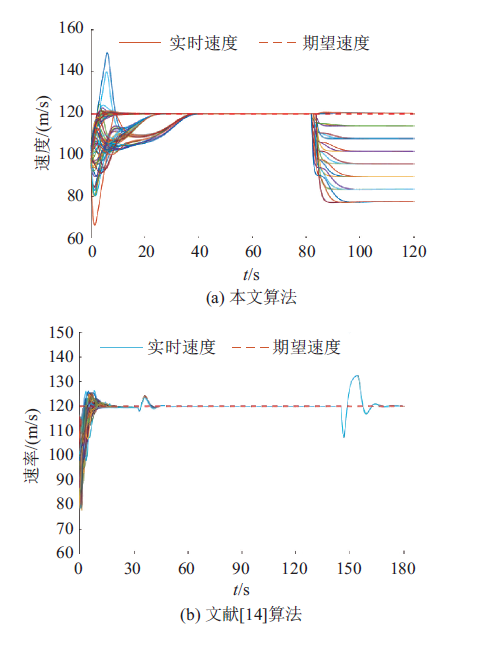
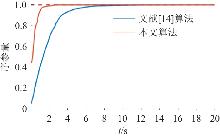
图20
不同算法序参量变化
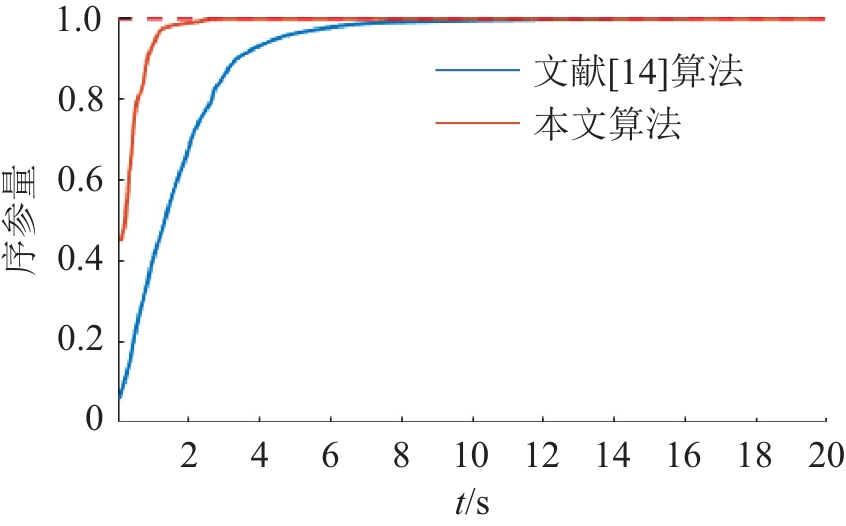
表7
不同算法协同效果对比 (s)
算法 | 速度收敛时间 | 序参量收敛时间 |
|---|---|---|
本文 | 40 | 3 |
文献[ | 46 | 8 |
| [1] | 李军, 陈士超. 无人机蜂群关键技术发展综述[J]. 兵工学报, 2023, 44(9): 2533-2545. |
| Li Jun, Chen Shichao. Overview of Key Technology and Its Development of Drone Swarm[J]. Acta Armamentarii, 2023, 44(9): 2533-2545. | |
| [2] | 杨中英, 王毓龙, 赖传龙. 无人机蜂群作战发展现状及趋势研究[J]. 飞航导弹, 2019(5): 34-38. |
| [3] | 侯进永, 刘传文. 无人机集群协同作战发展现状及关键技术分析[J]. 现代雷达, 2020, 42(6): 30-40, 47. |
| Hou Jinyong, Liu Chuanwen. Development Situation and Key Technology Analysis of Cooperative Combat for Unmanned Aerial Vehicle Swarm[J]. Modern Radar, 2020, 42(6): 30-40, 47. | |
| [4] | 张博, 梁延峰, 李建营, 等. 空中无人蜂群作战发展现状及对抗策略研究[J]. 中国电子科学研究院学报, 2022, 17(8): 755-763. |
| Zhang Bo, Liang Yanfeng, Li Jianying, et al. Research on the Development of UAV Swarm in Combat and Counter UAV Swarm Measures[J]. Journal of China Academy of Electronics and Information Technology, 2022, 17(8): 755-763. | |
| [5] | 李正平, 鲜斌. 基于虚拟结构法的分布式多无人机鲁棒编队控制[J]. 控制理论与应用, 2020, 37(11): 2423-2431. |
| Li Zhengping, Xian Bin. Robust Distributed Formation Control of Multiple Unmanned Aerial Vehicles Based on Virtual Structure[J]. Control Theory & Applications, 2020, 37(11): 2423-2431. | |
| [6] | Reynolds C W. Flocks, Herds and Schools: A Distributed Behavioral Model[J]. ACM SIGGRAPH Computer Graphics, 1987, 21(4): 25-34. |
| [7] | Vicsek Tamás, Czirók András, Ben-Jacob Eshel, et al. Novel Type of Phase Transition in a System of Self-driven Particles[J]. Physical Review Letters, 1995, 75(6): 1226-1229. |
| [8] | Couzin I D, Krause J E, James R I, et al. Collective Memory and Spatial Sorting in Animal Groups[J]. Journal of Theoretical Biology, 2002, 218(1): 1-11. |
| [9] | Olfati-Saber R, Murray R M. Distributed Structural Stabilization and Tracking for Formations of Dynamic Multi-agents[C]//Proceedings of the 41st IEEE Conference on Decision and Control, 2002. Piscataway: IEEE, 2002: 209-215. |
| [10] | Olfati-Saber R. Flocking for Multi-agent Dynamic Systems: Algorithms and Theory[J]. IEEE Transactions on Automatic Control, 2006, 51(3): 401-420. |
| [11] | Hauert Sabine, Leven Severin, Varga Maja, et al. Reynolds Flocking in Reality with Fixed-wing Robots: Communication Range vs. Maximum Turning Rate[C]//2011 IEEE/RSJ International Conference on Intelligent Robots and Systems. Piscataway: IEEE, 2011: 5015-5020. |
| [12] | 张兆宇, 段海滨. 时变切换拓扑下基于虚拟误差的无人机集群分布式协同控制[J]. 中国科学(技术科学), 2024, 54(9): 1637-1651. |
| Zhang Zhaoyu, Duan Haibin. Virtual Error-based Distributed Cooperative Control for Multiple UAVs Under Time-varying Switching Topologies[J]. Scientia Sinica(Technologica), 2024, 54(9): 1637-1651. | |
| [13] | 高晓博. 小型固定翼无人机集群编队快速集结及一致性控制技术[J]. 兵工自动化, 2025, 44(7): 88-93, 106. |
| Gao Xiaobo. Rapid Formation Assembly and Consistency Control Technology for Small Fixed-wing UAV[J]. Ordnance Industry Automation, 2025, 44(7): 88-93, 106. | |
| [14] | 许为乐, 李春涛. 基于速度协同一致的分布式无人机集群技术[J]. 兵工自动化, 2025, 44(1): 102-109. |
| Xu Weile, Li Chuntao. Distributed UAV Swarm Technology Based on Velocity Coordination and Consensus[J]. Ordnance Industry Automation, 2025, 44(1): 102-109. | |
| [15] | Soria Enrica, Schiano Fabrizio, Floreano Dario. Predictive Control of Aerial Swarms in Cluttered Environments[J]. Nature Machine Intelligence, 2021, 3(6): 545-554. |
| [16] | 艾高航, 李春涛. 基于视野和自适应半径的无人机集群避障算法[J]. 系统仿真学报, 2024, 36(12): 2945-2959. |
| Ai Gaohang, Li Chuntao. UAV Swarm Obstacle Avoidance Based on Visual Filed and Adaptive Radius[J]. Journal of System Simulation, 2024, 36(12): 2945-2959. | |
| [17] | Air Force U. S.. Small Unmanned Aircraft Systems (SUAS) Flight Plan: 2016-2036[EB/OL]. (2016-05-17)[2025-01-17]. . |
| [18] | 王道波, 任景光, 蒋婉玥, 等. 无人靶机及其自主控制技术发展[J]. 科技导报, 2017, 35(7): 49-57. |
| Wang Daobo, Ren Jingguang, Jiang Wanyue, et al. An Overview of the Development of Target Drones and Associated Autonomous Control[J]. Science & Technology Review, 2017, 35(7): 49-57. | |
| [19] | Park S, Deyst J, How J P. A New Nonlinear Guidance Logic for Trajectory Tracking[C]//AIAA Guidance, Navigation, and Control Conference and Exhibit. Reston: AIAA, 2004: AIAA 2004-4900. |
| [20] | 侯鹏森, 肖支才, 刘玄冰, 等. 基于改进非线性制导律的无人机航迹跟踪算法研究[J]. 电光与控制, 2023, 30(6): 8-14. |
| Hou Pengsen, Xiao Zhicai, Liu Xuanbing, et al. A UAV Trajectory Tracking Algorithm Based on Improved Nonlinear Guidance Law[J]. Electronics Optics & Control, 2023, 30(6): 8-14. | |
| [21] | 张令, 段海滨, 雍婷, 等. 基于寒鸦配对交互行为的无人机集群编队控制[J]. 北京航空航天大学学报, 2021, 47(2): 391-397. |
| Zhang Ling, Duan Haibin, Yong Ting, et al. Unmanned Aerial Vehicle Swarm Formation Control Based on Paired Interaction Mechanism in Jackdaws[J]. Journal of Beijing University of Aeronautics and Astronautics, 2021, 47(2): 391-397. | |
| [22] | Agrawal Anuj, Gupta Aniket, Bhowmick Joyraj, et al. A Novel Controller of Multi-agent System Navigation and Obstacle Avoidance[J]. Procedia Computer Science, 2020, 171: 1221-1230. |
| [23] | 桂雪琪, 李春涛. 基于视野和速度引导的无人机集群避障算法[J]. 系统仿真学报, 2024, 36(3): 545-554. |
| Gui Xueqi, Li Chuntao. UAV Swarm Obstacle Avoidance Algorithm Based on Visual Field and Velocity Guidance[J]. Journal of System Simulation, 2024, 36(3): 545-554. | |
| [24] | 王祥科, 陈浩, 赵述龙. 大规模固定翼无人机集群编队控制方法[J]. 控制与决策, 2021, 36(9): 2063-2073. |
| Wang Xiangke, Chen Hao, Zhao Shulong. Formation Control of Large-scale Fixed-wing Unmanned Aerial Vehicle Swarms[J]. Control and Decision, 2021, 36(9): 2063-2073. | |
| [25] | 李方敏, 刘新华, 旷海兰. 无线传感器网络中一种高能效低延时的泛洪算法研究[J]. 通信学报, 2007, 28(8): 46-53. |
| Li Fangmin, Liu Xinhua, Kuang Hailan. Research on a Very Energy-efficient and Low-delay Flooding Algorithm for Wireless Sensor Network[J]. Journal on Communications, 2007, 28(8): 46-53. | |
| [26] | Bullo Francesco, Cortés Jorge, Martínez Sonia. Distributed Control of Robotic Networks: A Mathematical Approach to Motion Coordination Algorithms[M]. Princeton: Princeton University Press, 2009: 42. |
| [27] | Conti Marco, Giordano Silvia. Mobile ad Hoc Networking: Milestones, Challenges, and New Research Directions[J]. IEEE Communications Magazine, 2014, 52(1): 85-96. |
| [1] | 肖玮, 高甲博, 柯学良. 基于LDE-MADDPG算法的无人机集群编队集结控制策略[J]. 系统仿真学报, 2025, 37(9): 2335-2351. |
| [2] | 艾高航, 李春涛. 基于视野和自适应半径的无人机集群避障算法[J]. 系统仿真学报, 2024, 36(12): 2945-2959. |
| [3] | 王宁, 梁晓龙, 张佳强, 侯岳奇, 杨爱武. 跨域无人集群协同反潜搜索方法研究[J]. 系统仿真学报, 2024, 36(4): 817-824. |
| [4] | 桂雪琪, 李春涛. 基于视野和速度引导的无人机集群避障算法[J]. 系统仿真学报, 2024, 36(3): 545-554. |
| [5] | 李高扬, 黎向锋, 赵康, 金玉超, 易志东, 左敦稳. 全粒子推动野马优化算法的无人机三维路径规划[J]. 系统仿真学报, 2024, 36(3): 595-607. |
| [6] | 焦嵩鸣, 丁辉, 钟宇飞, 姚鑫, 郑家豪. 一种基于SiamRPN的无人机目标跟踪及控制算法[J]. 系统仿真学报, 2023, 35(6): 1372-1380. |
| [7] | 赵静, 王鹏, 丁筱茜, 蒋国平, 徐丰羽, 孙雁飞. 基于观测器的四旋翼容错控制及仿真研究[J]. 系统仿真学报, 2022, 34(1): 1-10. |
| [8] | 王彪, 唐超颖, 孔大庆. 基于改进自抗扰技术的四旋翼姿态控制[J]. 系统仿真学报, 2018, 30(8): 3124-3129. |
| [9] | 张志伟, 陶建武, 邵校. 基于“τ-τ”的无人机规避告警准则分析[J]. 系统仿真学报, 2018, 30(5): 1877-1885. |
| [10] | 吴华兴, 黄伟, 康凤举, 毛红保. 基于前置攻击瞄准的UCAV自主拦截方法研究[J]. 系统仿真学报, 2016, 28(9): 2246-2253. |
| 阅读次数 | ||||||
|
全文 |
|
|||||
|
摘要 |
|
|||||
 http://www.china-simulation.com

